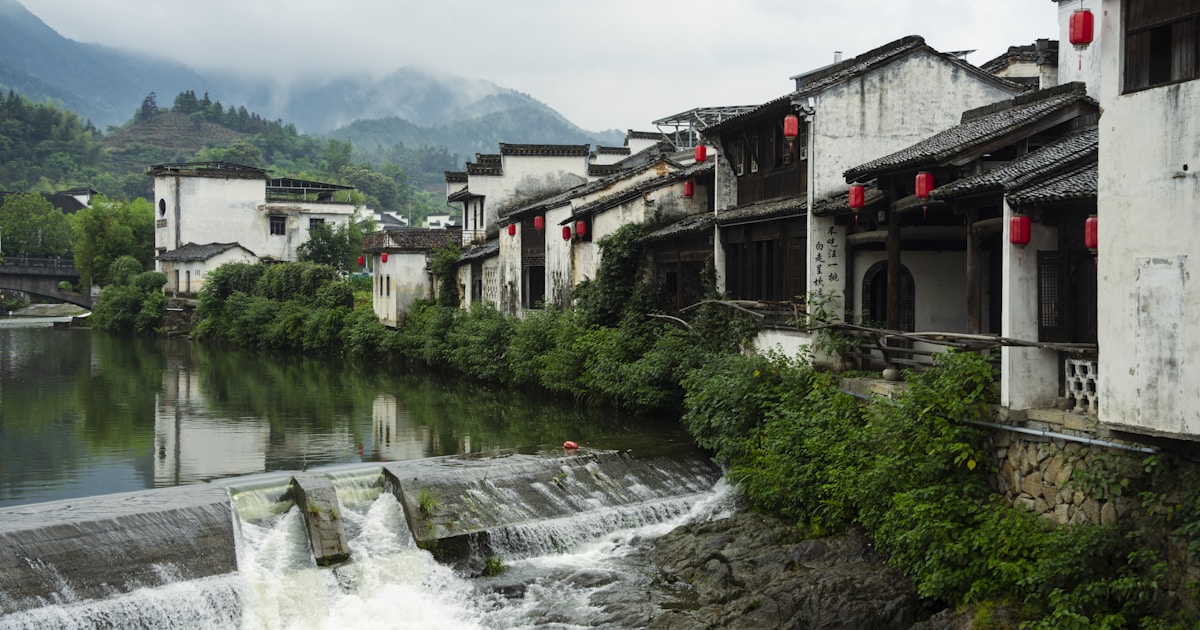


Safety in Anhui Province, China — key insights for foreign investors and businesses.
Hefei vs Wuhu: The Ultimate 2026 Living Comparison for Foreign Investors in Anhui
For foreign investors and expatriate professionals evaluating a base in Anhui Province, the choice between Hefei and Wuhu is increasingly critical. While Hefei, the provincial capital, has long been the default entry point, Wuhu is rapidly emerging as a high-value alternative. This comparison breaks down the living and business environment across eight key dimensions, using concrete data to help you decide which city aligns with your operational needs and lifestyle expectations.
1. Cost of Living: Capital Premium vs. Second-Tier Value
| Dimension | Hefei (Capital) | Wuhu (Second-Tier) |
|---|---|---|
| Rent (120m² luxury apt, city center) | ¥6,500–9,000/month | ¥3,800–5,500/month |
| Rent (120m² luxury apt, suburban) | ¥4,000–5,500/month | ¥2,500–3,500/month |
| Monthly groceries (single person) | ¥1,200–1,800 | ¥900–1,300 |
| International school tuition (annual) | ¥120,000–200,000 | ¥80,000–130,000 |
| Overall monthly budget (single) | ¥8,000–12,000 | ¥5,500–8,000 |
Key Data Point: The cost of living in Hefei is approximately 45% higher than in Wuhu for comparable expatriate standards. A senior engineer relocating to Wuhu can save roughly ¥50,000–70,000 annually on rent and groceries alone. For investors managing multiple expatriate staff, this difference compounds significantly—a team of five in Wuhu costs roughly the same as a team of three in Hefei.
Hefei’s premium reflects its status as a national science and technology hub, with higher demand for international-standard housing and services. Wuhu, while more affordable, has seen a 22% increase in high-end rental supply since 2024, narrowing the quality gap.
2. Business Environment & Government Efficiency
Hefei: The capital offers the most comprehensive government service centers. The Hefei International Business Service Center provides one-stop processing for company registration, work permits, and tax registration in English. Average processing time for a foreign-invested enterprise (FIE) is 7–10 working days. The city has over 1,200 registered foreign-invested enterprises as of mid-2026.
Wuhu: The Wuhu Municipal Commerce Bureau operates a dedicated “Foreign Investment Service Desk” that handles FIE registration in 5–8 working days—faster than Hefei for standard cases. Wuhu has attracted over 450 foreign-invested enterprises, with a 31% growth rate in 2025 alone, driven by its automotive and industrial robotics clusters. The city’s “One Window, One Form” policy for customs clearance at the Wuhu Port is particularly praised by manufacturing investors.
Verdict: Hefei wins on scale and English-language support; Wuhu wins on speed and manufacturing-focused efficiency.
3. Transportation & Connectivity
| Feature | Hefei | Wuhu |
|---|---|---|
| High-speed rail to Shanghai | 2 hours (G-series) | 2.5 hours (G-series) |
| High-speed rail to Nanjing | 1 hour | 35 minutes |
| International airport | Hefei Xinqiao (HFE) | Wuhu Xuanzhou (WHA) |
| Direct international flights | 14 destinations | 4 destinations |
| Metro system | 5 lines (operational) | 2 lines (operational) |
Key Data Point: Hefei Xinqiao Airport handled 13.2 million passengers in 2025, with direct flights to Singapore, Tokyo, Seoul, and Frankfurt. Wuhu Xuanzhou Airport handled 2.8 million passengers, primarily domestic plus seasonal charters to Bangkok and Osaka. For investors requiring frequent international travel, Hefei is clearly superior. However, Wuhu’s 35-minute high-speed rail link to Nanjing means international travelers can reach Nanjing Lukou Airport (a major hub with 30+ international destinations) in under an hour door-to-door.
Within the cities, Hefei’s metro system covers 156 km versus Wuhu’s 46 km. Both cities have extensive bike-sharing networks and ride-hailing services. Wuhu’s river ferry system along the Yangtze is a unique commuting option for certain industrial zones.
4. Education & International Schools
Hefei: Three major international schools serve the expatriate community: Hefei No.1 International School (IB curriculum, 350 students), Hefei British International School (IGCSE/A-Levels, 280 students), and Hefei American International School (AP curriculum, 200 students). Tuition ranges from ¥120,000 to ¥200,000 per year. The University of Science and Technology of China (USTC) offers graduate programs in English for accompanying spouses.
Wuhu: Wuhu International School (IB candidate school, 120 students) and Anhui Normal University’s International Division serve the community. Tuition is significantly lower at ¥80,000–130,000 per year. For older children, the 35-minute train to Nanjing opens access to Nanjing International School (IB, 800+ students) and the British School of Nanjing.
Key Data Point: The ratio of international school places to expatriate children in Hefei is approximately 1:2.5, while in Wuhu it is 1:4.2. This means Hefei offers more immediate capacity, while Wuhu families often rely on the Nanjing corridor for secondary education options.
5. Healthcare & Medical Services
| Service | Hefei | Wuhu |
|---|---|---|
| International hospitals/clinics | 3 (United Family, Parkway, Anhui Provincial) | 1 (Wuhu International Clinic) |
| English-speaking doctors | 45+ | 12 |
| Air ambulance/medical evacuation | Available (24/7) | Available (arranged via Nanjing) |
| Average wait time (general consult) | 15 minutes | 20 minutes |
Key Data Point: Hefei’s United Family Hospital, opened in 2024, is the only JCI-accredited facility in Anhui Province, handling over 50,000 outpatient visits annually. Wuhu’s International Clinic, affiliated with the Wuhu First People’s Hospital, handles 8,000 visits per year and can arrange medical evacuation to Nanjing or Shanghai within 2 hours.
For routine care, both cities are adequate. For complex procedures or specialist consultations, Hefei is the clear choice. However, many investors in Wuhu maintain a supplementary health insurance plan that covers evacuation to Shanghai or Beijing.
6. Housing & Residential Quality
Hefei: Prime expatriate neighborhoods include Swan Lake District (政务区), Binhu New District (滨湖新区), and Gaoxin District (高新区). A 120m² three-bedroom apartment in a modern compound with gym, pool, and 24/7 security rents for ¥7,000–9,000/month. New luxury compounds like “One Park” and “Lakeview International” offer western-standard finishes. The city has 12 compounds specifically marketed to expatriates.
Wuhu: The main expatriate areas are Jinghu District (镜湖区) and the Wuhu Economic and Technological Development Zone (经济技术开发区). A comparable 120m² apartment in a top compound rents for ¥4,000–5,500/month. The “Yangtze Riverside” development offers river-view apartments with international-standard amenities at 60% of Hefei’s cost. Wuhu has 4 compounds with dedicated expatriate services.
Key Data Point: Housing quality in Wuhu has improved dramatically since 2023, with three new international-standard compounds opening. The price difference means an expatriate in Wuhu can afford a 30–40% larger apartment for the same budget as a Hefei counterpart.
7. Food, Culture & Lifestyle
Hefei: The capital offers a vibrant food scene with over 50 international restaurants (Japanese, Korean, Italian, French, Indian, Mexican). The “Hefei International Food Festival” attracts 80,000+ visitors annually. Cultural attractions include the Anhui Museum, Mingjiao Temple, and the Swan Lake performance center. The city has 3 western-style supermarkets (Carrefour, Sam’s Club, Metro) with imported goods.
Wuhu: Wuhu has 12 international restaurants, primarily Japanese, Korean, and Western options concentrated near the economic zone. The city is famous for its local cuisine (Wuhu-style braised fish, pickled vegetables) and the Fantawild Adventure theme park, which draws 3 million visitors yearly. The Yangtze River waterfront promenade is a major leisure attraction. Wuhu has 1 western-style supermarket (Metro) plus specialty import shops.
Key Data Point: Hefei’s cultural scene is 4–5 times larger than Wuhu’s in terms of international events and dining options. However, Wuhu’s lower cost of living means expatriates can afford more frequent travel—many Wuhu-based professionals take weekend trips to Nanjing (35 min) or Shanghai (2.5 hours) for cultural events.
8. Safety & Community
| Metric | Hefei | Wuhu |
|---|---|---|
| Crime rate (per 100,000) | 38 (very low) | 29 (extremely low) |
| Expatriate population (estimated) | 4,500–5,000 | 1,200–1,500 |
| Active expat social groups | 8 (WeChat, Meetup) | 3 (WeChat, local chambers) |
| Police response time (urban area) | 5–8 minutes | 4–6 minutes |
Key Data Point: Both cities rank among the safest in China, with crime rates well below the national average of 45 per 100,000. Wuhu’s smaller expatriate community means a tighter-knit social network, while Hefei offers more anonymity and diversity. The Wuhu Foreign Chamber of Commerce, established in 2024, has 85 member companies and organizes monthly networking events.
Decision Guide: Hefei or Wuhu?
Choose Hefei if:
- You require frequent international travel (direct flights to 14+ destinations)
- You have school-aged children needing immediate international school placement
- Your business depends on access to R&D talent (USTC, Hefei Institutes of Physical Science)
- You value diverse cultural and dining options within walking distance
- Your budget allows for ¥8,000–12,000/month living expenses
Choose Wuhu if:
- Your business is in automotive, robotics, or advanced manufacturing (Chery, EK Automation clusters)
- You prioritize cost efficiency (45% lower living costs)
- You prefer faster government processing for FIE registration
- You are comfortable with 35-minute access to Nanjing for international services
- You want a smaller, more connected expatriate community
The 2026 Trend
Anhui’s “Dual Core” development strategy is actively promoting Wuhu as a complementary hub to Hefei. The Hefei-Wuhu Economic Corridor, with a planned ¥200 billion investment through 2030, will further integrate infrastructure, talent pools, and supply chains. Many investors are adopting a “Hefei for HQ, Wuhu for manufacturing” model, leveraging both cities’ strengths.
Final Recommendation: For the majority of foreign investors in 2026, Hefei remains the default choice for headquarters and R&D operations due to its superior international connectivity and talent pool. However, Wuhu offers unmatched value for manufacturing operations and cost-conscious startups. The optimal strategy may be to establish a presence in both cities, using the high-speed rail link (40 minutes) as a connective tissue between operations.
Source: Anhui Provincial Statistics Bureau 2025 Yearbook; Hefei Municipal Commerce Bureau; Wuhu Municipal Commerce Bureau; China Index Academy Housing Report Q2 2026; Anhui International School Association 2026 Directory | July 2026