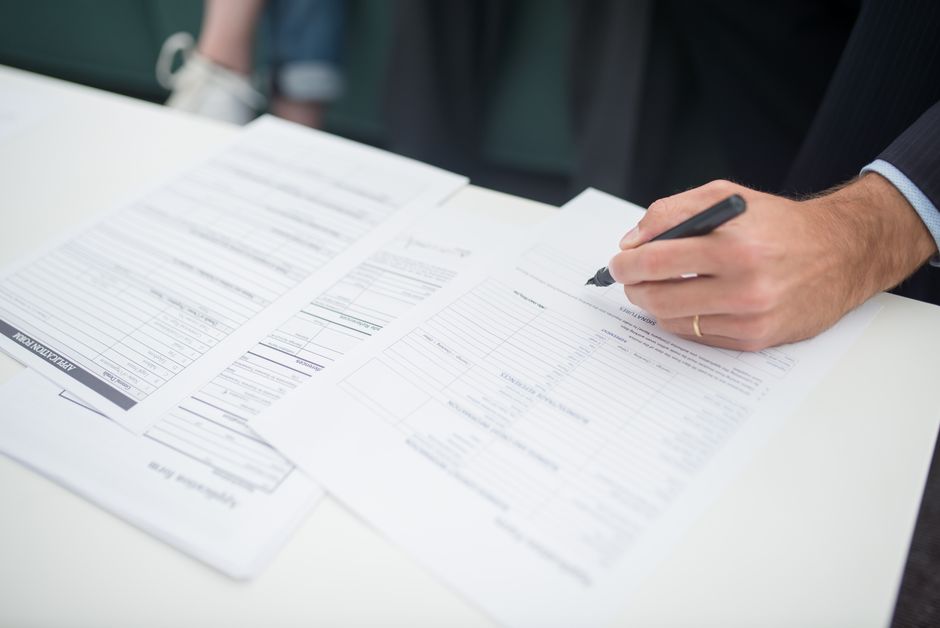


How to Apply for Battery Subsidies in Anhui: Incentive Guide
Table of Contents
- Introduction: Anhui’s Battery Incentive Ecosystem
- National-Level Incentives for Battery Manufacturers
- Anhui Provincial Incentive Programs
- Municipal-Level Incentives (Hefei, Wuhu, Bengbu, Chuzhou)
- Industrial Park-Level Preferential Policies
- Tax Incentives and Reductions
- R&D and Innovation Subsidies
- Equipment Purchase and Fixed Asset Subsidies
- Export and Trade Incentives
- Green Manufacturing and Energy Efficiency Incentives
- Application Process and Timeline
- Frequently Asked Questions
Introduction: Anhui’s Battery Incentive Ecosystem
Anhui Province is widely recognized as one of China’s most generous jurisdictions for battery industry incentives. The combination of national-level “encouraged industry” benefits, provincial new-energy development funds, municipal investment attraction policies, and industrial park-level packages creates a multi-layered incentive structure that can reduce total project costs by 15–40% for eligible battery manufacturing investments.
Understanding how to navigate this incentive landscape is critical for foreign investors. Incentives are not automatically applied — they must be proactively identified, applied for, and claimed through specific processes. Many foreign companies leave significant money on the table simply because they are unaware of available programs or lack the internal capability to prepare competitive applications.
This guide provides a structured overview of all major subsidy and incentive programs available to battery manufacturers in Anhui, organized by level (national, provincial, municipal, park) and by type (tax, R&D, equipment, export, green).
Total Incentive Potential
A typical 1 GWh battery plant in Anhui with a total investment of ¥500 million can potentially access ¥75–150 million in combined incentives across national, provincial, municipal, and park-level programs over the first 3–5 years of operation. Proactive incentive management can materially improve project economics.
National-Level Incentives for Battery Manufacturers
Encouraged Industry Tax Benefits
Battery manufacturing is listed in the “Encouraged” category of the Catalogue of Industries for Foreign Investment, which entitles foreign-invested battery enterprises to:
- Import Duty and VAT Exemption — Exemption from customs duties and import VAT for self-used production equipment and technologies that are not domestically producible. This typically covers advanced coating machines, winding machines, formation equipment, and testing systems imported from abroad. Estimated savings: 5–15% of imported equipment cost.
- Income Tax Preferential Treatment — Encouraged industry FIEs in China’s western regions enjoy a reduced 15% CIT rate (vs. standard 25%). While Anhui is not a western region, battery enterprises may qualify under the “High and New Technology Enterprise” (HNTE) regime (see tax section below).
National High and New Technology Enterprise (HNTE) Program
Battery manufacturers that meet HNTE criteria can access the following benefits:
- Reduced Corporate Income Tax — 15% CIT rate instead of the standard 25%, valid for 3 years (renewable). This is the single most valuable incentive for most battery manufacturers.
- Additional R&D Super-Deduction — 100% of qualified R&D expenses can be deducted from taxable income (in addition to the actual expense), effectively reducing the after-tax cost of R&D by 15–25%.
- Accelerated Depreciation — Fixed assets used for R&D can be depreciated using accelerated methods, providing earlier tax deductions.
HNTE Eligibility Criteria: At least 3% of revenue spent on R&D (for enterprises with annual revenue >¥200 million; higher ratios for smaller enterprises), R&D staff ≥10% of total workforce, core IP ownership (patents, software copyrights, or know-how registration), and revenue from high-tech products/services ≥60% of total revenue. Most mid-size battery manufacturers can qualify with proper documentation.
National SME Development Fund
Small and medium-sized battery manufacturers (up to 2,000 employees or ¥400 million in revenue or ¥400 million in assets) may qualify for low-interest loans and loan interest subsidies through the National SME Development Fund. Interest subsidy rate: up to 50% of the benchmark loan interest rate, capped at ¥1 million per enterprise per year.
National Green Manufacturing System Program
Battery factories that achieve “Green Factory” certification under the national Green Manufacturing program receive a one-time reward of ¥1–5 million and priority access to other national incentive programs. Certification requires meeting 100+ indicators covering energy consumption, water usage, waste reduction, and environmental management. Several Anhui battery plants have achieved this certification.
Anhui Provincial Incentive Programs
Anhui Province has one of the most comprehensive provincial-level incentive frameworks for the battery industry:
Anhui Province New Energy Storage Industry Development Special Fund
This dedicated fund (established 2022, replenished annually) provides targeted support for battery enterprises:
| Subsidy Type | Amount | Eligibility |
|---|---|---|
| New project equipment subsidy | 10–20% of equipment cost, up to ¥20M | New battery production projects with total investment ≥¥200M |
| Technology renovation subsidy | 10–15% of renovation cost, up to ¥10M | Existing battery lines undergoing major upgrade (investment ≥¥50M) |
| Intelligent manufacturing subsidy | 15% of digitalization cost, up to ¥5M | Implementation of digital production management systems (MES, ERP integration) |
| First-set equipment reward | ¥1–3M | Manufacturers of the first domestically made battery production equipment (qualifies as “first set” per MIIT criteria) |
| Industry chain collaboration reward | ¥500K–¥2M per project | Joint projects between battery manufacturers and upstream/downstream partners in Anhui |
Anhui Province Technology Innovation Guide Fund
Managed by the Anhui Provincial Department of Science and Technology, this fund supports R&D projects in key technology areas including advanced battery technologies:
- Key Technology R&D Projects — Funding of ¥2–10 million per project for breakthrough battery technologies (e.g., solid-state electrolytes, high-nickel NMC, silicon anodes). Projects must be conducted in collaboration with an Anhui-based research institution.
- Technology Transfer Subsidy — Up to ¥5 million for licensing or purchasing advanced battery technologies from domestic or foreign sources (see also the Technology Licensing Guide AH-IND-BATTERY-GUID-004 for details).
- Innovation Platform Subsidy — Up to ¥10 million for establishing a provincial-level battery engineering research center or innovation center within the enterprise.
Anhui Province Talent Attraction and Retention Programs
(Covered in detail in the Hiring Guide AH-IND-BATTERY-GUID-006, but summarized here for completeness):
- “Wan Jiang Talent” individual subsidies: ¥50,000–¥200,000 per year for 3 years for approved high-level technical talent
- Corporate social insurance rebate for new FIE hires: 50% rebate for first 2 years
- Training subsidy: ¥500–¥2,000 per employee for approved training programs
Anhui Province Fixed Asset Investment Reward
Battery manufacturing projects with total fixed asset investment exceeding ¥100 million can receive a one-time reward of 3–5% of the fixed asset investment amount, capped at ¥30 million. This is one of the most significant capital subsidies available. The reward is paid in installments: 50% after completion of civil construction, 30% after equipment installation, and 20% after commencement of commercial production.
Municipal-Level Incentives
Each major city in Anhui has its own investment incentive package. Below are the key programs for the most active battery cities:
Hefei City — New Energy Industry Investment Incentives
As Anhui’s capital and primary battery manufacturing hub, Hefei offers one of the most competitive municipal incentive packages:
- Land Price Discount — Industrial land for battery projects can be provided at 50–70% of the benchmark land price, subject to minimum investment density requirements (typically ¥4,000–¥6,000/m² of floor area).
- Construction Cost Subsidy — 5–10% subsidy on factory construction costs, up to ¥10 million, for projects completing construction within 18 months of land acquisition.
- Floor Area Reward — For projects that exceed the minimum floor area ratio (FAR) requirement, an additional subsidy of ¥100–¥200/m² of above-standard floor space is provided, incentivizing efficient land use.
- Lease Subsidy — For companies leasing pre-built factory space: rent subsidy of 30–50% for the first 3 years, capped at ¥5 million per year.
- Local Economic Contribution Reward — 3-year partial rebate of the local retained portion of VAT and CIT for projects that exceed their committed annual tax contribution. This is subject to negotiation and varies by project scale.
- Talent Housing Program — Subsidized apartment units for employees at designated locations, allocated based on company employment numbers. Monthly rent: ¥300–¥800 per unit (vs. market rate of ¥1,500–¥3,000).
Wuhu City — New Energy Vehicle Base Incentives
Wuhu, home to Chery and BYD manufacturing plants, offers incentives focused on power batteries for the EV supply chain:
- Supply Chain Integration Bonus — ¥1–3 million for battery companies that become certified suppliers to anchor OEMs in Wuhu’s EV base (Chery, BYD).
- Logistics Subsidy — 20–30% subsidy on inland logistics costs for battery products shipped from Wuhu to Shanghai Port for export, capped at ¥2 million/year for 3 years.
- Bonded Zone Benefits — Wuhu Comprehensive Bonded Zone offers deferral of customs duties and VAT on imported materials used for export production (processing trade model).
Bengbu City — Advanced Battery Materials Incentives
Bengbu’s programs are focused on battery materials manufacturing:
- Materials Innovation Reward — ¥1–5 million for developing new battery materials (cathode, anode, electrolyte formulations) that are commercialized and achieve ¥50 million+ in annual sales within 3 years.
- Utility Subsidy — Reduced electricity rates for battery materials manufacturers (¥0.05–¥0.10/kWh discount from standard industrial rate) for the first 3 years of operation. For a 1 GWh equivalent materials plant, this can save ¥2–5 million annually.
- Water Treatment Subsidy — 50% subsidy on the cost of industrial wastewater treatment for the first 2 years, recognizing the high water usage of battery materials production.
Chuzhou City — Smart Energy Zone Incentives
Chuzhou’s Smart Energy Industrial Zone specializes in energy storage systems and battery recycling:
- Energy Storage Demonstration Project Subsidy — ¥200–¥500/kWh for energy storage battery projects that serve as demonstration cases for grid integration, capped at ¥10 million per project.
- Recycling Infrastructure Subsidy — 30–50% subsidy on investment in battery recycling and second-life processing facilities, capped at ¥15 million.
- Carbon Credit Program — Chuzhou operates a municipal carbon credit trading pilot. Battery enterprises that reduce their carbon intensity below the municipal baseline can sell verified carbon credits at ¥80–¥150/tonne CO₂e through the municipal platform.
Industrial Park-Level Preferential Policies
At the individual industrial park level, additional negotiated incentives are available:
- Rent-Free Periods — Many parks offer 1–3 years of rent-free occupancy for standard factory shells, followed by reduced rent for an additional 2–3 years. Typical standard factory rent: ¥15–¥35/m²/month.
- Shared Infrastructure Access — Parks provide shared utilities including high-voltage power substations, steam supply, compressed air, nitrogen supply, wastewater treatment plants, and hazardous waste storage facilities, often at subsidized rates for park tenants.
- “One Enterprise, One Policy” Packages — For anchor projects (typically ¥500 million+ investment), park management can develop bespoke incentive packages that may include additional land discounts, customized utility pricing, dedicated power supply lines, and priority access to government services.
- Procurement Preference — Some parks give preference to local enterprises in government procurement of energy storage systems and battery products, providing a captive market channel for park-based battery manufacturers.
Negotiation Tip
When negotiating park entry terms, ask specifically about “clawback” provisions. Some parks offer very attractive upfront incentives but include clawback clauses that require repayment if investment or employment targets are not met within 3–5 years. Ensure your business plan realistically supports the commitments you make. Experienced park management is willing to negotiate both the incentive amount and the clawback timeframes.
Tax Incentives and Reductions
Beyond the HNTE tax rate reduction discussed above, several additional tax incentives are available:
Corporate Income Tax (CIT) Incentives
- HNTE 15% Rate — As described above, this is the standard route for reduced CIT. Application is through the provincial Department of Science and Technology, with re-certification every 3 years.
- Western Development Tax Policy — While Anhui is not a western province, battery enterprises that establish operations in designated “less developed areas” within Anhui (certain counties in western Anhui, including parts of Lu’an and Anqing) may qualify for the 15% CIT rate applicable to encouraged industries in western regions. This is a less commonly known provision worth exploring for projects in these areas.
- Technology Transfer Income Tax Exemption — Technology transfer income (including royalty income from licensed patents) up to ¥5 million per year is exempt from CIT, and income between ¥5 million and ¥50 million is taxed at 50% of the standard rate. This is relevant for battery companies that license out their technology.
- Dividend Withholding Tax Reduction — Dividends distributed by HNTE-certified enterprises to foreign parent companies may qualify for reduced withholding tax rates under applicable Double Taxation Agreements. Standard rate: 10%; can be reduced to 5% under certain DTAs.
Value-Added Tax (VAT) Incentives
- VAT Export Rebate — Lithium-ion batteries exported from China qualify for VAT rebate at the point of export. The standard rebate rate for batteries (HS code 8507.60) is 13% (full rebate of the domestic VAT paid). Processing is through the Anhui Tax Service (local branch of the State Taxation Administration).
- VAT Exemption for Imported Equipment — As noted under encouraged industry benefits, imported self-use equipment qualifies for import VAT exemption.
- VAT Retention Rebate — Battery manufacturers with significant VAT credit balances due to large equipment purchases may qualify for the “excess VAT credit refund” policy, which allows cash refunds of excess VAT credits rather than carrying them forward. This can provide significant working capital relief during the capital-intensive build phase.
Other Tax Benefits
- Stamp Duty Exemption — Exemption from stamp duty on technology import and export contracts registered with the Ministry of Commerce.
- Urban Land Use Tax Reduction — Some parks offer reductions of 30–50% on the urban land use tax for the first 3–5 years for encouraged industry projects.
- Property Tax Exemption — Exemption from property tax for self-owned factory buildings for the first 3 years of operation, available to newly established manufacturing enterprises in certain designated parks.
R&D and Innovation Subsidies
Anhui offers robust R&D support for battery manufacturers:
| Program | Support Amount | Focus Area |
|---|---|---|
| Provincial Key R&D Program (New Energy) | ¥2–10M per project | Next-gen battery chemistries, manufacturing process innovation |
| Enterprise Technology Center Recognition Bonus | ¥500K (provincial level); ¥2M (national level) | R&D center establishment |
| Patent Commercialization Reward | ¥100K–¥1M per patent family | Anhui-based battery patents achieving annual sales ≥¥10M |
| Standards Participation Reward | ¥200K–¥500K per standard | Leading or participating in battery-related national/international standards |
| Academic Collaboration Fund | Up to ¥3M per project | Joint R&D with USTC, HFUT, or Anhui University |
| Innovation Incubation Subsidy | ¥500K–¥2M | Spin-off battery technology startups |
Application Note: R&D subsidy applications are competitive and typically evaluated on: technical novelty (patent landscape analysis), commercialization potential (market size and growth), team qualifications, and alignment with Anhui’s strategic industry priorities. Projects involving collaboration with Anhui-based universities score significantly higher. Most R&D programs accept applications in two cycles per year (April–May and October–November).
Equipment Purchase and Fixed Asset Subsidies
Battery plant capital equipment is one of the largest cost categories, and several subsidy programs specifically target equipment investment:
- Provincial Equipment Purchase Subsidy — 10–20% of new equipment cost, up to ¥20 million (as noted under the New Energy Storage Special Fund above). This applies to both domestic and imported equipment meeting certain criteria.
- “Replacement of Imported Equipment” Reward — For battery companies that successfully replace imported production equipment with domestically manufactured equipment of equivalent performance, a one-time reward of 5–10% of the domestic equipment cost, up to ¥5 million. Anhui strongly promotes domestic equipment substitution in the battery sector.
- Digital Transformation Subsidy — 15–30% subsidy on investments in industrial internet platforms, MES (Manufacturing Execution Systems), digital twin systems, and automated quality control systems. Capped at ¥3–5 million per project.
- Intelligent Production Line Certification Reward — ¥1–3 million for production lines that achieve “Provincial Intelligent Manufacturing Demonstration Line” certification. The certification evaluates automation level, digital integration, and flexibility.
Export and Trade Incentives
Battery manufacturers exporting from Anhui can access specialized trade incentives:
- Export Credit Insurance Subsidy — 50–80% subsidy on export credit insurance premiums (purchased through Sinosure or commercial insurers). This reduces the cost of insuring export receivables, which is often required by banks when providing export financing.
- International Market Development Subsidy — 50–70% subsidy on costs of attending international battery trade fairs, product exhibitions, and market research trips. Maximum annual subsidy: ¥500,000 per enterprise. Eligible events include the Battery Show (North America/Europe/China) and the International Battery Seminar.
- Overseas Patent Filing Subsidy — Up to 50% subsidy on patent filing costs in foreign jurisdictions (PCT applications, national phase entries in target markets). Capped at ¥500,000 per patent per jurisdiction. Batteries are a priority area for overseas patent support.
- Cross-Border E-Commerce Subsidy — For battery companies selling through cross-border e-commerce platforms (Alibaba.com, Made-in-China.com, Global Sources): 50% subsidy on platform membership fees for the first year, up to ¥200,000.
- Bonded Warehouse and Customs Clearance Benefits — Battery manufacturers operating within Anhui’s comprehensive bonded zones (Hefei, Wuhu) can defer customs duty and VAT payments on imported raw materials until the final products are sold domestically or exported. This significantly improves working capital efficiency.
Green Manufacturing and Energy Efficiency Incentives
Given the energy-intensive nature of battery production, these green incentives are particularly relevant:
- Energy-Saving Technology Retrofit Subsidy — 20–30% of the cost of energy-saving retrofit projects, capped at ¥3 million per project. Eligible projects include NMP recovery system upgrades, HVAC optimization, waste heat recovery, and high-efficiency motor replacements.
- Green Electricity Procurement Subsidy — Anhui’s green electricity trading market allows battery manufacturers to purchase renewable energy certificates (RECs) at a subsidized rate. The provincial government provides a ¥0.02–¥0.05/kWh subsidy on green electricity purchases, reducing the premium for renewable energy to near parity with grid electricity.
- Carbon Footprint Certification Subsidy — 50% subsidy on the cost of obtaining product carbon footprint certification (ISO 14067, PAS 2050, or China’s national carbon footprint standard). With battery customers increasingly demanding carbon footprint data, this certification is becoming a competitive requirement.
- Zero-Liquid-Discharge (ZLD) System Subsidy — 30–40% subsidy on investment in ZLD wastewater treatment systems for battery plants, capped at ¥10 million. ZLD systems are increasingly required by Anhui’s environmental authorities for new battery facilities.
- Circular Economy Reward — ¥2–5 million for battery manufacturers that establish closed-loop material recycling processes within their facility or in partnership with Anhui-based recyclers, achieving ≥90% material recovery rate.
Application Process and Timeline
Applying for battery subsidies in Anhui requires a structured approach. Below is a recommended timeline and process flow:
| Phase | Activities | Timeline |
|---|---|---|
| Phase 1: Inventory & Eligibility | Identify all applicable incentives; assess eligibility criteria; gather required documentation (business license, investment plan, environmental permits, patent certificates); prepare project feasibility report | Month 1–2 (before or during company registration) |
| Phase 2: Registration & Filing | Register with Anhui Investment Promotion Bureau; file for HNTE pre-certification (if applicable); register projects with relevant municipal/provincial departments; submit land use and construction permit applications | Month 2–4 |
| Phase 3: Application Submission | Submit subsidy applications per each program’s schedule; most provincial programs have Q1 (Jan–Mar) or Q2 (Apr–Jun) intake windows; municipal programs may accept rolling applications; hire a local consulting firm if internal capacity is limited | Month 4–6 |
| Phase 4: Review & Approval | Regulatory review (1–3 months per program); possible site inspections for equipment/R&D subsidies; respond to queries and provide supplementary documents; track application status through online portals | Month 5–9 |
| Phase 5: Disbursement | Approval notification; sign subsidy agreement (for major subsidies); provide bank account details for disbursement; submit periodic progress reports (for multi-year incentives); prepare for post-subsidy audit | Month 7–12+ |
⚠ Application Warning
The single most common reason for subsidy rejection is incomplete or inconsistent documentation. Many programs require extensive supporting materials including audited financial statements, patent certificates, technology qualification reports, environmental clearance documents, and detailed project budgets. Engage a professional subsidy consulting firm (many operate in Hefei, e.g., Anhui Sunshine Consulting, Hefei Zhongchuang Technology Services) who can prepare comprehensive applications. Their fee (typically 10–20% of the subsidy amount) is usually contingent on successful approval.
Key Departments and Contact Points
- Anhui Provincial Department of Industry and Information Technology (DIIT) — New Energy Storage Special Fund, intelligent manufacturing subsidies. Location: Hefei. Contact through the “New Energy Industry Office” hotline: 0551-62871888.
- Anhui Provincial Department of Science and Technology — R&D subsidies, HNTE certification, innovation platform support. Location: Hefei. Online portal: kjt.ah.gov.cn.
- Anhui Provincial Department of Commerce — Technology import subsidies, export incentives, foreign investment promotion. Location: Hefei. Contact: 0551-63540123.
- Anhui Provincial Investment Promotion Bureau — First point of contact for new investors, comprehensive incentive advisory. Location: Hefei. Website: tz.ah.gov.cn.
- Hefei Municipal Investment Promotion Bureau — City-level incentives, park introductions. Location: Hefei Government Affairs Center, Floor 3.
Frequently Asked Questions
How much subsidy can a typical foreign battery company realistically expect?
For a ¥500 million investment (1 GWh plant), a realistic target is ¥50–100 million in combined subsidies and tax benefits over 5 years, consisting of ¥15–30 million in equipment subsidies, ¥10–20 million in fixed asset investment rewards, ¥15–30 million in CIT savings from HNTE status, and ¥5–10 million in R&D talent and other subsidies.
Are subsidies taxable income in China?
Most government subsidies in China are considered taxable income unless specifically exempted. However, subsidies used for qualifying capital expenditures (equipment purchases, R&D) can often be treated as deferred income and recognized over the useful life of the asset, reducing the current-period tax impact. Consult a Chinese tax advisor on the specific tax treatment of each subsidy received.
Can I apply for subsidies before the factory is built?
Yes, and this is strongly recommended. Many capital subsidies (equipment purchase subsidies, fixed asset investment rewards) require pre-registration before the investment is made. Applications submitted after the investment are often rejected. We recommend submitting initial subsidy applications during or immediately after the company registration phase.
What happens if I don’t meet the commitments made in the subsidy application?
Most subsidy agreements contain clawback provisions. If you fail to meet committed investment amounts, employment targets, or production timelines, the government can demand partial or full repayment of subsidies received, sometimes with interest. It is better to set conservative, achievable commitments and over-deliver than to promise aggressive targets and risk clawback. Many parks will accept revised lower commitments if circumstances change, provided you communicate proactively.
Do Chinese and foreign-invested companies receive equal treatment in subsidies?
Under the Foreign Investment Law (2020), FIEs are entitled to equal treatment in government support programs. In practice, some programs that involve national security or core technology protection may require additional review for foreign-invested applicants. However, for mainstream battery manufacturing, foreign and domestic companies generally receive equal consideration. Some municipal programs even offer additional incentives specifically for foreign-invested projects because they count toward local officials’ “foreign capital utilization” performance metrics.
Disclaimer: This guide is for informational purposes only and does not constitute professional tax or legal advice. Subsidy programs, eligibility criteria, and amounts are subject to change, and many programs have annual funding caps. Foreign investors should engage qualified local advisors with specific experience in Anhui’s battery industry incentive programs.