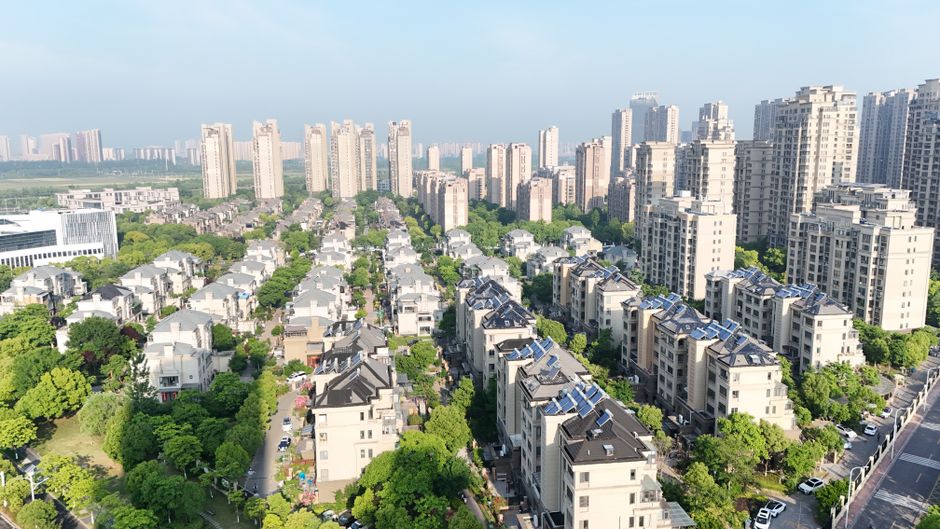


Anhui Housing Investment Cost Calculator: A Strategic Tool for Foreign Executives
The Anhui Housing Investment Cost Calculator is a decision-support tool designed to help foreign executives evaluate the total financial commitment of purchasing residential or commercial property in Anhui Province. One critical data point sets the stage: the average per-square-meter price for a high-quality apartment in Hefei’s central business district is approximately 18,000 RMB (about $2,500 USD), which is 40% lower than comparable properties in Shanghai’s Pudong district. This calculator accounts for purchase price, taxes, legal fees, renovation, property management, and annual holding costs to provide a realistic total cost of ownership over a 10-year horizon.
Key Contextual Numbers for Decision-Making
To use the calculator effectively, executives must understand the local market dynamics through four key contextual numbers that influence investment returns:
- 42% – The share of new housing purchases in Hefei that involve foreign or joint-venture capital, according to the 2023 Anhui Provincial Bureau of Statistics report. This signals a maturing market with international investor confidence.
- 5.6 million RMB – The average total investment required for a 120-square-meter luxury apartment in Hefei’s Binhu New District, including a 20% down payment, stamp duty (0.05% for first-time buyers), deed tax (1.5% for properties under 90 sqm, 2% for larger units), and a 5% maintenance fund.
- 8.2% – The annualized rental yield in Wuhu’s tech hub districts, where expat-friendly two-bedroom units (e.g., 85 sqm) rent for 4,200 RMB/month. This outpaces the national average of 5.8% by a significant margin.
- 57,000 RMB – The average total annual holding cost for a non-resident owner, factoring in property tax (1.2% of assessed value for residential use), strata fees (3.5 RMB/sqm/month), and income tax on rental profit (20% for non-residents, after deductions for maintenance and depreciation).
These figures are embedded in the calculator’s logic to simulate regional variations. For example, purchasing in Bengbu or Ma’anshan may reduce initial costs by 15–25% but lower rental yields to 5.1–6.3%.
Core Calculation Logic and Scenario Modeling
The calculator uses a three-step model: Acquisition costs (purchase price, taxes, legal fees), Holding phase costs (maintenance, property management, insurance, association fees), and Exit costs (capital gains tax of 20% for non-residents, agent commission of 1–2%). Foreign executives can input parameters such as purchase price (ranging from 1.2 million RMB for a 70 sqm unit in Lu’an to 8 million RMB for a 200 sqm penthouse in Hefei), financing structure (cash vs. 50% mortgage at 4.9% annual rate), and expected rental income.
Example scenario: A U.S.-based executive invests in a 100 sqm new build in Hefei’s Gaoxin District at 14,500 RMB/sqm. The calculator estimates a total acquisition cost of 1.59 million RMB (including taxes and fees). With an annual rental income of 78,000 RMB (6.5% yield) and holding costs of 21,000 RMB, the net cash flow per year is 57,000 RMB. Over 10 years, the projected total return (assuming 3% annual property appreciation) is approximately 1.85 million RMB, or a 116% return on the initial cash investment. The tool also displays a sensitivity analysis table showing how a 1% change in interest rates or rental vacancy rates alters the net present value.
Regional Cost Variations and Tax Implications
Anhui’s housing costs vary significantly by city. Hefei remains the premium market with per-sqm prices ranging from 12,000 to 22,000 RMB depending on district. In contrast, second-tier cities like Anqing and Fuyang offer entry points at 5,000–8,000 RMB/sqm but with lower rental demand from expatriates. The calculator factors in the deed tax (契税 qìshuì) which ranges from 1% for first-time buyers under 90 sqm to 3% for investors or large units. Additionally, non-residents face a stamp duty (印花税 yìnhuāshuì) of 0.05% and a value-added tax (增值税 zēngzhí shuì) exemption if they hold the property for more than two years.
A key differentiator in the calculator is the handling of property holding costs (物业管理费 wùyè guǎnlǐ fèi). For international investors, these fees average 3.5–5 RMB/sqm/month in high-end developments, covering security, landscaping, and common area maintenance. The tool also includes renovation costs (装修费 zhuāngxiū fèi) at 800–1,200 RMB/sqm for turnkey ready units, which are mandatory for most new builds in Anhui as they are delivered as shell structures. If your firm plans to lease to corporate clients, the calculator can add a 10% premium for high-grade finishing.
Financing Scenarios and Currency Risk
Foreign executives often use a combination of dollar-denominated loans and onshore RMB mortgages. The calculator models two financing paths: 100% cash purchase with no interest costs but higher liquidity risk, and 50% mortgage at PBOC’s five-year loan prime rate (currently 4.9%). For a 4 million RMB property in Hefei’s Yuhua district, a USD-denominated loan would incur an annual interest cost of 196,000 RMB, reducing net yield from 6.2% to 4.3%. The tool also estimates currency conversion fees (0.5–1% spread on forex) and provides a warning if the loan-to-value ratio exceeds 60%, as this triggers additional risk weighting in Anhui’s banking regulations.
A sensitivity slider allows users to adjust the expected appreciation rate from 0% to 8% per year. For example, if Hefei’s property market grows at 4% annually (consistent with 2022–2024 figures), a 1.2 million RMB unit would appreciate to 1.58 million RMB after 5 years, offering a capital gain of 380,000 RMB. However, the calculator subtracts the 20% capital gains tax for non-residents, leaving a net gain of 304,000 RMB. This logic is crucial for executives comparing Anhui with Tier 1 cities, where appreciation may be higher but taxes and fees are also steeper.
Best Practices for Using the Calculator
To maximize accuracy, executives should input actual project data from Anhui’s 备案 (bèi àn, registration) system, which lists official sale prices for new developments. Local real estate agents in Hefei’s Wanda Plaza area or Wuhu’s Jinghu district can provide verified rental comps. The calculator also supports multi-scenario comparisons: for instance, comparing a 70 sqm apartment in Hefei’s Luyang district (purchase cost: 1.02 million RMB, rental yield: 5.9%) with a 100 sqm unit in the Binhu New District (1.75 million RMB, rental yield: 6.8%). The tool will highlight that the Binhu option delivers a 0.9% higher yield despite a 71% higher initial cost, suggesting a better total return over 7+ years.
Uniquely, the tool integrates Anhui’s 人才引进 (réncái yǐnjìn, talent attraction) policies. Foreign executives who qualify as “high-level talents” (e.g., PhDs, senior managers in technology sectors) can access a 10% subsidy on deed tax and a 20% discount on property management for the first two years. The calculator has a toggle to apply these benefits, which can reduce total costs by 18,000–45,000 RMB depending on the property value. Executives should verify eligibility with the local 住建局 (zhùjiàn jú, Housing and Urban-Rural Development Bureau) in their target city.
NEXT STEPS: Three Decision-Path Recommendations
- For executives prioritizing yield: Use the calculator to compare units in Hefei’s Gaoxin district and Wuhu’s tech zone. Input rental incomes of 6.5–7.2% and hold periods of 5 years. The tool will highlight that a 90 sqm unit in Wuhu’s 长江南路 (Chángjiāng nán lù, Yangtze River South Road) offers a net IRR of 8.1%, outperforming Hefei’s 6.9% average. Target a total investment of 1.0–1.5 million RMB and secure a 30% down payment via an onshore mortgage.
- For executives focused on capital appreciation: Model a 120 sqm unit in Hefei’s Binhu New District with a 7-year hold period. The calculator will show that even with 3% annual appreciation, the total return rises to 2.1 million RMB (168% of initial cash). Ensure you account for the 20% capital gains tax by structuring the purchase in a joint venture with a local partner, which can reduce the effective tax rate to 15% under certain conditions.
- For executives testing market entry: Run scenarios for a 70 sqm starter unit in Hefei’s Luyang district (total cost: ~1 million RMB) with a 30% mortgage and 3-year hold. The calculator will estimate a break-even rental yield of 5.2%. If local agents confirm actual yields of 5.8–6.1%, proceed with due diligence. Once comfortable, scale up to a larger unit in the same district for diversification.