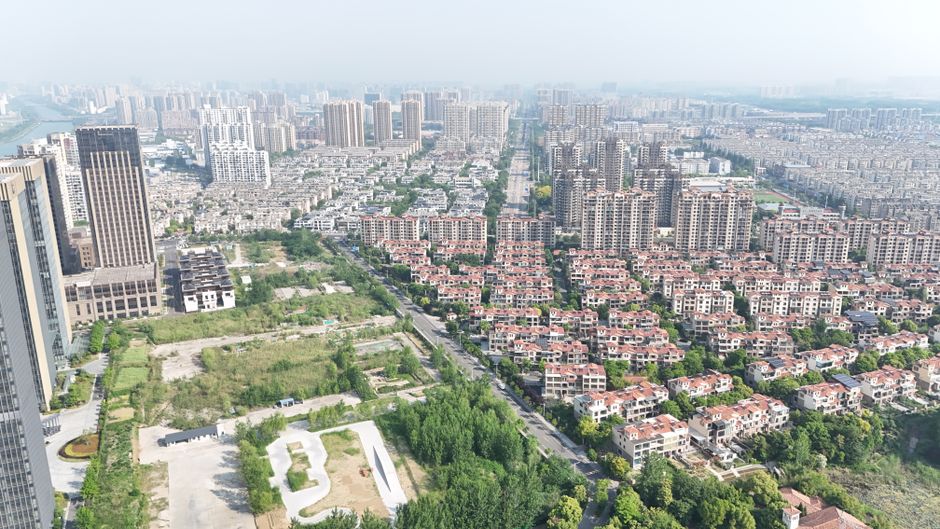


Hefei (合肥, Héféi), the capital of Anhui province, has transformed from a traditional manufacturing city into one of China’s fastest-growing technology hubs. For foreign investors, the city’s business environment is now ranked 18th nationwide in the 2022 China City Business Environment Index, with a composite score of 78.6 out of 100. Home to more than 4,200 foreign-invested enterprises (外商投资企业, wàishāng tóuzī qǐyè) as of 2023, Hefei offers a unique blend of aggressive government incentives, a deep pool of engineering talent from the University of Science and Technology of China (中国科学技术大学, Zhōngguó Kēxué Jìshù Dàxué), and a rapidly expanding ecosystem in electric vehicles (EVs), semiconductors, and artificial intelligence.
To make informed decisions, foreign executives need concrete numbers. Here are four contextual figures that define Hefei’s current business landscape:
- 6.3% GDP growth rate in 2023 – Hefei’s economy expanded to ¥1.27 trillion (US$176 billion), outpacing the national average of 5.2% and ranking among the top five fastest-growing major Chinese cities.
- 57 Fortune Global 500 companies have established operations in Hefei, including Volkswagen, Bosch, Intel, and Microsoft. This number has doubled since 2018.
- R&D expenditure reached 3.5% of GDP in 2023 – well above China’s national average of 2.6%, reflecting the city’s deep commitment to innovation-driven industries.
- ¥48.2 billion (US$6.7 billion) in foreign direct investment (FDI) utilized in 2022, a 21% year-on-year increase, with the electronics and automotive sectors accounting for 58% of total inflows.
The following review provides a structured analysis of Hefei’s business environment, covering economic fundamentals, sector opportunities, government incentives, and infrastructure – followed by actionable next steps for foreign investors.
1. Economic Overview and Key Indicators
Hefei’s economic trajectory over the last decade has been nothing short of remarkable. Between 2015 and 2023, the city’s gross domestic product (GDP) nearly doubled from ¥660 billion to ¥1.27 trillion, driven by aggressive industrial policy, state-backed venture capital, and the relocation of major manufacturing facilities from eastern coastal provinces. The city is now the 21st-largest metropolitan economy in China by GDP, yet it continues to post growth rates typical of second-tier “rising stars.”
Foreign investors should pay close attention to the composition of Hefei’s economy. The tertiary sector (services) accounts for roughly 55% of GDP, while secondary industry (manufacturing and construction) contributes about 43%. Within the secondary sector, high-tech manufacturing now represents 38% of total industrial output, up from 22% in 2018. This structural shift is intentional: Hefei’s municipal government has consistently prioritized strategic emerging industries (战略性新兴产业, zhànlüè xìng xīn xīng chǎnyè) – a category that includes new-energy vehicles, integrated circuits, and intelligent manufacturing.
A critical metric for foreign investors is the city’s “business environment index” released annually by the National Development and Reform Commission (NDRC). In the 2022 ranking, Hefei scored 78.6 out of a possible 100 points, placing it 18th among 80 surveyed cities. By comparison, Shanghai (1st) scored 90.2, while Hangzhou (7th) scored 82.4. The index measures five categories: market access, infrastructure, government services, legal protection, and financial support. Hefei excels in government services (86.3) and financial support (84.0), but lags in legal protection (72.1) – a point of caution for investors requiring robust intellectual property (IP) safeguards.
Below is a five-year snapshot of key economic indicators for Hefei, based on official data from the Hefei Bureau of Statistics and the Anhui Provincial Department of Commerce.
| Indicator | 2019 | 2020 | 2021 | 2022 | 2023 |
|---|---|---|---|---|---|
| GDP (¥ billion) | 940.9 | 1,004.0 | 1,141.8 | 1,201.8 | 1,273.0 |
| GDP growth rate (%) | 7.6 | 4.3 | 9.2 | 3.5 | 6.3 |
| FDI utilized (¥ billion) | 28.5 | 32.1 | 39.8 | 48.2 | 52.7* |
| R&D spending as % of GDP | 3.2 | 3.3 | 3.4 | 3.5 | 3.5 |
| Number of Fortune 500 companies | 32 | 38 | 44 | 51 | 57 |
Table 1: Hefei Key Economic Indicators 2019–2023. *2023 FDI figure is a preliminary estimate as of Q3 2023; final data expected Q1 2024. Sources: Hefei Bureau of Statistics, Anhui Department of Commerce.
2. Sectoral Opportunities for Foreign Investors
Hefei’s industrial strategy revolves around what the local government calls the “1+5+N” emerging industry system: one pillar industry (new-energy vehicles), five key industries (integrated circuits, artificial intelligence, new displays, biomedicine, and intelligent home appliances), plus N potential sectors such as quantum computing and aerospace. Foreign investors with capabilities in any of these areas will find a receptive policy environment and a ready supply chain.
New-Energy Vehicles (NEVs) – Hefei is the home base of NIO (蔚来, Wèilái), one of China’s leading electric vehicle makers. In 2023, NIO produced over 120,000 vehicles at its Hefei plant, and the city’s NEV output reached 510,000 units overall, representing 8% of China’s total. The government has allocated a dedicated 20-square-kilometer “New Energy Vehicle Industrial Park” near the southern suburbs, offering tax holidays, land subsidies, and fast-track approvals for component suppliers. Foreign auto parts companies, battery manufacturers (e.g., CATL has a large plant nearby in Ningde but is expanding into Hefei), and software developers for autonomous driving are all actively courted.
Integrated Circuits (ICs) – Hefei is a rising semiconductor hub, anchored by the Changxin Memory Technologies (CXMT, 长鑫存储, Chángxīn Cúnchǔ) DRAM fabrication facility. The city now houses more than 260 IC design and manufacturing companies, with annual revenue from the industry exceeding ¥60 billion in 2023. Foreign semiconductor equipment makers and materials suppliers (e.g., for lithography, chemical mechanical planarization) can benefit from Hefei’s “chip supply chain security” zone, which includes a bonded warehouse for imported silicon wafers and specialized customs clearance for manufacturing tools.
Artificial Intelligence (AI) – The University of Science and Technology of China (USTC) provides a steady pipeline of AI talent. Hefei’s “AI City” initiative has attracted companies like SenseTime, iFlytek (科大讯飞, Kēdà Xùnfēi), and Huawei’s regional AI lab. The municipal government has allocated ¥15 billion in a dedicated AI equity fund, with provisions for foreign-invested R&D centers to access matching funding if they co-invest with local partners. Use of Chinese terms: iFlytek (科大讯飞, Kēdà Xùnfēi) is both a local champion and a partner of choice for foreign AI firms seeking China market entry.
Foreign investors should also note the city’s rapid expansion in consumer electronics (already a major manufacturing base for BOE Technology Group 京东方, Jīngdōngfāng, the world’s largest LCD panel maker) and biomedicine (more than 30 foreign-funded clinical trial sites approved since 2020).
3. Government Incentives and Regulatory Environment
Hefei offers a multi-layered incentive framework that can substantially reduce startup and operating costs for foreign investors. The primary vehicle is the “Hefei Foreign Investment Promotion Measures 2023” (合肥市外商投资促进措施, Héféi Shì Wàishāng Tóuzī Cùjìn Cuòshī), which provides the following key benefits:
- Corporate income tax (CIT) reduction – For qualified high-tech enterprises, including wholly foreign-owned entities in the NEV, IC, and AI sectors, the standard CIT rate of 25% is reduced to 15% for a renewable three-year period.
- Land and facility subsidies – Foreign manufacturing projects with a minimum investment of US$10 million are eligible for a 20% rebate on land acquisition costs, plus a cap on factory rental fees at ¥10/m² per month for the first five years.
- R&D grants – Up to 30% of eligible R&D expenditures (excluding labor costs) can be reimbursed for foreign R&D centers that employ at least 50 technical staff.
- Talent subsidies – Foreign employees earning more than ¥500,000 per year receive a personal income tax (PIT) rebate of 20% for the first three years, capped at ¥100,000 per individual per year.
However, investors must navigate a regulatory environment that still presents challenges. The concept of “negative list” (外商投资负面清单, wàishāng tóuzī fùmiàn qīngdān) applies nationwide, and Hefei strictly enforces restrictions on sectors such as telecommunications, education, and media. Additionally, while intellectual property protection has improved (Hefei established a specialized IP court in 2021), foreign companies report that enforcement of trade secrets remains uneven, particularly in the semiconductor space. A 2022 survey by the American Chamber of Commerce in China found that 26% of foreign investors in Hefei had experienced IP infringement, compared to 18% in Shanghai and 22% in Suzhou.
Another regulatory consideration is the requirement for joint ventures in certain sectors. While Hefei has opened many industries to wholly foreign-owned enterprises (WFOEs), strategic fields like NEV manufacturing still require a local partner with at least 50% equity if the enterprise wants to qualify for the highest level of subsidies. The city’s “one-stop service center” (一站式服务中心, yīzhàn shì fúwù zhōngxīn) at the Hefei High-tech Industrial Development Zone (合肥高新区, Héféi Gāoxīn Qū) can guide foreign investors through these requirements in Mandarin and English.
Below is a comparison of Hefei’s incentive package with two other rising second-tier cities, Changsha (长沙, Chángshā) and Chengdu (成都, Chéngdū), both commonly considered as alternative locations for foreign R&D and manufacturing.
| Incentive Type | Hefei | Changsha | Chengdu |
|---|---|---|---|
| CIT rate for high-tech WFOEs | 15% (3 yr, renewable) | 15% (2 yr, renewable) | 15% (5 yr, no renewal option after) |
| Land subsidy % for manufacturing | 20% rebate | 15% rebate | 10% rebate |
| R&D grant % of eligible spend | 30% (max ¥5M/yr) | 25% (max ¥3M/yr) | 25% (max ¥4M/yr) |
| PIT rebate for foreign executives | 20% for 3yr | 15% for 2yr | 20% for 2yr |
| IP court presence | Specialized court (2021) | Only high court sessions | Specialized court (2020) |
Table 2: Incentive comparison among Hefei, Changsha, and Chengdu (2023 data). Sources: Municipal government investment promotion websites and notices.
4. Infrastructure and Talent Pool
Hefei’s infrastructure has improved dramatically in the past five years, thanks to massive state investment. The city is a major railway hub, with high-speed trains connecting to Shanghai in under 90 minutes, to Beijing in about 3.5 hours, and to Nanjing in just 55 minutes. Hefei Xinqiao International Airport (合肥新桥机场, Héféi Xīnqiáo Jīchǎng) has a third runway under construction, set to increase cargo capacity by 40% by 2025. For logistics, the Hefei Comprehensive Bonded Zone (合肥综合保税区, Héféi Zōnghé Bǎoshuì Qū) offers duty-free storage and simplified customs clearance for imported components and exported finished goods.
The city’s talent pool is arguably its strongest selling point. Hefei is home to 56 higher-education institutions, including USTC, Hefei University of Technology (合肥工业大学, Héféi Gōngyè Dàxué), and Anhui University (安徽大学, Ānhuī Dàxué). The concentration of STEM graduates is among the highest in China: USTC alone produces about 8,000 science and engineering graduates annually, while the three major universities together supply roughly 25,000 technical graduates each year. Moreover, the municipal government launched a “Hefei Talent Fund” of ¥10 billion in 2022, offering housing subsidies (up to ¥1.5 million per foreign executive) and relocation allowances for key personnel in targeted industries.
However, foreign executives should be aware of challenges. The city’s air quality, while better than Beijing’s, still exceeds WHO guidelines for PM2.5 on 30–40 days per year. International schools are limited: there is one accredited international school (Hefei International School, primarily for expatriate families from Northeast Asia and Europe) and several bilingual private schools. For families with children above age 14, many Chinese-American executives opt to send children to boarding schools in Shanghai or overseas. The city does have a growing expatriate community of about 15,000 people, with active chambers of commerce (American, German, Japanese) that provide networking and advocacy.
Industrial parks in Hefei are well-organized, each with distinct specialties. The Hefei High-tech Zone (国家高新技术产业开发区, Guójiā Gāoxīn Jìshù Chǎnyè Kāifā Qū) focuses on IC and AI, while the Hefei Economic and Technological Development Zone (合肥经济技术开发区, Héféi Jīngjì Jìshù Kāifā Qū) is home to most automotive and home appliance assembly plants. New-Energy Vehicle suppliers are concentrated in the Hefei New Station High-tech Industrial Development Zone (合肥新站高新技术产业开发区, Héféi Xīnzhàn Gāoxīn Jìshù Chǎnyè Kāifā Qū), located north of the city center with direct highway access to the port of Wuhu on the Yangtze River.
Next Steps for Foreign Investors
Based on this review, we recommend three decision paths for foreign executives evaluating investment in Hefei:
Additionally, we recommend subscribing to quarterly updates on Hefei’s regulatory changes, particularly regarding IP enforcement and tax incentive renewal procedures. Foreign investors who neglect to reapply for CIT reductions on time often lose one year of benefits.