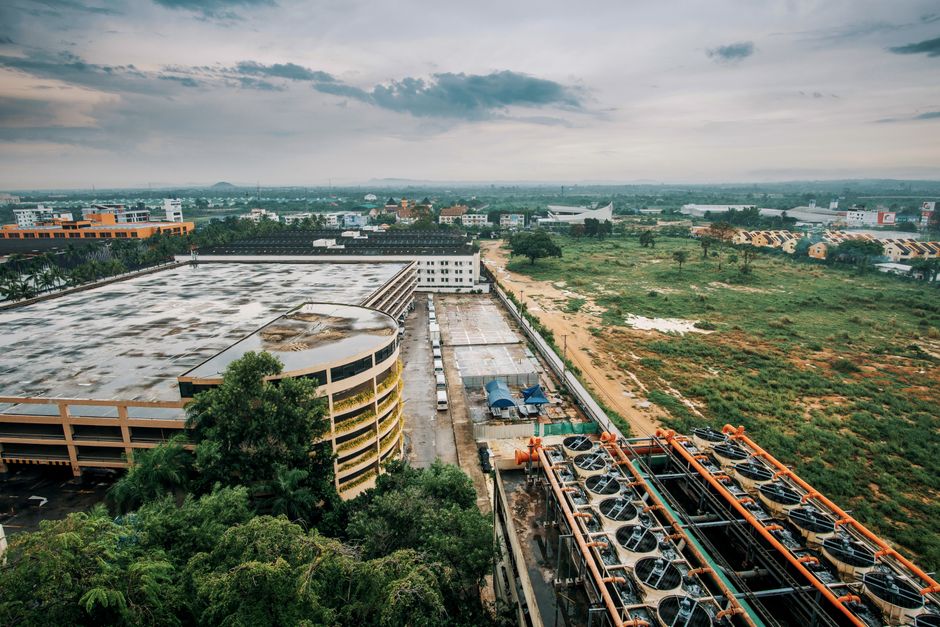


Understanding Hefei’s industrial landscape requires specific numbers. The city’s GDP surpassed 1.27 trillion RMB in 2023, a 6.2% year-on-year growth that outpaces the national average (5.2%). Its industrial park system attracted aggregate fixed-asset investment exceeding 240 billion RMB in 2023—equivalent to roughly 33% of all provincial industrial investment. Crucially, average rental costs in HEKJQ sit at 12–18 RMB per square meter per month, compared to 22–35 RMB in similar zones in Suzhou or Wuxi—a cost advantage of 35–45%. Electricity tariffs for industrial users at 0.68 RMB per kWh are 23% below Shanghai’s 0.89 RMB. Logistics costs to Shanghai port via the Hefei Comprehensive Bonded Zone average 1,800 RMB per TEU, while Ningbo port access costs 2,200 RMB per TEU. The parks collectively house 37 EV-related companies, 12 semiconductor fabs, and 9 biotech R&D centers as of Q1 2025, signaling strong sectoral clustering.
Hefei Economic and Technological Development Zone (HEKJQ) was established in 1993 and spans 85 square kilometers. It ranked 8th nationally in the Ministry of Commerce’s 2023 comprehensive evaluation of 230 national-level ETDZs. The zone anchors HQs for JAC Motors (江淮汽车, jiāng huái qì chē) and Hefei’s burgeoning EV supply chain, including a 7.5 billion RMB battery plant from CATL’s joint venture. HEKJQ’s rail-served industrial park provides direct rail access to the Ningbo-Zhoushan Port, cutting inland transport time from 48 hours to 28 hours for containerized cargo. Infrastructure highlights include dedicated 220kV substations for heavy-industry users, a 20,000 m³/day water treatment plant, and 10Gbps fiber backbone through the China Telecom Hefei node.
Infrastructure Maturity Across Parks
HEGXQ (Hefei High-Tech Zone) leads in R&D infrastructure. It is home to 24 national-level incubators, 9 science parks, and the University of Science and Technology of China’s (中国科学技术大学, Zhōngguó kēxué jìshù dàxué) West Campus accelerator. The zone provides shared laboratory facilities for semiconductor testing at 30% below market rates, with cryogenic probe stations and scanning electron microscopes available on a per-use basis. In 2024, HEGXQ completed a 5G private network covering 12 square kilometers, delivering 5–10ms latency for connected-vehicle and industrial IoT applications—versus 20–30ms in most Chinese industrial zones.
Hefei Export Processing Zone (HEXKQ) in the eastern part of the city offers bonded infrastructure for electronics assembly. It maintains a special customs clearance lane that processes goods within 2.5 hours of arrival—three times faster than the standard 8-hour cycle. The zone’s 120,000-square-meter bonded warehouse includes temperature-controlled sections for pharmaceutical storage at 2–8°C and 15–25°C zones. Power reliability is 99.98% uptime per contractual guarantee, backed by dual-substation redundancy and diesel backup generators for critical tenants.
New Station High-Tech Industrial Development Zone (XZGDZ) emphasizes green infrastructure. It is the first in Anhui to operate a district-heating and cooling system using waste heat from a municipal waste-to-energy plant, reducing tenant HVAC costs by roughly 15–18% according to 2024 internal zone data. Its centralized wastewater treatment facility handles 50,000 tons daily with Class A discharge standards, critical for textile and chemical manufacturers.
Cost Comparison: Operating Expenses Across Zones
| Cost Category | HEKJQ | HEGXQ | Suzhou Industrial Park (Benchmark) |
|---|---|---|---|
| Land lease (RMB/sqm/year) | 180–240 | 210–280 | 350–500 |
| Standard factory rent (RMB/sqm/month) | 12–18 | 15–22 | 22–35 |
| Industrial electricity (RMB/kWh) | 0.68 | 0.66 | 0.74 |
| Industrial water (RMB/ton) | 3.50 | 3.80 | 4.50 |
| Skilled worker wage (RMB/month avg) | 5,500–6,500 | 6,000–7,500 | 7,000–8,500 |
| Property tax (annual, % of assessed value) | 1.2% | 1.2% | 1.5% |
| Corporate income tax (standard / with HI-TECH status) | 25% / 15% | 25% / 15% | 25% / 15% |
Land costs in HEKJQ are the most competitive for heavy industry. A plot in western HEKJQ zone for standard manufacturing runs 180–240 RMB per square meter per year, compared to 350–500 RMB in Suzhou Industrial Park. However, land availability is tightening—HEKJQ now has less than 1.2 square kilometers of unallocated industrial land suitable for buildings larger than 20,000 sqm. The zone’s new “City Revitalization” policy requires tenants to achieve minimum tax payments of 400 RMB per square meter annually by the third year of operation for new leases.
Labor cost differential is narrowing but still significant. A skilled CNC operator in HEKJQ averages 5,500–6,500 RMB monthly versus 7,000–8,500 in the Yangtze River Delta core area—a 20–25% gap. For high-tier engineering talent (systems design, chip layout), the gap narrows to 10–15%. HEGXQ’s proximity to USTC allows companies like iFlytek (科大讯飞, kēdà xùnfēi) to recruit fresh graduates at 8,000 RMB/month, versus 12,000+ in Shenzhen. Social insurance costs in Hefei are roughly 32% of gross salary (employer + employee combined), versus 35–37% in coastal cities with higher payout ceilings.
Access to Markets and Supply Chains
Domestic market access. Hefei sits at the intersection of the Yangtze River Delta integration corridor and the national “Middle of the Country” logistics ring. Trucks from HEKJQ reach Shanghai within 5 hours via G40/G42 expressways, Wuhan in 3 hours, and Nanjing in 2 hours. This places 350 million consumers within a 1,000-kilometer radius—about 25% of China’s population. Rail freight via the China-Europe Railway Express (中欧班列, zhōng ōu bānliè) from Hefei North Station to Hamburg averages 15 days, compared to 22 days via coastal ports, offering faster access to European warehouses. In 2024, the Hefei multimodal terminal processed 180,000 TEUs, a 14% increase year-over-year.
Supply chain concentration for targeted industries. Hefei now ranks second only to Shanghai in national EV battery production capacity, with 78 GWh of installed capacity from CATL & Gotion High-Tech (国轩高科, guóxuān gāokē) plants within the city limits. Semiconductor supply chains cluster around the Hefei Comprehensive Bonded Zone, which processes 40% of domestic memory chip imports from SK Hynix’s plant at the zone’s edge. The zone’s bonded logistics function permits duty-free movement of components between park tenants, reducing material import processing from 3 days to under 4 hours for pre-qualified foreign companies.
International connectivity. Hefei Xinqiao International Airport (合肥新桥国际机场, héféi xīnqiáo guójì jīchǎng) flies cargo routes to Osaka, Incheon, and Bangkok via freighter services, but direct European or North American cargo flights remain limited—connecting via Shanghai or Nanjing adds 1–2 days. For time-sensitive high-value components, the airport’s bonded cargo station can process goods in 8 hours. Port access relies on the Hefei Comprehensive Bonded Zone’s intermodal connection: trucking to Shanghai takes 5 hours, while rail-water intermodal takes 28 hours to Ningbo. Port costs at Shanghai are approximately 500 RMB per TEU higher than direct global port access, adding roughly 1.5% to total logistics costs for a standard manufacturing exporter.
Sector-Specific Park Advantages
For EV and battery manufacturers, the Hefei Linghu New Energy Vehicle Industrial Park (within HEKJQ) is the obvious choice. It offers dedicated high-voltage power lines (110kV) for gigawatt-level charging infrastructure, and proximity to battery-grade lithium carbonate refineries supplying 60,000 tons per year. The park has secured commitments from 14 Tier-1 suppliers, including Bosch and Hyundai Mobis, to co-locate with anchor OEMs.
Life sciences investors should evaluate HEGXQ’s Biopharmaceutical Accelerator. It offers BSL-2+ shared wet labs, hazardous waste disposal at 4 RMB/kg (60% below standalone cost), and accelerated Class II medical device approval through a park-level service window—average review time 28 days versus standard 60 days. The park hosts 9 Class III device firms and 4 CROs. However, cold-chain storage is limited to two operators currently, with throughput capped at 4,000 pallets monthly.
Electronics and semiconductor assembly sits well in New Station High-Tech Zone (XZGDZ), which has pure nitrogen supply pipelines across the core industrial area for 28nm+ fabrication steps. The zone’s “Semiconductor Partner Program” offers foreign firms subsidized EDA software from Synopsys and Cadence, available at 40% of license cost for the first three years. However, the zone has experienced three 2–4 hour power outages in 2024, which potential semiconductor tenants should verify during site walkthroughs.
A caution for advanced manufacturing: Hefei’s industrial parks have strong power reliability at the substation level—99.98% uptime as per HEKJQ’s contract—but grid-level fluctuations during peak summer (July–August) caused 6 outages of 2–5 minutes across the city’s industrial zones in 2024. Critical continuous-process manufacturers should install battery-backed UPS systems at a one-time cost of 200–300 RMB per kVA of load, which is standard in site-prep budgets.
Decision Matrix: Choosing Between Parks
- For heavy manufacturing or EV supply chain: Target HEKJQ. Its land costs are the lowest among top-tier zones. Confirm your minimum tax commitment at 400 RMB/m²/year and verify power reliability via on-site meeting with Hefei Power Supply Company.
- For R&D-intensive or life sciences projects: Select HEGXQ. The talent pipeline from USTC and shared lab infrastructure reduces your CapEx by 15–20%. Initiate cold-chain capacity discussions early (6+ months) as slots are limited.
- For bonded logistics or electronics assembly: Prefer HEXKQ or XZGDZ. The 2.5-hour customs clearance at HEXKQ and subsidized EDA tools at XZGDZ provide operational efficiency gains for time-critical supply chains.
Site Selection Next Steps
After reading this review, foreign executives should plan a site visit around these three decision paths: