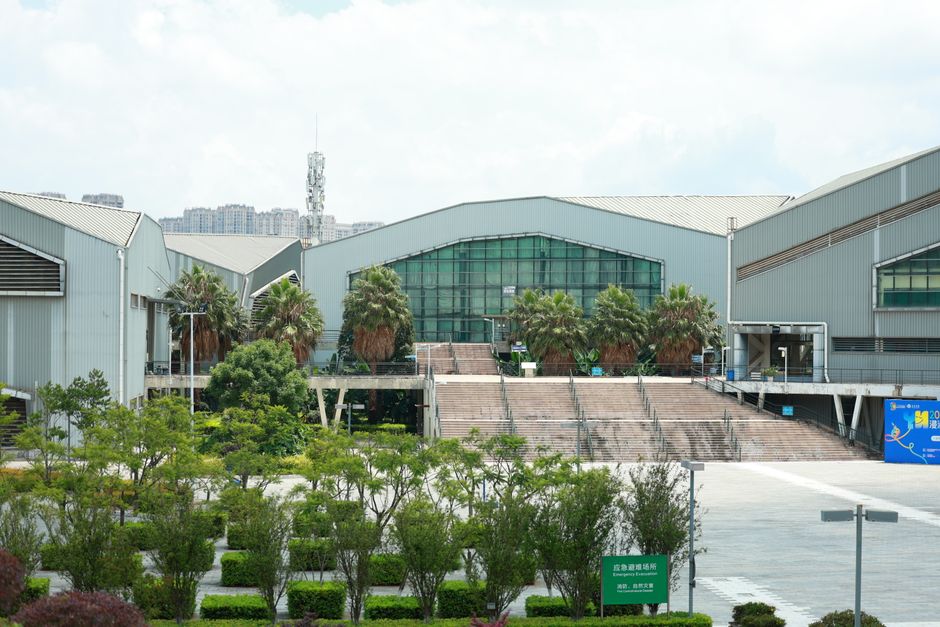


Huainan Industrial Parks: A Strategic Review for Manufacturing Investors
Huainan, a prefecture-level city in north-central Anhui, operates 4 major industrial parks covering 126 km², which together attracted over ¥48 billion in manufacturing-related foreign direct investment (FDI) in 2024. For foreign companies considering a 外商独资企业 (WFOE, wàishāng dúzī qǐyè) in China’s interior, these parks offer a unique blend of legacy coal-industry infrastructure, growing new-energy supply chains, and lower operating costs compared to coastal hubs. This review evaluates whether Huainan’s parks deliver on their investment promises for manufacturing firms.
Park Landscape & Specialization
Huainan’s industrial strategy pivots on two national-level and two provincial-level parks. The Huainan Economic and Technological Development Zone (淮南经济技术开发区, Huáinán Jīngjì Jìshù Kāifā Qū) focuses on smart manufacturing and automotive parts, housing 85+ enterprises with a combined output of ¥22.7 billion in 2023. The Huainan High-Tech Industrial Development Zone (淮南高新技术产业开发区, Huáinán Gāoxīn Jìshù Chǎnyè Kāifā Qū) targets new-energy vehicles (NEV) and advanced materials, boasting a 28% year-on-year growth in patent filings since 2020.
Two provincial parks — Panji Industrial Park (潘集工业园区, Pānjí Gōngyè Yuán Qū) and Fengtai Industrial Park (凤台工业园区, Fèngtái Gōngyè Yuán Qū) — specialize in metal fabrication and equipment maintenance, leveraging local coal-mechanized skills. Foreign manufacturing firms have historically favored the High-Tech Zone due to its 15% corporate tax rate for qualified “high-new-tech” enterprises (a national policy), while the Economic Zone offers faster permitting (30-day turnaround for WFOE registration in 2024).
A critical number: 72% of manufacturing output in Huainan’s parks comes from companies that relocated from coastal provinces (Jiangsu, Zhejiang) between 2018 and 2023, according to the Anhui Bureau of Statistics. This “inland shift” is a clear signal for foreign investors evaluating supply chain resilience.
Incentives and Cost Structures
Huainan’s parks compete aggressively on cost. Average industrial electricity rates in 2024 are ¥0.58/kWh — 22% lower than Shanghai and 15% lower than Suzhou. Land transfer prices in the High-Tech Zone start at ¥340,000 per mu (1 mu = 667 m²), compared to ¥1.2 million per mu in Nanjing’s suburban parks. However, the municipal government imposes a minimum investment intensity of ¥3 million per mu to qualify for tax rebates — a threshold that eliminates some small-scale foreign investors.
Beyond tax, the city offers a “Relocation Bonus” of up to ¥5 million for WFOEs that relocate R&D functions to Huainan, and a “Utility Subsidy” of ¥0.10/kWh for the first three years. These are administered through the Huainan Investment Promotion Bureau (淮南投资促进局, Huáinán Tóuzī Cùjìn Jú). Below is a comparative table of the two primary parks:
| Park | Focus Sector | Area (km²) | Avg. Rent (¥/m²/month) | Foreign Enterprises | Incentive Highlight |
|---|---|---|---|---|---|
| Huainan Economic Zone | Auto parts, general machinery | 42 | 18 | 23 | 3-year land tax exemption |
| Huainan High-Tech Zone | NEV, battery, advanced materials | 35 | 22 | 17 | 15% high-tech CIT rate |
| Panji Industrial Park | Metal fabrication, mining equipment | 28 | 12 | 6 | Utility subsidy (¥0.10/kWh) |
| Fengtai Industrial Park | Electronics assembly, plastics | 21 | 15 | 9 | Fast-track environmental permits |
Infrastructure and Logistics Risks
While costs are attractive, infrastructure remains a mixed story. The Huainan Port, on the Huai River, handles 8.2 million tons of cargo annually — enough for bulk materials but far below Shanghai’s 780 million tons. Rail connectivity is improving: the Shanghe-Hangzhou high-speed rail link (completed 2023) puts Huainan within 90 minutes of Hefei and 3 hours of Shanghai. However, last-mile road access inside older parks (especially Panji) is outdated, with 57% of internal roads rated “fair” or below in a 2023 municipal survey.
Another critical number: average water shortage days per year in Huainan’s parks dropped from 12 to 3 after a 2020 reservoir expansion, but peak summer usage still sees 7% supply deficits. Manufacturing processes requiring high-purity water (e.g., semiconductor cleaning) face extra treatment costs of ¥12–18 per ton.
Labor is abundant but skill-specific. Huainan has 4 universities and 12 vocational schools, producing 18,000 STEM graduates annually. Yet the retention rate among WFOEs is 67% for technical staff, compared to 82% in Hefei. Many foreign managers report a 3–6 month “training gap” for workers adapting to ISO 9001 or Six Sigma standards.
Decision Framework: Which Park for Your Manufacturing WFOE?
If your manufacturing requires heavy electricity (e.g., metal smelting, battery cathode production), choose the Yangtze River Economic Belt-designated High-Tech Zone — it has a dedicated 220 kV substation and electricity price discounts for consumption over 10 GWh/year. If you need moderate-skilled assembly with short lead times to eastern ports, choose the Economic Zone due to its direct expressway link to the G3 Beijing-Taipei highway (1 hour to Hefei Xinqiao airport).
If your supply chain depends on local raw coal byproducts (e.g., fly ash, coal chemicals), choose Panji Industrial Park — it sits 8 km from the Huainan Coal Mining Group and offers raw material cost savings of 12–18%. If you prioritize soft environment (fast permitting, bilingual support), the High-Tech Zone has a dedicated “Foreign Affairs Service Window” with English-speaking staff, reducing WFOE registration time to an average of 18 business days.
3 Pitfalls of Huainan Industrial Parks
NEXT STEPS
- Audit your WFOE structure — Review the latest registration requirements for manufacturing WFOEs in Anhui. Read our guide: Anhui WFOE Registration: Step-by-Step (2025 Update).
- Compare park incentive tiers — Download the official Huainan Investment Promotion Bureau’s “Park Incentive Matrix” and cross-check with our analysis: Anhui Industrial Park Incentives: How to Maximize Tax Rebates.
- Conduct a site visit with local support — We offer on-ground assessment of land readiness, utility capacity, and labor pool. Start here: Huainan Site Inspection & Feasibility Study Service.
— Anhui Gateway —
Remote China market entry support, built around execution.