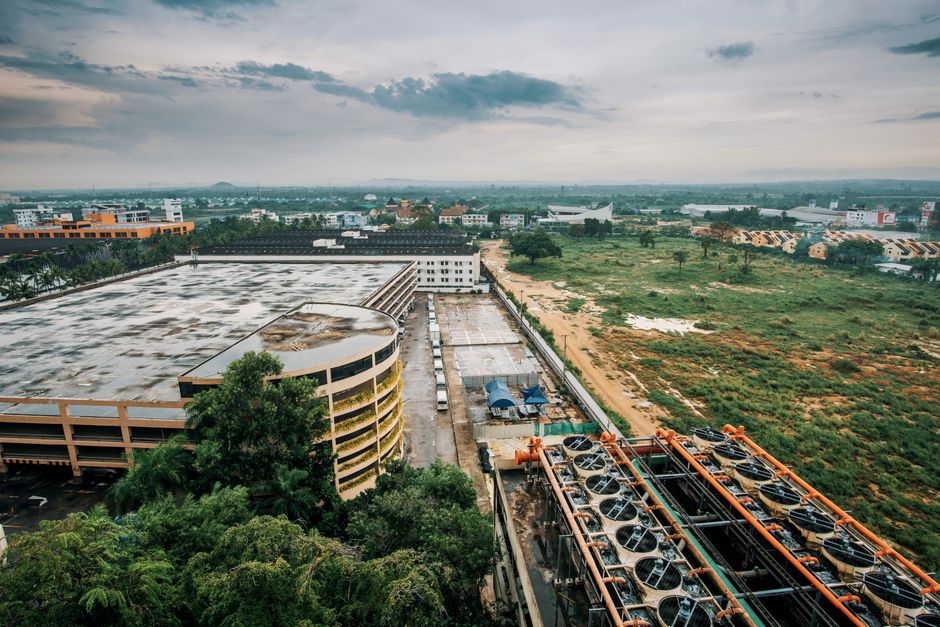


Anqing Industrial Parks: What It Means for Manufacturing Investment
Anqing, a prefecture-level city in southwestern Anhui province, operates 12 provincial-level and above industrial parks that collectively attracted over ¥48 billion in manufacturing investment in 2023. For foreign executives evaluating China production bases, the city’s industrial zones represent a lower-cost, inland alternative that balances proximity to the Yangtze River economic belt with access to emerging supply chains for automobiles, petrochemicals, and new energy components. The key question is whether Anqing’s infrastructure, incentives, and labor pool can deliver the scale and reliability your operation requires.
Policy Profile and Fiscal Incentives
Anqing’s main manufacturing zones — including the Anqing Economic and Technological Development Zone (安庆经济技术开发区, ānqìng jīngjì jìshù kāifā qū, ETDZ) and the Anqing High-Tech Industrial Development Zone (安庆高新技术产业开发区, ānqìng gāoxīn jìshù chǎnyè kāifā qū) — offer a standard package of national-level tax incentives plus city-level subsidies. New foreign-invested enterprises (外商投资企业, wàishāng tóuzī qǐyè) in encouraged manufacturing categories can receive a 15% corporate income tax rate (reduced from the standard 25%) for the first three years, followed by a 50% reduction for years four through six. Land-use premiums are also negotiable: average industrial land costs in Anqing stood at ¥375/m² in 2023, compared to ¥1,200/m² in Shanghai and ¥780/m² in Hefei — a cost saving of 50–70% on site acquisition alone.
The city government has also rolled out a “digital transformation subsidy” covering up to 30% of automation equipment costs for manufacturers that invest over ¥10 million. In 2023, 17 Anqing-based factories received these grants, totaling ¥46 million. For foreign companies setting up a Wholly Foreign-Owned Enterprise (外商独资企业, wàishāng dúzī qǐyè, WFOE) in the parks, the processing time for business licenses and permits has been compressed to 15 working days under the city’s “one-stop service” window.
Infrastructure and Supply Chain Realities
Anqing sits on the north bank of the Yangtze River, giving it direct barge access to Shanghai port (about 520 km downstream). The Anqing Port handled 28.4 million tonnes of cargo in 2023, up 11% year-on-year, and the newly expanded container terminal now processes 150,000 TEUs annually — enough for mid-size manufacturing projects. For road freight, the G50 Shanghai–Chongqing expressway and G35 Ji’nan–Guangzhou expressway intersect in Anqing, providing 4-hour trucking to Nanjing, 5 hours to Shanghai, and 6 hours to Wuhan.
However, the city’s rail freight network remains underdeveloped compared to Hefei or Wuhu. Anqing currently has two railway cargo stations with combined annual capacity of 3.5 million tonnes, and the planned Anqing–Huanggang rail link will not be operational until late 2026. This means that heavy or time-sensitive imports/export may still require transshipment via Hefei, adding 1–2 days of logistics lead time. Electricity costs are competitive at ¥0.64/kWh for industrial users — 20% lower than in Jiangsu province — but the city experienced two voltage dips exceeding 50 milliseconds in 2023, which can disrupt sensitive automated equipment unless backup systems are installed.
Land Use Comparison: Anqing vs. Peer Inland Parks
| Park / City | Level | Focus Industries | Industrial Land Cost (¥/m²) | Average Monthly Wage (¥) | Corporate Tax Incentive |
|---|---|---|---|---|---|
| Anqing ETDZ | National | Auto parts, petrochemicals, textiles | 350–400 | 4,200 | 15% rate for 3 years |
| Anqing High-Tech Zone | National | New materials, biopharma, electronics | 340–390 | 4,500 | 15% rate + R&D super deduction |
| Hefei High-Tech Zone | National | Semiconductors, AI, EVs | 750–1,000 | 5,800 | 15% rate + talent subsidies |
| Wuhu ETDZ | National | Auto manufacturing, robotics | 520–680 | 5,100 | 15% rate for 5 years |
| Bengbu High-Tech Zone | Provincial | Glass, machinery, food processing | 300–360 | 3,900 | 10% rate for 2 years |
As shown, Anqing parks sit at the low-cost end of the spectrum for both land and labor. However, the trade-off is a smaller pool of experienced technical workers: Anqing has just 2 vocational colleges graduating about 3,500 students per year in manufacturing disciplines, versus 8 such schools in Hefei producing over 20,000 graduates annually. For capital-intensive, low-skill assembly lines, this is manageable. For high-precision electronics or pharmaceutical production, the talent gap may require your firm to offer relocation packages for senior engineers from other cities.
Decision Framework for Manufacturing Investment
If your production requires high throughput by ocean freight (more than 5 containers per week), has a high weight-to-value ratio (e.g., auto parts, machinery, petrochemical intermediates), and you can absorb 2–4 extra days of logistics compared to a coastal park, choose an Anqing industrial park. The land and labor cost advantages outweigh the logistics premium.
If your operation relies on just-in-time delivery of components from multiple domestic suppliers, requires frequent exports by air cargo, or demands a deep local base of R&D engineers with tertiary degrees, choose a higher-tier inland hub such as Hefei or Wuhan. Anqing’s supplier ecosystem is still maturing, and air freight will require a 4-hour truck haul to Hefei Xinqiao International Airport.
If you are a medium-size manufacturer (¥50–200 million annual revenue) in an encouraged sector like new energy components or advanced materials, and you are willing to invest in on-site automation and a modest training center, Anqing provides the strongest cost-to-incentive ratio among Anhui’s second-tier cities.
Three Common Pitfalls When Investing in Anqing Parks
NEXT STEPS
- Read our Anhui WFOE setup guide. Get the full step-by-step on registering a manufacturing WFOE in Anqing, including required documents, timeline, and bank account opening: Anhui WFOE Registration Guide
- Verify your supply chain fit. Use our China inland logistics cost model to compare Anqing vs. Hefei vs. coastal ports for your specific product weight and value: Inland Logistics Calculator
- Schedule a parks briefing. Book a 30-minute remote consultation with Anhui Gateway to connect directly with Anqing ETDZ investment officers and receive the latest incentive packages: Anqing Industrial Park Investment Briefing
— Anhui Gateway —
Remote China market entry support, built around execution.