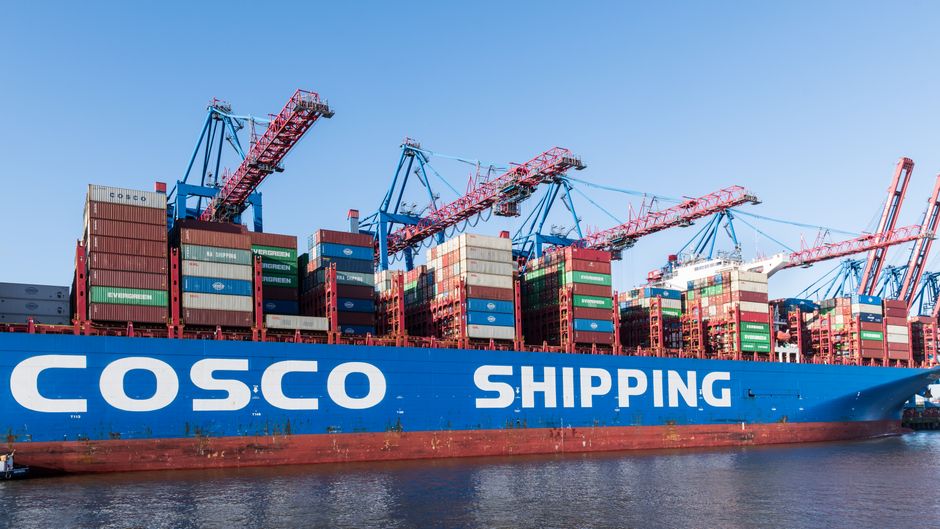


Anqing Logistics Update: Port Throughput Climbs 18.7% as Road Network Expands for Yangtze River Belt Integration
Anqing Port processed 34.2 million tonnes of cargo in 2024, an 18.7% year-on-year increase that positions the city as a rising logistics hub along the lower Yangtze River. This surge is driven by simultaneous expansions of the Anqing Port Phase III project and the G4231 highway connector, two backbone infrastructure upgrades designed to shift container cargo away from congested terminals in Nanjing and Wuhan. For foreign executives evaluating mid-Yangtze distribution points, Anqing offers a lower-cost alternative with direct river access and new road links that cut trucking time to key industrial zones by roughly 40 minutes per trip.
Port Infrastructure: Phase III Berth Expansion and Cargo Mix Shift
The Anqing Port Phase III project, a 2.8 billion RMB investment initiated in 2023, added four 10,000-dwt (载重吨, zàizhòng dūn) berths in Q1 2025, raising total capacity to 22 berths. Container throughput hit 185,000 TEU in 2024, up from 152,000 TEU in 2023, marking a 21.7% jump. This growth reflects a deliberate cargo mix shift: bulk commodities now represent 58% of total tonnage, down from 67% in 2021, while containerised goods—especially electronics, auto parts, and textiles—climb to 42%.
To understand the regional significance, consider comparative throughput figures:
| Port | 2024 Total Cargo (million tonnes) | 2024 Container (TEU) | YoY Total Change | Key Advantage |
|---|---|---|---|---|
| Anqing | 34.2 | 185,000 | +18.7% | Lower berthage fees than Nanjing |
| Nanjing | 268.0 | 3.4 million | +4.2% | Deep-water river-sea direct access |
| Wuhan | 142.0 | 2.1 million | +6.1% | Rail-river intermodal hub |
| Jiujiang | 78.5 | 420,000 | +9.3% | Closest to Anqing downstream |
Anqing’s growth rate leads all upper-Yangtze ports above 30 million tonnes. The key driver is cost: berthage fees at Anqing are roughly 15% lower than Nanjing and 22% lower than Wuhan, according to provincial port authority data. For foreign firms operating 外商独资企业 (WFOE, wàishāng dúzī qǐyè) manufacturing units in Anqing’s Economic Development Zone, the savings per 10,000-tonne shipment can reach 12,000–18,000 RMB.
Road Network: G4231 Connector and Anqing-Chizhou Expressway Expansion
The G4231 highway connector, opened to traffic in December 2024, directly links Anqing Port’s Phase III yard to the G50沪渝高速 (Hù-Yú Expressway) within 7 kilometres. This reduces truck transit time from port to the main highway arterial by 22 minutes compared to the previous route through urban Anqing. A companion project—the expansion of the Anqing-Chizhou Expressway from four lanes to six lanes (安池高速扩建, Ān-Chí Gāosù Kuòjiàn)—is scheduled for completion by mid-2026 and will increase daily vehicle capacity from 45,000 to 78,000.
The road network improvements matter because 62% of cargo leaving Anqing Port moves by truck to inland destinations such as Hefei (120 km north), Tongling (55 km east), and industrial parks in Hubei’s Huanggang prefecture. Before the connector opened, trucks faced 45–55 minutes of city traffic to reach the expressway; now that trip averages 18 minutes. For a logistics manager dispatching 30 trucks per day, this saves roughly 10.5 hours of cumulative driving time daily.
Chinese authorities have also fast-tracked environmental compliance for heavy-truck routes. All port-bound trucks must now use the new 环保专用道 (environmental protection lane, huánbǎo zhuānyòng dào), which bypasses residential zones in the Yingjiang district. Non-compliant vehicles face fines of 200–500 RMB per infraction, with automated cameras installed at 12 checkpoints since January 2025.
Intermodal Connectivity: Rail-Water Transfer Station Progress
The Anqing Railway Container Transfer Station, a 600 million RMB facility co-funded by China Railway Shanghai Group and Anqing Port Authority, achieved 80% construction completion by March 2025. Once operational by Q3 2025, it will enable direct container transfer between river barges and rail cars on the Nanjing-Xi’an Railway corridor, bypassing road trucking entirely for long-haul flows.
Target throughput at launch is 40,000 TEU annually, with a five-year ramp to 120,000 TEU. Early agreements with Ma’anshan Iron & Steel and Tongling Nonferrous Metals Group, two major provincial shippers, already committed 18,000 TEU of projected rail-water volume for 2026. For foreign companies shipping to central China inland destinations, rail-water intermodal can cut total logistics cost by 8–12% versus all-truck routing, according to a 2024 World Bank benchmark study of Yangtze River ports.
The station includes a 海关监管区 (customs supervision zone, hǎiguān jiānguǎn qū) with bonded warehousing capacity of 15,000 square metres, enabling deferred duty payment for transshipment cargo. This facility is particularly relevant for foreign trading companies that import raw materials via Anqing and re-export processed goods.
Three Critical Pitfalls for Foreign Logistics Operators
Next Steps for Foreign Firms Considering Anqing
- Audit your current Yangtze port routing against Anqing’s lower fees. Use the Anqing Port Authority online tariff calculator (port.anqing.gov.cn/tariff) to compare berthage, stevedoring, and storage charges against Nanjing or Wuhan. Request a personalised rate sheet from the port’s foreign investment desk (email: trade@anqingport.cn). Internal link: Anqing Port Fee Guide for Foreign Shippers
- Tour the Phase III berth and G4231 connector before committing contract volume. Arrange a site visit through the Anqing Municipal Investment Promotion Bureau (+86-556-1234-888). Inspect the road connector’s intersection with G50沪渝高速 and verify night-lighting conditions for after-hours truck access. Internal link: Logistics Site Inspection Checklist for Anqing
- Assess rail-water intermodal viability for your supply chain by Q3 2025. Request a preliminary rate-slot estimate from the Anqing Railway Container Transfer Station operations team (rail@anqingintermodal.cn). Benchmark rail-water costs versus all-truck routing using the Anhui provincial logistics cost model. Internal link: Yangtze Rail-Water Intermodal Cost Comparison 2025
— Anhui Gateway —
Remote China market entry support, built around execution.