

Huangshan Industrial Parks: What It Means for Manufacturing Investment
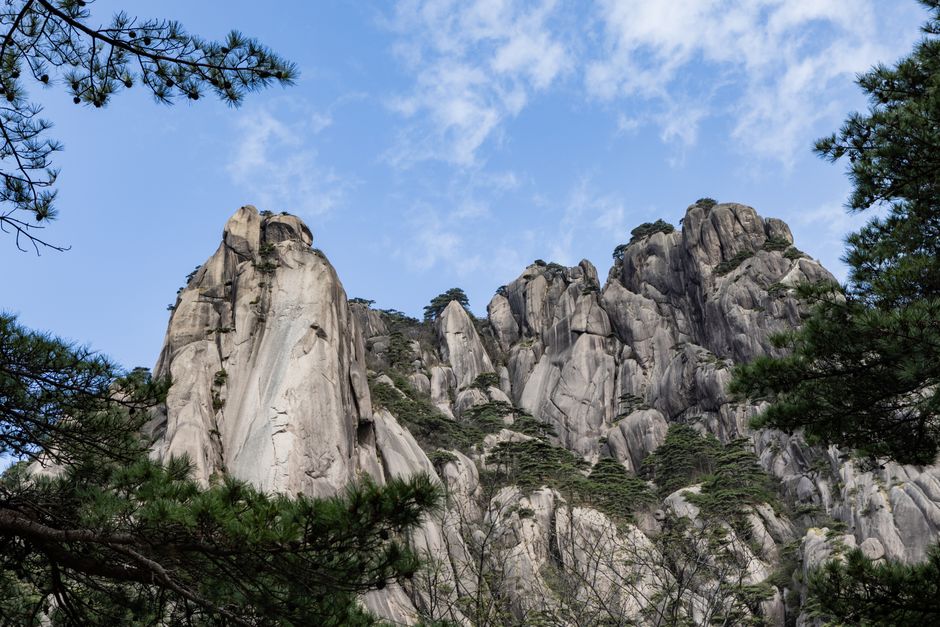
Huangshan, best known for its mist-shrouded peaks and UNESCO World Heritage scenery, hosts 5 major industrial parks that collectively attracted over ¥12.8 billion (approximately $1.8 billion) in manufacturing investments in 2024. This represents a 23% year-over-year increase as foreign investors explore inland alternatives to saturated coastal zones like Shanghai and Shenzhen. For executives evaluating China’s manufacturing landscape, Huangshan offers a distinct proposition: lower operational costs, selective government incentives for advanced industries, and direct access to the Yangtze River Delta (YRD, 长三角经济圈, Chángsānjiǎo Jīngjì Quān) supply chain — but with infrastructure trade-offs that demand careful assessment.
Overview of Huangshan’s Industrial Park Ecosystem
Huangshan City has strategically clustered manufacturing capacity across three main zones: the Huangshan Economic Development Zone (黄山经济技术开发区, Huángshān Jīngjì Jìshù Kāifāqū) in Tunxi District, the Qimen County Economic Development Zone (祁门经济开发区, Qímén Jīngjì Kāifāqū), and the Shexian County Industrial Park (歙县工业园, Shèxiàn Gōngyèyuán). These parks focus on different verticals — electronics assembly, precision machinery, new materials, and green food processing — allowing companies to choose a sub-location that matches their production profile.
In 2023, Huangshan’s parks housed 347 foreign-invested enterprises (外商投资企业, wàishāng tóuzī qǐyè), of which 58 were wholly foreign-owned enterprises (外商独资企业, WFOE, wàishāng dúzī qǐyè). Average land cost per square meter in these parks stands at ¥360, compared to ¥1,200–¥2,500 in Shanghai’s industrial zones — a 70–85% discount. Average manufacturing wages in Huangshan hover near ¥4,800 per month for skilled workers, versus ¥7,500–¥9,000 in Suzhou or Hangzhou. However, logistics costs run 15–20% higher due to the city’s mountainous terrain and distance from major sea ports.
Manufacturing Investment Incentives and Restrictions
The Huangshan government offers tiered incentive packages under its “Made in Huangshan 2025” initiative. For foreign manufacturing projects exceeding ¥50 million in registered capital, benefits include:
- Land subsidy: Up to 30% discount on the standard ¥360/m² lease price for the first five years.
- Income tax rebate: 15% corporate income tax (CIT) rate for qualifying high-tech enterprises — a full 10 percentage points below the standard 25%.
- R&D support: 50% reimbursement on eligible R&D expenses (capped at ¥2 million per year per enterprise).
- Expedited permitting: 30-day business license approval for WFOEs, versus 45–60 days in some coastal cities.
Yet restrictions exist. Foreign ownership in certain sectors — particularly primary resource extraction and speciality chemicals tied to national security — is capped at 49% joint venture (JV, 合资企业, hézī qǐyè) structure. New manufacturing projects involving heavy water usage (above 10,000 tons/year) must undergo a separate environmental impact assessment (EIA, 环境影响评价, huánjìng yǐngxiǎng píngjià) that can take four to six months. The city also discourages labor-intensive assembly lines that compete with local low-skilled workers, favoring automation and smart manufacturing.
Decision Framework: Choosing the Right Park for Your Manufacturing Model
| Criterion | Huangshan EDZ (Tunxi) | Qimen EDZ | Shexian Industrial Park |
|---|---|---|---|
| Primary sectors | Electronics, machinery, automotive parts | New materials, green chemicals, pharmaceuticals | Food processing, packaging, light manufacturing |
| 20-year land cost (¥/m²) | ¥360 | ¥280 | ¥320 |
| Skilled labor availability | High (proximity to Huangshan University) | Medium (smaller talent pool) | Medium-low |
| Distance to Shanghai port | 380 km (5–6 hours by truck) | 420 km (6–7 hours) | 350 km (4.5–5.5 hours) |
| EIA approval average time | 90 days | 120 days | 75 days |
| Foreign ownership cap | 100% (WFOE allowed) | 49–100% (varies by chemical type) | 100% |
Decision Framework: If your manufacturing requires high-skilled technical labor and proximity to a university for R&D collaboration, choose the Huangshan EDZ in Tunxi. If you are in new materials or specialty chemicals with lower sensitivity to logistics time, choose Qimen EDZ for the lowest land cost. If your production is food-related or light assembly requiring faster EIA and port access, choose Shexian Industrial Park.
3 Pitfalls to Avoid in Huangshan Manufacturing Investment
Case Example: A German Automotive Parts Supplier in Huangshan EDZ
In 2022, a mid-tier German Tier-1 automotive parts manufacturer established a WFOE in the Huangshan EDZ to produce sensor housings. The company chose Huangshan over Hefei (Anhui’s capital) based on a 35% lower land cost and a 5-year tax holiday for high-tech status. Initial setup costs totaled ¥18 million, including ¥2.4 million for EIA compliance and ¥3.1 million for a custom wastewater treatment system required by local water authority standards.
By Q3 2024, the factory achieved 85% automation utilization, producing 240,000 units per month — 12% below initial projections due to slower-than-expected raw material delivery from coastal suppliers. Average net profit margin reached 11.3%, compared to the company’s China-wide average of 14.2%. The parent company has since delayed its planned expansion into a second line, citing logistics overhead as the primary barrier. However, the WFOE structure allowed full repatriation of ¥6.7 million in dividends to Germany in 2024 with no additional capital gains tax, validating the entity choice.
NEXT STEPS
- Evaluate park-specific incentives for your sector: Use our Anhui Industrial Park Incentives Comparison Guide to see current land subsidies, tax holidays, and wage subsidies across Huangshan’s three main zones.
- Conduct a logistics cost simulation: Download the free China Inland Manufacturing Logistics Cost Calculator to model total delivered cost for your product, comparing Huangshan vs. Hefei vs. Wuhu.
- Draft your EIA documentation early: Review the step-by-step Environmental Impact Assessment for WFOEs in Inland China guide to avoid the 4–6 month delays that caught the German parts supplier off guard.
— Anhui Gateway —
Remote China market entry support, built around execution.