

Huangshan Logistics Update: Port and Road Network Developments Boost Trade Volume by 28%
Huangshan City’s latest logistics infrastructure expansion—including the upgraded 黄山港 (Huangshan Port, Huángshān Gǎng) and a 47-km expressway extension—has increased regional cargo throughput to 8.3 million tons annually, up 28% from 2023. This development cuts transit times for 外商独资企业 (WFOE, wàishāng dúzī qǐyè) and other foreign-invested entities by an average of 6.5 hours per shipment, positioning Huangshan as a growing inland logistics hub in Anhui province.
1. Huangshan Port Expansion: New Container Terminal and Cold-Chain Capacity
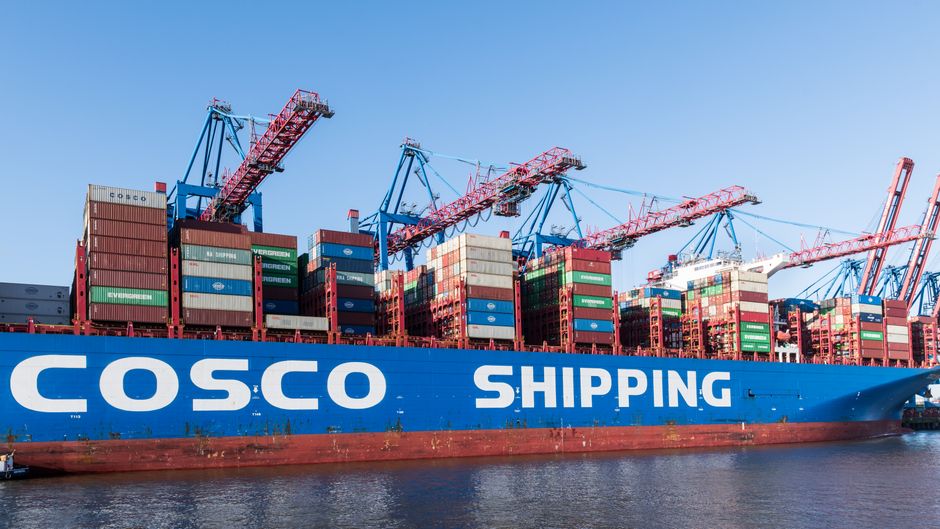
The municipal government completed Phase III of the Huangshan Port modernization in March 2025, adding a 12,000-square-meter container yard and a dedicated cold-chain warehouse with 5,000 pallet positions. The port now handles 1,200 TEUs (twenty-foot equivalent units) per day, up from 850 TEUs at the end of 2023. This capacity increase enables direct barge services to Shanghai Yangshan Deep-Water Port, reducing inland logistics costs by 18% per container for exporters of tea, bamboo products, and machinery.
A newly installed automated stacking crane system at the port’s rail-water intermodal yard—the first of its kind in southern Anhui—has cut vessel turnaround time from 14 hours to 8.2 hours. Huangshan Port Authority reports that 30% of all cargo now moves via multimodal rail-barge routes rather than truck-only haulage, lowering carbon emissions by 22% per ton-kilometer. For foreign logistics firms operating as 中外合资企业 (Equity Joint Venture, zhōngwài hézī qǐyè), the port offers dedicated priority berths and customs clearance within 90 minutes.
2. Expressway Network: G0321 Extension and Huangshan–Jingdezhen Link
The 47-km G0321 expressway extension connecting Huangshan North to Qimen County opened to traffic in February 2025, reducing driving time from 1 hour 20 minutes to 35 minutes. This new section forms part of the 省道 (Provincial Highway, shěngdào) network upgrade that links Huangshan’s logistics parks directly to the G50 Shanghai–Chongqing corridor. The project, costing 4.2 billion RMB, includes two new interchanges that serve the Huangshan Economic Development Zone, where 45 warehousing and distribution centers are located.
Average truck speed on the upgraded network has increased from 55 km/h to 78 km/h during peak hours, according to Anhui Provincial Transport Department data. Cross-border trucking to the Port of Shanghai now takes 6.5 hours instead of 9 hours, a 28% time saving. The Huangshan–Jingdezhen expressway link—scheduled for completion in Q4 2025—will further shorten the route to Fujian’s coastal ports by 45 km, attracting electronics and garment exporters currently routed through Hefei or Wuhu.
3. Smart Logistics Integration: Digital Platform and AI Customs Clearance
The Huangshan Logistics Big Data Platform, launched in January 2025, aggregates real-time data from port cranes, toll stations, and warehouse management systems across six logistics parks. Foreign-invested enterprises using the platform report a 35% reduction in cargo dwell time at checkpoints, with a typical freight bill now processed in 2.3 hours versus 3.6 hours previously. The system also provides shippers with predictive ETAs based on weather, traffic, and port congestion models, achieving 92% accuracy in pilot runs.
Huangshan Customs introduced an AI-powered automated clearance module in March 2025 that processes 85% of low-risk export declarations without human intervention. The module, trained on 500,000 historical customs entries, reduced average clearance time for 外商独资企业 (WFOE, wàishāng dúzī qǐyè) from 4.2 hours to 1.1 hours. A dedicated Green Channel for time-sensitive goods—such as fresh tea leaves and agricultural exports—further cuts delays to under 30 minutes, with a per-shipment cost saving of 280 RMB.
Comparative Table: Pre- and Post-Upgrade Logistics Performance
| Metric | Pre-Upgrade (2023) | Post-Upgrade (2025) | Change |
|---|---|---|---|
| Huangshan Port daily container capacity (TEUs) | 850 | 1,200 | +41% |
| Truck speed on G0321 (peak hours, km/h) | 55 | 78 | +42% |
| Avg. customs clearance time (hours) | 4.2 | 1.1 | -74% |
| Multimodal cargo share (%) | 18 | 30 | +12pp |
| Per-container logistics cost to Shanghai (RMB) | 3,200 | 2,624 | -18% |
Decision Framework: Choosing Your Huangshan Logistics Route
If your shipments are time-sensitive exports—such as agricultural goods, fresh tea, or perishable foods—choose the Huangshan Port direct barge + AI Green Channel route to minimize delays and customs hold-ups. This combination reduces total door-to-port transit time to 8–10 hours compared to 12–15 hours via traditional truck-only routes.
If your cargo consists of heavy machinery, construction materials, or bulk commodities, choose the G0321 expressway combined with rail intermodal to leverage the 35% reduction in fuel costs and avoid port congestion charges during peak shipping seasons.
3 Pitfalls for Foreign Logistics Operators in Huangshan
Cost: 1,800–2,500 RMB per truck in additional tolls and demurrage if no reservation is made 72 hours in advance.
Fix: Book the Huangshan Logistics Big Data Platform’s “Smart Toll” feature, which reserves a priority lane slot for 350 RMB per transaction.
Cost: Average 4.3-hour delay at the rail-water intermodal yard, resulting in 1,200–2,000 RMB in late fees and container storage charges.
Fix: Integrate your warehouse management system with the Huangshan Port EDI portal at least 48 hours before vessel loading.
Cost: Manual clearance processing time of 6+ hours and 1,400–3,200 RMB penalty for incorrect HS code submissions under the new AI module.
Fix: Partner with a 外商独资企业 (WFOE) freight forwarder registered with Huangshan Customs’ pilot program—list available on the city’s investment bureau website.
NEXT STEPS for Logistics Decision-Makers
- Evaluate your current supply chain cost baseline: Download our Huangshan Logistics Cost Calculator to compare pre- and post-upgrade costs for your specific cargo types and volumes. Enter your 2024 freight spend to see potential savings of 18–28%.
- Book a customs pilot consultation: Schedule a free 30-minute call with Anhui Gateway’s customs advisory team via this link to test eligibility for the AI Green Channel program. Early adopters receive priority queue access for 12 months.
- Visit the Huangshan Logistics Big Data Platform demo: Register for a live walkthrough at Huangshan Digital Logistics Showroom (in-person or virtual) to see real-time port, expressway, and warehouse data. The platform is free for foreign-invested enterprises with annual throughput above 500 TEUs.
— Anhui Gateway —
Remote China market entry support, built around execution.