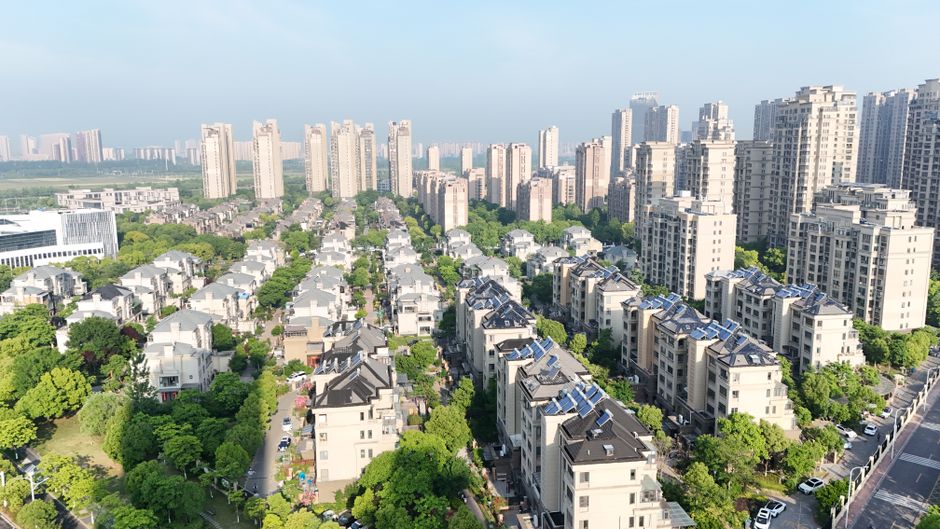


Chuzhou Unveils 2025 Foreign Enterprise Incentives: Reshaping Anhui’s Investment Landscape
On January 15, 2025, the Chuzhou Municipal Government released its 2025 Foreign Investment Promotion Measures (外商投资促进措施, wàishāng tóuzī cùjìn cuòshī), introducing 23 targeted incentives designed to attract 外资 (foreign investment, wàizī) totaling RMB 8.2 billion by year-end — a 35% increase over the 2024 target of RMB 6.1 billion. This marks the most aggressive foreign capital push by any prefecture-level city in 安徽省 (Anhui Province, ānhuī shěng) since 2020 and signals a strategic shift toward high-value manufacturing and green energy sectors.
Incentive Package Breakdown: Cash Grants, Tax Holidays, and Land Subsidies
The 2025 measures consolidate five main incentive streams that directly reduce the cost of establishing and scaling a 外商独资企业 (Wholly Foreign-Owned Enterprise, WFOE, wàishāng dúzī qǐyè) in Chuzhou. The headline offering is a three-year corporate income tax (CIT) holiday for WFOEs investing more than RMB 50 million in designated priority sectors, followed by a 50% reduction for the subsequent two years — effectively a 5–5–10% CIT structure during the first five years versus the standard 25% rate.
Additional cash grants include a one-time establishment subsidy of up to RMB 3 million for WFOEs with registered capital exceeding RMB 100 million, plus land-use fee waivers covering up to 60% of the standard industrial land cost in the 滁州经济技术开发区 (Chuzhou Economic and Technological Development Zone, chúzhōu jīngjì jìshù kāifā qū). Companies that achieve annual export turnover above USD 20 million also qualify for logistics subsidies capped at RMB 800,000 per year.
| Incentive Category | Maximum Benefit | Qualifying Condition | Duration |
|---|---|---|---|
| CIT Holiday | Full exemption (first 3 yrs) + 50% reduction (next 2 yrs) | WFOE with ≥ RMB 50M investment in priority sectors | 5 years |
| Establishment Subsidy | RMB 3M (one-time) | Registered capital ≥ RMB 100M | Single payment |
| Land Fee Waiver | 60% discount on industrial land | Manufacturing WFOE with > 50% export ratio | Per project |
| Logistics Subsidy | RMB 800K/yr | Annual export turnover > USD 20M | Up to 3 yrs |
| R&D Talent Grant | RMB 500K per foreign expert hired | Full-time R&D role, minimum 2-yr contract | Per hire |
Compared to neighboring cities — Hefei offers no land fee waivers below RMB 200M investment, and Nanjing caps its establishment subsidy at RMB 1.8M — Chuzhou’s package represents a 67% higher subsidy ceiling and a more accessible threshold for mid-cap foreign investors. This is a deliberate play to capture spillover from the Yangtze River Delta (YRD) industrial corridor.
Sector Focus: Where Chuzhou Is Targeting Foreign Capital
The 2025 measures explicitly prioritize 五大核心领域 (five core sectors, wǔ dà héxīn lǐngyù): new energy vehicle (NEV) components, photovoltaic (PV) manufacturing, integrated circuit (IC) packaging and testing, biomedical devices, and advanced materials. Within these sectors, the city government has identified 17 specific sub-industries where foreign participation is currently below 10% of total enterprise numbers — a gap it intends to close through these incentives.
Chuzhou’s existing industrial base already includes 隆基绿能 (LONGi Green Energy, lóngjī lǜnéng), which operates a 20GW PV module plant in the CETDZ, and 博西华家电 (BSH Home Appliances, bóxīhuá jiādiàn), a German-owned WFOE producing dishwashers and ovens since 2015. The new incentives add a 15% capital equipment subsidy for foreign investors that localize R&D in Chuzhou, a move expected to attract at least 8–10 mid-size European and Japanese component makers during 2025 alone.
The city has also established a dedicated 外资服务窗口 (foreign investment service window, wàizī fúwù chuāngkǒu) at the CETDZ administrative hall, offering same-day business license processing and mandatory Chinese partner matchmaking — a bottleneck that previously delayed WFOE registration by 14–18 business days. Process times are now guaranteed at 7 business days for standard applications.
Anhui-Wide Implications: A Competitive Shift
Chuzhou’s incentive escalation creates immediate pressure on other Anhui cities — particularly Wuhu (home to 奇瑞汽车, Chery Automobile, qíruì qìchē) and Ma’anshan — which have not yet released comparable 2025 foreign investment measures. Anhui Province’s total foreign direct investment (FDI) inflow in 2024 was USD 18.4 billion, of which Chuzhou accounted for 9.2%, or approximately USD 1.69 billion. If the 2025 target of RMB 8.2 billion (roughly USD 1.14 billion at current exchange rates) is met, Chuzhou’s share of Anhui FDI could climb past 12% — the highest for any non-provincial-capital city in the province.
The ripple effect is already visible: in the last two weeks of January 2025, three European automotive suppliers — two German, one Italian — submitted WFOE registration applications in the CETDZ, citing the new tax holiday and land subsidies as decisive factors. Industry analysts at 安永中国 (Ernst & Young China, ānyǒng zhōngguó) estimate that the incentives could generate RMB 2.8–3.4 billion in additional GDP contribution from foreign-invested enterprises (FIEs) by 2027, with 70% concentrated in PV and NEV supply chains.
However, the incentive race carries fiscal risk. Chuzhou’s municipal government revenue in 2024 was RMB 28.7 billion; the combined cost of the 2025 incentive package, if fully subscribed, is projected at RMB 1.6 billion — a 5.6% revenue exposure that could strain other public services if FDI inflows fall short of target.
Implementation Timeline and Compliance Essentials
The 2025 measures took effect on February 1, 2025, and will be reviewed quarterly by the Chuzhou Investment Promotion Bureau (CPIB). Foreign investors must submit incentive applications within 90 days of WFOE registration; late applications are automatically denied for the 2025 fiscal year. The application requires a detailed investment roadmap, including capital contribution milestones (minimum 25% within 6 months) and employment commitments (≥ 50 local hires within 18 months).
Key compliance obligations include semi-annual reporting on export volumes (for logistics subsidies) and annual R&D expenditure certifications (for CIT holidays). The CPIB has the right to claw back incentives if the WFOE fails to meet milestones during the first three years of operation — a provision that mirrors provincial policy but is enforced more rigorously in Chuzhou due to the smaller fiscal base.
For foreign investors already operating in Anhui, the 2025 measures also include a “conversion incentive” that allows existing WFOEs to restructure their registered capital allocation — for instance, converting a distribution-focused WFOE into a manufacturing WFOE — and still qualify for a pro-rated version of the land fee waiver and logistics subsidies. This is particularly relevant for the 43% of Chuzhou’s existing FIEs that currently operate as trading or service entities and could reclassify to capture the new benefits.
NEXT STEPS
- Evaluate your investment eligibility against the 2025 priority sectors. Review the detailed sector list and capital thresholds at our Chuzhou WFOE Setup Guide to determine which incentive category your project fits.
- Prepare your incentive application within the 90-day window. Use our Chuzhou Investment FAQ to avoid common documentation errors that result in rejection rates above 15% for first-time applicants.
- Scout the CETDZ industrial land parcels available under the 60% waiver. Contact our team for a sector-specific analysis of Anhui’s tax and land incentives and a referral to licensed Chinese partners for the mandatory matchmaking requirement.
— Anhui Gateway —
Remote China market entry support, built around execution.