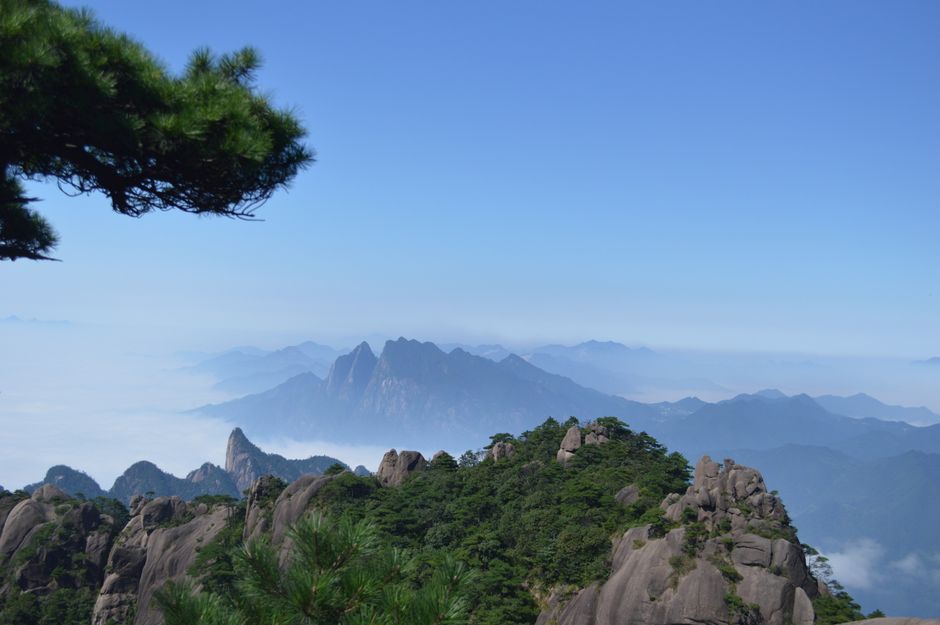


Chizhou vs Huangshan: Which Anhui Tourism Destination for Investment?
For foreign investors evaluating Anhui’s tourism sector, the choice between Chizhou and Huangshan comes down to two fundamentally different models: Huangshan (黄山, Huángshān) attracts over 70 million tourists annually with its UNESCO-listed mountain, while Chizhou (池州, Chízhōu) welcomed 63 million visitors in 2023 yet generates only 60% of Huangshan’s tourism revenue per capita. This 1.7x revenue gap defines the strategic decision. Chizhou offers lower entry costs and higher growth potential in niche segments, while Huangshan delivers established brand power and premium pricing capability. This comparison provides a data-driven decision framework for executives considering where to deploy capital in Anhui’s tourism ecosystem.
Market Fundamentals: Scale vs. Growth
Huangshan city reported 72.8 million tourist visits in 2023, generating RMB 65.2 billion in tourism revenue, according to the Anhui Provincial Bureau of Statistics. The average spend per tourist reached RMB 896, driven by high-margin segments like luxury hotels and international tour groups. Chizhou, home to the sacred Buddhist mountain Jiuhuashan (九华山, Jiǔhuáshān), hosted 63.2 million visitors but produced only RMB 38.1 billion in revenue, yielding an average per-visitor spend of RMB 603. This 32% spending gap reflects Chizhou’s heavier reliance on domestic day-trippers and pilgrimage visitors rather than high-end leisure travelers.
However, Chizhou’s year-over-year visitor growth hit 18.2% in 2023 versus Huangshan’s 11.5%. The compound annual growth rate (CAGR) for Chizhou tourism revenue from 2020–2023 was 9.8%, compared to Huangshan’s 5.4%. For investors seeking rapid expansion phase opportunities, Chizhou presents a less mature market with compounding potential. Huangshan, meanwhile, is approaching market saturation in its core scenic zones, where new development permits are increasingly restricted by environmental protection regulations.
Infrastructure investment tells a similar story. Huangshan received RMB 12.3 billion in government tourism infrastructure spending from 2021–2023, while Chizhou received RMB 8.7 billion — but Chizhou’s allocation grew 34% year-on-year versus Huangshan’s 12%. The completion of the Chizhou–Huangshan high-speed railway in 2024 cut travel time between the two cities to under 40 minutes, creating a dual-city tourism corridor that benefits both destinations.
Investment Costs and Land Availability
| Metric | Chizhou | Huangshan | Ratio |
|---|---|---|---|
| Average land price — commercial tourism (RMB/m²) | 1,850 | 3,420 | 1 : 1.85 |
| Typical hotel build cost (RMB/m²) | 4,500–6,000 | 6,500–9,000 | 1 : 1.44 |
| Average hotel room rate (RMB/night) — 4-star | 480 | 720 | 1 : 1.50 |
| Landed labor cost (RMB/month) — service staff | 3,800 | 4,500 | 1 : 1.18 |
| Available developable tourism land (km² within 20km from core attractions) | 34 | 12 | 2.83 : 1 |
Land availability is the most compelling advantage for Chizhou. Huangshan Scenic Area is strictly protected under national park regulations, limiting commercial development within a 15-kilometer radius to less than 8% of total land area. Chizhou’s Jiuhuashan area has similar protections, but the broader Chizhou prefecture — including Qiyun Mountain (齐云山, Qíyún Shān), Taiping Lake (太平湖, Tàipíng Hú), and the Yangtze River shoreline — offers substantially more zoned commercial tourism land at lower prices.
Despite higher land costs, Huangshan commands premium room rates and occupancy. The city’s 4-star and above hotels averaged 68% occupancy in 2023, versus Chizhou’s 52%. Revenue per available room (RevPAR) in Huangshan reached RMB 490, compared to RMB 250 in Chizhou — a 96% premium. This means investors building in Huangshan need roughly 2.3x higher capital but generate roughly 1.96x higher RevPAR, producing comparable returns on equity if financed at similar leverage ratios.
Decision Framework: Which City Suits Your Investment Profile?
If your investment thesis targets high-yield luxury and international tourism with established demand, choose Huangshan. The brand recognition eliminates years of marketing spend — you can open a 5-star property near Huangshan Scenic Area and achieve 70% occupancy within six months. If you are building a mid-scale resort, eco-lodge, or health and wellness property with a 3- to 5-year ramp-up horizon, choose Chizhou. Lower land and labor costs give you a 1.8x capital efficiency advantage, and Jiuhuashan’s 2.5 million annual Buddhist pilgrims provide a stable baseline demand that insulates against seasonal fluctuations.
If your investment is under RMB 30 million total CAPEX, Chizhou is the only sensible choice — Huangshan’s minimum viable investment for a middle-tier hotel starts at RMB 45 million. If you are investing above RMB 80 million and targeting international luxury tax-equivalent yields, Huangshan can support higher and more liquid exit multiples, with international hotel groups like IHG and Marriott already present.
If your investment horizon is 7 years or longer and you have local partnership capability, Chizhou’s growth trajectory — projected 12–15% annual tourist growth through 2028 per the Anhui Tourism Development Plan — offers superior IRR potential. Huangshan’s growth rate is expected to converge to 4–6% by 2026 as the destination matures.
Regulatory and Partnership Landscape
Foreign-invested enterprises (外商独资企业, WFOE, wàishāng dúzī qǐyè) face different challenges in each city. Huangshan has 23 licensed foreign-invested tourism projects (as of Q1 2024), including five 5-star hotels with partial foreign ownership. The local government in Huangshan offers standard provincial incentives: a 15% corporate income tax reduction for qualifying high-tech tourism projects (effective for three years), and land-use fee reductions of up to 20% for investments above RMB 100 million. However, approval times for WFOE establishment average 45 business days, and all tourism projects require environmental impact assessments that can take 4–6 months.
Chizhou’s government actively courts foreign investment with a “one-window” approval service that aims to reduce WFOE registration to 20 business days. The Chizhou Economic Development Zone offers additional incentives for tourism projects: 15% rebate on land costs for investments over RMB 50 million, a three-year property tax exemption on new tourism construction, and priority processing for “foreign expert” work permits. In 2023, Chizhou approved 9 new foreign-invested tourism projects — a 50% increase from 2022 — while Huangshan saw only 5 new approvals.
Tourism-related environmental regulations are stringent in both cities, but enforceability differs. Huangshan’s scenic area management authority has shut down 12 unlicensed commercial tourism operations since 2022. Chizhou has issued 18 permits for small-scale eco-tourism projects in the same period but has not been as aggressive in enforcement against unlicensed operators. Foreign investors should ensure all approvals are structurally documented through a local law firm, as verbal approvals by local officials may not withstand regulatory changes.
Three Critical Investment Pitfalls
Case Study: Two Real-world Investments
Case A — Huangshan: In 2021, a Singapore-based hospitality firm invested RMB 68 million in a 72-room boutique hotel 8km from Huangshan North Station. The property achieved 70% average occupancy by year two, with an average daily rate of RMB 950. Land cost was RMB 5.8 million for 1.8 mu. The operator projects a 12-year payback period at 14% IRR, with an exit value estimated at RMB 95 million based on comparable transactions. The critical driver was the property’s positioning for international FIT (free independent traveler) flow — 82% of guests arrived by high-speed rail from Shanghai or Hangzhou.
Case B — Chizhou: In 2022, a German-Chinese joint venture invested RMB 32 million in a 38-unit “forest wellness resort” near Qiyun Mountain, targeting the growing health tourism segment. Land cost was RMB 2.1 million for 3.2 mu. By year two, occupancy averaged 55%, with an ADR of RMB 580. The resort operates on a five-year tax holiday under Chizhou’s rural revitalization program. Projected payback is 9 years at 16% IRR, with potential exit value of RMB 42 million. The JV partner leveraged existing German outbound travel agency relationships to fill 40% of rooms with European wellness tourists.
NEXT STEPS
- Conduct a site inspection of available tourism land in Chizhou’s Taiping Lake area and Huangshan’s East Gate zone — we provide a structured land audit template and local government liaison support. Contact us for a customized visit itinerary: Request Chizhou/Huangshan Land Audit.
- Compare the incentive packages available in each city’s economic development zone — our regulatory team can prepare a side-by-side analysis within 10 business days. Access the comparison: Anhui Tourism Incentives by City.
- Evaluate your preferred investment structure — WFOE or Joint Venture — JVs offer faster local facilitation; WFOEs offer full operational control. Review the latest WFOE registration process in Anhui: WFOE Registration Guide for Anhui Tourism.
— Anhui Gateway —
Remote China market entry support, built around execution.