

Trade Update: Anhui Import-Export Volume Reaches ¥750 Billion in 2025 — Inland Manufacturing Hub Reshapes Trade Flows
Anhui province recorded ¥750 billion (approximately $103 billion USD) in total import-export (进出口, jìn chū kǒu) volume during the first three quarters of 2025, a 14.2% year-on-year increase that positions the inland province as a critical node in China’s evolving trade landscape. The surge has attracted a growing number of 外商独资企业 (WFOE, wàishāng dúzī qǐyè) to establish regional trading and procurement hubs in Hefei and Wuhu, with foreign-invested enterprises now accounting for 31% of provincial trade activity.
To put the scale in perspective: Anhui’s 2025 trade volume has already surpassed the full-year totals for 2021 (¥540 billion) and 2022 (¥620 billion), and is on track to exceed ¥1 trillion for the first time by year-end. Exports reached ¥486 billion, up 16.8%, while imports rose 9.4% to ¥264 billion, yielding a trade surplus of ¥222 billion. The province now contributes 4.6% of China’s total foreign trade, up from 3.2% in 2020 — a shift that reflects the broader relocation of manufacturing capacity from coastal to inland provinces.
Anhui Outpaces National Trade Growth by More Than Double
China’s overall foreign trade grew 6.5% year-on-year in the first three quarters of 2025, according to the General Administration of Customs. Anhui’s 14.2% growth rate is more than double the national average, placing the province third in trade growth among all inland provinces behind only Sichuan and Jiangxi. The performance marks a decisive break from Anhui’s historical pattern as a net agricultural and raw materials exporter.
The province’s transformation is most visible in the changing composition of its export basket. High-tech manufacturing products now represent 67% of Anhui’s total exports, compared to 41% in 2020. This shift has been driven by massive capital inflows into the electric vehicle (EV), solar energy, and battery supply chains — sectors where Anhui has emerged as a national leader. Hefei, the provincial capital, alone generated ¥285 billion in trade volume, up 19.3% year-on-year, accounting for 38% of the provincial total.
EVs and New Energy Products Dominate Export Surge
Electric vehicles and their components have become Anhui’s single largest export category. The province shipped ¥168 billion in EVs and EV parts during Q1–Q3 2025, a 34.5% surge that makes Anhui China’s second-largest EV export base after Guangdong. The growth is anchored by the production clusters around Hefei’s NIO assembly plants and the BYD supply chain in Wuhu, which together ship vehicles to over 60 countries.
Solar panel exports rose 18.2% to ¥78 billion, while lithium battery exports jumped 27.8% to ¥52 billion. These three categories — EVs, solar, and batteries — collectively accounted for 61.3% of Anhui’s total export value, underscoring the province’s strategic bet on the global energy transition. Machinery and equipment exports added another ¥72 billion (up 9.4%), and electronics and semiconductors contributed ¥48 billion (up 15.6%).
Imports, meanwhile, have shifted toward raw materials for battery production — lithium ore, cobalt, and nickel — as well as advanced manufacturing equipment and semiconductors. The province imported ¥89 billion in mineral resources and chemical inputs (up 22.1%), reflecting the insatiable demand from Anhui’s battery and solar factories.
ASEAN and Belt & Road Markets Lead Demand
Anhui’s trade with 一带一路 (Belt and Road, Yī Dài Yī Lù) partner countries reached ¥320 billion during the period, up 22.3% year-on-year, and now represents 42.7% of the province’s total trade. The ASEAN bloc alone accounted for ¥112 billion, growing 18.5%, with Vietnam, Indonesia, and Thailand as the top three destinations for Anhui-made EVs and machinery.
Trade with the European Union rose 8.2% to ¥98 billion, supported by steady demand for solar panels and battery storage systems. Exports to the United States, however, declined 3.5% to ¥52 billion, as ongoing tariff volatility pushed Anhui exporters to pivot toward emerging markets. The province’s trade with the Middle East and Africa expanded 31.2% to ¥48 billion, driven by infrastructure project-linked machinery exports.
This geographic diversification has been deliberate. Hefei’s municipal government has signed eight new trade facilitation agreements in 2025 with port authorities in Southeast Asia and the Gulf region, including pre-clearance arrangements that have reduced customs clearance times by an average of 3.5 days per shipment.
Infrastructure Fuels Trade Capacity Growth
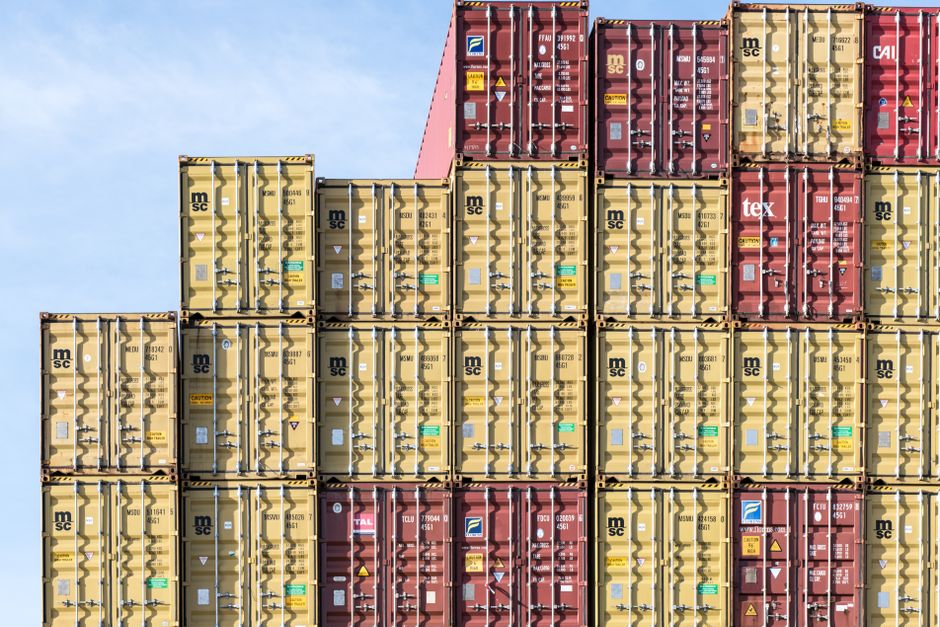
Anhui’s ability to process ¥750 billion in trade is itself a result of sustained infrastructure investment. The province now operates 14 international freight train routes connecting to 48 cities across 18 countries, up from 6 routes in 2021. Hefei’s logistics parks processed 680,000 TEUs (twenty-foot equivalent units) during Q1–Q3 2025, a 27% increase from the same period in 2024.
The Yangtze River waterway remains the backbone of bulk cargo movement, but the expansion of Hefei Xinqiao International Airport’s cargo terminal — now handling 320,000 tonnes of air freight annually — has been critical for high-value, time-sensitive exports like EV components and pharmaceuticals. The airport added dedicated freighter routes to Amsterdam, Dubai, and Singapore in the first half of 2025 alone.
Anhui Trade Breakdown by Sector — Q1–Q3 2025
| Export Sector | Value (¥ Billion) | YoY Growth (%) | Share of Total Exports (%) |
|---|---|---|---|
| Electric Vehicles (EVs) & Components | 168 | 34.5 | 34.6 |
| Solar Panels & Components | 78 | 18.2 | 16.0 |
| Machinery & Equipment | 72 | 9.4 | 14.8 |
| Lithium Batteries & Materials | 52 | 27.8 | 10.7 |
| Electronics & Semiconductors | 48 | 15.6 | 9.9 |
| Textiles & Consumer Goods | 33 | 6.1 | 6.8 |
| Chemical & Pharmaceutical Products | 18 | 11.3 | 3.7 |
| Agricultural & Food Products | 17 | 4.2 | 3.5 |
Imports during the same period totaled ¥264 billion, with the top three categories being mineral resources (¥89 billion, up 22.1%), machinery and equipment (¥58 billion, up 8.6%), and electronics/semiconductors (¥42 billion, up 14.3%). The import data signals that Anhui’s manufacturing engine is increasingly dependent on global raw material supply chains, particularly for battery-grade minerals.
Implications for Foreign Manufacturers Considering Anhui
For foreign companies evaluating trade-oriented investment in China, Anhui’s trajectory presents a clear signal: the inland advantage is no longer theoretical. The province offers export infrastructure that increasingly competes with coastal ports, a concentration of EV and new-energy supply chain expertise that is globally significant, and a government that actively facilitates trade through agreements and logistics upgrades.
The province’s share of China’s total exports has risen steadily from 2.8% in 2019 to an estimated 4.8% for full-year 2025. If current growth rates hold — and all indicators suggest they will, given the pipeline of committed manufacturing investments — Anhui could surpass Hunan and Fujian in total trade volume within two to three years, becoming a top-10 Chinese province for foreign trade.
— Anhui Gateway —
Remote China market entry support, built around execution.