

Hefei vs Huangshan Food Scene: Where Should Foreign Visitors Dine?
Hefei and Huangshan collectively host over 15,000 registered dining establishments, yet their food scenes cater to distinctly different appetites. Hefei, Anhui’s modern capital, boasts approximately 8,500 restaurants spanning international chains, upscale Chinese banquet halls, and street-food alleys that have grown 40% in menu diversity since 2018. Huangshan, anchored by the UNESCO-listed mountain, relies on roughly 7,200 eateries — mostly family-run guesthouses and rustic farm-to-table kitchens — where average meal costs run 30% lower than Hefei but spike 50% during peak tourist months (June–October). Foreign visitors must understand these contrasts to allocate their dining budget and time effectively.
Both cities claim deep roots in 徽菜 (Huīcài, Huī cuisine), one of China’s eight great culinary traditions, but their executions diverge. Hefei presents a polished, accessible version of Huī cuisine alongside global options like Korean BBQ, Italian pizza, and Thai curries. Huangshan stays closer to the source, using mountain-foraged bamboo shoots, wild river fish, and stone-ground tofu that taste of the landscape. This comparison breaks down signature dishes, dining atmosphere, practical costs, and common pitfalls so foreign visitors can decide which city’s table suits their travel style.
Hefei’s Food Scene: Modern Capital with Traditional Roots
Hefei’s dining landscape has transformed dramatically since the city emerged as Anhui’s economic hub. The central business districts around Xiaoyaojin Park and the Swan Lake area now host U.S.-style steakhouses, Japanese ramen shops, and French patisseries alongside centuries-old Huīcài restaurants. Over 25 international cuisine concepts operate within the city limits, concentrated in five major shopping malls such as 百大购物中心 (Bǎidà Gòuwù Zhōngxīn) and 银泰中心 (Yíntài Zhōngxīn). A meal at a mid-range international restaurant in Hefei averages 120–180 RMB per person, while a banquet at a high-end Huīcài venue like 同庆楼 (Tóngqìnglóu) runs 200–350 RMB per person.
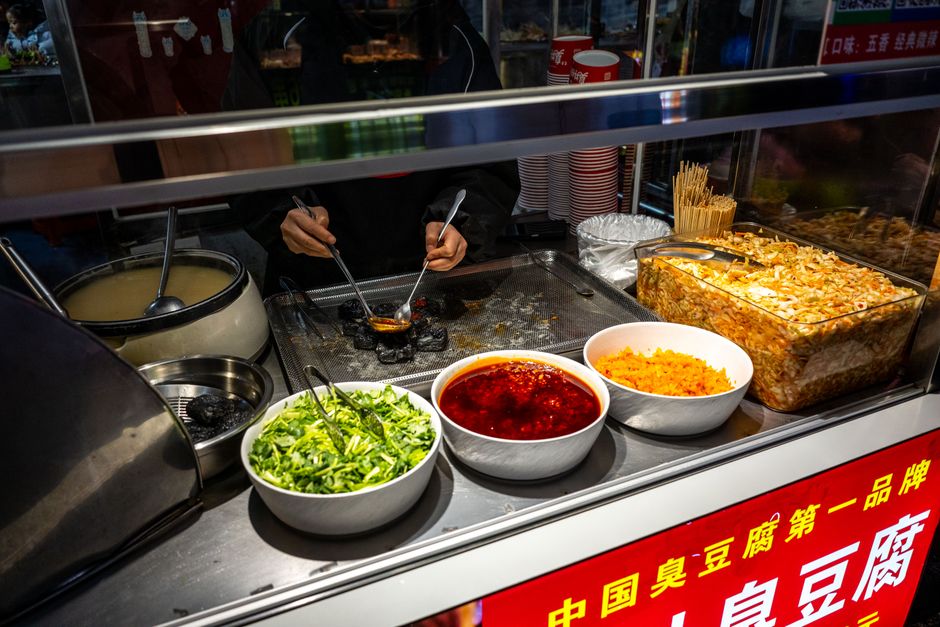
Local diners in Hefei have developed a taste for 李鸿章大杂烩 (Lǐ Hóngzhāng dà záhuì, Li Hongzhang’s mixed stew), a rich broth of sea cucumber, fish maw, chicken, and ham named after the Qing Dynasty official from Hefei. This dish, alongside 庐州烤鸭 (Lúzhōu kǎoyā, Luzhou roast duck), defines the city’s signature contributions to Huī cuisine. Street food also thrives: night markets near Huaihe Road sell candied hawthorn skewers, stinky tofu, and grilled meat skewers for 10–30 RMB per snack. Foreign visitors comfortable with mild chilli and soy-based sauces will find Hefei’s offerings approachable. The city’s food scene suits travelers who want variety, convenience, and the option to eat familiar global dishes after exploring local flavors.
Huangshan’s Food Scene: Mountain Ingredients and Ancient Traditions
Huangshan’s cuisine mirrors its geography — steep terraced fields, misty peaks, and clear streams yield ingredients unavailable elsewhere in Anhui. The signature dish 臭鳜鱼 (chòu guì yú, stinky mandarin fish), a fermented whole fish with pungent aroma and firm white flesh, originates from this region. Locals serve it braised with bamboo shoots and winter mushrooms; a portion at an authentic guesthouse in Tunxi Old Street costs 68–98 RMB, compared to 120–150 RMB at tourist-oriented restaurants near the mountain cable car stations. Another must-try is 毛豆腐 (máo dòufu, hairy tofu), a fermented tofu covered in white mold that develops a creamy, cheese-like interior. Street vendors in Huangshan’s ancient villages fry it on portable griddles — five pieces for 10 RMB — making it one of China’s most affordable and adventurous street eats.
Dining in Huangshan operates largely outside the international restaurant ecosystem. The city offers fewer than 10 formal international cuisine restaurants, mostly clustered in the 屯溪老街 (Túnxī Lǎojiē, Tunxi Old Street) tourist district. Here, travelers find Italian-run pizza places and Indian curry houses, but menus skew heavily toward local palates. Average meal costs remain low outside tourist zones: a two-person dinner at a village guesthouse costs 60–100 RMB for dishes like stir-fried mountain vegetables, bamboo shoot soup, and smoked pork belly. During October’s golden week holiday, however, peak-season pricing doubles street-food prices and forces 45-minute waits at popular stinky fish restaurants. Huangshan rewards visitors who embrace rustic, ingredient-driven cooking and who can navigate Chinese-only menus with translation apps. The scene best suits adventurous eaters, hikers seeking post-climb hearty meals, and travelers prioritizing authenticity over comfort.
Signature Dishes Face-Off: Hefei vs Huangshan
| Dish | City | Key Ingredients | Avg. Price (RMB) | Heat Level | Foreign Appeal |
|---|---|---|---|---|---|
| 李鸿章大杂烩 (Li Hongzhang’s mixed stew) | Hefei | Sea cucumber, fish maw, ham, bamboo shoots | 180–250 | Mild | High — savory, familiar broth |
| 庐州烤鸭 (Luzhou roast duck) | Hefei | Duck, sesame oil, honey glaze | 80–120 | Mild | High — similar to Peking duck |
| 臭鳜鱼 (stinky mandarin fish) | Huangshan | Fermented mandarin fish, chillies | 68–150 | Medium | Moderate — pungent aroma challenges |
| 毛豆腐 (hairy tofu) | Huangshan | Fermented tofu, chilli oil | 10–15 | Mild–Medium | Moderate — texture surprises |
| 黄山烧饼 (Huangshan baked cake) | Huangshan | Flour, sesame, preserved vegetable filling | 3–8 | Mild | High — portable, snackable |
| 笋干烧肉 (dried bamboo shoot braised pork) | Both | Dried bamboo, pork belly, soy sauce | 55–90 | Mild | High — universally liked |
The table highlights a clear split: Hefei’s dishes lean rich, intricate, and approachable for Western palates, while Huangshan’s specialties rely on fermentation and mountain-foraged elements that challenge but reward curious diners. For a safe yet satisfying entry point, Hefei’s 李鸿章大杂烩 or 庐州烤鸭 cause zero surprises. For authentic Anhui food memories, Huangshan’s 毛豆腐 and 臭鳜鱼 deliver stories worth telling back home.
Dining Experience: Atmosphere, Audience, and Practicalities
Hefei’s dining atmosphere matches its urban identity: bright, modern interiors with English menus common in malls, and servers accustomed to foreign guests. Restaurants like 外婆家 (Wàipó Jiā, Grandma’s Home) and 海底捞 (Hǎidǐ Láo, Haidilao) operate bilingual ordering systems and accept international credit cards. Dinner service runs from 11:00 to 14:00 and 17:00 to 21:00, with peak waits of 20–30 minutes on weekends. Street food vendors in Hefei also provide some English signage, especially around the university district. Foreign visitors with dietary restrictions — vegetarian, gluten-free, or halal — will find Hefei far easier to navigate. Over 40 vegetarian-friendly restaurants exist across the city, and halal options cluster near the mosque in the old town.
Huangshan’s dining atmosphere feels slower and more intimate. Meals happen in wooden-beamed guesthouses or at roadside stalls where the cook chops bamboo shoots while you wait. English menus are rare outside Tunxi Old Street; most establishments show pictures or rely on WeChat-based ordering systems with Chinese-only interfaces. Payment leans heavily on Alipay and WeChat Pay — only large hotels near the scenic area accept foreign credit cards. Service hours shift with tourist volume: during low season (November–March), many family-run restaurants close by 19:00. Foreign visitors who don’t speak Mandarin should download translation apps and carry cash (50–100 RMB in small bills) for street stalls. The intimacy rewards efforts: guesthouse owners often share cooking tips, regional histories, and samples of homemade rice wine.
Decision Framework: Where Should Foreign Visitors Dine?
If you are a first-time visitor to China with limited Mandarin, dietary restrictions, or a preference for international cuisine, choose Hefei. The capital’s bilingual menus, credit card acceptance, and variety from street snacks to fine dining reduce friction. You can sample authentic Huīcài dishes like 李鸿章大杂烩 in comfortable settings and pivot to pizza or ramen if your palate needs a break. Hefei suits business travelers, families with children, and anyone on a tight schedule who wants reliable quality.
If you are an experienced China traveler, a food adventurer, or a hiker prioritizing authentic village cooking, choose Huangshan. The city’s low costs (60–100 RMB for a two-person village meal), ingredient-driven dishes, and intimate guesthouse dining deliver cultural immersion that Hefei cannot replicate. Huangshan rewards patience: the best stinky fish comes from a no-name stall on a back alley of Tunxi Old Street, and the best hairy tofu sizzles on a cart at the base of the mountain at sunrise. This choice suits backpackers, culinary bloggers, and travelers for whom the meal itself is the destination.
If you have time for both cities, start in Hefei for 2–3 days to build familiarity with Huī cuisine, then travel 2.5 hours by high-speed rail to Huangshan for 4–5 days of deeper exploration. This sequence lets you learn flavor profiles in a controlled environment before tackling the rustic, less forgiving offerings of the mountain region.
NEXT STEPS
- Read our Hefei Dining Guide for Foreigners — restaurant recommendations with bilingual names, price ranges, and map pins for Hefei’s best Huīcài houses and international options.
- Book a Huangshan village cooking class — learn to make 毛豆腐 and 笋干烧肉 with a local family; our Huangshan Cooking Class Directory lists verified instructors with English support.
- Download our Anhui food glossary cheat sheet — Anhui Food Glossary with Pinyin and Photos helps you order stinky fish, hairy tofu, and mountain vegetables confidently at any restaurant.
— Anhui Gateway —
Remote China market entry support, built around execution.