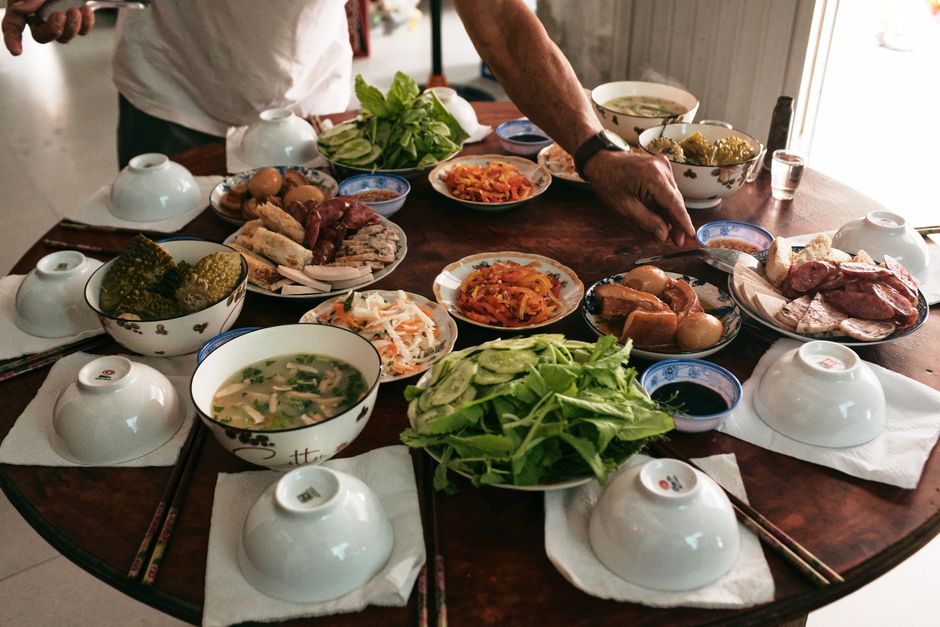


Anhui Province Partners with World Chefs’ Association for Chef Training: A 500-Chef Pilot Program
On March 20, 2025, Anhui Province officially signed a memorandum of understanding with the World Chefs’ Association (WCA) in Hefei, committing to train 500 local chefs over the next three years under international standards. The partnership marks the first time a Chinese province has directly engaged the WCA for a large-scale professional culinary upskilling initiative, with a total budget of ¥12 million (approx. USD 1.7 million) co-funded by the Anhui Provincial Department of Culture and Tourism and the WCA’s Asian chapter.
The initiative targets the modernization of 安徽菜 (Anhui cuisine, Ānhuī cài), commonly known as 徽菜 (Huīcài, Huizhou cuisine), a culinary tradition dating back over 1,200 years. By integrating WCA-certified training modules, Anhui aims to elevate its local cuisine from a regional specialty to a globally recognized fine-dining segment, directly competing with Guangdong’s Cantonese and Sichuan’s spicy offerings that currently dominate China’s culinary exports abroad.
What the Partnership Entails
Under the three-year agreement, the WCA will deploy a team of 12 international master chefs—including Michelin-starred chefs from France, Japan, and Singapore—to conduct intensive, hands-on workshops across five cities in Anhui: Hefei, Huangshan, Wuhu, Bengbu, and Ma’anshan. The training curriculum covers four core areas: knife skills, sauce preparation, ingredient sourcing, and modern plating techniques, all adapted to highlight the unique characteristics of Huizhou cuisine, such as its use of bamboo shoots, river fish, and cured ham.
Anhui’s selection was driven by the province’s growing tourism economy—tourist arrivals hit 820 million in 2024, a 12% increase from 2023—and the demand for high-quality dining experiences. The Anhui Provincial Government has set a target to have at least 50 WCA-certified restaurants operating across the province by 2028, up from the current zero. The program includes a train-the-trainer component, where 50 elite local chefs will become WCA-certified instructors who can then train additional chefs beyond the initial 500.
Why Anhui Cuisine Needs Global Standards
安徽菜 (Ānhuī cài) has long been overshadowed by other Chinese culinary schools. Data from the China Cuisine Association shows that in 2024, Anhui cuisine accounted for only 3.2% of the total market value of China’s culinary industry (estimated at ¥3.2 trillion), compared to 23% for Sichuan cuisine and 18% for Cantonese. The lack of standardized training is a key bottleneck: while 85% of top-tier Cantonese chefs hold formal international certifications, fewer than 5% of Anhui chefs have any internationally recognized credential.
To address this, the WCA partnership introduces a tiered certification system: Level 1 (Basic) for cooks with less than 2 years of experience, Level 2 (Intermediate) for chefs with 2–5 years, and Level 3 (Advanced) for veteran chefs with over 10 years. The table below summarizes the key differences between the current local training and the new WCA program:
| Metric | Traditional Local Training (Pre-2025) | WCA Integrated Program (2025–2028) |
|---|---|---|
| Training duration per chef | 2–3 months (apprenticeship) | 6 months (240 hours classroom + 480 hours practical) |
| Certification recognized | Anhui provincial certificate | WCA Global Certificate + Anhui joint endorsement |
| International exposure | None | 2-week overseas rotation in Singapore or France |
| Focus techniques | Stewing, braising, smoking | Stewing + modern sous-vide, plating, flavor pairing |
| Cost to chef (if not subsidized) | ¥3,000–5,000 | ¥12,000 (¥8,000 subsidized by government) |
The program also aims to standardize ingredient sourcing: the WCA will certify 30 local farms across Anhui as “Premium Huizhou Ingredient Suppliers,” ensuring consistent quality for the 20 signature dishes that will be included in the training syllabus, such as 毛豆腐 (Máo dòufu, hairy tofu) and 臭鳜鱼 (Chòu guìyú, stinky mandarin fish).
Economic and Cultural Implications
The partnership is expected to generate significant economic returns. According to a feasibility study conducted by Anhui University, each certified chef is projected to increase restaurant revenue by an average of ¥180,000 per year through menu innovation and higher pricing at their outlets. If all 500 chefs achieve Level 3 certification, the cumulative revenue impact could reach ¥90 million annually. Additionally, the provincial tourism bureau forecasts a 15–20% increase in international tourist spending on dining from 2026 onward, as WCA-certified restaurants will be listed on global platforms like Michelin Guide and World’s 50 Best Restaurants.
Culturally, the partnership aims to preserve and modernize Huizhou cuisine. The WCA will work with the Anhui Cuisine Research Institute to document oral traditions of 100 elderly master chefs (aged 70+), many of whom have recipes passed down through 5 generations. These recipes, once digitized and standardized, will be incorporated into the training material. A documentary series featuring the collaboration is already in production, funded by a ¥500,000 grant from the Anhui Cultural Media Fund.
Training Curriculum Highlights
The WCA-designed curriculum blends international culinary science with local wisdom. For example, the “Flavor Pairing and Fermentation” module teaches chefs to calibrate the umami levels in 腌鲜鳜鱼 (pickled fresh mandarin fish) using controlled lactic acid fermentation, reducing the traditional 15-day process to 7 days while retaining flavor. Another module, “Plating for Export,” trains chefs to present dishes in a way that appeals to Western diners without losing the essence of Huizhou cooking.
To ensure quality, participating chefs must pass a written test (100 multiple-choice questions on sanitation, history, and ethics) and two practical exams—one traditional dish and one fusion dish—before receiving WCA certification. The first batch of 100 chefs will begin training in Hefei on May 1, 2025, with graduation ceremonies scheduled for December 2025.
NEXT STEPS
- If you are a chef based in Anhui and want to apply for the program, review our detailed application guide (including eligibility criteria and deadlines).
- If you are a restaurant owner interested in becoming a WCA-certified outlet, read how to prepare your kitchen and staff for international standards.
- If you are a foreign investor considering F&B opportunities in Anhui, explore our report on foreign investment trends in China’s culinary sector.
— Anhui Gateway —
Remote China market entry support, built around execution.