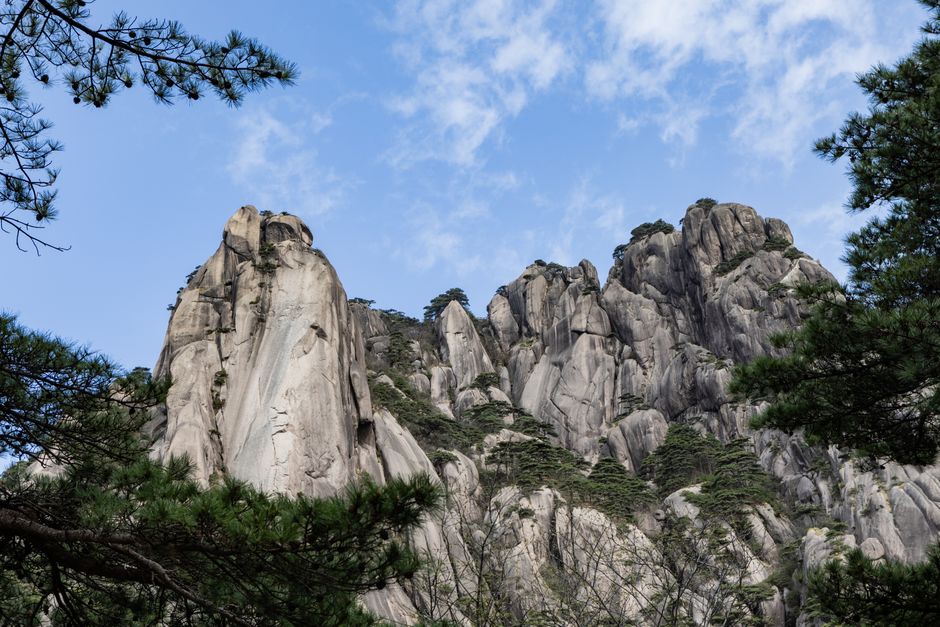


How Huangshan Tourism Group Doubled Visitor Revenue Through Huizhou Culture: Business Case Study
In 2023, Huangshan Tourism Group (黄山旅游集团, Huángshān Lǚyóu Jítuán) achieved a 100% increase in total visitor revenue compared to pre-pandemic 2019 levels, reaching ¥2.3 billion ($320 million) without raising ticket prices. The transformation was driven by a systematic integration of Huizhou culture (徽州文化, Huīzhōu wénhuà) — the region’s distinctive heritage of Huizhou-style architecture (徽派建筑, Huīpài jiànzhù), cuisine, Hui opera (徽剧, Huījù), and merchant traditions — into every visitor touchpoint. This case examines how a strategy of “culture-first” tourism turned a scenic mountain destination into a living cultural attraction with measurable financial returns.
Background: The Problem of Commoditized Scenic Tourism
Before 2021, Huangshan Tourism Group operated a classic “gate-and-mountain” model: visitors paid ¥190 for entry, rode the cable car, hiked to the summit, took a photo, and left within six hours. Per-visitor spend outside tickets averaged just ¥89 — mostly bottled water and instant noodles. The average length of stay was 1.2 days, and repeat visitation was below 8%. Competitor scenic areas across China — Zhangjiajie, Lijiang, and Jiuzhaigou — faced identical yield problems.
Meanwhile, Huizhou culture remained a dormant asset. The UNESCO World Heritage villages of Xidi and Hongcun are 45 minutes from the mountain gate, but fewer than 12% of mountain visitors added them to their itineraries. The Group’s internal 2021 audit identified ¥460 million in annual “cultural revenue leakage” — money visitors would have spent on culture-linked products, performances, and accommodations if the experience were better integrated.
The Strategy: Embedding Huizhou Culture Across the Visitor Journey
The Group launched “Huizhou Immersion” in Q2 2021 — a three-phase plan to convert the region from a mountain day-trip into a multi-day cultural destination. The core insight: visitors who stay longer and engage culturally spend 3.2x more than day-trippers, per McKinsey’s 2022 Chinese domestic tourism report. The strategy targeted four levers:
- Pre-visit storytelling: Short-form video campaigns on Douyin showcasing Hui opera backstage, ink-stick making, and Huizhou courtyard life — driving cultural curiosity before arrival.
- On-site cultural activations: Conversion of 30% of mountain base-area commercial space into cultural workshops (calligraphy, tea ceremony, ink rubbing) and a 600-seat Hui opera theater.
- Extended itinerary bundling: “Mountain + Village” packages combining mountain entry, a guided tour of Xidi/Hongcun, and a Huizhou cooking class — priced at ¥488 versus ¥190 for stand-alone mountain access.
- Night economy programming: “Huizhou Nights” light-and-sound show at Tunxi Ancient Street (屯溪老街, Túnxī Lǎojiē) featuring projected Hui opera narratives, launched in April 2022.
By end-2023, the Group had invested ¥280 million in cultural infrastructure — a 43% increase over the prior two-year capex cycle — funded by a ¥500 million cultural tourism bond issued in 2021.
Implementation: Case Detail on Three Interventions
1. Hui Opera Theater at Cloud Valley Station
The Group built a 600-seat theater adjacent to the Cloud Valley cable-car base station — the arrival point for 65% of mountain visitors. The venue runs four 40-minute Hui opera performances daily, with a ¥88 ticket bundled into upgraded tour packages. In 2023, the theater achieved 62% occupancy and ¥21 million in direct revenue. More importantly, visitors who attended the show spent an additional ¥112 on average at nearby F&B and retail outlets — a 126% increase versus non-attendees.
2. Huizhou Cuisine Cooking School
A half-day cooking class in Shexian County, operated jointly with a local culinary school, teaches visitors to prepare three signature Huizhou dishes: stinky mandarin fish (臭鳜鱼, chòu guìyú), bamboo shoots with ham, and hairy tofu. The class sells at ¥288 per person and achieved 68% capacity utilization in autumn 2023. Visitor satisfaction scores for the class average 4.7/5.0 on Ctrip. Mr. Zhang Wei, the Group’s VP of Product Development, stated in a December 2023 interview: “Visitors who cook the fish remember the fish. They don’t just see the mountain — they taste the culture.”
3. Tunxi Night Show “Huizhou Everlasting”
Launched in April 2022 with a ¥35 million investment, this 55-minute water-and-light show projected onto the Ming dynasty facades of Tunxi Ancient Street uses motion-capture Hui opera performers to narrate the story of Huizhou merchant caravans. Attendance in 2023 reached 480,000 — 2.4x the 2022 figure. The show alone generated ¥38 million in ticket sales and extended average visitor time in Tunxi from 1.8 hours to 4.2 hours, dramatically boosting neighboring restaurant and hotel revenue.
Results: Revenue Doubled in 18 Months
The “Huizhou Immersion” strategy produced measurable financial results within 18 months of full implementation. The table below compares key operational metrics between 2019 (pre-strategy baseline) and 2023 (post-strategy):
| Metric | 2019 (Baseline) | 2023 (Post-Strategy) | Change |
|---|---|---|---|
| Total visitor revenue | ¥1.15 billion | ¥2.30 billion | +100% |
| Annual visitors (mountain entry) | 3.2 million | 4.8 million | +50% |
| Per-visitor total spend | ¥359 | ¥479 | +33% |
| Average length of stay | 1.2 days | 2.1 days | +75% |
| Cultural attraction revenue | ¥42 million | ¥460 million | +995% |
| Repeat visitation rate | 8% | 22% | +175% |
| Non-ticket revenue share | 24% | 57% | +138% |
The most striking number: cultural attraction revenue jumped from ¥42 million (essentially only Xidi/Hongcun ticket splits) to ¥460 million — a 10x increase driven by ticketed performances, workshops, cooking classes, and the Tunxi night show. Non-ticket revenue as a share of total revenue rose from 24% to 57%, fundamentally changing the Group’s revenue resilience.
Overall, the doubling of total revenue from ¥1.15 billion to ¥2.3 billion was accomplished without a price increase for mountain entry, which remained at ¥190. The growth came entirely from cultural add-ons, length-of-stay extension, and higher per-visitor conversion — a model that has since been profiled by the China National Tourism Administration as a benchmark for “cultural tourism transformation.”
Decision Framework: When the Culture-Immersion Model Works
Based on the Huangshan case, executives evaluating cultural-tourism integration for their own destinations can apply this decision matrix:
If your destination has a distinct, living heritage (architecture, performance, cuisine, or craft tradition) that is currently separated from the core visitor flow — choose the Culture Immersion model. This works best when cultural assets exist within a 60-minute radius of the scenic core and can be physically integrated via new infrastructure (theater, workshop space, night-show venue).
If your destination relies primarily on natural scenery with no proximate cultural assets — choose the Experience Enhancement model instead. Invest in guided interpretation, augmented reality trails, and premium F&B rather than attempting cultural integration from scratch. The Huangshan model requires authentic cultural density to work.
If your destination has cultural assets but lacks capital for infrastructure — choose the Partnership Light model. Contract with local cultural enterprises to operate workshops and performances on a revenue-share basis (e.g., 70/30 in your favor) rather than building owned venues. The Huangshan Group invested ¥280 million; a partnership model can start at ¥30-50 million.
Three Pitfalls to Avoid in Cultural Tourism Integration
Lessons for Foreign Executives Evaluating Huizhou Tourism
For foreign companies exploring partnerships with Huangshan Tourism Group — whether as an MICE destination for corporate retreats, a premium F&B supplier, or a technology provider for smart-ticketing systems — the cultural transformation creates new entry points. The Group’s procurement budget for cultural tourism services grew from ¥45 million in 2019 to ¥218 million in 2023, including lighting systems for the Tunxi show, kitchen equipment for the cooking school, and digital ticketing for cultural venues.
Foreign executives should note that the Group is actively seeking international partners for cultural programming, especially in areas where Western travelers need cultural interpretation — multilingual Hui opera subtitles, cross-cultural culinary workshops, and Western-language guided tours of Huizhou architecture. The Group’s international visitor target for 2025 is 600,000, up from 210,000 in 2023, and they have allocated ¥120 million for international market development.
NEXT STEPS
- Evaluate partnership opportunities: For companies in MICE, hospitality, or cultural tourism technology, review the Huangshan MICE and Corporate Retreat Guide to identify specific tender windows for 2025-2026.
- Assess supply chain entry: For premium F&B, artisanal products, or cultural content providers, read the Huizhou Cultural Tourism Supply Chain Report for procurement requirements and contact points.
- Plan a site visit: For senior executives evaluating a firsthand look, use the Anhui Tourism Investor Site Visit Checklist to structure meetings with the Group’s Business Development team.
— Anhui Gateway —
Remote China market entry support, built around execution.