

Huizhou Painting vs Suzhou Embroidery: Which Traditional Art Has Better Investment Potential?
For collectors and investors looking at Chinese traditional arts, two schools stand out for their historical depth and market momentum: Huizhou Painting (徽州绘画) from Anhui province and Suzhou Embroidery (苏绣) from Jiangsu. Both represent centuries of refined craftsmanship, yet their investment profiles differ significantly in terms of liquidity, price trajectory, authentication complexity, and audience reach. This article provides a comprehensive, data-driven comparison to help you decide where to allocate capital in 2026 and beyond.
Understanding the Two Art Forms
Huizhou Painting: The Scholar’s Art
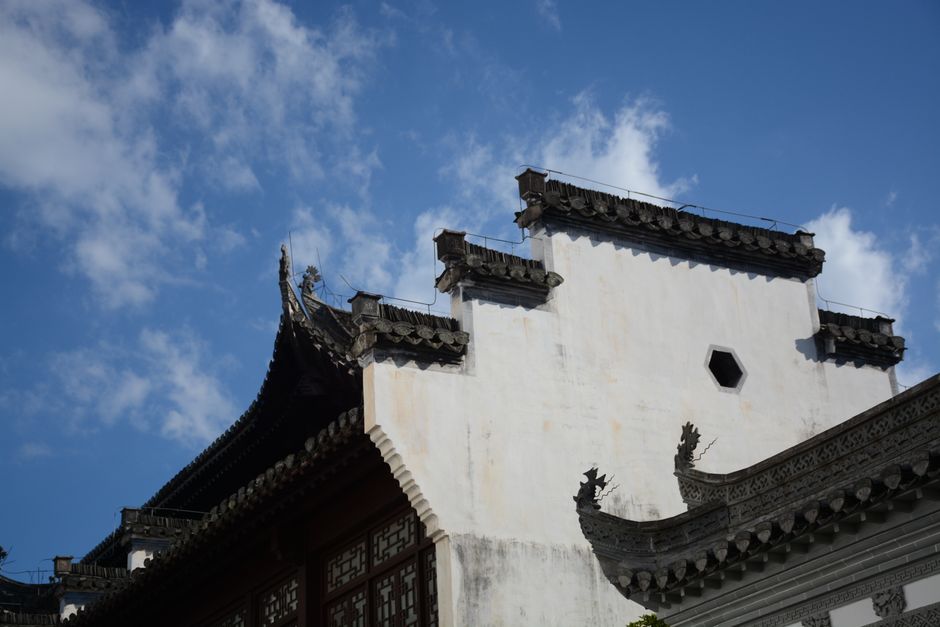
Huizhou painting is the ink-brush tradition that flourished in the Huizhou region (modern Huangshan area of southern Anhui) during the Ming and Qing dynasties. It is part of the broader Xin’an School (新安画派) of painting, characterized by sparse, minimalist landscapes that reflect the region’s misty mountains, ancient pines, and Hui-style architecture. Masters like Zha Shibiao (查士标) and Hongren (弘仁) established a tradition that prizes restraint, brush economy, and philosophical depth over ornamentation. The Xin’an School emerged during the late Ming period when many scholar-officials retreated to the Huizhou mountains after the fall of the Ming dynasty, bringing with them a refined literati aesthetic that rejected the ornate court styles of the early Qing. This historical context — painting as political and philosophical expression — gives Huizhou works a depth of meaning that purely decorative arts lack.
In the contemporary market, Huizhou painting encompasses both antique works from the Ming-Qing period and works by living inheritors recognized by the Anhui Provincial Department of Culture. A mid-range contemporary Huizhou ink painting by a recognized master typically ranges from ¥50,000 to ¥500,000, while authenticated antique works can fetch ¥1 million to ¥10 million at major auction houses like China Guardian and Poly Auction. The pricing hierarchy is well-established: works by the “Four Great Masters of the Xin’an School” — Zha Shibiao, Hongren, Sun Yi, and Wang Zhirui — command the highest premiums, while lesser-known but still historically significant painters offer more accessible entry points for mid-range collectors.
Suzhou Embroidery: The Courtly Craft
Suzhou embroidery, by contrast, is a textile art originating in Suzhou, Jiangsu province, that dates back over 2,500 years to the Spring and Autumn period. It uses silk threads, gold filigree, and intricate satin stitching to create densely textured depictions of flowers, birds, figures, and landscapes. The finest pieces employ double-sided embroidery (双面绣) where both front and back appear identical — a feat of technical virtuosity that can take a single artisan months to complete. Suzhou embroidery reached its zenith during the Song dynasty when it was adopted by the imperial court, and it has maintained its association with luxury and refinement ever since. The craft encompasses multiple sub-styles, including “random stitch” embroidery (乱针绣) which creates impressionistic effects, and “fine-stitch” embroidery (细绣) which achieves photographic realism through thousands of tiny, precisely placed threads per square centimeter.
The Suzhou embroidery market spans from small decorative panels (¥5,000–¥50,000) to museum-grade masterpieces by national-level inheritors like Yao Jianping (姚建萍), whose works have sold for ¥2 million to ¥8 million at auction. The market is more accessible at entry levels but faces challenges around industrial reproduction and authentication. The total addressable market for Suzhou embroidery is estimated at ¥3–5 billion annually, significantly larger than Huizhou painting’s ¥500–800 million market, but the per-unit investment potential is constrained by the vast supply of mid-range pieces that behave more like decorative consumer goods than investment-grade assets.
Market Size and Liquidity
One of the most critical factors for any investment is how easily you can exit the position. Here the two arts diverge sharply.
Suzhou embroidery benefits from a larger domestic market. Jiangsu’s textile economy means there are more dealers, more collectors, and more frequent transactions. The Suzhou Embroidery Research Institute alone maintains a database of over 3,000 registered collectors, and live auctions dedicated to Suzhou embroidery occur quarterly in Suzhou, Nanjing, and Shanghai. Online platforms like Taobao Art and Xiling Auction list hundreds of embroidery pieces daily. This breadth of distribution means that a mid-range Suzhou embroidery piece can typically be sold within 30–60 days, though often at a discount of 20–30% from retail if sold privately rather than at auction. The rapid transaction speed is a significant advantage for investors who value liquidity, but the discount reflects the market’s understanding that mid-range embroidery pieces are reproducible — there is always another piece similar to yours available elsewhere.
Huizhou painting has a narrower but more committed collector base. The Anhui painting market is smaller — perhaps one-tenth the volume of Suzhou embroidery transactions nationally — but buyers tend to be serious connoisseurs rather than decorative buyers. The Xin’an School has a dedicated following among Chinese literati culture enthusiasts, and because supply of high-quality antique works is finite, prices have shown remarkable resilience even during broader market downturns. A quality Huizhou painting by a known master may take 3–6 months to sell at a fair price, compared to 1–3 months for Suzhou embroidery, but the per-transaction profit margin is typically higher — often 15–25% annual appreciation for blue-chip works versus 8–12% for comparable embroidery. The smaller market also means that a motivated seller with a well-priced piece can often find a buyer more quickly than the averages suggest, particularly if the work is listed through specialist galleries in Huangshan or Hefei where the most dedicated collectors maintain relationships.
Price Trajectory: 2016–2026
Examining the last decade of auction data from China Guardian, Poly Auction, and Xiling Yinshe reveals contrasting growth patterns.
Huizhou painting prices have grown at a compound annual rate of approximately 12–18% for recognized masters over the past ten years. The 2021 economic recovery saw a particular spike, with works by Xin’an School painters appreciating 25% year-over-year as cultural heritage tourism to Huangshan drove renewed interest. Anhui Province’s designation of Huizhou culture as a provincial heritage priority in 2023 further boosted prices. The UNESCO tentative listing in early 2026 (a development we cover separately in our News section) is expected to push prices another 10–15% over the next two years as international interest grows. For antique works specifically, the supply is effectively fixed — only 800–1,200 authenticated Xin’an School paintings are believed to exist in institutional and private collections — creating a fundamental supply-demand imbalance that supports long-term appreciation.
Suzhou embroidery has seen more modest but steadier growth of 6–10% annually across the same period. The lower growth rate reflects the much larger supply base — thousands of embroiderers produce work annually versus perhaps fifty serious Huizhou painters. However, the top tier of Suzhou embroidery — works by national-level inheritors — has outperformed, with some individual pieces appreciating 20–30% annually as ultra-high-net-worth collectors compete for the best examples. This bifurcation means that investors in Suzhou embroidery must be very selective: mass-produced pieces may actually depreciate due to wear and changing fashion, while museum-grade works rival painting in returns. The market for works by deceased masters is particularly interesting — the value of a piece by the late Gu Wenxia (顾文霞), a pioneer of modern Suzhou embroidery, has appreciated approximately 18% annually since her passing in 2021, and similar patterns are expected for other senior inheritors approaching retirement age.
Authentication and Risk
Huizhou painting faces significant authentication challenges for antique works. The market has been plagued by forgeries of Qing-dynasty Xin’an School pieces, and even seasoned experts sometimes disagree on attributions. The Anhui Provincial Museum maintains a reference collection and offers authentication services, but the process is time-consuming and costly (¥5,000–¥20,000 per piece). For contemporary works, the risk is lower — artists issue certificates backed by the Anhui Artists Association — but provenance gaps are common when works change hands multiple times. Investors should budget 5–10% of purchase price for authentication when buying antique works, and should prioritize pieces with continuous documented provenance dating back to their original sale or commission.
Suzhou embroidery authentication is equally complex but for different reasons. The rise of machine embroidery has created a grey market where hand-made and machine-made pieces are sold interchangeably. A trained eye can distinguish them — hand-made double-sided embroidery shows slight thread-angle variations that machines cannot replicate, and the reverse side of hand-made pieces has a characteristic slight irregularity — but the average investor cannot reliably tell them apart. The Suzhou Embroidery Association launched a blockchain-based certification system in 2024 that logs each piece’s provenance, artisan, and materials. As of 2026, approximately 40% of high-value pieces are registered in this system. Investors should insist on blockchain registration for any piece over ¥100,000, and should verify the registration directly rather than accepting a screenshot or printed certificate, as forgers have begun producing fake registration documents to accompany counterfeit pieces.
International Market Potential
This is perhaps the most dynamic area of comparison. Huizhou painting currently has a smaller international market but is growing rapidly. Major sales at Christie’s and Sotheby’s for Xin’an School works have increased from fewer than five lots per year in 2018 to over twenty in 2025. The UNESCO tentative listing is expected to accelerate this trend, particularly among European and American collectors of Chinese literati art. Prices in international auctions for Huizhou painting antiques are typically 20–40% higher than comparable domestic transactions, creating arbitrage opportunities for investors who can navigate both markets. The international buyer base remains concentrated in Hong Kong, New York, and London, but emerging interest from Southeast Asian and Middle Eastern collectors is broadening the geographic distribution.
Suzhou embroidery has a larger but more commoditized international presence. Suzhou embroidery is widely sold as decorative art in galleries worldwide, particularly in Hong Kong, Singapore, and London’s Chinatown. However, these markets are dominated by mid-range decorative pieces (¥5,000–¥50,000) that have limited investment upside. The top-tier, investment-grade Suzhou embroidery market outside China remains thin — fewer than ten international auctions per year feature pieces by national-level inheritors. The potential for growth is significant if Chinese textile arts gain the same recognition as, say, Japanese kimono or French tapestry, but that breakthrough has not yet arrived. Cultural diplomacy efforts — including the Chinese Ministry of Culture’s “Embroidery Diplomacy” program, which gifts Suzhou embroidery to foreign dignitaries — are gradually raising international awareness, but the market remains heavily dependent on Chinese diaspora collectors for high-value purchases.
Storage and Maintenance Costs
Both art forms require specialized care, but the costs differ significantly over a multi-year holding period.
Huizhou painting on paper or silk requires controlled humidity (45–55%), protection from direct sunlight, and periodic remounting every 30–50 years. Professional storage costs approximately ¥3,000–¥8,000 per year for a scroll, depending on size and insurance value. Remounting by a conservator can cost ¥10,000–¥50,000 but is essential for long-term preservation, as old mounting silk can become brittle and damage the painting itself. UV-protective glazing for framed works adds another ¥2,000–¥5,000 per piece but is strongly recommended for works displayed in naturally lit rooms.
Suzhou embroidery, being textile, requires even more careful handling. It must be stored flat or carefully rolled on acid-free tubes, never folded. Humidity must stay below 60% to prevent silk deterioration and mildew. Professional storage runs ¥5,000–¥12,000 annually. Cleaning and conservation by a textile specialist is recommended every 10–15 years at ¥15,000–¥40,000 per treatment. The silk threads in Suzhou embroidery are particularly vulnerable to light damage — even indirect sunlight can cause noticeable fading within five years. Collectors should budget for UV-filtered display cases (¥8,000–¥25,000) if they intend to display rather than store their pieces. Insurance premiums are comparable for both art forms — approximately 0.5–1.5% of appraised value annually through specialist art insurers like PICC Art Insurance or AXA Art.
Investment Recommendation by Profile
Based on the analysis above, here is our guidance for different investor profiles:
For long-term capital preservation (5–10 year horizon): Huizhou painting is the stronger choice. Finite supply of antique works, a committed collector base, and the UNESCO-driven international interest create favorable supply-demand dynamics. Allocate 60–70% of a traditional art portfolio to antique Huizhou painting by recognized Xin’an School masters, and 30–40% to contemporary works by provincial-level inheritors as growth plays. Target a blended annual return of 12–15% over the holding period, net of storage and insurance costs.
For medium-term appreciation (2–5 year horizon): Top-tier Suzhou embroidery by national-level inheritors offers attractive risk-adjusted returns. Focus on pieces with blockchain certification and strong provenance. Expect 10–15% annual appreciation, but be prepared for lower liquidity in the secondary market. Avoid mid-range and decorative Suzhou embroidery, which behaves more like a consumer good than an investment asset. The sweet spot is pieces priced between ¥200,000 and ¥800,000 from recognized inheritors with at least fifteen years of exhibition history.
For short-term trading (under 2 years): Neither art form is ideal for short-term flipping due to transaction costs (auction house commissions of 10–15% plus authentication and shipping) and liquidity constraints. If forced to choose, contemporary Huizhou painting by emerging artists (aged 35–50) offers the best opportunity for rapid appreciation, though with higher risk. Buy at studio prices (¥30,000–¥80,000) during artist visits to Huangshan, and sell at auction within 12–24 months if the artist gains provincial-level recognition. Returns of 30–50% are achievable on successful picks, but the failure rate is approximately 40%.
For diplomatic or corporate gifting: Suzhou embroidery wins decisively. Its visual impact, cultural cachet, and immediate recognizability make it a superior gift for international business partners. The Suzhou Embroidery Research Institute offers bespoke commissioned pieces with documented provenance — an excellent option for enterprises building relationships in China’s cultural economy. Unlike painting gifts, which require the recipient to have some knowledge of Chinese art history to appreciate the piece, Suzhou embroidery’s technical virtuosity is immediately accessible to any viewer, making it a reliable diplomatic tool regardless of the recipient’s cultural background.
Conclusion
Huizhou painting and Suzhou embroidery represent two distinct investment philosophies. Huizhou painting is the patient collector’s asset — lower liquidity, higher per-unit appreciation, strong cultural tailwinds from heritage policy, and growing international recognition. Suzhou embroidery offers easier entry, larger market breadth, and stronger gifting applications, but requires very careful selection to avoid the commoditized middle market that offers marginal investment returns.
For 2026, the smartest strategy may be to hold both: a core position in antique Huizhou painting for long-term capital appreciation, and a satellite position in top-tier Suzhou embroidery for medium-term growth and diversification. The two assets have low correlation — they respond to different market drivers, different collector demographics, and different policy environments — making them complementary components of a well-structured traditional art portfolio. With the UNESCO tentative listing driving new international interest in Huizhou culture and the blockchain certification system improving transparency in the Suzhou embroidery market, the fundamentals for both asset classes are stronger now than at any point in the past decade.
This article is for informational purposes only and does not constitute investment advice. Past performance does not guarantee future results. Always consult a qualified art advisor and authentication specialist before making significant art investments.