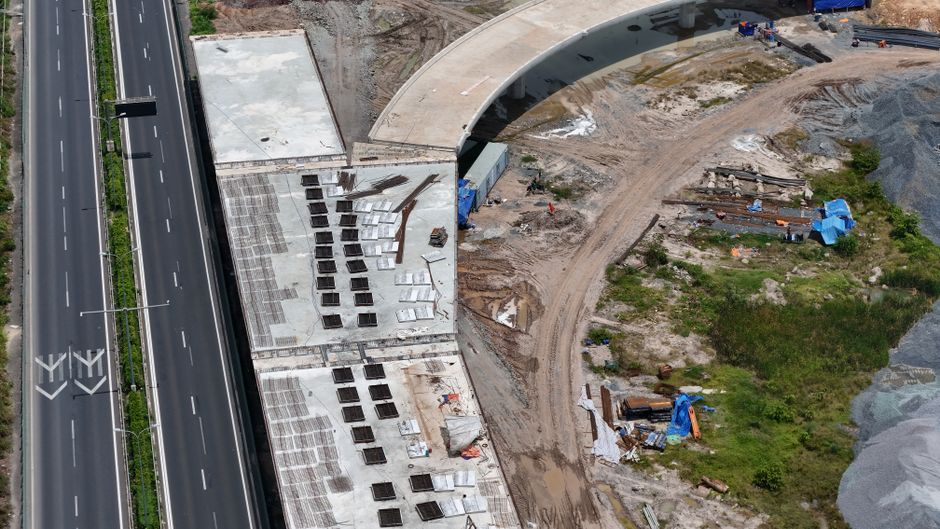


Chizhou Airport Expansion Completed: Terminal Capacity Triples to 2 Million, Boosting Jiuhuashan Tourism Corridor
The Chizhou Jiuhuashan Airport expansion has been completed, lifting annual passenger throughput capacity to 2 million — a 300% increase from the previous 500,000 travelers. This marks the largest infrastructure upgrade for 池州九华山机场 (Chizhou Jiuhuashan Airport, chízhōu jiǔhuáshān jīchǎng) since its opening in 2013, directly targeting the surging demand for temple tourism and eco-leisure travel in southern Anhui. With the new terminal and extended runway, the airport now supports wide-body aircraft and is expected to connect Chizhou to 32 domestic destinations plus 4 international charter routes by the end of 2025.
Expansion Specifics: What Changed at Jiuhuashan Airport
The 18-month, RMB 1.2 billion project delivered a 28,000-square-meter terminal (up from 12,000 sqm), a 2,600-meter runway extended by 400 meters, and 8 new boarding gates. A dedicated VIP corridor for group tour operators now processes up to 600 passengers per hour, reducing average check-in time from 45 minutes to under 18 minutes. The apron was expanded from 12 to 22 aircraft stands, including 4 positions capable of handling Boeing 787 and Airbus A330 aircraft — a key requirement for international charter flights from Southeast Asian Buddhist pilgrim markets.
Cargo capacity also doubled to 8,000 tons annually, with a new cold-chain facility for transporting 九华黄精 (Jiuhua Polygonatum, jiǔhuá huángjīng) and other local medicinal herbs to premium markets in Shanghai and Guangzhou. Airport authorities confirmed that the first international charter — a direct flight from Kuala Lumpur carrying 280 Malaysian pilgrims — is scheduled for April 2026, timed with the Jiuhuashan Buddha Bathing Festival.
Tourism Impact Data: Pre- and Post-Expansion Benchmarks
Chizhou received 12.3 million tourists in 2023, generating RMB 15.6 billion in tourism revenue. The city government projects that the expanded airport will help lift those figures to 18.5 million arrivals and RMB 23 billion revenue by 2026. The key driver is the “Jiuhuashan Golden Triangle” — a coordinated tourism zone linking Chizhou with Huangshan and Xuancheng that already accounts for 40% of regional visitor spend.
Below is a comparison of the airport’s operational metrics before and after the expansion:
| Metric | Before Expansion (2022) | After Expansion (2025) | Change |
|---|---|---|---|
| Annual passenger capacity | 500,000 | 2,000,000 | +300% |
| Terminal area (sqm) | 12,000 | 28,000 | +133% |
| Runway length (m) | 2,200 | 2,600 | +18% |
| Aircraft stands | 12 | 22 | +83% |
| Domestic routes | 19 | 32 | +68% |
| International charter routes | 0 | 4 | N/A |
| Check-in time (avg) | 45 min | 18 min | -60% |
| Cargo capacity (tons/yr) | 4,000 | 8,000 | +100% |
The 13 new domestic routes include direct connections to Xi’an, Chengdu, Xiamen, and Harbin — all cities with large Buddhist communities and existing pilgrim tour demand. The four international charter routes pending regulatory approval are Kuala Lumpur, Bangkok, Seoul, and Taipei, targeting the core markets for 地藏菩萨 (Ksitigarbha Bodhisattva, dìzàng púsà) pilgrimage.
Broader Economic Ripple Effects
The airport expansion is part of Chizhou’s broader “Southern Anhui Transit Hub” strategy, which also includes the completion of the Chizhou–Huangshan high-speed rail link (2027) and the expansion of the G50 Expressway interchange at the airport junction. Combined, these projects are expected to reduce average travel time from Jiuhuashan to Shanghai Pudong from 5.5 hours to 3.2 hours by 2028.
Hotel investment has already accelerated. In the 12 months since the expansion announcement, Chizhou recorded 11 new hotel projects with 1,850 rooms — including a 350-room InterContinental resort near the Jiuhuashan scenic area entrance. Average hotel occupancy in Chizhou was 68% in 2024, up from 52% in 2020, and is projected to reach 78% by 2027. The 池州市文化和旅游局 (Chizhou City Culture and Tourism Bureau, chízhōu shì wénhuà hé lǚyóu jú) is also offering a 30% subsidy on landing fees for airlines that operate year-round routes to the airport, effective through December 2026.
Travel Decision Framework for Tour Operators and Investors
If you are a tour operator targeting Buddhist pilgrimage groups from Southeast Asia, choose Chizhou Jiuhuashan Airport for direct charters to Jiuhuashan — the airport’s new international facilities reduce arrival-to-mountain transfer time to 45 minutes, compared to 3 hours via Hefei Xinqiao. If you are a hotel developer evaluating Anhui secondary cities, choose Chizhou for its combination of expanding airlift and a religious tourism anchor that delivers repeat visitor traffic (average Jiuhuashan pilgrims visit 2.4 times per year).
If you are a logistics company in herbal or agricultural products, choose Chizhou for its new cold-chain capacity and direct cargo flights to Guangzhou and Shanghai, cutting transit time from 48 hours to 12 hours for high-value items like Jiuhua Polygonatum and Anhui green tea.
3 Key Risk Factors for Travelers and Investors
NEXT STEPS
- Evaluate route viability — Review our Anhui Airport Connectivity Guide 2025 to compare Chizhou with Hefei, Huangshan, and Wuhu for your specific cargo or passenger route needs.
- Contact the Chizhou investment bureau — Access our Verified Government Contact Directory for Anhui Cities to request the latest tourism incentive policy documents and landing fee subsidy application forms.
- Plan a site inspection — Use our Anhui Business Trip Planning Checklist to coordinate terminal tours, hotel site visits, and meetings with the 池州市文化和旅游局 (Chizhou Culture and Tourism Bureau) in a single 3-day itinerary.
— Anhui Gateway —
Remote China market entry support, built around execution.