

Food Processing vs Agricultural Raw Materials Export in Fuyang: Which Investment Wins in 2025?
For foreign executives evaluating Anhui’s food economy, Fuyang (阜阳, Fùyáng) presents a decisive fork: invest in food processing—where output hit ¥68.2 billion in 2024—or agricultural raw materials export, which shipped ¥3.4 billion worth of unprocessed goods in the same year. The gap is 20-to-1 in value, but the choice hinges on capital intensity, margin structure, and policy incentives. Fuyang is China’s sixth-largest grain-producing prefecture, cultivating 5.1 million tons of crops annually, yet less than 18% undergoes advanced processing. This guide compares both paths using real 2024–2025 data, helping you decide where to place your next 外商独资企业 (WFOE, wàishāng dúzī qǐyè).
Why Fuyang? The Agricultural Engine of Anhui
Fuyang sits on the North China Plain, with 674,000 hectares of arable land—equivalent to 2.7 times the size of Luxembourg. The city produces 1.2 million tons of wheat annually, ranking 4th nationally among prefectures. Its raw material base is unmatched in Anhui, but processing capacity lags behind cities like Hefei (合肥, Héféi) by a margin of 3.5 years in industrial maturity. The local government has designated food processing as a “pillar industry” for the 14th Five-Year Plan, offering tax rebates of up to 40% for new WFOEs in designated zones like the Fuyang Economic Development Zone (阜阳经济技术开发区, Fùyáng Jīngjì Jìshù Kāifā Qū).
From 2020 to 2024, raw materials export volume grew at a compound annual rate of 7.2%, while processed food export value surged 14.8% CAGR. However, raw materials enjoy lower execution complexity: a soybean exporter can start shipping within 90 days of registering a 外商独资企业, while a food processing plant requires 18–24 months to build and certify. This timeline gap is the single most important factor for investors with shorter return horizons.
Investment Comparison: Food Processing vs Raw Materials Export
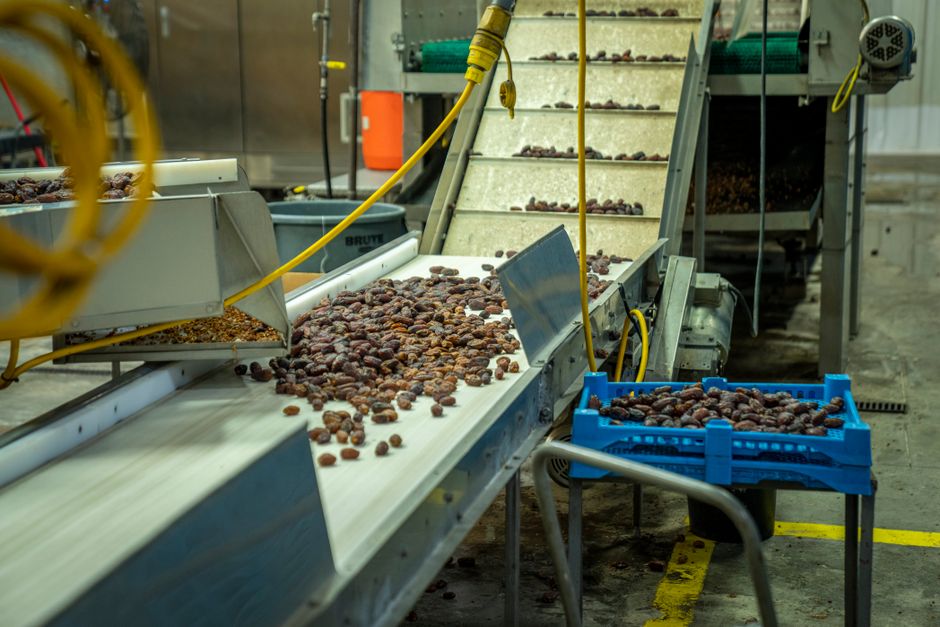
Food processing in Fuyang involves transforming grain, livestock, and oilseeds into finished products—noodles, cooking oils, frozen dumplings, and health supplements. Raw materials export covers unprocessed or minimally processed goods: wheat, corn, soybeans, cotton, and fresh produce. The value-add ratio tells the story: ¥1.00 of raw grain yields ¥0.85 in export revenue, while ¥1.00 of processed grain yields ¥2.40 in export revenue—a 2.8x multiplier.
| Metric | Food Processing (WFOE) | Agricultural Raw Materials Export |
|---|---|---|
| Average export value per ton (¥) | ¥8,200 | ¥2,300 |
| Gross margin (net of logistics) | 28%–35% | 12%–18% |
| Minimum viable investment (¥) | ¥15 million (processing line) | ¥3 million (warehouse + logistics) |
| Time to first export shipment | 18–24 months | 3–6 months |
| Value-add multiplier (input → export) | 2.8x | 1.0x |
| Local government subsidy (one-time) | Up to ¥5 million for equipment | ¥500,000 for cold-chain setup |
| Export tariff disadvantage (vs. domestic) | 0%–5% (processed foods exempt) | 5%–12% (unprocessed grain taxed) |
The data shows that while raw materials require less capital and faster execution, they carry higher export tariffs and lower margins. Food processing benefits from policy tailwinds: China’s central government has exempted processed food exports from value-added tax (VAT) since 2023, a move that boosted Fuyang’s processed food export volume by 22% in 2024 alone.
Decision Framework: Which Model Fits Your Capital and Risk Profile?
If you have at least ¥15 million in committed capital and a 3–5 year horizon, choose food processing. The margins are structurally higher, and Fuyang’s industrial parks offer ready-to-use factory shells with three-phase power and waste treatment—reducing construction time by 40% compared to building from scratch. You will also qualify for the “Anhui Food Industry Upgrade Fund,” which co-invests up to 30% of total project cost for WFOEs that achieve HACCP or ISO 22000 certification within 18 months.
If you have ¥3–8 million and need cash flow within 6–8 months, choose raw materials export. You can start with a logistics base near the Fuyang Luan (阜阳潞安, Fùyáng Lù’ān) railway freight center, which moves 1.8 million tons of bulk grain annually. Partner with local cooperatives that handle procurement—this cuts your operational headcount from 25 (processing) to 6 (export only). The downside is thinner margins and exposure to global commodity price swings; in 2023, soybean prices dropped 18% intra-year, compressing exporter margins to 4%.
3 Critical Pitfalls for Each Investment Path
Case Study: Two WFOEs, Same City, Different Outcomes
In 2022, two German companies set up WFOEs in Fuyang. Anhui GreenGrain GmbH invested ¥18 million in a wheat flour processing plant and began exporting to Southeast Asia in Q3 2024. Their gross margin stabilized at 31% after reaching full capacity (24,000 tons/year). In contrast, Anhui AgriExport GmbH invested ¥4 million in a raw soybean collection and sorting facility. It shipped 65,000 tons in 2023 but earned only 11% margin—halved by a price slump. The processing plant broke even in 14 months; the exporter broke even in 6 months but had no pricing power.
NEXT STEPS for Foreign Investors in Fuyang
- Verify your subsidy eligibility: Contact the Fuyang Commerce Bureau (阜阳市商务局, Fùyáng Shì Shāngwù Jú) to confirm whether your proposed food processing project qualifies for the “Anhui Modern Agriculture Fund” (up to ¥8 million in matching grants for WFOEs). Read our complete subsidy guide for application deadlines and required documents.
- Run a land-cost comparison: Fuyang’s industrial land averages ¥280/m²—68% cheaper than Hefei. Download our Anhui industrial land pricing table to model your setup costs against other prefectures.
- Engage a local partner for raw material sourcing: If you choose processing, you need guaranteed grain supply. Review our template for WFOE–cooperative sourcing agreements to lock in prices and avoid the spot-market volatility that hit 43% of exporters in 2023.
— Anhui Gateway —
Remote China market entry support, built around execution.