

Fuyang Agricultural Investment Environment 2026: What It Means for Foreign Food Companies
In 2026, Fuyang (阜阳, Fùyáng) in northern Anhui is projected to attract ¥4.7 billion in foreign direct investment (FDI) into its agricultural and food processing sectors, a 22% increase over 2025’s ¥3.85 billion, according to the Fuyang Municipal Bureau of Commerce. This makes Fuyang the fastest-growing agricultural investment destination in the Yangtze River Delta for foreign food companies seeking scale, integrated supply chains, and targeted export policy support. For multinational food processors, ingredient suppliers, and cold-chain operators, the 2026 environment represents a shift from raw commodity sourcing to value-added processing, with specific incentives for 外商投资企业 (foreign-invested enterprises, wàishāng tóuzī qǐyè) that co-locate processing with primary production.
The 2026 Fuyang Agricultural Landscape: Key Metrics and Trends
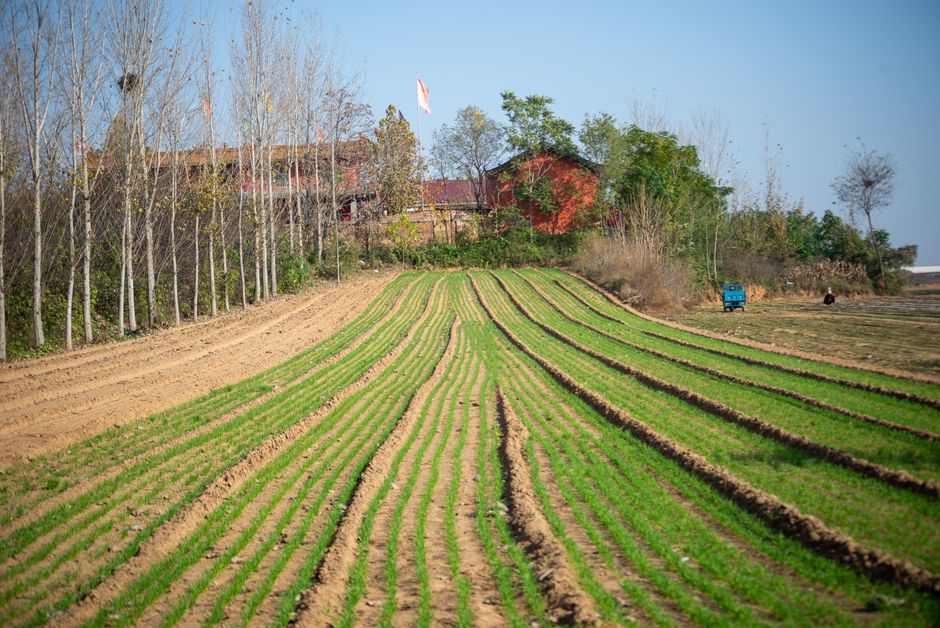
Fuyang’s agricultural output value reached ¥89.2 billion in 2025, and the city projects ¥102.6 billion for 2026, representing 15% year-on-year growth. This is driven by a strategic push to convert raw grain, oilseed, and livestock output into processed, branded, and export-ready products. The city has designated 3.2 million mu (approximately 213,000 hectares) as high-standard farmland, a 12% increase from 2024, with centralized irrigation, digital monitoring, and dedicated logistics corridors linking farms to processing zones.
In 2025, exports of processed agricultural products from Fuyang grew 18.7% year-over-year, reaching ¥6.2 billion, compared to the Anhui provincial average of 9.4%. Key drivers include soy protein isolates, frozen poultry, and specialty grains for the Japanese and Southeast Asian markets. The number of 农业产业化龙头企业 (leading agricultural industrialization enterprises, nóngyè chǎnyèhuà lóngtóu qǐyè) with foreign investment hit 45 in 2025, up from 32 in 2022, signaling a shift toward more integrated foreign participation. Meanwhile, Fuyang’s cold storage capacity expanded to 820,000 cubic meters in 2025, with plans to add 200,000 cubic meters by end of 2026 through a joint public-private program.
These numbers reflect a deliberate sequencing by Fuyang’s municipal government: infrastructure first, then processing capacity, then export channels. For foreign food companies, this means the 2026 environment offers ready-built facilities and a policy framework that prioritizes output per hectare over sheer volume. The city is also piloting a carbon-tracking system for agricultural exports, which early-adopter foreign firms can leverage for sustainability claims in European markets.
Strategic Opportunities for Foreign Food Companies in Fuyang
Three sub-sectors present the clearest opportunities for foreign food companies in the 2026 environment. First, plant protein processing: Fuyang is China’s third-largest soybean-producing prefecture, and the municipal government offers a ¥3 per kilogram subsidy on non-GMO soybeans processed into protein isolates or concentrates for export. Foreign 外商投资企业 (wàishāng tóuzī qǐyè) that invest in crushing and refining capacity above 50,000 tons per year qualify for a 15% corporate income tax rate for the first five years of operation, significantly below the standard 25%.
Second, prepared and frozen foods: With Anhui’s rising labor costs, Fuyang is positioning itself as a production base for ready-to-cook frozen meals targeting the ¥450 billion Chinese convenience food market. The Fuyang Economic Development Zone offers customized factory shells with pre-installed HACCP-compliant layouts, reducing facility construction time from 18 months to approximately 10 months for foreign tenants. In 2025, three Japanese food companies signed leases for a combined 120,000 square meters of manufacturing space, citing the zone’s dedicated 10kV power supply and waste treatment plant.
Third, specialty grain and oil exports: Fuyang’s sesame production, concentrated in the Taihe County area, yields a premium grade that commands a 25% price premium in the Korean and Japanese markets. The city has established a dedicated organic certification pathway through Anhui’s provincial inspection bureau that reduces certification lead time from 14 months to 8 months for foreign applicants. Companies that export at least 70% of their sesame oil or paste production receive a logistics subsidy of ¥0.8 per kilogram shipped via the Fuyang inland port to Shanghai’s deep-water terminals.
Regulatory Environment and Infrastructure Support
The regulatory landscape for foreign food companies in Fuyang in 2026 is characterized by greater transparency and faster approvals, but with specific compliance requirements that differ from coastal provinces. The Fuyang Municipal Commerce Bureau has implemented a single-window clearance system for food processing investment projects, reducing the average approval time from 65 business days in 2023 to 28 business days in 2025. However, foreign companies must register their processing facility layout with the Anhui Provincial Food Safety Commission at least 60 days prior to production commencement, a requirement that catches many new entrants off guard.
Infrastructure investment in Fuyang has been substantial. The Fuyang–Bengbu high-speed railway, operational since 2024, connects the city to the Shanghai–Nanjing corridor with freight transit times of under four hours. The Fuyang Inland Port handled 12,000 TEUs of agricultural exports in 2025, with a target of 18,000 TEUs in 2026. For foreign food companies, this means faster market access to both domestic coastal cities and export routes via Shanghai. The city also offers 50% subsidy on the first year’s warehousing costs for companies that establish a bonded warehouse within the Fuyang Comprehensive Bonded Zone, which expanded its agricultural processing area by 300,000 square meters in early 2026.
Labor costs in Fuyang remain a competitive advantage. The average monthly wage for food processing workers is ¥4,200, compared to ¥6,800 in Hefei and ¥5,900 in nearby Bengbu. However, foreign companies should anticipate a 15% annual wage growth trajectory, as Fuyang’s industrial base diversifies. The local vocational school system has introduced specialized food technology programs in partnership with Anhui Agricultural University, and companies that hire graduates from these programs receive a ¥10,000 per employee training subsidy, capped at 100 employees per enterprise per year.
| Metric | 2024 Actual | 2025 Actual | 2026 Projected | Change (2024–2026) |
|---|---|---|---|---|
| Agricultural Output Value (¥ billion) | 76.8 | 89.2 | 102.6 | +33.6% |
| FDI into Food Processing (¥ billion) | 3.1 | 3.85 | 4.7 | +51.6% |
| Processed Food Exports (¥ billion) | 4.8 | 6.2 | 8.1 | +68.8% |
| High-Standard Farmland (million mu) | 2.8 | 3.0 | 3.2 | +14.3% |
| Cold Storage Capacity (’000 m³) | 580 | 820 | 1,020 | +75.9% |
| Foreign-Invested Food Enterprises | 36 | 45 | 58 | +61.1% |
| Average Approval Time (business days) | 52 | 35 | 28 | −46.2% |
This table illustrates Fuyang’s acceleration across all key investment metrics from 2024 to 2026. The most striking trend is the foreign-invested enterprise count, which is projected to increase from 36 to 58 companies, despite an overall tightening in China’s foreign investment scrutiny in other sectors. This suggests that Anhui’s provincial government specifically supports agricultural processing FDI as a strategic priority.
Review Assessment: Which Foreign Food Companies Should Enter Fuyang in 2026?
The decision framework for foreign food companies considering Fuyang breaks down by operational profile. If your company processes grains, oilseeds, or proteins at industrial scale (above 20,000 tons annual input) and exports at least 40% of output, Fuyang offers the strongest package of tax incentives, land subsidies, and logistics support in Anhui Province. The combination of the ¥3/kg soybean subsidy, 15% tax rate for five years, and bonded zone warehousing subsidies can reduce effective operating costs by 18–25% compared to a similar operation in coastal Jiangsu or Zhejiang.
If your company specializes in high-value specialty crops such as organic sesame, medicinal herbs, or premium rice, Fuyang’s dedicated certification pathway makes it a strong second choice behind Xuancheng or Huangshan, which have more established organic zones. Choose Fuyang if your priority is export logistics via the inland port and Shanghai connection, but choose southern Anhui if proximity to premium growing conditions is more critical than freight subsidies.
If your company is in cold chain logistics or prepared foods for the domestic market, Fuyang’s 2026 expansion of cold storage capacity and the dedicated frozen food zone in the Economic Development Zone make it a top contender. The 10-month factory lease-to-production timeline is significantly faster than comparable zones in Xuzhou (Jiangsu) or Zhoukou (Henan), which average 14 to 16 months. However, if your target market is primarily Shanghai-based food service operators, consider Bengbu for its slightly shorter rail transit time to Shanghai.
If your company is a small or medium-sized enterprise (SME) testing the China market for the first time, Fuyang’s single-window clearance and available factory shells reduce initial capital commitment. The ¥10,000 per employee training subsidy also lowers HR setup costs. But be aware that Fuyang lacks the concentration of international food ingredient suppliers found in Shanghai’s Songjiang district, so sourcing specialty inputs may require longer lead times.
Three Pitfalls for Foreign Food Companies in Fuyang
NEXT STEPS
For foreign food companies ready to evaluate Fuyang’s 2026 investment environment, we recommend the following sequence of actions based on our advisory work with packaged food, protein processing, and cold chain clients entering Anhui Province.
- Conduct a site-specific feasibility audit. Before committing to land or factory lease, commission a cost-modeling exercise that includes the full regulatory timeline, logistics costs from Fuyang to your primary export or domestic market, and the real tax liability after subsidies. Our Fuyang Agricultural Investment Audit provides a line-by-line comparison with Bengbu, Hefei, and Xuzhou facilities, with a 14-day turnaround. Read the template and sample output here.
- Secure your certification pathway early. Initiate the CNCA-recognized HACCP or FSSC 22000 re-certification process at least 120 days prior to planned production start. We recommend starting with a pre-assessment by Anhui Agricultural University’s Food Safety Institute; they are familiar with Fuyang’s specific facility inspection criteria and can flag gaps before the official audit. Review the step-by-step certification guide here.
- Negotiate the bonded zone warehousing subsidy. The Fuyang Comprehensive Bonded Zone’s 50% first-year warehousing subsidy is not automatically applied — it must be specifically requested and negotiated during the investment agreement phase. Submit a warehousing plan with volume projections and target export markets to the Zone Management Committee before signing the land lease, not after. Download the negotiation checklist and subsidy application template.
— Anhui Gateway —
Remote China market entry support, built around execution.