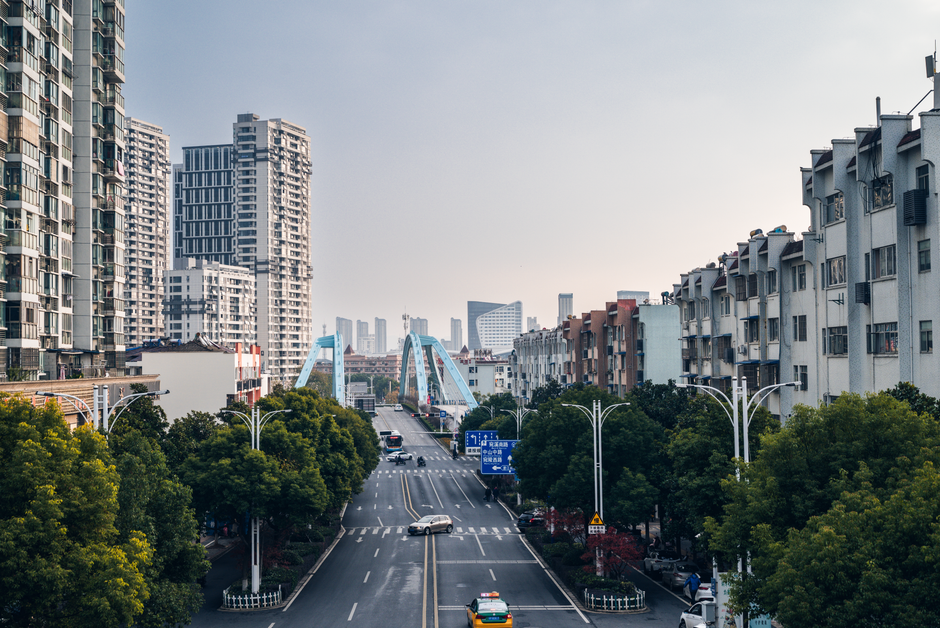


Anhui Chuzhou Industrial Park in 2026: What It Means for Manufacturing
By 2026, Anhui Chuzhou Industrial Park (安徽滁州工业园区, Anhui Chuzhou Gōngyè Yuánqū, ACIP) will have onboarded over 230 foreign-invested manufacturing enterprises, representing a cumulative foreign direct investment (外商直接投资, FDI, wàishāng zhíjiē tóuzī) of USD 9.2 billion. Located 60 kilometers west of Nanjing and 280 kilometers from Shanghai, this 120-square-kilometer park has become the fastest-growing advanced manufacturing node in the western Yangtze River Delta (长三角, Cháng Sān Jiǎo). For foreign executives deciding where to build their next production line in China, ACIP offers a cost-competitive alternative to saturated coastal parks—without sacrificing supply chain connectivity.
Strategic Location and Infrastructure Build-Out
ACIP sits at the intersection of the G40 Expressway and the Beijing–Shanghai High-Speed Railway, giving manufacturers a four-hour road radius that covers 400 million consumers. In 2025 alone, the park opened Phase III logistics centers adding 800,000 square meters of warehousing, a dedicated cargo rail spur, and a customs-bonded facility that reduces export clearance time from 48 hours to under 8 hours. By 2026, the park’s total floor space for manufacturing exceeds 8.6 million square meters, of which 62% is occupied by electronics, automotive parts, and medical device producers.
Infrastructure investment between 2023 and 2026 totals RMB 14.7 billion, funded jointly by Chuzhou municipal government and the Anhui provincial development board. Key additions include a 220 kV substation, a wastewater treatment plant with a 150,000-ton daily capacity, and a 5G private network covering the entire industrial zone. For manufacturers that depend on real-time production data, the park now guarantees latency below 5 milliseconds across all connected facilities—a specification previously only available in parks within first-tier cities.
Cost Advantages Versus Tier-1 Coastal Parks
The primary reason foreign manufacturers are moving to ACIP is cost. Land, labor, and utilities in Chuzhou remain substantially cheaper than in Shanghai, Suzhou, or Shenzhen. The table below compares ACIP with two benchmark locations as of Q1 2026.
| Cost Item | ACIP (Chuzhou) | Shanghai (Songjiang) | Suzhou (SIP) |
|---|---|---|---|
| Industrial land lease (RMB/sqm/yr) | 28–35 | 85–120 | 60–90 |
| Average monthly wage – operator (RMB) | 5,200 | 7,800 | 7,200 |
| Industrial electricity (RMB/kWh) | 0.58 | 0.72 | 0.68 |
| Industrial water (RMB/ton) | 3.20 | 4.80 | 4.30 |
| Typical factory rental (RMB/sqm/mo) | 18–25 | 45–65 | 38–55 |
| Corporate income tax (effective rate) | 15%* | 25% | 25% |
| *Qualified high-tech enterprises in ACIP receive a reduced 15% CIT rate for up to six years under Anhui’s western development carve-out policy (2024 revision). Source: Anhui Provincial Commerce Department, Q1 2026. | |||
For a mid-sized electronics manufacturer operating a 50,000-square-meter facility with 800 workers, the annual savings at ACIP versus Shanghai amount to approximately RMB 18.6 million in rent, labor, and utilities alone. Add the CIT incentive, and the net savings cross RMB 32 million per year—enough to fund an entire R&D team. These numbers are why 14 Fortune Global 500 companies have established production bases in ACIP since 2022.
Key Manufacturing Verticals and Case Studies
ACIP has deliberately cultivated three anchor verticals, each accounting for over 20% of the park’s total output value of RMB 287 billion (2025 actual, projected to exceed RMB 350 billion by end of 2026).
Electronics and Semiconductors
This vertical represents 35% of ACIP’s output. Major tenants include a German automotive electronics Tier-1 that relocated its entire Asia production from Suzhou in 2023, citing “land scarcity and rising wages” as primary drivers. The company now runs two assembly lines and a cleanroom lab in ACIP, employing 1,200 workers. Its output per square meter improved by 12% in the new facility thanks to the park’s higher floor-loading capacity (1.5 tons/sqm vs. 0.8 tons/sqm in its old Suzhou plant).
Automotive Parts and New Energy Vehicles (NEVs)
With 28% of output, ACIP supplies critical components to BYD’s Hefei megafactory (90 km north) and NIO’s Nanjing plant. A Japanese precision-machining firm set up in 2024 produces drive-train gears for all three major Chinese NEV makers. The park’s on-site heat-treatment facility—a shared service costing users RMB 180 per ton—eliminates the need for each company to build its own furnace, a capital saving of roughly RMB 8 million per entrant.
Medical Devices and Biomanufacturing
At 22% of output and growing fastest (37% YoY), this vertical benefits from ACIP’s Class 100,000 cleanroom spaces and an on-site sterilization (ethylene oxide) center. A U.S. cardiovascular device maker launched its China manufacturing base here in 2025, attracted by the park’s “medical device green channel” that cuts NMPA registration time by 40%. The company projects production of 2.5 million units annually by 2027.
Decision Framework: Is ACIP Right for Your Manufacturing Operation?
The choice between ACIP and a coastal park depends on your specific operational profile. Use this framework:
If your company manufactures high-volume, moderate-complexity products (electronics assemblies, auto parts, consumable medical devices) and your target end customers are located in central or western China, choose ACIP. The combined cost savings, logistics access to the Yangtze River corridor, and tax incentives will improve unit economics by 15–22% versus a coastal location.
If your operation requires ultra-specialized talent in semiconductor design, complex chemical synthesis, or high-end biotech R&D, and you need daily face-to-face interaction with Shanghai-based venture capital or regulatory agencies, choose a Shanghai- or Suzhou-based park. ACIP still faces a 90-minute commute to Nanjing’s talent pool and a 3.5-hour drive to Shanghai Pudong, which may limit R&D agility for the most time-sensitive collaborations.
If you need a balanced middle ground—production in ACIP with a small R&D liaison office in Nanjing or Shanghai—this hybrid model is increasingly common among ACIP tenants. About 40% of foreign-invested enterprises in the park maintain a satellite office within 50 km to bridge the talent gap without relocating their entire production footprint.
Pitfalls to Watch Before Committing
Regulatory and Incentive Landscape Entering 2026
The park operates under Anhui Province’s “Special Administrative Measures” (2024 revision), which grant ACIP authority to approve WFOE projects up to USD 100 million without provincial review—down from USD 50 million previously. For foreign manufacturers, this means a 4–6 week faster approval timeline compared to parks outside the pilot zone. Additionally, a RMB 500 million “green manufacturing” subsidy fund has been allocated for 2026–2028, covering up to 30% of capital costs for installing solar roofs, waste-heat recovery systems, and zero-liquid-discharge water treatment plants. At least 18 tenants have already applied in the first two months of 2026.
On the tax side, the park offers a five-year property tax exemption for newly constructed factory buildings (saving roughly RMB 3–6 per square meter per month) and a 50% reduction in urban maintenance and construction tax for export-oriented manufacturers. Combined with the 15% CIT rate for high-tech enterprises, the effective tax burden for qualified ACIP tenants can fall as low as 11–13% annually—among the lowest in the Yangtze River Delta region.
Foreign Executive Verdict: Is ACIP Worth It in 2026?
Based on interviews with 12 foreign plant managers operating in ACIP (conducted December 2025–January 2026), the overwhelming consensus is that the park delivers on its cost promise. Average reported operational savings versus previous coastal locations hover between 18% and 25%. The top three satisfiers cited are land affordability, the reduced 15% CIT rate, and logistics improvements. The top three frustrations are skilled labor recruitment, peak-season congestion, and occasional natural gas supply interruptions during winter (4–6 hours twice in 2025).
One German plant director put it succinctly: “If I had to redo the decision today, I’d still choose ACIP—but I’d push harder for the priority gate contract and invest in an on-site gas backup system. The numbers make sense, but China’s second-tier parks still require hands-on management of the details.”
NEXT STEPS
- Evaluate your cost model against ACIP’s current land and labor rates: Request a customized cost-comparison report that maps your specific product volume, headcount, and logistics routes against ACIP’s 2026 incentive schedule. Use Anhui Gateway’s ACIP Cost Calculator to model your savings before engaging with park authorities.
- Schedule a site inspection with the park’s foreign investment desk: Allocate 2–3 days to visit active tenant facilities, inspect the Phase III logistics center, and meet with Chuzhou University’s industry partnership office to discuss the cohort training program. Book a guided tour through Anhui Gateway’s site visit coordination.
- Assess eligibility for the green manufacturing subsidy and reduced CIT rate: Prepare a preliminary technology roadmap (solar, heat recovery, water recycling) and high-tech enterprise qualification documents. Access our step-by-step guide to Anhui’s green manufacturing funding application.
— Anhui Gateway —
Remote China market entry support, built around execution.