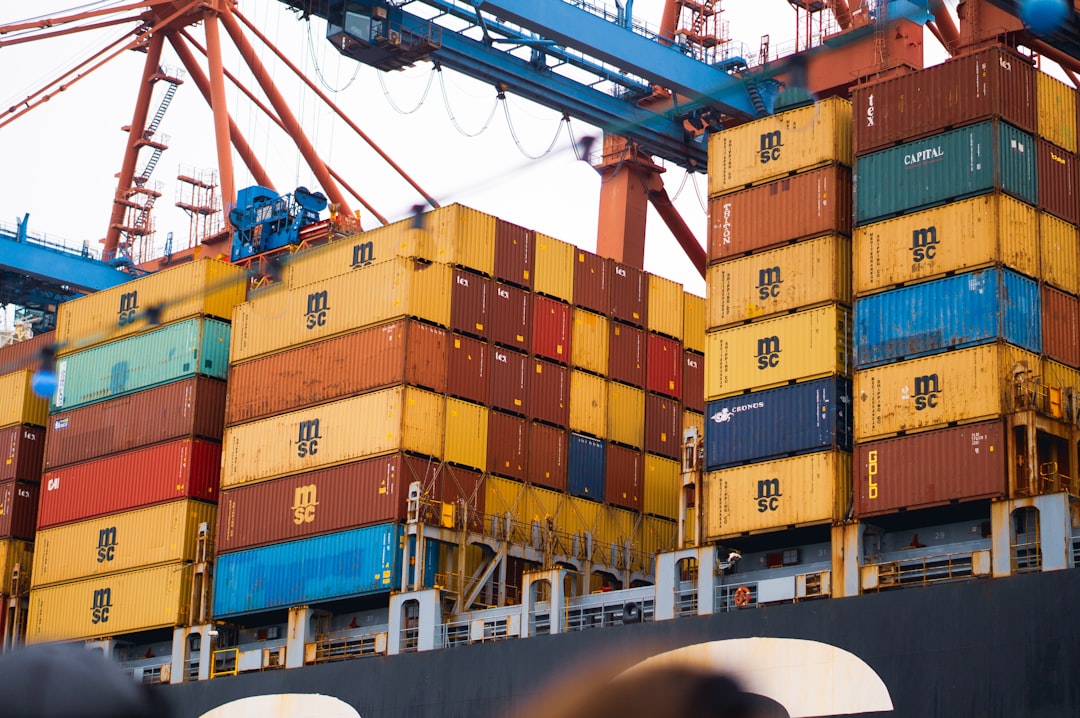


How to Operate in Anhui Free Trade Zone: 2026 Guide
The Anhui Free Trade Zone (安徽自贸试验区, ānhuī zìmào shìyàn qū) is an 119.86-square-kilometer special economic zone established in September 2020 to streamline cross-border trade and investment across three cities: Hefei, Wuhu, and Bengbu. As of early 2026, over 24,000 registered enterprises operate within the zone, including more than 1,800 foreign-invested entities from 62 countries, making it one of China’s fastest-growing Pilot Free Trade Zones (自由贸易试验区, zìyóu màoyì shìyàn qū). This guide covers the operational framework, compliance requirements, and financial incentives foreign businesses need to establish and scale their presence in the Anhui FTZ.
Why This Matters
Operating inside the Anhui FTZ reduces corporate income tax to a standard 15% for qualifying encouraged industries, compared to 25% outside the zone. Foreign-invested enterprises (外商投资企业, wàishāng tóuzī qǐyè) benefit from negative-list management, meaning any sector not explicitly on the prohibited list is automatically open to foreign participation without special approval. The zone also offers streamlined customs clearance under the “front-line放开, second-line safe” model, reducing average cargo release times by 47% compared to standard inland ports.
Anhui province recorded a 14.3% year-on-year increase in total foreign trade volume in 2025, reaching US$98.7 billion, driven largely by FTZ activity. The zone’s targeted focus on advanced manufacturing, new-energy vehicles, integrated circuits, and biomedical R&D aligns directly with China’s 14th Five-Year Plan priorities, creating concentrated opportunities for foreign technology firms and industrial investors. For companies already operating in China, relocating production or logistics operations to the Anhui FTZ can yield tangible tax savings and logistics advantages within the first fiscal year.
The local government has allocated ¥8.2 billion (approximately US$1.13 billion) in special funds for FTZ infrastructure, R&D subsidies, and innovation incentives through 2027. These funds support qualifying projects with R&D cost coverage of up to 30%, talent recruitment subsidies of ¥50,000–200,000 per foreign hire, and cross-border financing facilitation through designated zone banks. The cumulative effect is a significantly lower effective operating cost for foreign enterprises that properly structure their entry and compliance framework.
Step by Step: How to Operate in the Anhui FTZ
- Determine FTZ Eligibility and Industry Classification. Before beginning operations, confirm that your business activity falls under an encouraged category within the FTZ’s industry catalogue. The zone prioritises intelligent manufacturing, integrated circuits, artificial intelligence, new-energy vehicles and batteries, biomedical R&D, and modern logistics. Industries on the negative list — such as rare-earth mining, certain media services, and legal services — remain restricted or fully prohibited for foreign participation. The Hefei Zone Management Committee (合肥片区管委会, héféi piànqū guǎnwěi huì) publishes an updated industry guidance catalogue each January, reflecting changes in national and provincial industrial policy. You should engage a qualified local legal adviser to review your planned operations against this catalogue before signing any lease, because non-qualifying activities lose access to zone-specific tax breaks, customs simplifications, and subsidy programmes.
- Establish a Legal Entity Within the Zone. All FTZ operators must register a physical presence inside the zone boundaries — a virtual address or representative office is insufficient. The most common entity types are Wholly Foreign-Owned Enterprise (外商独资企业, wàishāng dúzī qǐyè) and Foreign-Invested Limited Liability Company (外商投资有限责任公司, wàishāng tóuzī yǒuxiàn zérèn gōngsī). Registration requires approval from the Anhui Provincial Department of Commerce and the local Market Supervision Administration, with a notarised Articles of Association, shareholder identification, and a qualifying lease agreement. As of 2026, the entire company registration process can be completed online through the “Single Window” (单一窗口, dānyī chuāngkǒu) platform in 3 to 7 working days — significantly faster than the 15–20 day average for non-FTZ registration. You must also register for value-added tax (VAT) with the local tax bureau within 30 days of license issuance and open a yuan-denominated capital account at a designated FTZ bank branch.
- Apply for Preferential Tax Treatment. To access the reduced 15% corporate income tax rate, submit a formal application to the Hefei High-Tech Zone Tax Bureau with supporting documentation proving your industry qualification and revenue composition. Eligible enterprises must derive at least 60% of total annual revenue from encouraged activities to maintain the preferential rate. Additional financial incentives include VAT rebates on domestic equipment purchases used for R&D, full tariff exemptions on imported machinery deployed in qualifying manufacturing lines, and personal income tax reductions of up to 30% for qualified foreign executives earning above ¥500,000 annually. The tax bureau typically approves or rejects applications within 15 working days. Retroactive tax benefits are not granted, so you must submit the preference application before your first corporate income tax filing year begins or risk paying the full 25% rate for that period.
- Set Up Customs and Logistics Infrastructure. The Anhui FTZ operates a unique “front-line放开, second-line safe” customs supervision model. Goods moving between the FTZ and overseas (front-line) enjoy relaxed procedures and minimal inspection, while goods entering domestic Chinese territory (second-line) undergo standard import clearance with full duty and VAT assessment. You must register with Hefei Customs (合肥海关, héféi hǎiguān) and install the required electronic fence monitoring system at your warehouse or factory gate. The full process includes obtaining a customs declaration registration number, installing the customs E-port electronic data interchange system, and designating a company customs liaison officer. Zone enterprises report an average customs clearance time of 6.2 hours for export shipments and 8.5 hours for imports, compared to over 15 hours at non-FTZ inland ports, yielding meaningful reductions in working capital tied up in transit inventory.
- Open Cross-Border Financing Channels. The Anhui FTZ permits foreign-invested enterprises to access cross-border renminbi lending (跨境人民币贷款, kuàjìng rénmínbì dàikuǎn) from overseas banks without prior SAFE (State Administration of Foreign Exchange) approval for amounts under US$5 million per transaction. You can also utilise the FTZ’s foreign debt quota system, which allows borrowing up to four times the paid-in capital for wholly foreign-owned entities. Major FTZ-accredited banks include Bank of China Anhui Branch, HSBC Hefei Branch, Standard Chartered Hefei, and Industrial and Commercial Bank of China Anhui FTZ Sub-branch. The application process for cross-border lending takes approximately 10 working days and requires a board resolution, audited financial statements for the past 2 years, and a loan agreement drafted in both Chinese and English. Interest rates on cross-border renminbi loans typically undercut domestic Chinese rates by 80–150 basis points, providing a meaningful financing cost advantage.
- Implement Ongoing Compliance and Reporting. FTZ enterprises must submit quarterly operational reports to the Anhui FTZ Administrative Committee, including production output data, import-export volumes by HS code category, and employment headcount figures for both Chinese and foreign staff. Annual tax filings must reflect the preferential rate and include a detailed revenue breakdown by encouraged and non-encouraged activities, attested by a certified Chinese CPA firm. The government conducts random compliance audits on approximately 8% of zone enterprises each year, with manufacturing entities and high-volume traders audited at higher frequency. Non-compliance discovered during an audit can result in retroactive tax claw-backs covering up to 3 prior years, plus a daily late-payment penalty of 0.05% on all unpaid amounts. You should designate a dedicated compliance officer or retain an outsourced compliance service to manage these requirements, as the FTZ administrative committee strictly enforces all submission deadlines.
Timelines and Costs
| Milestone | Estimated Timeline | Estimated Cost (CNY) | Responsible Party |
|---|---|---|---|
| FTZ eligibility review | 1–2 weeks | ¥10,000–25,000 | Legal adviser |
| Company registration | 3–7 working days | ¥5,000–15,000 | Registration agent |
| Tax preference application | 15 working days | ¥8,000–20,000 | Tax consultant |
| Customs registration & E-port setup | 3–4 weeks | ¥30,000–80,000 | Customs broker |
| Cross-border financing setup | 10–15 working days | ¥15,000–40,000 | Bank + legal adviser |
| First-year total setup | 8–12 weeks | ¥68,000–180,000 | All parties |
Three Pitfalls to Avoid
Pitfall 1: Assuming All FTZ Sub-Zones Offer Identical Incentives
Problem. The Anhui FTZ comprises three separate sub-zones — Hefei (74 km²), Wuhu (45 km²), and Bengbu (20 km²) — each operating with distinct priority industries and additional local top-up incentives that go beyond the national FTZ framework. Hefei focuses on IC design, AI, and quantum computing, Wuhu targets new-energy vehicle manufacturing and automotive parts, and Bengbu specialises in advanced silicon-based materials and fine chemicals. Many foreign investors default to registering in Hefei because of its name recognition, only to discover later that their specific operations would qualify for better land-subsidy packages or utility-rate discounts in another sub-zone.
Cost. Missing optimal sub-zone incentives can cost ¥500,000 to ¥2 million per year in forgone subsidies and tax credits for a mid-sized manufacturing facility employing 100-plus workers.
Fix. Research each sub-zone’s latest incentive catalogue before selecting your physical location. Visit the zone management committee offices in person during your site inspection and request a written side-by-side comparison of fiscal support packages. Engage a local site-selection consultant who understands the actual implementation differences — not just the published policies — between the three sub-zones.
Pitfall 2: Inadequate Chinese-Language Recordkeeping
Problem. The Anhui FTZ requires all operational records — including contracts, financial statements, customs declarations, and compliance reports — to be maintained exclusively in Chinese. Foreign companies frequently submit bilingual or English-only documents to the tax bureau and customs, which are routinely rejected, causing cascading delays in approvals and payments. The zone’s digital Single Window platform operates primarily in Chinese with limited English-language support, and translation bottlenecks compound with regulatory submission deadlines.
Cost. Rejected filings can delay critical operations by 2 to 6 weeks and incur late-filing penalties of up to ¥10,000 per document set, plus additional translator rush fees.
Fix. Budget for professional Chinese-language accounting and legal support from day one of your FTZ setup. Implement a bilingual Enterprise Resource Planning system configured for Chinese GAAP and customs declaration format requirements from the outset. Assign a Chinese-speaking finance manager to your in-country team or outsource bookkeeping to a certified FTZ-based accounting firm that handles English-Chinese reconciliation as a standard service.
Pitfall 3: Neglecting the “Second-Line” Domestic Sales Tax Impact
Problem. Goods moving from the FTZ into China’s domestic market (second-line) are legally treated as imports and subject to full customs duty, import VAT, and consumption tax where applicable. Foreign firms operating in the zone often design their business model around export-oriented production and overlook the tax implications of selling into the domestic Chinese market. When they later pivot to local sales — a common strategy as China’s domestic demand grows — they face unexpected duty rates averaging 8–15% plus 13% VAT, significantly eroding the FTZ’s cost advantages.
Cost. Unplanned import duties and VAT on domestic sales can add ¥200,000 to ¥1.5 million in annual operating costs for a mid-sized trading or light manufacturing firm.
Fix. Model your expected domestic sales volume and duty exposure during the initial business-planning phase, not after operations begin. Where domestic sales represent a meaningful revenue channel, consider establishing a separate domestic sales company outside the FTZ to handle local-market transactions, keeping the FTZ entity focused on export or inter-company flows. Consult with a cross-border tax specialist to structure inter-entity pricing and transfer pricing documentation that minimises the combined FTZ and domestic tax liability across both entities.
Decision Checklist
- ☐ My business activity is in an FTZ-encouraged industry and not on the foreign-investment negative list
- ☐ I have engaged a Chinese legal adviser to review my FTZ eligibility and optimal entity structure
- ☐ I have selected the optimal sub-zone (Hefei, Wuhu, or Bengbu) based on industry-specific local incentives
- ☐ I have budgeted ¥68,000–180,000 for first-year setup costs including legal, customs, and registration fees
- ☐ I have arranged bilingual accounting and recordkeeping to meet Chinese-language compliance requirements from day one
- ☐ I have applied or will apply for the reduced 15% corporate income tax rate before my first filing year
- ☐ I have registered with Hefei Customs and installed the electronic fence monitoring system at my premises
- ☐ I have modelled domestic (second-line) sales duty exposure and planned my entity structure accordingly
- ☐ I have opened a yuan-denominated capital account at an FTZ-accredited bank for cross-border transactions
- ☐ I have assigned a dedicated compliance officer for quarterly FTZ reporting and annual CPA-attested filings
Where to Go From Here
Based on what you just read:
- Ready? Start your Anhui FTZ operations with a professional registration agent
- Comparing? Compare Anhui FTZ incentives with other Chinese Pilot Free Trade Zones
- Need numbers? Download the 2026 Anhui FTZ cost-benefit analysis report
— Anhui Gateway —
Your bridge to business in Anhui, China.