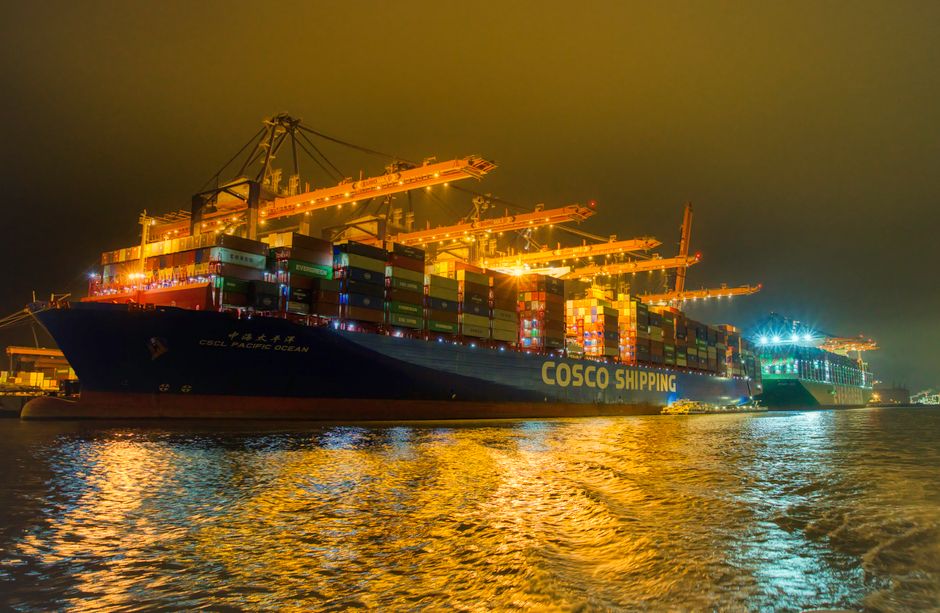


Anhui International Logistics Corridor Development: A Trade Gateway Review for Foreign Investors
Since 2018, Anhui Province has invested over RMB 45 billion in developing its International Logistics Corridor — an integrated network of rail, river, sea, and air routes connecting inland manufacturing hubs to global markets. For foreign executives evaluating China supply chain strategy, this corridor represents a fundamental shift: what was once a bottleneck province is now one of China’s fastest-growing multimodal export gateways, offering 15-day rail transit to Europe and 3-day barge-to-sea access to Shanghai.
What Is Anhui’s International Logistics Corridor?
The Anhui International Logistics Corridor (安徽国际物流走廊, ānhuī guójì wùliú zǒuláng) is a coordinated government-enterprise initiative that links the province’s major industrial cities — Hefei, Wuhu, Bengbu, and Ma’anshan — to international trade routes via the Hefei International Land Port (合肥国际陆港, héféi guójì lùgǎng), the Yangtze River Golden Waterway, and direct air cargo links. The corridor’s core ambition is to reduce inland logistics costs to coastal parity, currently estimated at 85% of Shanghai’s multimodal cost per TEU for high-value electronics and machinery components.
This is not an abstract infrastructure project. For foreign companies manufacturing in Anhui — including 1,200+ 外商独资企业 (WFOE, wàishāng dúzī qǐyè) and 3,400+ foreign-invested enterprises — the corridor directly determines export competitiveness. In 2023, the corridor handled 380,000 TEUs of foreign trade cargo, up from 195,000 in 2020, representing a compound annual growth rate of 24.8%. The trade value moving through these routes reached RMB 142 billion, 13% of Anhui’s total foreign trade that year.
Key Developments in the Corridor Network
China-Europe Railway Express (Hefei Hub)
The Hefei International Land Port now operates 86 fixed China-Europe freight train routes to 18 countries, including Germany, Poland, Russia, and Kazakhstan. In 2023, 868 trains departed from Hefei, carrying goods worth RMB 38.6 billion — up 32% year-on-year. Cumulative trains exceeded 3,700 by mid-2024. Cargo categories have shifted: electronics (36% of value), new energy vehicles (22%), auto parts (18%), and machinery (14%) dominate, reflecting Anhui’s industrial upgrade.
Yangtze River Direct Barge Service
Wuhu Port, Anhui’s largest river port, now operates daily direct barge services to Shanghai Yangshan Deep-Water Port. Transit time: 72 hours, compared to 5 days in 2019. In 2023, Wuhu handled 1.28 million TEUs of total cargo, up 18% year-on-year, with foreign trade containers reaching 420,000 TEUs. The service has reduced inland trucking costs for foreign exporters by 35% per container.
Air Cargo Hub at Hefei Xinqiao International Airport
Since 2021, Hefei Xinqiao has opened 7 international all-cargo routes to key markets: Frankfurt, Chicago, Singapore, Seoul, Tokyo, London, and Budapest. In 2023, air cargo throughput reached 138,000 tonnes, of which 52% was international cargo. For time-sensitive electronics and pharmaceutical shipments, air freight from Hefei to Europe now takes 12–18 hours, at 60% of the cost of shipping via Shanghai Pudong airport.
Trade Impact Assessment: Numbers That Matter for Decision-Makers
For foreign execs building China trade models, four metrics define the corridor’s importance:
- Logistics cost reduction: Companies shifting from truck-to-Shanghai to rail or barge have saved RMB 2,200–3,800 per TEU, depending on route and cargo type.
- Transit time compression: Hefei-Europe rail delivery in 15 days versus 35 days by sea; Hefei-to-Shanghai barge in 3 days versus 5+ days by truck.
- Export value growth: Anhui’s total foreign trade grew from RMB 780 billion in 2020 to RMB 1.17 trillion in 2023, with logistics corridor routes accounting for 12% of this absolute growth.
- NEV dominance: New energy vehicles and batteries made up 28% of corridor export value in 2023, reflecting Anhui’s position as a top-3 NEV production province.
| Route Type | Destination Reach | Avg Transit (Days) | 2023 Volume (TEUs) | Cost vs. Shanghai (Index) |
|---|---|---|---|---|
| China-Europe Railway (Hefei) | 18 countries, 86 routes | 15 | 68,500 | 78% |
| Yangtze Barge (Wuhu→Shanghai) | Global via Yangshan | 3 | 420,000 | 62% |
| Air Cargo (Hefei International) | 7 routes, 4 continents | 0.6–0.75 | 71,800 (tonnes) | 60% |
| Truck-to-Sea (Hefei→Ningbo) | Global via Ningbo-Zhoushan | 2 | 195,000 | 85% |
Note: The cost index compares multimodal logistics cost per TEU from Anhui origin versus shipping directly from Shanghai port, using 2023 average spot rates. Lower percentage = cheaper relative to Shanghai.
Three Real-World Cases and Pitfalls from Anhui Trade Operations
Case 1: A German Auto Parts WFOE Misjudged Rail Capacity
In early 2022, a tier-1 auto supplier in Hefei committed 80% of its Europe-bound production to China-Europe Railway Express. When train schedules were disrupted during COVID-related lockdowns in Shanghai (April–May 2022), the company faced 45-day backlogs and incurred demurrage costs of RMB 1.2 million. The WFOE had not contracted for barge backup capacity, and spot truck rates surged 210% overnight.
Case 2: A U.S. Electronics Manufacturer Overlooked Customs Clearance Bottlenecks
A U.S.-owned JV in Wuhu expanded its export volume by 70% in 2023 but did not upgrade its customs brokerage agreement. The result: average clearance time at Hefei Land Port stretched from 6 hours to 36 hours, causing 14 missed container ship deadlines at Shanghai in Q3 2023 alone. The cost of rebooking container slots and expedited trucking reached RMB 870,000.
Case 3: A Japanese Machinery Exporter Ignored NEV Cargo Priority Rules
In early 2024, Anhui port authorities introduced priority berthing and rail slot allocation for NEV exports — batteries, vehicles, and components — to meet national trade targets. A Japanese machinery exporter saw its barge allocation from Wuhu cut by 40%, as NEV cargo filled the priority. The company lost two contracts with European buyers due to delivery delays.
Strategic Implications for Foreign Trade Operations
The Anhui International Logistics Corridor is not just a transport upgrade — it is a structural rebalancing of China’s inland-export economy. For foreign companies, three shifts demand attention. First, the corridor tilts cost advantage toward high-value, time-sensitive products: NEVs, electronics, and machinery goods benefit disproportionately from rail and air routes. Second, the corridor creates a “two-week Europe” option from inland China that competes directly with coastal hubs, meaning companies can now locate factories inland without sacrificing delivery speed to European buyers. Third, provincial support includes logistics subsidies for foreign-invested enterprises: in 2023, Anhui provided RMB 420 million in direct freight subsidies, which reduced logistics costs for qualifying WFOEs by 8–12% per container on China-Europe routes.
However, the corridor is still maturing. Intermodal connectivity between rail terminals and factory zones remains incomplete — only 6 of 17 major industrial parks in Anhui have direct rail sidings connected to the Land Port. Foreign companies planning new facilities should prioritize park locations with existing rail links to avoid last-mile trucking costs that can add RMB 600–900 per container. The corridor’s digital tracking platform — Anhui Logistics Cloud — currently covers only 58% of container movements, making real-time visibility a challenge for global supply chain managers.
Outlook: What to Watch Through 2027
Anhui’s 14th Five-Year Plan for trade logistics commits RMB 28 billion in further investment through 2027. Key projects include: construction of a second Hefei rail terminal (capacity: 500,000 TEUs annually), dredging of the Yangtze channel to allow 10,000-ton vessels to reach Wuhu year-round, and a dedicated NEV export rail terminal in Hefei’s Feidong County. If completed, these projects could reduce transit time to Europe by an additional 2–3 days for rail and increase barge capacity by 40%. For foreign investors, the corridor’s trajectory is clear: Anhui is building toward becoming a top-5 provincial trade gateway by 2030, with an estimated 800,000 TEUs of export capacity across multimodal routes. Companies that secure logistics partnerships and park locations now will benefit from cost structures that approach coastal competitiveness within three years.
NEXT STEPS
1. Evaluate your current Anhui logistics cost structure. Compare your per-TEU logistics costs against the corridor average indices in the table above. If you are paying more than 85% of Shanghai-equivalent cost, request a corridor route audit. Read the Anhui Logistics Cost Analysis Guide →
2. Align your export product mix with corridor priority lanes. NEV, electronics, and machinery components receive preferential rail and barge allocation. If your cargo does not fit these categories, plan buffer capacity for possible schedule shifts. See the full Anhui Cargo Priority Policy Overview →
3. Secure multimodal backup contracts before peak season Q4 2025. The corridor’s annual 25% growth rate means capacity will tighten in Q4 export windows. Engage with at least two logistics providers to maintain flexibility. Contact Anhui Gateway for logistics partner introductions →
— Anhui Gateway —
Remote China market entry support, built around execution.