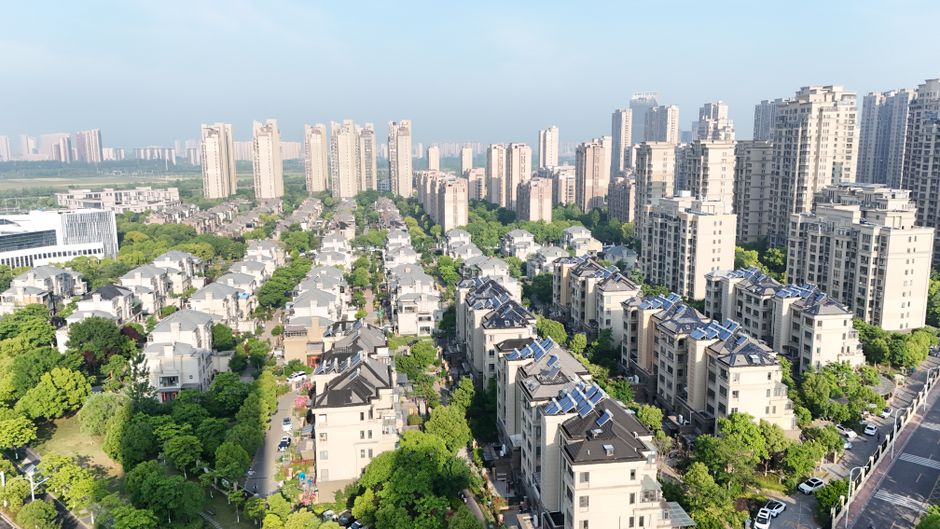


Anqing Real Estate Update: Commercial Property Market Trends
Anqing’s commercial real estate market experienced a measurable shift in the first quarter of 2025, with average Grade-A office vacancy rates declining to 23.4% from 26.1% a year earlier, according to the Anqing Real Estate Association (安庆房地产协会, Ānqìng Fángdìchǎn Xiéhuì). This improvement, driven by increased demand from logistics and light manufacturing firms, marks the first single-digit quarterly drop since mid-2022. However, retail shop vacancy edged up to 18.7%, reflecting uneven recovery across commercial segments. The following analysis covers supply-side trends, rental dynamics, and government policy interventions shaping Anqing’s commercial property landscape in 2025.
Supply-Side Shift: From Retail to Logistics
Anqing’s commercial property supply structure is undergoing a deliberate rebalancing. In 2024, new completions of 商业地产 (commercial real estate, shāngyè dìchǎn) totaled 480,000 square meters, of which 62% were logistics parks and warehouse spaces, compared to only 38% in 2021. This shift aligns with the city’s strategy to become a regional distribution hub for the Yangtze River Economic Belt. Meanwhile, new retail mall supply dropped by 34% year-on-year to 82,000 square meters, as developers redirect capital toward industrial-adjacent formats.
Notably, the Yingjiang District (迎江区, Yíngjiāng Qū) saw the largest concentration of new logistics space (180,000 sqm), with vacancy at just 12.3% — far below the city average. This contrasts with the Daguan District (大观区, Dàguān Qū), where older office towers (写字楼, xiězìlóu) face vacancy rates above 30%. The market is bifurcating between modern, specification-grade properties built for e-commerce fulfillment and legacy stock that struggles to attract tenants.
Rental Market Dynamics: Diverging Paths
Rental rates for commercial space in Anqing are telling a story of two markets. Prime logistics warehouse rents averaged 28.5 RMB/sqm/month in Q1 2025, up 7% from Q1 2024, driven by demand from third-party logistics providers serving the Hefei-Nanjing corridor. In contrast, ground-floor retail rents in traditional commercial streets like Renmin Road fell to 85 RMB/sqm/month — a 12% decline over the same period — as foot traffic migrated to newer integrated malls and online platforms.
Grade-A office rents held relatively steady at 55–70 RMB/sqm/month, but effective rents after incentives (e.g., rent-free periods, fit-out allowances) dropped to approximately 48 RMB/sqm/month. Landlords are increasingly offering “graduated rent” structures: low initial rates escalating by 5–8% annually. This trend, along with shorter lease terms (2–3 years instead of 5), suggests uncertainty among both tenants and owners about medium-term demand.
The following table compares key indicators for Anqing’s main commercial sub-markets as of March 2025:
| Segment | Average Rent (RMB/sqm/month) | Vacancy Rate (%) | New Supply 2024 (sqm) | Absorption Rate (sqm, Q1 2025) |
|---|---|---|---|---|
| Grade-A Office | 62 | 23.4% | 65,000 | 14,200 |
| Retail Shop | 85 | 18.7% | 82,000 | 11,800 |
| Logistics/Warehouse | 28.5 | 12.3% | 298,000 | 73,000 |
| Business Hotel | — | 27.8% | 35,000 | 4,500 |
This data underscores the resilience of the logistics segment, which absorbed more space in Q1 2025 than the other three segments combined. The overall commercial property absorption rate in Anqing reached 103,500 sqm in Q1, the highest first-quarter figure since 2021.
Policy Interventions and Foreign Investor Considerations
The Anqing municipal government has introduced targeted incentives to boost commercial property utilization. In December 2024, the city released the “Several Measures to Promote High-Quality Development of the Commercial Real Estate Market” (促进商业房地产市场高质量发展的若干措施, cùjìn shāngyè fángdìchǎn shìchǎng gāo zhìliàng fāzhǎn de ruògān cuòshī). Key provisions include:
- A 20% reduction in property tax for commercial landlords who achieve 80% or higher occupancy in existing buildings.
- Direct subsidy of 200 RMB/sqm for foreign-funded enterprises (外商投资企业, wàishāng tóuzī qǐyè) that lease Grade-A office space in designated zones, capped at 1,000 sqm per entity.
- Streamlined approval for converting idle retail space into co-working centers or last-mile logistics hubs, reducing permit time from 180 days to 45 days.
These policies are particularly relevant to foreign companies exploring Anqing as a manufacturing or distribution base. For instance, a European auto parts supplier recently leased 3,500 sqm of logistics space in the Yingjiang logistics park, benefiting from the property tax reduction and the enterprise subsidy. The company’s CEO noted that effective rent after subsidies fell to under 22 RMB/sqm/month, making Anqing 15% cheaper than comparable space in Wuhu or Ma’anshan.
However, foreign investors should remain cautious about off-plan pre-leasing. In 2024, two commercial projects in the Yi’xiu District were delayed by 6–8 months, forcing tenants who had signed lease agreements to accept temporary alternative space at 30% higher rent. Such delays remain a risk despite government pledges to improve project delivery timelines.
Outlook and Key Numbers for Decision-Makers
Three additional numbers frame the near-term outlook for Anqing commercial property:
- 65% of new commercial space starts in 2024 were in the logistics/industrial category, confirming the structural pivot away from retail and conventional office.
- 14.2% year-on-year increase in foreign direct investment (FDI) flowing into Anqing’s commercial real estate sector in 2024, reaching 1.26 billion RMB, according to the Anqing Commerce Bureau.
- 38,000 sqm of office space remains under construction and scheduled for delivery in H2 2025, which could push overall office vacancy above 26% if absorption does not accelerate.
Retail and Grade-B office landlords will need to offer aggressive leasing incentives, while logistics-oriented property owners hold the pricing power. Foreign companies evaluating a physical presence in Anqing should prioritize the Yingjiang logistics zone for distribution operations and wait for office supply to clear before committing to long-term leases in the central business district.
For a deeper analysis of commercial property due diligence steps, see our Commercial Property Due Diligence Guide for Anqing.
NEXT STEPS
- Review Anqing’s logistics park incentives — Compare the 20% property tax reduction with other cities in Anhui province. Read our Anhui Logistics Park Incentives Comparison to identify the best location for your distribution center.
- Conduct a lease diligence checklist — Before signing any commercial lease in Anqing, use our Commercial Lease Due Diligence Checklist to verify property title, occupancy permits, and payment escrow options.
- Explore WFOE setup for property acquisitions — If you plan to purchase commercial real estate directly, understand the limitations for 外商独资企业 (WFOE) in land ownership. See our WFOE Property Ownership in China Guide.
— Anhui Gateway —
Remote China market entry support, built around execution.