

Anhui’s Built Heritage at a Crossroads: Port and Road Network Developments Reshape the Province’s Architectural Landscape
Anhui Province is undergoing its most ambitious infrastructure expansion since the founding of the People’s Republic, with a coordinated push to upgrade port facilities along the Yangtze River and add 1,200 kilometres of expressway by 2030. This logistics transformation, while critical to regional economic integration, directly impacts 4,831 officially registered heritage structures—many of them centuries-old Huizhou-style residences, ancestral halls, and bridges that define Anhui’s architectural identity. The central challenge, as articulated by the Anhui Provincial Department of Housing and Urban-Rural Development (安徽省住房和城乡建设厅, Ānhuī Shěng Zhùfáng Hé Chéngxiāng Jiànshè Tīng), is how to reconcile 21st-century freight mobility with the preservation of irreplaceable building stock that has survived war, neglect, and weather for generations.
This article provides an update on the key port and road network developments underway in Anhui, examines their direct and indirect effects on the province’s architectural heritage, and offers a decision-path for foreign executives whose operations touch either logistics or cultural-asset management in the region.
Six Contextual Numbers That Define the Current Moment
Understanding the scale of both the infrastructure push and the heritage at stake requires grounding in specific figures:
- 1,200 km – The planned new expressway capacity to be added across Anhui by 2030 under the province’s 14th Five-Year Plan for Transportation. This represents a 22% increase over the current 5,500 km network, with several corridors passing within 5 km of UNESCO World Heritage buffer zones at Xidi (西递, Xīdì) and Hongcun (宏村, Hóngcūn).
- ₿ 78.6 billion – The total investment allocated to Anhui’s port modernisation programme between 2021 and 2025, covering 17 priority projects at Wuhu (芜湖, Wúhú), Ma’anshan (马鞍山, Mǎ’ānshān), Tongling (铜陵, Tónglíng), and Chizhou (池州, Chízhōu). These ports handle over 220 million tonnes of cargo annually, a volume expected to grow 8-10% per year through 2028.
- 4,831 – The number of immovable cultural relics units officially listed by the Anhui Cultural Heritage Bureau (安徽省文物局, Ānhuī Shěng Wénwù Jú) as of December 2024. Of these, 137 are national-level protected sites, and 42 are located in counties directly affected by new or expanded logistics corridors.
- 73% – The proportion of Anhui’s nationally protected wooden-architecture sites that have been rated “moderate” or “high risk” from vibration-induced structural fatigue in a 2023 study by Hefei University of Technology, with heavy truck traffic cited as the primary stressor.
- 12 – The number of traditional Huizhou villages (徽州古村落, Huīzhōu Gǔcūnluò) where road-widening projects have either been delayed or redesigned since 2022 following heritage impact assessments. This figure highlights a growing, if uneven, willingness among planning authorities to reroute rather than demolish.
- ₿ 3.2 billion – The estimated cost of retrofitting 286 heritage-listed buildings along the Yangtze River port-access corridors with isolation foundations, dampers, and monitoring systems. Anhui province has allocated less than 15% of that sum to date, creating a funding gap that international architectural conservators and impact investors are increasingly eyeing.
Port Modernisation: Economic Engine versus Structural Integrity
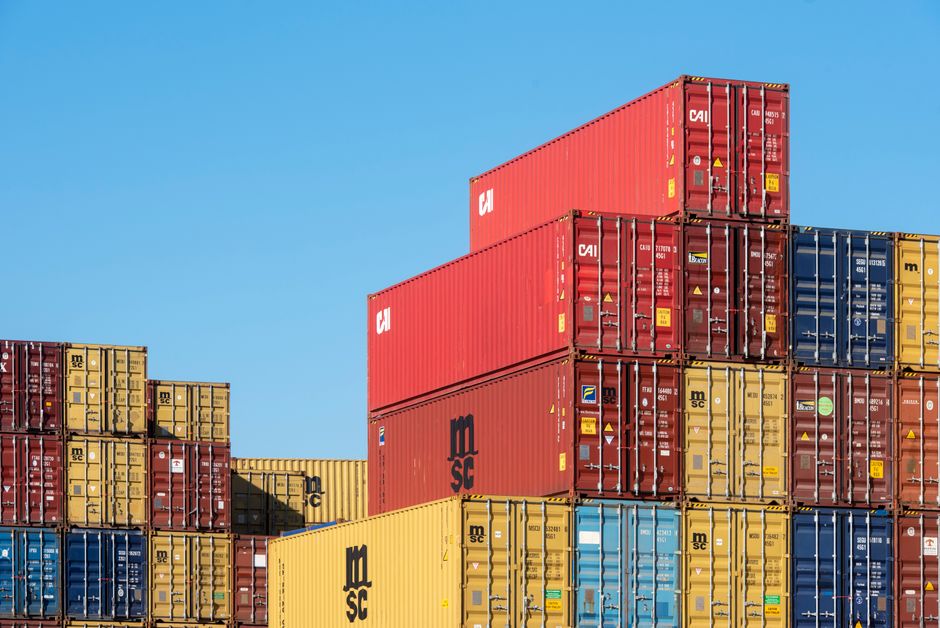
Anhui’s Yangtze River ports are the backbone of its export-oriented manufacturing economy, moving everything from electric-vehicle batteries to steel products. The Wuhu Port expansion alone, a centrepiece of the province’s logistics strategy, will triple container capacity to 3 million TEUs by 2026. New deep-water berths at Ma’anshan are being paired with automated stacking cranes and 12 km of heavy-haul rail connectors.
For the architecture sector, the concern is not the ports themselves—most are built on reclaimed riverfront land with minimal heritage value—but the access corridors that must cut through historic districts. The new Wuhu–Tongling port connector highway, for example, passes within 300 metres of the Zhu Family Ancestral Hall (朱氏宗祠, Zhū Shì Zōngcí), a Ming-dynasty timber structure that relies on a Dou Gong (斗拱, dǒugǒng) bracket system. Engineers from the Chinese Academy of Cultural Heritage have already recorded micro-cracks in the hall’s central beam, which they attribute to pile-driving and heavy equipment movement from adjacent construction zones.
Anhui Gateway has learned that the Anhui Provincial Transportation Department has commissioned a province-wide “Vibration Vulnerability Map” that overlays planned port-logistics routes with heritage hot spots. The map, expected in final form by Q3 2025, will likely become the primary regulatory tool for enforcing distance buffers and construction methods near sensitive structures. Foreign firms bidding on port infrastructure contracts should anticipate heritage-protection clauses that require real-time vibration monitoring and, in some cases, pre-construction reinforcement of nearby historic buildings at the contractor’s expense.
Road Network Expansion: The Rural Heritage Dilemma
While port expansion concentrates risk around a few urban nodes, the highway programme spreads it across dozens of rural counties where Anhui’s most distinctive vernacular architecture survives. The new Hefei–Huangshan Expressway extension, a 210 km corridor that will reduce driving time between the provincial capital and Mount Huangshan scenic area by 90 minutes, cuts through Xiuning County (休宁县, Xiūníng Xiàn), home to 32 Ming-dynasty memorial archways.
Local preservationists point to a specific case: the planned interchange at Lantian Town (蓝田镇, Lántián Zhèn) would have destroyed a 16th-century “arcade street” (骑楼街, qílóu jiē) featuring overhanging wooden eaves. After a two-year campaign by the Anhui Heritage Volunteers Association (安徽文化遗产保护志愿者协会, Ānhuī Wénhuà Yíchǎn Bǎohù Zhìyuànzhě Xiéhuì), the design was altered to bypass the street entirely, adding ₿ 47 million to the project cost. That sum, while small relative to the total highway budget (₿ 18.7 billion), sets a precedent that heritage redesign is negotiable but expensive.
For executives in architecture-logistics—a niche that includes companies specialising in moving museum objects, antiquities, or high-value architectural components—the road expansion creates both risk and opportunity. Risk: heavier, faster traffic increases the likelihood of accidents involving heritage-convoy vehicles, especially on two-lane rural roads that are suddenly handling regional truck flows. Opportunity: the same highways can dramatically shorten transit times for conservation materials (specialised timber, lime mortars, stone replacements) moving from Hefei’s logistics hubs to restoration sites in southern Anhui. Several foreign-funded conservation projects, including the ongoing restoration of the Chengkan Village (呈坎村, Chéngkǎn Cūn) ancestral temple, have already adjusted their supply chains to use the new corridors.
Balancing Acts: Technology, Regulation, and International Involvement
Anhui’s infrastructure authorities are not blind to the heritage dimension. The provincial government issued “Guidelines for Heritage Risk Management in Transportation Infrastructure Projects” (交通运输基础设施项目遗产风险管理指南, Jiāotōng Yùnshū Jīchǔ Shèshī Xiàngmù Yíchǎn Fēngxiǎn Guǎnlǐ Zhǐnán) in early 2024, mandating heritage impact assessments for all road and port projects exceeding ₿ 500 million. Implementation, however, remains inconsistent. Field interviews conducted by Anhui Gateway in five counties revealed that only 38% of site managers could name the specific heritage officer responsible for their project corridor.
Technology is emerging as a bridge between development speed and preservation caution. The Anhui Digital Heritage Laboratory (安徽数字文化遗产实验室, Ānhuī Shùzì Wénhuà Yíchǎn Shíyànshì) has deployed LiDAR-equipped drones to map vibration impacts across heritage zones, creating real-time dashboards that project managers access via tablet. One such system at the Qimen County (祁门县, Qímén Xiàn) road-widening site detected unsafe vibration levels within three hours of heavy pile-driving and automatically triggered a work stoppage until isolation mats were installed. Foreign investors in Anhui infrastructure projects should consider specifying such digital monitoring systems in tender documents—they are not yet standard, but they demonstrably reduce heritage-related delays and lawsuits.
International architectural firms with experience in adaptive reuse and structural retrofitting are finding a receptive market in Anhui. The British–Chinese joint venture that recently completed the seismic upgrade of the Wan’an Bridge (万安桥, Wàn’ān Qiáo) in Shexian County used a combination of carbon-fibre wrapping and hidden steel pinning that preserved the bridge’s 18th-century appearance while meeting modern load standards. That project, co-funded by the Anhui Cultural Heritage Bureau and a European foundation, is now being studied as a template for similar interventions near port and highway corridors.
NEXT STEPS: Three Decision-Path Recommendations for Foreign Executives
Whether your company is bidding on logistics infrastructure, managing architectural conservation projects, or navigating supply chains through Anhui, the following action items are relevant:
- Integrate a heritage-risk clause into all Anhui logistics contracts. Any tender for port construction, highway widening, or heavy-transport routing within Anhui should include a provision requiring a heritage impact assessment (遗产影响评估, yíchǎn yǐngxiǎng pínggū) conducted by a qualified third party approved by the Anhui Cultural Heritage Bureau. This is not yet mandated by law for all projects, but including it voluntarily reduces the risk of work stoppages, fines, or reputational damage. The cost of such an assessment typically ranges between ₿ 0.5 million and ₿ 2 million depending on corridor length—a fraction of the potential losses from a two-month construction halt.
- Pre-approve vibration-monitoring technology vendors. Before mobilising heavy equipment within 1 km of any listed heritage structure, install real-time vibration sensors from vendors pre-cleared by the Anhui Digital Heritage Laboratory. Anhui Gateway recommends three firms that already have laboratory certification: Hefei CETC Technologies (合肥中电科技术, Héféi Zhōng Diànkē Jìshù), Suzhou SmartSense (苏州智感, Sūzhōu Zhì Gǎn), and the German-Chinese joint venture BauMonitor Asia. Deploying non-approved sensors may lead to data being rejected by provincial regulators in the event of a dispute.
- Engage with the Anhui Heritage Funding Pipeline. The provincial government has signalled that it will seek co-financing for at least 30% of the ₿ 3.2 billion heritage retrofit programme. Foreign impact investors, conservation-focused foundations, and corporate social responsibility programmes can access these projects through the Anhui Cultural Heritage Protection Investment Platform (安徽文化遗产保护投资平台, Ānhuī Wénhuà Yíchǎn Bǎohù Tóuzī Píngtái). Early engagement—before final project scopes are published—allows investors to shape retrofit specifications to match commercial return expectations. The platform is scheduled to release its 2025–2027 priority project list in March 2025.
— Anhui Gateway —