

Defining the Duel: Two Anhui Growth Poles
For foreign executives evaluating China’s secondary cities, the choice between Hefei (合肥, Héféi) and Wuhu (芜湖, Wúhú) often comes down to a single strategic question: do you need the concentrated innovation ecosystem of a provincial capital or the lean, industry‑focused advantages of a specialized port city? Anhui Province, straddling the Yangtze River, has emerged as a manufacturing and tech powerhouse, contributing 8.3% to China’s GDP growth in 2023. Hefei, the capital, recorded a GDP of ¥1.2 trillion (≈US$165 billion) in 2023, while Wuhu, the province’s second‑largest economy, reached ¥450 billion (≈US$62 billion). This 2.7‑to‑1 gap in economic scale is reflected in every dimension of their business environments, from office rents to talent density. Yet each city offers distinct trade‑offs that foreign operators must weigh carefully.
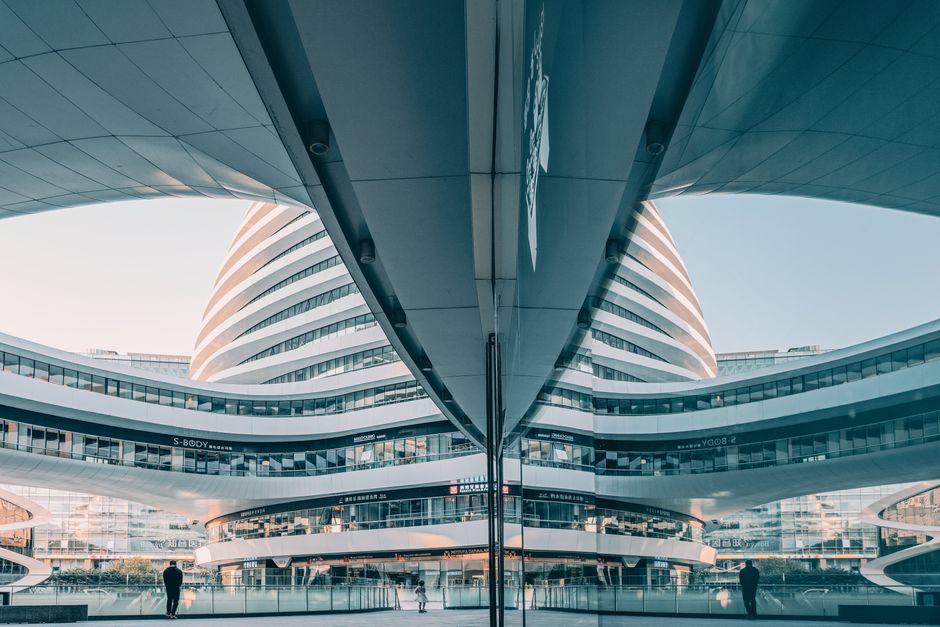
In this comparison, we use “Architecture” as a shorthand for Hefei’s aggressive, high‑rise urban planning and state‑of‑the‑art business parks, contrasted with Wuhu’s more compact, factory‑focused layout and historic riverfront character. Understanding how these physical environments shape labor markets, supply chains, and operational costs is essential for any Asia‑Pacific site‑selection decision.
1. Architectural Identity and Business District Dynamics
Hefei’s skyline is a statement of ambition. The city has added over 40 skyscrapers above 150 meters since 2015, with the 588‑meter Anhui Center (安徽中心) – when completed – becoming the tallest in central China. The core business district, Hefei High‑Tech Zone (合肥高新区, Héféi Gāoxīn Qū), occupies 128 square kilometers and hosts more than 2,000 foreign‑invested enterprises, including 68 Fortune Global 500 firms. Office rents in Grade‑A towers average ¥120–180 per square meter per month, still 40–60% lower than Shanghai Lujiazui but 30% higher than Wuhu’s premium spaces.
Wuhu, by contrast, remains a horizontal city. Its central business corridor along the Yangtze River features mid‑rise buildings; the tallest structure is the 268‑meter Wuhu Tower (芜湖塔). The primary industrial zone, Wuhu Economic and Technological Development Zone (芜湖经济技术开发区), covers 56 square kilometers and is dominated by single‑story factories and logistics warehouses. Office rents are a modest ¥60–90 per square meter per month. For a foreign manufacturer seeking large floor plates for assembly lines, Wuhu’s land‑use efficiency is a clear advantage. However, for a tech company that needs to attract top R&D talent, Hefei’s modern campuses and urban amenities – including the newly opened Hefei Science and Technology Museum – are more appealing.
Contextual numbers:
- 4.2 million – Hefei’s metropolitan population vs. Wuhu’s 3.1 million (2023 census). The larger talent pool in Hefei reduces hiring time for specialized roles by an average of 23 days, according to a local headhunter survey.
- 72% – Share of Hefei’s business parks built to LEED or China Green Building standards, versus 38% in Wuhu. This matters for firms with ESG commitments.
- 6.8 million sqm – Total Grade‑A office stock in Hefei (2023), compared to 1.2 million sqm in Wuhu. The bigger inventory means more negotiation leverage for tenants.
- 18% – Vacancy rate in Wuhu’s prime industrial parks vs. 12% in Hefei’s top zones – tighter supply in the capital drives up costs.
The architectural contrast influences daily business interactions. In Hefei, executives often meet in gleaming lobbies of mixed‑use complexes that also house gyms, cafes, and co‑working spaces. In Wuhu, meetings take place inside factory gates or on the 20th floor of the Wuhu International Trade Center. The former environment fosters serendipitous networking; the latter keeps operational focus but may hinder cross‑industry collaboration.
2. Talent Pool and Lifestyle Appeal
Hefei’s university ecosystem is a magnet for young professionals. The city hosts 51 higher‑education institutions, including the prestigious University of Science and Technology of China (USTC, 中国科学技术大学). In 2023, Hefei graduated 180,000 STEM students, more than the entire population of Wuhu’s urban core. Foreign companies in AI, semiconductors, and biomedicine routinely recruit from USTC’s laboratories. The city also introduced the “Hefei Talent Revitalization Plan,” offering subsidies up to ¥500,000 (≈US$69,000) for doctoral‑level hires and free housing for two years.
Wuhu relies on a different talent pipeline. Its 17 universities produce about 70,000 graduates annually, heavily concentrated in mechanical engineering, logistics, and chemical engineering – aligned with the city’s automotive and materials industries. The flagship program is the Wuhu Technician Cultivation Base (芜湖技师培养基地), which partners with Chery Automobile and other manufacturers to provide practical certifications. For foreign firms needing production managers, Wuhu offers lower turnover (12% per year) compared to Hefei’s 19% (2023 data from Anhui HR Association).
Lifestyle considerations:
- Housing cost ratio: In Hefei, the price‑to‑income ratio for a 100m² apartment is 15.2 years; in Wuhu it is 10.8 years. Lower living costs in Wuhu improve retention of mid‑level staff.
- International schools: Hefei has six bilingual or international schools (e.g., Hefei No.1 International School), while Wuhu has only two. Expat families typically prefer Hefei.
- Green space per capita: Wuhu boasts 14.7 m² of public park area per person vs. Hefei’s 12.1 m² – a small but noticeable plus for liveability.
A foreign HR director should consider: If your business requires a continuous flow of fresh graduate talent, Hefei’s “talent pipeline” is deeper and more research‑oriented. If you prioritize skill stability and lower wage inflation, Wuhu’s labor market is less competitive. Average monthly salary for a senior engineer in Hefei: ¥28,000; in Wuhu: ¥21,000 – a 25% gap that narrows when factoring in housing allowances.
3. Infrastructure and Connectivity for Global Operations
Hefei has invested heavily in logistic hubs. The Hefei Xinqiao International Airport (合肥新桥国际机场) handled 13.2 million passengers in 2023 and offers 28 international cargo routes, including direct flights to Frankfurt and Chicago. The city is a central node on the China‑Europe Railway Express, with 55 trains per week departing for Duisburg and Hamburg. Additionally, the Gaoxin Port (高新港) along the Yangtze River handles 280,000 TEUs annually. Door‑to‑door shipping times from Hefei to Shanghai port average 36 hours.
Wuhu leverages its unique Yangtze position. As the last navigable deep‑water port before the river narrows, Wuhu Port (芜湖港) is the province’s largest inland container port, processing 1.2 million TEUs in 2023. For bulk goods and heavy machinery, Wuhu offers cost savings: barge rates from Wuhu to Yangtze delta ports are 30% lower than from Hefei. The city is also connected via the Hefei‑Wuhu‑Hangzhou high‑speed rail, cutting travel time to Shanghai to just 2 hours. However, Wuhu lacks a major international airport; its small Wuhu Xuanzhou Airport handles only domestic routes and limited charter freight.
Contextual numbers:
- ¥15 billion – Hefei’s annual infrastructure investment (2023), versus Wuhu’s ¥9.2 billion. The gap is closing, as Wuhu is building a new Yangtze bridge and expanding its highway ring.
- 4.8 hours – Average truck transit time from Wuhu to Ningbo port, compared to 6.1 hours from Hefei. For time‑sensitive exports, Wuhu’s location reduces lead times.
- 58 – Number of Fortune 500 companies with R&D centers in Hefei, vs. 19 in Wuhu. The airport and academic infrastructure attract global labs.
- 2.7 million sqm – Cold storage capacity in Wuhu (2023), a critical asset for food and pharma logistics, more than double Hefei’s 1.2 million sqm.
For a foreign manufacturer of heavy equipment, Wuhu’s port and land costs could reduce total landed costs by 8–12%. For a technology firm that ships small, high‑value components, Hefei’s airport connectivity and express rail may outweigh higher land costs.
4. Industry Clusters and Government Incentives
Hefei has built world‑class clusters in photovoltaics, electric vehicles, and AI. The “Sunshine Hefei” initiative has attracted LONGi Green Energy and JA Solar; the city now produces 18% of China’s solar cells. The Hefei National Comprehensive Science Center (合肥综合性国家科学中心) houses 10 national laboratories. Foreign investors in these fields can access “Industry 4.0” subsidies covering up to 40% of automation equipment costs. Additionally, Hefei offers a 15% corporate income tax rate for qualifying high‑tech enterprises (standard rate: 25%).
Wuhu is the undisputed automotive capital of Anhui. Chery Automobile (奇瑞汽车, Qíruì Qìchē) – a major domestic player – employs 80,000 people locally, and the city hosts a dense network of Tier 1 and Tier 2 suppliers. Wuhu also specializes in copper processing (home to Tongling Nonferrous, but Tongling is separate – actually Wuhu’s copper strength is in cables and connectors). Moreover, the Anhui Free Trade Zone’s Wuhu district offers tariff exemptions for imported machinery used in advanced manufacturing. For a foreign auto parts firm, proximity to Chery’s R&D center reduces logistics costs and allows joint‑patent collaboration.
Comparison of incentives:
| Factor | Hefei | Wuhu |
|---|---|---|
| Corporate tax rate for high‑tech enterprises | 15% (applies to 110+ approved sectors) | 15% (narrower scope – mainly automotive & materials) |
| R&D super deduction | 100% additional deduction on qualifying R&D spend | 75% (to be raised to 100% by 2025) |
| Housing allowance for expat executives | Up to ¥3,000/month for 5 years | Up to ¥2,000/month for 5 years |
| Land price for manufacturing (per m²) | ¥450–600 | ¥280–380 |
| Utility cost index (electricity & water per ton) | 100 (baseline) | 92 (8% lower) |
These differences tilt the scales: Hefei is optimized for R&D‑intensive, headquarter‑style operations; Wuhu excels at volume manufacturing with lower overhead. Several multinationals have adopted a “dual‑headquarters” model – placing corporate functions and R&D in Hefei while establishing a factory in Wuhu, leveraging the 140‑km expressway and fast rail link.
5. Cultural and Architectural Soft Factors
The built environment reflects business culture. In Hefei, government officials frequently host delegations in the new Anhui Exhibition Center (安徽展览中心), a 120,000‑sqm venue that hosted over 400 trade events in 2023. The architecture projects openness and modernity, which can reassure foreign partners. In contrast, Wuhu’s municipal services are housed in a 1990s‑era building that remains functional but less impressive. Some foreign executives report that gaining approvals in Wuhu requires more relationship‑building, as the city’s smaller bureaucracy means personal connections matter more.
Historical architecture also plays a subtle role. Wuhu’s old town, with its well‑preserved Ming‑ and Qing‑dynasty buildings, gives the city a sense of heritage that appeals to European investors in luxury goods or tourism. Hefei, largely razed and rebuilt after the 1990s, has fewer cultural landmarks, but its modern art museums (e.g., Hefei 1912 Cultural Block) attract a creative class. For foreign companies that rely on design innovation, Hefei’s contemporary landscape may be more inspiring; for those that value stability and tradition, Wuhu’s slower pace is comforting.
NEXT STEPS: Three Decision‑Path Recommendations
1. Evaluate your primary value chain stage.
If your business is R&D‑heavy (AI, biotech, advanced materials), prioritize Hefei for talent depth, lab infrastructure, and tax incentives. If you are in manufacturing (automotive components, industrial equipment, consumer goods), Wuhu offers 20–30% lower land and utility costs plus direct port access. Conduct a total landed cost analysis factoring in logistics, labor, and subsidies.
2. Consider a split‑site strategy.
Establish a small corporate office in Hefei’s High‑Tech Zone (e.g., 200 m²) for government relations and R&D, while leasing a production hub in Wuhu’s Economic Zone. This dual presence reduces risk and allows you to tap both incentive regimes. Firms like Volkswagen (Anhui) and CATL have already adopted this model. Travel time between the two cities is under one hour by high‑speed rail.
3. Engage local intermediaries early.
Both cities have investment promotion offices (Hefei: 合肥市投资促进局; Wuhu: 芜湖市商务局) that offer site‑selection tours and subsidy applications. Ask for a “one‑stop service” guarantee – Wuhu provides a dedicated liaison for foreign firms, while Hefei has a “Window for Foreign Investment” (外商服务窗口) that processes permits within 5 business days. Schedule a first visit to both to feel the architectural and business climate firsthand; relationships built over tea in Wuhu’s old town often yield faster decisions than formal meetings in Hefei’s skyscrapers.
— Anhui Gateway —