

Bengbu Industrial Parks Review: Infrastructure, Costs, and Access for Foreign Investors
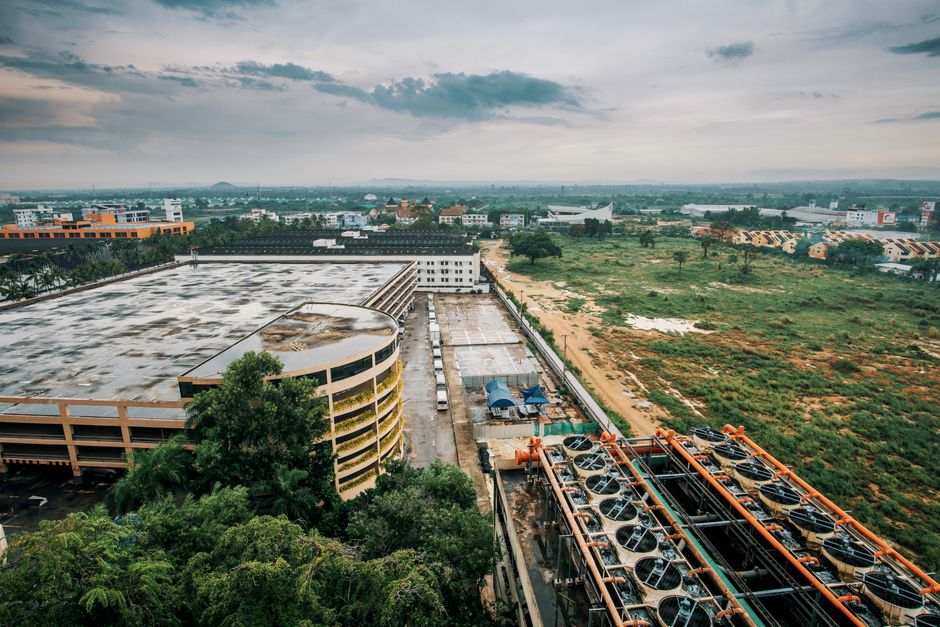
With more than 1,200 enterprises operating across its industrial zones and ¥42.8 billion in fixed-asset investment recorded in 2023 alone, Bengbu’s industrial parks are emerging as a serious option for foreign manufacturers looking beyond first-tier Chinese cities. Located in northern Anhui along the Huaihe River, Bengbu (蚌埠, Bèngbù) has transformed from a traditional transportation hub into a diversified industrial base. This review evaluates three major parks—the Bengbu High-tech Industrial Development Zone (蚌埠高新技术产业开发区, Bèngbù Gāoxīn Jìshù Chǎnyè Kāifā Qū), the Bengbu Economic and Technological Development Zone (蚌埠经济技术开发区, Bèngbù Jīngjì Jìshù Kāifā Qū), and the Silicon-based Materials Industrial Park (硅基材料产业园, Guījī Cáiliào Chǎnyè Yuán)—across infrastructure, cost, and access parameters relevant to foreign executives making location decisions.
Infrastructure Overview: Roads, Utilities, and Logistics
Bengbu’s industrial parks benefit from the city’s historic role as a river-rail junction. The High-tech Zone, established in 1994 and upgraded to national-level status in 2010, has invested ¥3.2 billion in internal road networks over the past three years, with over 95% of plots within 500 meters of a four-lane arterial road. The Economic Development Zone offers a separate power substation capacity of 220 kV, ensuring less than one hour of unplanned downtime per year on average. Sewage treatment capacity across the three parks is rated at 240,000 tons per day, sufficient for projected demand through 2027.
Warehouse and logistics infrastructure are notably improving. The Bengbu Huaihe River Port, located 12 km from the High-tech Zone, handles bulk and container cargo with annual throughput of 18 million tons. A new multimodal logistics center near the Silicon-based Materials Park provides on-site customs clearance and a 50,000-square-meter bonded warehouse, reducing export lead times by an estimated 2–3 days compared to direct road transport to Shanghai.
However, logistics costs remain above those in coastal cities. A 40-foot container from Bengbu to Shanghai Port costs approximately ¥4,200 by truck versus ¥3,100 from Suzhou, reflecting the 480 km inland distance. Rail freight is available at ¥2,800 per container but departs only three times per week, limiting flexibility for time-sensitive goods.
Cost Analysis: Land, Labor, and Utilities
Cost advantages are Bengbu’s primary draw for foreign investors. Industrial land in the High-tech Zone is priced at ¥32万 per mu (approximately ¥480 per square meter), roughly 45% lower than Hefei’s ¥58万 per mu and less than one-fifth of Shanghai’s average industrial land price. Lease rates for standard factory space range from ¥18 to 25 per square meter per month, with built-in office mezzanines available at a 10% premium.
Labor costs follow a similar gradient. The average monthly wage for production workers in Bengbu’s industrial parks is ¥4,800, inclusive of social insurance contributions, compared to ¥6,200 in Hefei and ¥8,500 in Shanghai. Technician-level roles command ¥6,500–8,200. Turnover rates across the parks average 12% annually, well below the national manufacturing average of 18–20%, which the Bengbu Economic Development Zone attributes to a clustering effect of Anhui Vocational College feeder programs.
Utility costs are competitive but not the lowest in Anhui. Industrial electricity is ¥0.68 per kWh, water is ¥3.90 per ton, and natural gas is ¥3.45 per cubic meter. Combined monthly utility costs for a medium-sized factory (5,000 sqm, 200 workers, two-shift operation) run approximately ¥120,000–150,000, roughly 15% below Hefei and 15% above provincial averages in southwest China like Kunming.
| Cost Item | Bengbu | Hefei | Shanghai |
|---|---|---|---|
| Industrial land (¥万/mu) | 32 | 58 | 170+ |
| Factory rent (¥/sqm/month) | 18–25 | 28–40 | 55–90 |
| Avg. production wage (¥/month) | 4,800 | 6,200 | 8,500 |
| Electricity (¥/kWh, industrial) | 0.68 | 0.73 | 0.85 |
| Container to Shanghai Port (¥/40ft) | 4,200 | 3,800 | 1,500 |
| Annual property tax rate | 1.2% | 1.2% | 1.2% |
Strategic Access and Market Connectivity
Bengbu’s location at the intersection of the Beijing–Shanghai and Huaihe River economic corridors gives it a distinctive advantage for domestic market access. By expressway, the High-tech Zone is 1.5 hours from Hefei, 4 hours from Nanjing, and 5 hours from Shanghai. The Bengbu South High-speed Rail Station connects to Shanghai in 2 hours 40 minutes and to Beijing in 3 hours 10 minutes, enabling same-day executive travel to either financial hub.
For foreign investors targeting the central China consumer market, Bengbu sits within a 500 km radius covering 400 million people with ¥3.8 trillion in combined retail consumption—a proximity that logistics provider DB Schenker has leveraged by opening a regional distribution center in the Economic Zone in 2022. The Anhui provincial government has designated Bengbu as a key hub for silicon-based and photovoltaic materials, with preferential approval paths for foreign-invested projects in those supply chains.
The Silk Road connection is limited but improving. Bengbu Station on the China Railway Express (CR Express) network offers weekly outbound services to Kazakhstan and Uzbekistan, with a transit time of 12–14 days. For European destinations, the preferred route remains via the Xi’an hub, adding 3–4 days of lead time. Airfreight is available through Hefei Xinqiao International Airport (75 minutes by shuttle), which handles 220,000 tons of cargo annually across 40 international routes.
Decision Framework: Choosing the Right Bengbu Industrial Park
If your priority is land cost and expandability for heavy manufacturing, choose the Silicon-based Materials Industrial Park—its 20-year lease terms and plot sizes from 30 mu upward offer the lowest per-unit costs (¥28万/mu) and direct utility lines for energy-intensive processes. If your focus is on logistics speed and proximity to skilled labor, choose the Bengbu High-tech Industrial Development Zone—its location on the G36 Expressway corridor and partnership with Anhui Vocational College yield shorter hiring cycles and faster road access to eastern China ports.
If your business requires bonded warehousing and customs facilities—for example, in electronics assembly or components trade—choose the Bengbu Economic and Technological Development Zone, which hosts the city’s only supervised customs warehouse and offers same-day customs clearance for approved goods under the AEO program. If your foreign-invested enterprise (外商独资企业, WFOE, wàishāng dúzī qǐyè) plans a phased rollout, the Economic Zone also offers sub-5,000 sqm lease spaces with flexible break clauses that the High-tech Zone does not match.
Assessment note: All three parks are designated as national-level or provincial-level zones, entitling qualified foreign-funded projects to standard corporate income tax reductions (15% for encouraged industries and 25% for standard) and VAT refunds on imported equipment under specific catalogues. Confirm your project’s HS code eligibility with Anhui provincial commerce authorities before signing any land agreement.
Three Critical Pitfalls to Avoid
Cost: ¥80,000–150,000 per mu in hidden preparation charges.
Fix: Request a “turnkey price” (交钥匙价格, jiāo yàoshi jiàgé) from the park management committee covering all site works to a defined grade level; get it in writing before signing the letter of intent.
Cost: ¥200,000–800,000 in unplanned import duties, plus 3–6 month approval delays.
Fix: Engage a licensed customs broker (报关行, bàoguān háng) in Bengbu city proper, not in Hefei, who knows the local enforcement practice. Have your equipment list pre-approved by the park’s investment service center.
Cost: Estimated ¥1–3 million in lost production per event for a medium facility.
Fix: Request the park’s flood risk map and ground elevation certificate. Choose plots at least 2 meters above the 100-year flood level. Purchase flood insurance from a domestic insurer (China Pacific Insurance operates a Bengbu industrial desk).
NEXT STEPS
- Conduct a site visit with a structured checklist. Download our Bengbu Industrial Parks Site Inspection Checklist to evaluate road access, utility load capacity, and neighbor factory quality before committing to any lease or land purchase.
- Compare Bengbu’s incentive package against other Anhui zones. Read the Anhui Province Foreign Investment Incentives: 2024–2025 Overview to understand how Bengbu’s local subsidies on R&D equipment and talent housing stack up against Hefei, Wuhu, and Ma’anshan.
- Validate your company structure for a Bengbu WFOE. Review our guide on Incorporating a Wholly Foreign-Owned Enterprise in Anhui Province to navigate the registration timeline, minimum capital requirements, and industry restrictions specific to Bengbu municipal authorities.
— Anhui Gateway —
Remote China market entry support, built around execution.