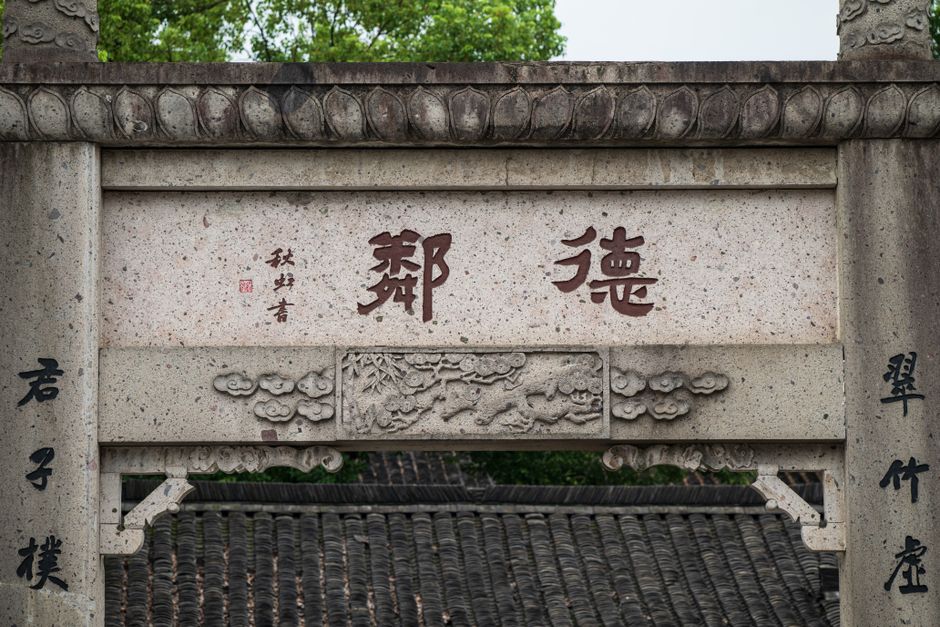


Chizhou Heritage Update: Ancient Villages Restoration Project Opens for Investment — Impact on Local Economy and Cultural Preservation
Chizhou (池州, Chízhōu) has opened its largest-ever ancient villages restoration project to private investment, targeting 12 designated cultural heritage villages in Guichi District and Qingyang County, with a combined project valuation of RMB 2.8 billion as of Q1 2025. The initiative marks the first time local authorities have offered equity stakes and long-term operational rights to foreign and domestic investors in exchange for capital to restore Ming- and Qing-dynasty architecture, with an initial public investment round of RMB 850 million already secured from the Anhui Provincial Cultural Heritage Bureau. The project sits within the broader 乡村振兴 (rural revitalization, xiāngcūn zhènxīng) strategy and is expected to reposition Chizhou as a heritage tourism destination capable of drawing 500,000 high-spend visitors annually by 2028, up from roughly 180,000 in 2024. This article provides a data-driven analysis of the project’s structure, economic impact, investment mechanics, and the specific risks overseas investors must navigate when participating in Chinese cultural heritage restoration.
Project Overview and Investment Framework
The Chizhou Ancient Villages Restoration Project — officially branded as the 池州古村落保护与开发计划 (Chizhou Ancient Village Protection and Development Plan, Chízhōu gǔ cūnluò bǎohù yǔ kāifā jìhuà) — encompasses 12 villages designated as 文物保护单位 (cultural relic protection units, wénwù bǎohù dānwèi). Among them, three are classified as national-level protected sites: Lishan Village, Xintang Old Street, and the Jiuhua Mountain foothill cluster. The city government has structured the project as a public-private partnership (PPP) model, wherein investors can acquire a minority equity stake of up to 49% in individual village restoration SPVs (special purpose vehicles), with the Chizhou State-Owned Cultural Assets Management Company retaining control. The minimum single-investment threshold is set at RMB 30 million, with a maximum of RMB 150 million per village.
Investment funds are earmarked for three specific phases: structural reinforcement and restoration of existing building stock (roughly 65% of total capital), modern infrastructure including sewage, power, and fiber-optic connectivity (20%), and commercial development such as boutique hotels, tea houses, and artisan workshops (15%). The government has committed to a 20-year operational concession period, after which the assets revert to state ownership with a residual value compensation clause. Investors should note that all restoration work must follow strict guidelines issued by the 国家文物局 (National Cultural Heritage Administration, guójiā wénwù jú), which mandates the use of traditional materials (lime mortar, hand-hewn timber, fired clay tiles) and prohibits the use of modern construction methods on facades.
Economic Impact Projections and Visitor Volume Targets
The Chizhou municipal government’s economic impact assessment, published in January 2025, projects that the fully restored village cluster will generate RMB 1.2 billion in direct annual tourism revenue by 2030, up from approximately RMB 320 million in 2024 from the same villages (in their current, partially deteriorated state). The projection is based on a compound annual growth rate of 24.5%, benchmarked against similar heritage restoration projects in Huizhou and Wuyuan that saw average revenue growth of 22–27% in their first five years post-restoration. Visitor volume is expected to grow from 180,000 (2024) to 500,000 (2028 target) and eventually 750,000 (2032 ceiling under the site’s carrying capacity limit).
The employment effect is significant: the project is anticipated to create approximately 1,800 direct jobs — including 400 positions for heritage craftsmen, 300 hospitality roles, 200 in guided interpretation and cultural programming, and the remainder in operations, maintenance, and administration. An additional 2,000+ indirect jobs are expected in supply chains (agriculture, tea production, transportation) and local services. The government has committed to reserving 60% of direct jobs for residents of the restoration villages, with a training stipend of RMB 1,500 per month per trainee funded through the provincial rural revitalization budget.
| Village Name | Restoration Phase | Total Investment (RMB) | Investor Equity Cap | Expected Opening | Annual Visitor Target |
|---|---|---|---|---|---|
| Lishan Village (国家保护) | Phase 1 (2025–2027) | 480 million | 49% | Q2 2028 | 150,000 |
| Xintang Old Street | Phase 1 (2025–2027) | 320 million | 49% | Q4 2027 | 100,000 |
| Jiuhua Foothill Cluster | Phase 2 (2026–2028) | 520 million | 49% | Q2 2029 | 180,000 |
| Xingcun Village | Phase 2 (2026–2028) | 320 million | 49% | Q1 2029 | 90,000 |
| Taiping Old Town Hamlet | Phase 3 (2027–2029) | 280 million | 49% | Q3 2030 | 80,000 |
| Heavenly Pond Village | Phase 3 (2027–2029) | 300 million | 49% | Q1 2030 | 100,000 |
Source: Chizhou Municipal Bureau of Culture and Tourism Investment Prospectus, January 2025. Figures are in RMB. “国家保护” indicates national-level cultural relic protection status.
Cultural Preservation Strategy and the Role of Artisan Training
A distinctive feature of the Chizhou project is its integration of a formal 传统工匠培训体系 (traditional artisan training system, chuántǒng gōngjiàng péixùn tǐxì). The government, in partnership with Anhui University’s School of Architecture and the provincial Intangible Cultural Heritage Center, has established a 3-year apprenticeship program aimed at training 600 craftsmen in traditional skills including wood joinery, roof tiling, whitewashing with lime-soybean mixes, and decorative woodcarving. The program is mandatory for all restoration projects funded by the investment pool, and investors are required to allocate 8% of their restoration budget to employing and training local artisans through this program. As of March 2025, 120 apprentices have enrolled, with a graduation rate target of 85%.
The preservation strategy also addresses the tension between authenticity and commercial viability. Investors are permitted to convert no more than 30% of any village’s total built floor area into commercial uses (hotels, restaurants, retail), with the remaining 70% preserved as “living heritage” — occupied by local residents, used for cultural activities, or maintained as open-to-the-public museum spaces. This ratio was modeled on the successful conservation-utilization balance achieved in the Hongcun and Xidi UNESCO villages in nearby Yi County, where commercial floor area ratio has been capped at 28% since 2020, resulting in a per-tourist spend of RMB 380 (versus RMB 220 in less-restricted Hainan heritage sites).
Foreign Investor Suitability and Entry Strategies
For foreign capital — particularly from ASEAN and European investors targeting China’s cultural tourism market — the Chizhou project offers the most formalized equity entry point currently available in Anhui province for heritage assets. Unlike most Chinese heritage sites, which are entirely state-managed or licensed to domestic developers, the Chizhou SPV structure explicitly permits foreign ownership up to the 49% cap, provided the investor registers a 外商独资企业 (WFOE, wàishāng dúzī qǐyè) in Chizhou for the purposes of the investment. The WFOE must have a registered capital of at least RMB 10 million, and the investor must demonstrate a track record in hospitality, cultural tourism, or heritage conservation via a portfolio exceeding RMB 100 million in total asset value.
The return on investment is structured through three revenue streams: (1) a share of ticket revenue pooled across all 12 villages, distributed quarterly based on equity percentage; (2) rental income from commercial leases within the investor’s designated village (50% to investor, 50% to the SPV); and (3) a tax-incentivized operational profit share from any hotel or cultural venue the investor chooses to operate directly. The combined internal rate of return (IRR) is projected at 10.2% over the 20-year concession, with a payback period of approximately 8–9 years. However, investors should be aware that returns in years 1–5 are expected to be negative (transition period), turning positive only in year 6 once village occupancy reaches an estimated 60%.
Decision Framework: Is Chizhou the Right Heritage Investment for You?
If your firm has a track record in boutique hospitality or cultural destination management and can commit at least RMB 30 million with a 7-year+ horizon, choose a single-village SPV investment (Phase 1 or 2) — the direct operational involvement maximizes IRR. If you are a high-net-worth individual or family office seeking a passive cultural asset with stable but slower appreciation, choose the pooled fund vehicle (minimum RMB 10 million) offered via the Chizhou Cultural Investment Trust, which distributes ticket and lease income across all 12 villages and diversifies village-specific occupancy risk. If you are an ESG or impact investor targeting verifiable cultural preservation outcomes, choose the artisan training program sponsorship route (RMB 5 million minimum), which provides no equity but yields annual reporting on craftsmen trained and structures preserved, aligned with UNESCO heritage reporting standards.
NEXT STEPS
- Review the full Chizhou investment prospectus and financial model — download the 2025 official prospectus from the Chizhou Municipal Investment Bureau. Examine the tariff tables and revenue waterfall before committing any capital. → Read the full prospectus details here
- Engage a local due diligence partner — the Anhui provincial asset assessment firm qualified to audit heritage SPVs is Anhui Zhonghua Asset Appraisal Co. (合肥中化资产评估). Ensure your WFOE registration and SPV contract are reviewed by a lawyer experienced with cultural relic protection agreements. → View the heritage investment legal checklist
- Visit Chizhou for an on-site evaluation in Q2 2025 — the government offers a 3-day familiarization tour for shortlisted investors, including inspection of all 12 villages, meetings with the Cultural Heritage Bureau, and introductions to the artisan training center. The next tour is May 12–14, 2025; applications close April 30. → Register for the May site visit
— Anhui Gateway —
Remote China market entry support, built around execution.