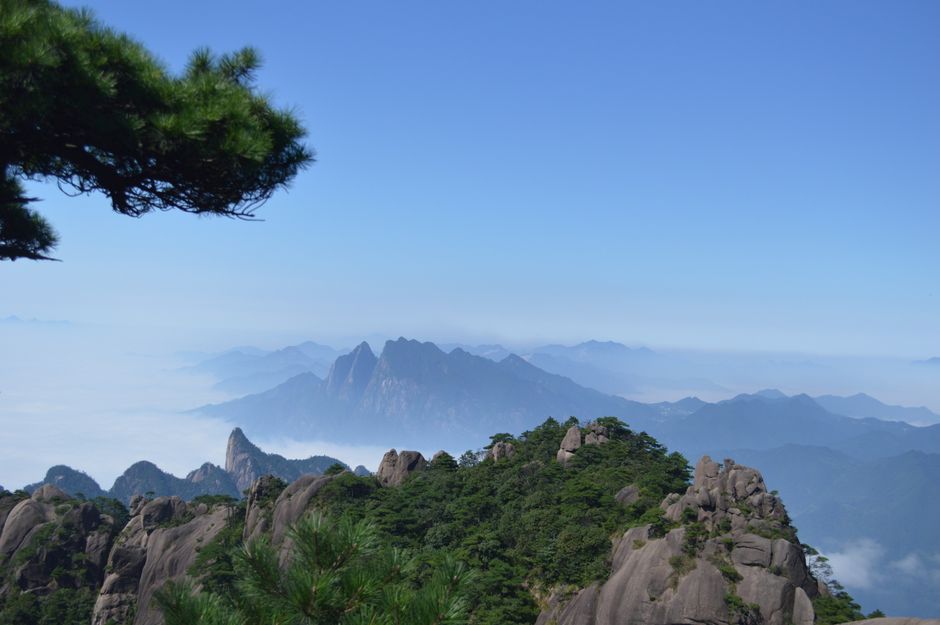


Chizhou vs Huangshan: Which Anhui City for Tourism Investment?
Table of Contents
- Introduction: Two Paths to Anhui Tourism Investment
- Market Scale and Growth Trajectory
- Investment Costs: Land, Construction, and Operating Expenses
- Government Incentives and Policy Environment
- Infrastructure: Transportation and Tourism Readiness
- Sector-by-Sector Opportunity Analysis
- ROI Comparison and Investment Timelines
- Strategic Recommendation by Investor Profile
- Frequently Asked Questions
1. Introduction: Two Paths to Anhui Tourism Investment
For foreign investors evaluating tourism opportunities in Anhui Province, the choice between Chizhou (池州) and Huangshan (黄山) represents a fundamental strategic decision that will shape the nature, scale, and risk profile of the investment. Both cities share the same provincial government, similar natural endowments of mountain scenery and cultural heritage, and are located in the same southern Anhui geographic region. Yet they offer profoundly different investment propositions. Huangshan, home to the globally iconic Yellow Mountain (黄山), is one of China’s most established and internationally recognized tourism destinations, with mature infrastructure, high visitor volumes, premium pricing, and intense competition. Chizhou, home to the sacred Buddhist mountain Jiuhua (九华山) and an expanding portfolio of eco-tourism and cultural heritage assets, is an emerging destination with lower entry costs, faster growth rates, and significant first-mover advantages — but also higher marketing requirements and a less developed tourism ecosystem.
This comparison provides a structured, data-driven analysis of the two cities across the factors that matter most to foreign investors: market size and growth, investment costs and barriers to entry, government incentives and policy support, infrastructure quality, sector-specific opportunities, and projected return on investment. The analysis is designed to help investors match their specific profile — investment size, risk tolerance, timeline, and sector focus — to the city that offers the best strategic fit. We conclude with specific recommendations for different investor types, recognizing that there is no universal “better” choice between these two distinctive Anhui destinations.
2. Market Scale and Growth Trajectory
The most significant difference between the two cities is the scale and maturity of their tourism markets. Huangshan Mountain is a UNESCO World Heritage Site (both natural and cultural designations) and one of China’s most photographed and visited natural landmarks. The city of Huangshan as a whole receives approximately 60–70 million tourist visits annually, generating tourism revenue of CNY 55–65 billion. However, this enormous volume comes with a slow growth rate — Huangshan’s tourist numbers have been increasing at just 3–5% annually in recent years, reflecting the market’s maturation and the capacity constraints imposed by the mountain’s limited carrying capacity. The international visitor segment (approximately 2–3 million annually) has been flat to slightly declining since 2019, impacted by global travel patterns and increased competition from other Chinese destinations.
Chizhou’s tourism market is approximately half the size of Huangshan’s in visitor terms, with 25–30 million annual visits and tourism revenue of CNY 25–30 billion. However, it is growing at 8–12% annually — roughly two to three times the growth rate of Huangshan. This faster growth is driven by several factors: the development of new tourism products beyond Jiuhua Mountain (eco-tourism, hot springs, rural homestays); improved transportation infrastructure that is expanding the catchment area; government investment in destination marketing; and the general trend toward diversified, experiential travel that benefits destinations with multiple attraction types. Chizhou’s international visitor numbers (200,000–400,000 annually) are significantly lower than Huangshan’s, representing both a weakness and an enormous untapped opportunity. The international market for Buddhist cultural tourism (targeting Southeast Asian markets) and eco-tourism (targeting European and North American markets) is essentially undeveloped in Chizhou, offering substantial growth potential for investors who bring international marketing capabilities.
| Market Metric | Huangshan | Chizhou | Advantage |
|---|---|---|---|
| Annual Tourist Visits | 60–70 million | 25–30 million | Huangshan (volume) |
| Annual Tourism Revenue | CNY 55–65 billion | CNY 25–30 billion | Huangshan (scale) |
| Year-on-Year Growth Rate | 3–5% | 8–12% | Chizhou (momentum) |
| International Visitors | ~2–3 million | ~200,000–400,000 | Chizhou (untapped potential) |
| Tourism Revenue per Visitor | ~CNY 950 | ~CNY 950 | Similar (both ~USD 130) |
| Hotel Occupancy Rate (Avg) | 55–65% | 60–70% | Chizhou (higher utilization) |
| Market Saturation Level | High (mature market) | Moderate (developing) | Chizhou (less competition) |
| Brand Recognition (Global) | Very High | Low-Moderate | Huangshan (awareness) |
| Brand Recognition (Domestic) | Very High | Moderate-High | Huangshan (awareness) |
3. Investment Costs: Land, Construction, and Operating Expenses
The cost differential between Chizhou and Huangshan is one of the most compelling arguments for choosing Chizhou as an investment destination. Across virtually every cost category, Chizhou offers significantly lower prices — 30–50% below Huangshan levels for most inputs — while the revenue potential per visitor is comparable. This creates a more favorable margin structure for Chizhou-based investments.
Commercial land prices in Huangshan’s prime tourism zones — particularly the areas around the mountain scenic area entrances, the Tunxi Old Street historic district, and the new high-speed rail station area — range from CNY 3,000 to 8,000 per square meter, with premium locations exceeding CNY 10,000. In Chizhou, comparable commercial land near the city center or along the Jiuhua Mountain tourism corridor ranges from CNY 1,500 to 4,000 per square meter. The differential is even larger for rural land in eco-tourism zones: Huangshan’s rural tourism areas command CNY 1,000–3,000 per square meter, while Chizhou’s equivalent locations in Shitai County and Qingyang County range from CNY 500–1,500 per square meter. Construction costs follow a similar pattern. A four-star hotel in Huangshan costs approximately CNY 6,000–9,000 per square meter to build, compared to CNY 4,000–6,500 in Chizhou, reflecting both lower labor costs and less pressure on construction material supply chains. A 100-room four-star hotel in Huangshan thus represents a total construction cost of approximately CNY 60–90 million versus CNY 40–65 million for the equivalent property in Chizhou. Including land acquisition, the total project cost differential is approximately 35–45%.
Operating costs also favor Chizhou, though the differential is narrower. Staff costs in Chizhou are approximately 20–30% lower than in Huangshan across all hospitality positions — a significant advantage given that labor represents 25–35% of operating expenses for a typical hotel. Utility costs, property taxes, and insurance premiums are also marginally lower in Chizhou. However, marketing costs are higher as a proportion of revenue for Chizhou properties: less brand recognition means higher customer acquisition costs. A new hotel or resort in Chizhou should budget 15–25% of revenue for marketing in the first 2–3 years, compared to 8–12% for an equivalent new property in Huangshan. Over a 5-year operating horizon, the marketing cost differential partially offsets the labor and land advantages, but Chizhou properties still achieve meaningfully lower total operating costs.
| Cost Category | Huangshan Range | Chizhou Range | Chizhou Savings |
|---|---|---|---|
| Commercial Land (prime zone) | CNY 3,000–8,000/m² | CNY 1,500–4,000/m² | 40–50% |
| Rural Tourism Land | CNY 1,000–3,000/m² | CNY 500–1,500/m² | 40–50% |
| Hotel Construction (4-star) | CNY 6,000–9,000/m² | CNY 4,000–6,500/m² | 30–40% |
| Hotel Construction (5-star) | CNY 9,000–14,000/m² | CNY 6,500–10,000/m² | 25–35% |
| Staff Wages (Avg Hospitality) | CNY 4,500–6,500/mo | CNY 3,500–5,000/mo | 20–30% |
| Marketing (as % of revenue) | 8–12% | 15–25% (first 2–3 yrs) | Huangshan advantage |
| Permitting & Compliance | Standard timeline | Faster via green channel | Time-cost savings |
| Total Project Cost (100-room 4★ hotel) | CNY 90–140 million | CNY 55–90 million | 35–45% |
4. Government Incentives and Policy Environment
The policy environment for tourism investment differs significantly between the two cities, reflecting their different stages of development. Huangshan, as a mature tourism destination with strong demand from domestic investors, offers standard incentives aligned with Anhui Province’s general foreign investment promotion policies. These include the standard tax benefits available to foreign-invested enterprises (FIEs) in encouraged industries, streamlined business registration processes, and access to provincial-level tourism development funds. However, Huangshan is generally not in a position to offer the kinds of enhanced, discretionary incentives that Chizhou can provide, because the market already attracts sufficient domestic investment without them.
Chizhou’s approach is more proactive and investor-friendly. The municipal government has designated tourism as a pillar industry and has authorized a comprehensive package of incentives specifically for tourism investment — not just standard provincial policies but locally enhanced benefits. As detailed in the Chizhou Municipal Tourism Investment Promotion Guidelines (2024–2028), qualifying foreign-invested tourism projects may receive land price discounts of up to 30% for projects that meet minimum investment thresholds (typically CNY 30 million+) and achieve environmental certification. Corporate income tax holidays of 3–5 years are available for projects in encouraged categories such as eco-tourism, cultural heritage tourism, and rural revitalization-oriented tourism. Infrastructure connection subsidies cover the cost of connecting water, electricity, gas, and road access to the project site boundary — a benefit that can be worth CNY 2–5 million for a mid-sized resort development. Marketing co-op funding of up to CNY 500,000 per project is provided for new tourism developments’ promotional activities in the first two years of operation.
Beyond direct financial incentives, Chizhou offers significant administrative advantages. The city maintains a dedicated “green channel” for foreign investment projects, which consolidates approvals across multiple government departments and reduces total processing time by approximately 40% compared to the standard procedure. This means that a foreign investor can go from project proposal submission to construction permit in approximately 3–4 months in Chizhou, compared to 5–7 months in Huangshan. For investors who value speed to market, this administrative efficiency is a meaningful competitive advantage.
5. Infrastructure: Transportation and Tourism Readiness
Huangshan has a clear advantage in transportation infrastructure, reflecting its decades-long development as an international tourism destination. Huangshan Tunxi International Airport (TXN) offers direct flights to approximately 20 domestic destinations plus seasonal international charters. The Huangshan North high-speed railway station provides seamless connections to the national HSR network, with frequent service to Shanghai (2.5 hours), Hangzhou (1.5 hours), Nanjing (1 hour 45 minutes), and Beijing (4.5 hours). The expressway network is excellent, with direct links to all major cities in the Yangtze River Delta. Within the city, comprehensive public transportation, abundant taxis and ride-hailing options, and English signage at major tourist facilities make navigation straightforward for international visitors.
Chizhou’s infrastructure, while improving rapidly, remains less developed. Chizhou Jiuhuashan Airport (JUH) offers flights to approximately 8–10 domestic destinations — adequate but less comprehensive than Huangshan’s network. The high-speed rail connection via the Nanjing–Anqing Intercity Railway is excellent, providing direct service to Nanjing (1 hour 40 minutes), Hefei (1 hour 20 minutes), and connections through these hubs to the national network. The expressway network, anchored by the G50 Shanghai–Chongqing Expressway, provides good connectivity to the Yangtze River Delta, but secondary roads serving rural tourism areas (Shitai County, Qingyang County) are less developed and can be congested during peak seasons. Local public transportation is adequate but less frequent and less English-friendly than Huangshan’s system.
However, infrastructure is not a static variable. The Anhui Provincial Government’s 14th Five-Year Plan for Transportation (2026–2030) includes significant investments in Chizhou’s tourism transportation infrastructure, including expansion of Jiuhuashan Airport terminal and runway, upgraded secondary roads to Shitai County and Qingyang County tourism areas, expanded high-speed rail station capacity, and new tourism highway connecting Chizhou directly to Huangshan, creating a Southern Anhui Tourism Golden Circle route. For investors with a 5+ year horizon, the infrastructure gap between the two cities will narrow substantially during the investment period, and early investors will benefit from appreciating asset values as connectivity improves.
| Infrastructure Factor | Huangshan | Chizhou | Chizhou Catch-Up Timeline |
|---|---|---|---|
| Airport Destinations | ~20 domestic + intl charters | ~8–10 domestic | 2028–2030 (expansion planned) |
| HSR Travel Time to Shanghai | 2.5h (direct) | 3–3.5h (via Nanjing) | No direct route planned |
| HSR Travel Time to Hefei | 1h 10m | 1h 20m | Comparable already |
| Expressway Quality | Excellent | Good (primary), Developing (secondary) | 2027–2029 (rural upgrades) |
| English Signage | Widespread at tourist sites | Limited to major sites | Ongoing improvement |
| International Hotel Brands | 15+ brands present | 5–8 brands present | Rapidly increasing |
| Tour Guide Availability (English) | Abundant | Limited but growing | 2027–2028 (training programs) |
6. Sector-by-Sector Opportunity Analysis
The specific investment opportunities vary significantly between the two cities, and the optimal choice depends heavily on the sector an investor wishes to target. For upscale and luxury hotels, Huangshan offers a proven market with established demand from affluent domestic and international travelers, but the market is approaching saturation in the luxury segment, and achieving differentiation is increasingly difficult. Chizhou offers a less saturated market for upscale properties, particularly in the eco-lodge and boutique hotel segments, with potential for stronger pricing power due to limited supply. The strategic recommendation favors Chizhou for boutique and eco-luxury concepts and Huangshan for large-scale luxury brands that require the destination’s recognition to justify premium pricing.
In the MICE (Meetings, Incentives, Conferences, Exhibitions) sector, Huangshan has a well-developed infrastructure for business events, with several large convention hotels and dedicated conference facilities, but faces increasing competition from other Chinese MICE destinations. Chizhou has minimal MICE infrastructure currently, representing an opportunity to establish a first-mover position in a less crowded market. The city’s unique selling point for MICE would be the combination of business facilities with the Jiuhua Mountain spiritual retreat atmosphere, targeting corporate wellness retreats, leadership training programs, and executive strategy sessions — a niche that is underserved in China. The strategic recommendation is Chizhou for the corporate retreat and wellness MICE niche, and Huangshan for traditional conference and exhibition events.
For eco-tourism and nature-based experiences, Chizhou has a clear competitive advantage over Huangshan. Shitai County’s 80% forest coverage and nationally protected nature reserves offer a more pristine natural environment than Huangshan’s more developed and crowded scenic areas. Chizhou’s eco-tourism assets are less commercialized, offering greater authenticity — a key value driver for the eco-conscious traveler segment. The strategic recommendation strongly favors Chizhou for eco-tourism, nature retreats, and forest therapy investments. For cultural heritage tourism and ancient village development, both cities offer significant opportunities. Huangshan has the advantage of the well-established Huizhou culture tourism circuit centered on ancient villages like Hongcun and Xidi (both UNESCO World Heritage sites), which are already major destinations. Chizhou’s ancient villages in Qingyang County are less known but offer lower acquisition costs and the opportunity to develop more immersive, less commercialized experiences. The strategic recommendation depends on the investor’s brand strategy: if association with UNESCO recognition is important, Huangshan; if creating a unique, off-the-beaten-path experience is the goal, Chizhou.
| Tourism Sector | Huangshan Advantage | Chizhou Advantage | Recommended for Investor Type |
|---|---|---|---|
| Luxury Hotels (5-star) | Proven demand, brand recognition | Lower costs, higher occupancy potential | Huangshan for global brands, Chizhou for boutique concepts |
| Boutique Eco-Lodges | Strong brand association | Superior natural assets, less competition | Chizhou strongly preferred |
| MICE Facilities | Existing infrastructure, proven market | First-mover opportunity, niche positioning | Huangshan for traditional MICE, Chizhou for retreat niche |
| Wellness & Spa Resorts | Established wellness tourism market | Hot springs + Buddhist spirituality unique combo | Chizhou for integrative wellness |
| Ancient Village Tourism | UNESCO sites, established circuit | Lower costs, less commercialization | Huangshan = established, Chizhou = emerging |
| Eco-Tourism / Nature | Famous mountain brand | Purer ecosystems, less crowded | Chizhou strongly preferred |
| Rural Homestays | Existing nongjiale network | Higher quality potential, lower competition | Chizhou for premium segment |
| Religious/Spiritual Tourism | General pilgrimage market | Jiuhua Mountain specific niche | Chizhou for Buddhist spiritual tourism |
7. ROI Comparison and Investment Timelines
Based on current market data and comparable project analysis, the projected ROI profiles for tourism investments in the two cities differ in important ways that reflect their different risk-reward characteristics. In Huangshan, a well-executed hotel or resort investment can be expected to achieve stabilized occupancy of 55–65% within 2–3 years, with average daily rates (ADR) of CNY 600–1,200 depending on the property category, and a revenue per available room (RevPAR) of CNY 330–780. The payback period for a mid-scale to upscale hotel in Huangshan is typically 6–9 years, with an internal rate of return (IRR) of 8–12%. These projections are relatively predictable, reflecting the mature market, but the returns are moderate and the competitive pressure on rates limits upside potential.
In Chizhou, the projections are more variable but potentially more attractive. Stabilized occupancy of 60–70% can be achieved within 2–4 years, with ADR of CNY 500–1,000 and RevPAR of CNY 300–700. The payback period is shorter at 5–8 years, and the projected IRR of 10–16% reflects both the lower capital costs and the higher growth trajectory. However, the range is wider — reflecting the higher uncertainty of a developing market. The key risk in Chizhou is demand-side: will the projected visitor growth materialize at the pace anticipated? The key opportunity is supply-side: can early movers establish market-leading positions before competitors enter? For investors with a higher risk tolerance and a 5–10 year horizon, Chizhou offers a superior risk-adjusted return. For risk-averse investors prioritizing capital preservation and predictable income streams, Huangshan is the more conservative choice.
| ROI Metric | Huangshan (Est.) | Chizhou (Est.) |
|---|---|---|
| Stabilized Occupancy Rate | 55–65% | 60–70% |
| Average Daily Rate (Mid-Upscale) | CNY 600–1,200 | CNY 500–1,000 |
| RevPAR (Mid-Upscale) | CNY 330–780 | CNY 300–700 |
| Payback Period | 6–9 years | 5–8 years |
| Projected IRR | 8–12% | 10–16% |
| Stabilization Period | 2–3 years | 2–4 years |
| Revenue Growth (5-year CAGR) | 3–6% | 8–14% |
| Capital Appreciation Potential (5yr) | 15–30% | 30–60% |
| Risk Level | Low-Moderate | Moderate |
8. Strategic Recommendation by Investor Profile
Based on the comprehensive analysis above, we offer the following strategic recommendations for different investor profiles. For large institutional investors and global hotel chains (investment CNY 200M+), we recommend considering both cities as part of a diversified Anhui portfolio. A flagship luxury property in Huangshan provides brand visibility, stable cash flow, and international marketing leverage, while a complementary eco-resort in Chizhou captures growth upside and diversifies market exposure. The combined portfolio strategy reduces overall risk compared to a single-city approach while maximizing the total addressable market.
For medium-sized investors and boutique hospitality groups (investment CNY 30–200M), we recommend prioritizing Chizhou over Huangshan for new investments, particularly in the eco-lodge, wellness resort, and boutique hotel segments. The lower entry costs, faster growth, and less competitive environment in Chizhou offer a more favorable risk-return profile for this investor size. The exception would be for investors whose business model specifically requires established brand recognition — for example, a luxury brand launching its first China property — in which case Huangshan’s established market provides a safer entry point.
For small-scale investors and individual entrepreneurs (investment under CNY 30M), Chizhou is the clear winner among the two cities. Huangshan’s high land costs, intense competition, and market saturation make small-scale differentiation very difficult. Chizhou’s emerging market offers more opportunities for niche concepts — a 10-room boutique homestay in Qingyang County, a 20-room forest retreat in Shitai County, or a tea culture experience center in the Jiuhua foothills — that can achieve meaningful market presence with limited capital. The Chizhou government’s small-project support programs are also more accessible than Huangshan’s, which tend to favor larger developments.
Frequently Asked Questions
Q: Can I visit both cities in one trip to evaluate investment opportunities?
A: Absolutely. Chizhou and Huangshan are approximately 150 kilometers apart, connected by expressway (about 2 hours by car) and by the Nanjing–Anqing intercity railway with a transfer at Tongling or direct bus services. A combined evaluation trip of 4–5 days is feasible: spend 2 days in Chizhou visiting Jiuhua Mountain, Shitai County, and Qingyang County sites; then 2 days in Huangshan visiting the mountain area and Tunxi. The contrast between the two cities is itself instructive. Many investors find that experiencing both destinations in sequence clarifies their strategic preference. The Anhui Provincial Department of Commerce can arrange a coordinated itinerary covering both cities.
Q: Which city is better for investing in a hot spring resort?
A: Chizhou has a stronger value proposition for hot spring resort investment. The city has significant geothermal resources that have been assessed but remain largely undeveloped, while Huangshan’s hot spring resources are already commercialized and the market is more competitive. Chizhou’s hot spring development potential is concentrated in several areas near Jiuhua Mountain and in Qingyang County, where the combination of hot springs with mountain scenery and Buddhist cultural heritage creates a unique positioning. Land costs for hot spring resort development in Chizhou are approximately 40% lower than comparable locations in Huangshan. The Chizhou government actively promotes hot spring tourism as a priority sector and offers enhanced incentives for qualifying projects.
Q: How do the labor markets compare for finding qualified hospitality staff?
A: Huangshan has a larger and more experienced hospitality labor pool, reflecting its longer development as a tourism destination and its larger population base. The city has several vocational schools offering hospitality training programs and a pool of experienced mid-level managers. Wages are correspondingly higher, with average hospitality wages 20–30% above Chizhou levels. Chizhou has a smaller talent pool but lower labor costs, and the government actively subsidizes staff training programs for foreign-invested tourism projects. Both cities face challenges in attracting and retaining English-speaking staff, though the situation is more acute in Chizhou. For projects requiring multilingual staff, Huangshan is the easier option, while Chizhou projects should budget for language training and consider recruiting from Hefei’s universities.
Q: What is the best approach to marketing a tourism property in Chizhou compared to Huangshan?
A: Marketing strategies for the two cities differ fundamentally. In Huangshan, the destination itself is the primary draw — a property’s marketing can leverage the existing brand recognition and focus on positioning within the destination. The target customer is already searching for “Huangshan hotels” and the marketer’s job is to convert that search into a booking. In Chizhou, the marketer’s first job is to create awareness of the destination, then position the property within it. This requires a higher marketing investment and a more creative approach to storytelling. Successful Chizhou marketing strategies typically combine provincial-level partnerships (working with Anhui’s tourism promotion campaigns), niche targeting (Buddhist pilgrimage groups, eco-tourists, wellness seekers), social media content marketing (leveraging platforms like Xiaohongshu and Douyin for visual storytelling), and bundling with Hefei or Huangshan itineraries to capture spillover demand. The marketing challenge is real, but investors who crack it gain a significant competitive advantage.
Q: Is it possible to invest in both cities simultaneously as part of a tourism portfolio?
A: Yes, and this is increasingly the recommended approach for serious institutional investors. A multi-destination portfolio across Chizhou and Huangshan offers diversification benefits — exposure to both mature and growth markets, different customer segments, and complementary seasonal patterns. The two cities can be marketed as a combined “Southern Anhui Cultural and Ecological Tourism Circuit” itinerary, capturing customers who want to experience both destinations in a single trip. Several international hotel groups already operate across both cities, and the Anhui Provincial Tourism Bureau actively promotes multi-destination itineraries. For investors considering this approach, we recommend establishing a holding company in Hefei to manage both investments, with separate operating entities in each city to take advantage of municipal-level incentives.
Conclusion
The choice between Chizhou and Huangshan for tourism investment is not a simple question of which city is “better” — it is a strategic decision that depends on the investor’s specific profile, objectives, and risk tolerance. Huangshan offers the security of a globally recognized brand, mature infrastructure, and predictable returns, but at significantly higher entry costs and with more limited growth upside. Chizhou offers lower costs, faster growth, generous incentives, and substantial first-mover advantages, but requires greater marketing investment and carries higher uncertainty about the pace of market development. For most foreign investors — particularly those with a 5–10 year investment horizon and moderate risk tolerance — Chizhou offers a more attractive risk-adjusted return. For risk-averse investors or those whose business model relies on established brand recognition, Huangshan remains a solid, if less exciting, choice. The optimal strategy for many investors may be to establish a presence in both cities, capturing the complementary benefits of each. For personalized investment guidance, contact the Anhui Provincial Department of Commerce at +86-551-63540114.