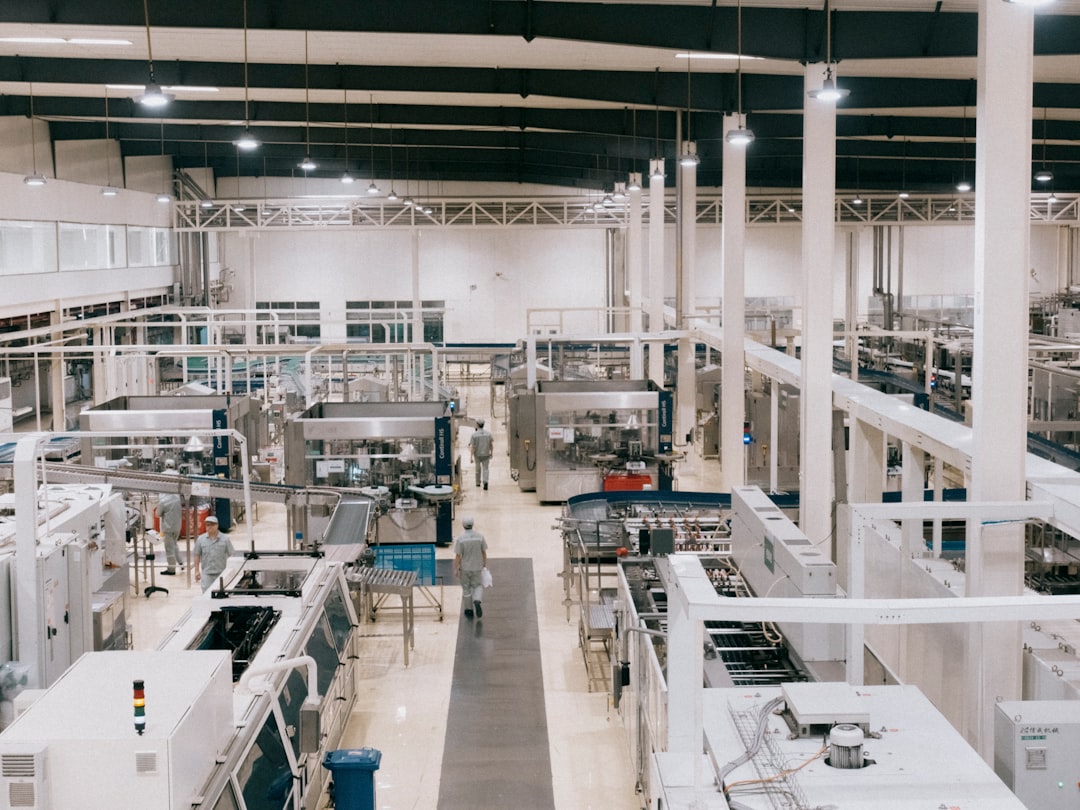


How to Choose an Industrial Park in Anhui: 2026 Guide
This Anhui Industrial Park 2026 guide helps foreign investors navigate the 3 major development zones across the province: the Hefei High-Tech Zone (合肥高新区, Héféi Gāoxīn Qū), the Wuhu Economic and Technological Development Zone (芜湖经开区, Wúhú Jīngkāi Qū), and the Anhui Pilot Free Trade Zone (安徽自贸区, Ānhuī Zìmào Qū). Each zone offers distinct incentives tailored to different industries and investment scales. Making the right choice can reduce your setup timeline by up to 6 months and save tens of thousands in compliance costs. This guide provides a systematic framework to compare, evaluate, and select the optimal park for your specific business needs in Anhui.
Why This Matters
Anhui’s industrial parks generated over ¥3.2 trillion (approximately USD $440 billion) in industrial output in 2025, accounting for 58% of the province’s GDP. Foreign-invested enterprises (FIEs) operating inside these zones enjoy corporate tax rates as low as 15% — a full 10 percentage points below the standard rate — along with streamlined customs clearance and land-use subsidies. The 3 major parks alone host more than 2,800 foreign-funded companies, representing cumulative contracted foreign investment exceeding $62 billion as of late 2025.
Yet the wrong choice carries real cost. A semiconductor supplier that set up in a logistics-oriented zone rather than a tech-focused park spent an additional 14 months retrofitting its facility and lost an estimated ¥8 million in early-mover advantages. A German automotive parts maker that chose a park without bonded customs facilities paid 18% more in import duties over its first 2 years compared to an FTZ-based competitor. Understanding each park’s industry focus, infrastructure readiness, and local government support is the single most impactful decision you will make during your Anhui market entry.
By mid-2026, Anhui will have opened 4 new specialized sub-zones focused on next-generation AI manufacturing, electric vehicle batteries, biopharma, and green hydrogen — doubling the number of park options available to foreign investors. This guide equips you with the framework to evaluate them systematically, saving your company months of research and potentially millions in misallocated capital.
The stakes are amplified by Anhui’s rapid integration into the Yangtze River Delta Economic Belt, which positions the province as a manufacturing and logistics hub connecting Shanghai, Nanjing, and Hangzhou. Foreign investors who select the right park today are not just choosing a factory location — they are anchoring their long-term China strategy in one of the country’s fastest-growing industrial corridors, which posted an average annual GDP growth rate of 6.8% from 2020 through 2025.
Step by Step: How to Choose the Right Industrial Park
-
Audit your industry classification and match it to zone specialisation. Each of Anhui’s major parks targets specific sectors. The Hefei High-Tech Zone (合肥高新区, Héféi Gāoxīn Qū) is Anhui’s premier destination for integrated circuits, AI, biopharma, and quantum computing — home to over 1,200 tech firms including 48 publicly listed companies. The Wuhu EDBZ (芜湖经开区, Wúhú Jīngkāi Qū) excels in new-energy vehicles, robotics, and advanced materials, hosting major supply-chain anchors like Chery’s EV plants. The Anhui FTZ (安徽自贸区, Ānhuī Zìmào Qū) spans three sub-blocks (Hefei, Wuhu, Bengbu) and offers the broadest incentives for cross-border trade, logistics, fintech, and R&D services. Map your product category, production process, and target export markets against each park’s published industry catalogues — available on their respective investment promotion websites — before shortlisting candidates.
-
Evaluate physical infrastructure and land-readiness for your operation. Visit the park or engage a local third-party inspector to assess three infrastructure layers: power reliability (most parks guarantee dual-circuit supply with ≥99.97% uptime), water and waste-water treatment capacity, and internet backbone latency (Hefei High-Tech Zone offers sub-2ms access to the ChinaNet backbone). For manufacturers, verify floor-loading ratings (standard is 750 kg/m²; heavy industry parks offer up to 2,000 kg/m²), ceiling height (minimum 8 m for general, 12 m+ for heavy machinery), and customs-bonded warehousing availability. The Anhui FTZ’s Hefei block provides on-site bonded logistics that can reduce import-duty cycle times from 5 days to under 4 hours for qualified enterprises.
-
Compare fiscal incentives and negotiate a tailored package. Baseline incentives across all three parks include a 15% reduced Corporate Income Tax (CIT) rate for qualifying High and New Technology Enterprises (HNTEs), VAT rebates on exported goods, and land-use fee reductions of 30–50% for priority industries. The Anhui FTZ adds foreign-invested R&D centres can claim an additional 100% super-deduction on eligible R&D expenses. However, most parks allow negotiation beyond published rates for anchor tenants or high-value investors (typically projects above ¥100 million or those creating 500+ local jobs). Prepare a binding term-sheet showing projected employment, local-content sourcing, and technology-transfer commitments before entering negotiations — parks compete on these metrics and the strongest offer goes to the investor with the most concrete plan.
-
Assess local talent availability and training support. Hefei is home to the University of Science and Technology of China (USTC) and Hefei University of Technology, producing over 30,000 STEM graduates annually — a key advantage for tech-intensive operations. Wuhu’s vocational school system partners directly with zone enterprises to provide custom training pipelines. All three parks operate government-subsidised talent recruitment programmes that cover 50–70% of employee training costs for the first 2 years. The Anhui provincial government’s “Peacock Plan” provides relocation allowances and housing subsidies for foreign managerial staff, reducing expatriate talent-acquisition costs by an estimated 25%. Factor the local labour pool depth and skill-set match into your park decision, not just the headline incentives.
-
Verify administrative efficiency and one-stop service quality. Each major park operates a one-stop service centre that handles company registration, foreign-invested enterprise (FIE) approval, construction permits, and tax registration. Hefei High-Tech Zone’s service centre has an average licence-approval turnaround of 7 working days — the fastest in the province. The Anhui FTZ offers a “Dedicated Service Window” for foreign investors, providing bilingual case officers and online document submission. Request a formal service-level commitment letter from the park’s administrative committee during your site visit. Parks that cannot commit to specific timelines in writing are signalling future friction that will cost you time and legal-consulting fees down the road.
Timelines and Estimated Costs by Park
| Park | Setup Timeline | Estimated Land Cost (per m²) | Typical Rent (per m²/month) | Corporate Income Tax |
|---|---|---|---|---|
| Hefei High-Tech Zone (合肥高新区) | 7–12 weeks | ¥480–¥750 | ¥25–¥45 | 15% for HNTE-qualified |
| Wuhu EDBZ (芜湖经开区) | 8–14 weeks | ¥380–¥600 | ¥18–¥35 | 15% for HNTE-qualified |
| Anhui FTZ (安徽自贸区) | 5–10 weeks | ¥450–¥850* | ¥22–¥50 | 15% + R&D super-deduction |
* FTZ Hefei block land costs are at the higher end; Bengbu and Wuhu FTZ sub-blocks range ¥320–¥550.
Three Common Pitfalls — and How to Avoid Them
1. Signing the land-transfer agreement before confirming environmental classification
Problem: A European chemical intermediates firm leased land in the Wuhu EDBZ only to discover that its proposed solvent-use process fell under a Class 2 environmental impact assessment (EIA) category that the zone’s infrastructure was not licensed to handle. The zone’s EIA permit capped volatile organic compound (VOC) emissions at a level one-third of what the operation required.
Cost: The firm spent ¥2.3 million on abortive design work and legal fees, and lost 9 months renegotiating terms at a different site. The aborted lease penalty consumed 15% of the original deposit.
Fix: Submit your production-process description and material safety data sheets to the park’s environmental protection bureau for a pre-assessment before signing any binding agreement. Request a written EIA compatibility confirmation as a condition precedent in your letter of intent. This free review takes 2–3 weeks and can save millions.
2. Underestimating the logistics-cost differential between inland and river-port zones
Problem: A US-based agricultural machinery manufacturer chose the Hefei High-Tech Zone for its lower land costs, overlooking that its primary export route required trucking finished equipment 460 km to the Port of Shanghai at ¥28 per km per container. The Wuhu EDBZ — which has direct Yangtze River port access — would have cost ¥8 per km for the same container via barge.
Cost: The company incurred over ¥6.5 million in excess logistics costs during its first 18 months of operation — wiping out the land-cost savings within the first year. The effective total landed cost per unit was 22% higher than budgeted.
Fix: Model your full logistics chain — inbound raw materials and outbound finished goods — using current freight rates from all three parks before selecting a site. For heavy or containerised exports, prioritise a park with direct Yangtze River port access (Wuhu EDBZ or the Anhui FTZ Wuhu block) or rail-freight connectivity to Ningbo-Zhoushan port. Request a logistics-cost comparison template from the Anhui Investment Promotion Bureau, which publishes standardised multimodal shipping rates quarterly.
3. Overlooking the park’s minimum investment threshold and tax-holiday sunset clauses
Problem: A Singaporean med-tech startup invested ¥15 million in the Hefei High-Tech Zone under a standard incentive package, only to discover that the 15% reduced CIT rate was contingent on achieving ¥50 million in annual revenue within 3 years — a threshold the startup could not realistically meet. The park’s tax-holiday agreement also contained a clawback provision that recaptured 100% of the tax benefit if the company failed the HNTE re-certification after the initial 3-year period.
Cost: The startup faced a retroactive tax liability of ¥2.1 million plus interest penalties, and spent ¥340,000 on compliance consultants attempting to restructure the agreement — ultimately deciding to relocate to a lower-threshold park at significant operational disruption.
Fix: Demand full transparency on all incentive conditions, thresholds, clawback terms, and sunset dates before signing. Engage a local corporate-law firm with specific Anhui zone experience to review your incentive agreement and flag any performance triggers that are not aligned with your 5-year business plan. Negotiate graduated thresholds (e.g., 20% CIT rate if revenue is 50–80% of target) rather than binary cliff clauses. The Anhui FTZ offers more flexible performance-based incentive structures for smaller foreign investors — make this your first option if your project is below ¥50 million in committed capital.
Decision Checklist
Use this checklist to evaluate each shortlisted park. Tick off each item before proceeding to the next stage.
- ☐ My industry sector matches the park’s published priority-industry catalogue
- ☐ Environmental classification for my production process has been pre-confirmed in writing by the park’s EIA office
- ☐ Land cost, lease term, and floor-loading / ceiling-height specifications meet operational requirements
- ☐ Logistics cost model has been run for the full inbound-outbound chain and compared against alternatives
- ☐ The park’s one-stop service centre has provided written service-level commitments for licence approvals
- ☐ Talent pipeline — number of relevant graduates within 50 km and available training subsidies — has been assessed
- ☐ All incentive conditions, thresholds, clawback clauses, and sunset dates have been reviewed by a qualified local law firm
- ☐ Minimum investment threshold and revenue targets are realistic for my company’s 5-year business plan
- ☐ A site visit has been conducted, including interviews with 2+ existing foreign-invested enterprises in the park
- ☐ The park offers bilingual (Chinese-English) investment liaison support during the setup phase
Where to Go From Here
Based on what you just read:
- Ready? https://anhui-gateway.com/how-to-choose-wfoe-jv-rep-office-anhui-2026/
- Comparing? https://anhui-gateway.com/how-to-choose-wfoe-jv-rep-office-anhui-2026/
- Need numbers? https://anhui-gateway.com/how-to-choose-wfoe-jv-rep-office-anhui-2026/
— Anhui Gateway —
Your bridge to business in Anhui, China.