

New Anhui Food Festival Launches to Attract International Tourism
The Anhui Provincial Department of Culture and Tourism has unveiled the inaugural “Taste of Huizhou” International Food Festival, a province-wide culinary event featuring over 200 traditional dishes from 16 cities. The festival, running from March to May 2025, aims to attract 50,000 international visitors and boost culinary tourism revenue by an estimated 15% in its first year, according to provincial officials.
安徽 (Anhui, Ānhuī) has long been home to one of China’s eight great culinary traditions — 徽菜 (Huizhou cuisine, Huīcài) — but remains relatively underpromoted compared to cuisines from neighboring provinces like Sichuan or Jiangsu. The festival marks a strategic shift by the provincial government to position food as a primary driver of international tourism, leveraging the region’s 1,200-year culinary heritage to draw travelers from Europe, Southeast Asia, and North America.
“This is not simply a food fair. It is a cultural diplomacy initiative that places Huizhou cuisine at the center of Anhui’s global identity,” said Chen Wei, Director of the Anhui Provincial Department of Culture and Tourism, at the launch press conference in Hefei.
A Culinary Showcase Rooted in History
Huizhou cuisine emerged during the Tang Dynasty (618–907 AD) and reached its peak during the Ming and Qing dynasties, shaped by the mountainous terrain of southern Anhui and the creative resourcefulness of local chefs. The cuisine emphasizes slow braising, steaming, and the use of cured meats, wild herbs, and fermented ingredients — techniques born from the need to preserve food in the region’s humid climate.
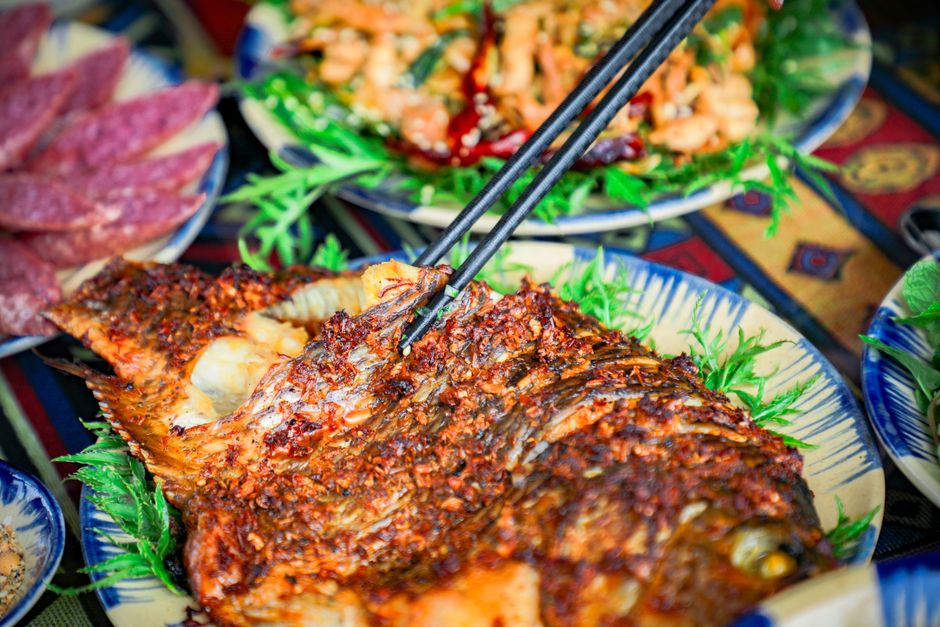
The festival will highlight 28 signature dishes across five host cities — Hefei, Huangshan, Wuhu, Xuancheng, and Chizhou. Among the most anticipated is 臭鳜鱼 (stinky mandarin fish, chòu guìyú), a fermented fish dish that undergoes a 10-day curing process before being braised in chili and ginger. Another featured classic is 毛豆腐 (hairy tofu, máo dòufu), fermented tofu covered in a white mold, then pan-fried and served with a spicy soy dip.
“The flavor profiles of Huizhou cuisine are complex and deeply tied to the land,” explained Chef Zhang Ming, a third-generation Huizhou chef and the festival’s culinary director. “Our goal is to help international visitors understand not just how the food tastes, but why it tastes that way — the geography, the climate, the history.”
The festival program includes daily cooking demonstrations, guided tasting tours, and masterclasses. A dedicated “Culinary Heritage Trail” will take visitors through six historic villages in the Huizhou region, where they can observe traditional cooking methods in restored Ming-era kitchens.
Strategic Tourism and Economic Impact
The launch of the “Taste of Huizhou” festival comes at a critical time for Anhui’s tourism sector. In 2023, the province received 7.2 million international visitors, a figure still 30% below pre-pandemic levels of 10.3 million in 2019. The provincial government has allocated 280 million RMB (approximately $39 million USD) toward culinary tourism infrastructure, including training programs for bilingual chefs, certification systems for authentic Huizhou restaurants, and digital promotion campaigns targeting overseas markets.
| Host City | Festival Dates | Signature Dish | Target International Visitors |
|---|---|---|---|
| Hefei | March 1–15 | Li Hongzhang Hotchpotch (李鸿章杂烩) | 12,000 |
| Huangshan | March 16–April 5 | Stinky Mandarin Fish (臭鳜鱼) | 15,000 |
| Wuhu | April 6–20 | Wuhu Sliced Fish (芜湖刀鱼) | 8,000 |
| Xuancheng | April 21–May 5 | Hairy Tofu (毛豆腐) | 7,000 |
| Chizhou | May 6–20 | Chizhou Bamboo Rice (池州竹筒饭) | 8,000 |
Economic projections from the Anhui Academy of Social Sciences estimate that the festival could generate over 600 million RMB in direct spending from international tourists, with an additional 900 million RMB in indirect economic benefits across hospitality, transportation, and retail sectors. Hotel bookings in Huangshan and Hefei have already increased 22% for the March–May period compared to the same months in 2024, according to preliminary data from Ctrip.
The festival also aligns with China’s broader national strategy to revive inbound tourism. In November 2024, the central government expanded visa-free transit policies to 54 countries and introduced a 15-day visa-free entry policy for citizens of France, Germany, Italy, the Netherlands, Spain, Malaysia, and Switzerland. Anhui officials have coordinated directly with travel agencies in these markets to package the food festival as part of multi-city itineraries.
A Multi-Sensory Experience Beyond the Plate
Beyond the food itself, the “Taste of Huizhou” festival integrates cultural performances, tea ceremonies, and calligraphy workshops to create a holistic experience of Huizhou culture. Each host city will feature nightly performances of 黄梅戏 (Huangmei opera, Huángméi xì), a local folk opera tradition recognized as a national intangible cultural heritage.
Tea will also play a central role. Anhui is famous for several premium green teas, including 黄山毛峰 (Huangshan Maofeng, Huángshān Máofēng) and 六安瓜片 (Lu’an Guapian, Lù’ān Guāpiàn). The festival includes a “Tea and Cuisine Pairing Pavilion” where visitors can sample tea pairings developed by sommeliers and chefs, designed to complement the strong, savory flavors of Huizhou dishes.
“International tourists today are looking for authentic, immersive experiences — not just a meal, but a story,” said Dr. Li Na, a tourism professor at Anhui University advising the festival. “Anhui has a very strong story to tell, but we have not been telling it well to global audiences. This festival changes that.”
The digital component of the festival includes a multilingual mini-program on WeChat and a dedicated YouTube channel featuring 50 short-form videos in English, French, German, Japanese, and Korean. Each video profiles a specific dish, chef, or culinary tradition, with QR codes embedded at festival venues linking directly to the content.
Early indicators suggest strong interest. Pre-registration data from the festival’s official website shows that 68% of international sign-ups come from Southeast Asia (particularly Singapore, Malaysia, and Thailand), 22% from Europe, and 10% from North America. The average planned stay among international registrants is 9 days — significantly higher than Anhui’s pre-pandemic average of 4.5 days per international visitor.
Challenges Ahead
Not all feedback has been positive. Some industry observers have pointed out that logistical coordination across five cities over eight weeks presents significant operational risks, particularly in terms of transport connectivity and food safety oversight. Anhui’s international flight connectivity remains limited — Hefei Xinqiao International Airport currently serves only 18 international destinations, compared to 65 at Shanghai Pudong.
To address the connectivity gap, the provincial tourism bureau has partnered with China Eastern Airlines to offer discounted connecting flights from Shanghai, Beijing, and Guangzhou to Hefei and Huangshan during the festival period. A dedicated shuttle bus network linking the five host cities has also been launched, with 12 daily departures during peak festival weeks.
Food safety remains another focus area. The Anhui Food and Drug Administration has announced that it will conduct unannounced inspections at all 200+ festival vendor locations, with penalties ranging from immediate closure to fines of up to 50,000 RMB for violations of hygiene standards.
Despite these challenges, the provincial government has signaled long-term commitment. The “Taste of Huizhou” festival is planned as an annual event, with a five-year roadmap that aims to double international visitor participation to 100,000 by 2029.
NEXT STEPS
- Explore Anhui’s culinary heritage online: Read our guide to Anhui’s Must-Try Dishes and Where to Find Them for a deeper look at the province’s food culture.
- Plan your festival visit: Consult the Anhui Travel & Logistics Guide for practical tips on flights, visas, and accommodations across the five host cities.
- Understand the business opportunity: International food suppliers and hospitality investors can review our Anhui Market Entry Overview for insights on regulations, partnerships, and sourcing.
— Anhui Gateway —
Remote China market entry support, built around execution.