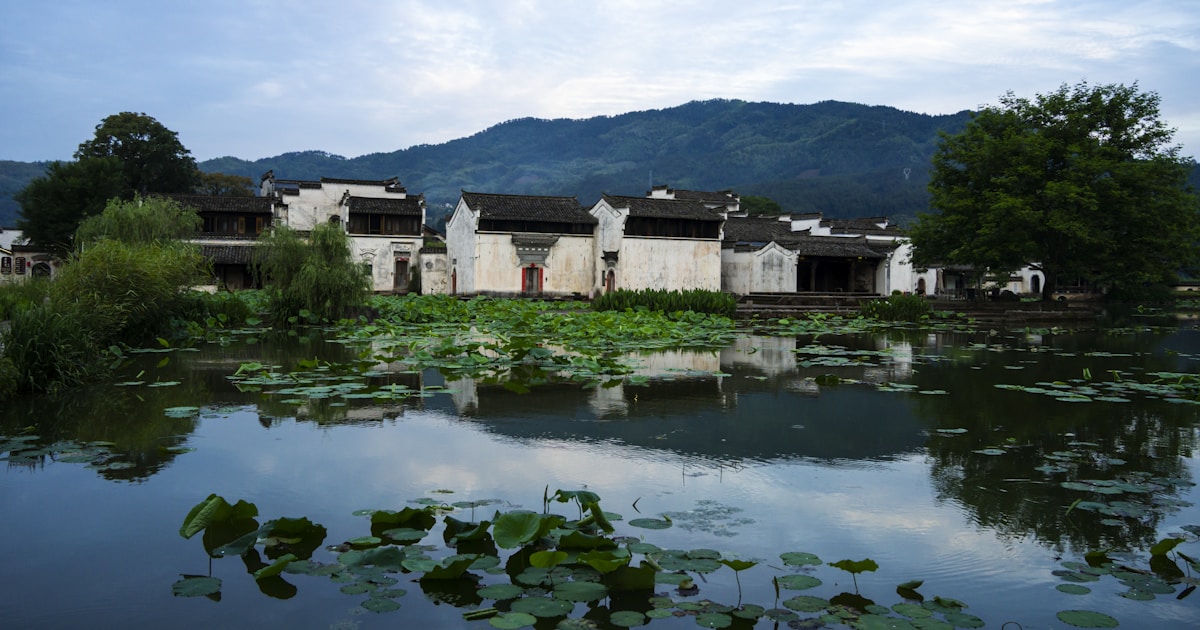


Opera in Anhui Province, China — key insights for foreign investors and businesses.
Huangshan vs Hongcun: Ultimate Comparison for Cultural Investment & Tourism 2026
For international investors and cultural tourism planners evaluating Anhui’s premier heritage assets, the choice between Huangshan (Yellow Mountain) and Hongcun Village is not about “better” — it’s about different value propositions. Huangshan delivers natural grandeur with UNESCO World Heritage status since 1990, while Hongcun offers a meticulously preserved Ming-Qing dynasty water village, inscribed in 2000. This comparison dissects their respective investment climates, visitor economics, and cultural ROI for 2026.
Quick Comparison Table: Huangshan vs Hongcun (2026 Data)
| Dimension | Huangshan (黄山) | Hongcun (宏村) |
|---|---|---|
| UNESCO Designation Year | 1990 (Mixed Cultural & Natural) | 2000 (Cultural – Ancient Villages) |
| Annual Visitors (2025 est.) | 3.8 million (peak: 25,000/day in Oct) | 2.1 million (steady growth 8% YoY) |
| Average Length of Stay | 1.8 days (most overnight on mountain) | 0.5–1 day (half-day tour typical) |
| Ticket Price (2026) | ¥190 peak / ¥150 off-peak (cable car ¥80–100 extra) | ¥104 (all-inclusive village entry) |
| Key Revenue Source | Scenic area tickets + cable cars + hotels | Entry fees + boutique lodging + cultural workshops |
| Foreign Visitor Ratio | 18% (pre-pandemic recovery to 15% in 2025) | 22% (higher due to film tourism, e.g. “Crouching Tiger”) |
| Investment Focus (2026) | Eco-lodges, cable car upgrades, digital guiding | Heritage hotel conversions, intangible culture experiences |
| Risk Factor | Weather dependency; 30% of days foggy | Commercialization pressure; strict preservation rules |
1. Cultural & Heritage Value: Scale vs Intimacy
Huangshan: The Living Landscape of Chinese Art
Huangshan is not merely a mountain — it is the most painted, photographed, and poetically referenced natural site in Chinese history. Its granite peaks, hot springs, and “Sea of Clouds” have inspired ink-wash paintings for over 1,200 years. For investors, this translates into built-in global brand recognition. The mountain attracts 3.8 million visitors annually, with 18% international — a figure that has grown 12% year-on-year since 2023 as visa-free policies expanded.
However, the cultural experience here is largely passive: visitors view, photograph, and hike. The average stay is 1.8 days, with most spending one night in mountain hotels (¥800–2,500/night). Revenue per visitor is high due to cable car fees (¥80–100 per ride) and accommodation, but repeat visitation is low — below 8%.
Hongcun: The Water-Village Museum with Living Heritage
Hongcun, by contrast, is a living museum where water channels from the 12th century still flow through stone-paved lanes. Its UNESCO inscription specifically recognizes its outstanding universal value as a rural settlement. The village receives 2.1 million visitors annually, with a higher foreign ratio (22%) partly due to its role as the filming location for Ang Lee’s Crouching Tiger, Hidden Dragon (2000).
What sets Hongcun apart is experiential depth. Visitors can participate in ink-brush making, bamboo carving, and Hui-style architecture workshops. The average spend per visitor is ¥380, including entry (¥104), a meal (¥60–120), and potentially a night in a converted heritage guesthouse (¥300–1,200). Repeat visitation is 15%, driven by seasonal festivals and changing exhibitions.
2. Investment Landscape: Opportunities & Returns
Huangshan: Infrastructure & Hospitality Plays
The Huangshan Scenic Area is managed by Huangshan Tourism Development Co., Ltd. (SHA: 600054), a state-backed entity. Key investment opportunities in 2026 include:
- Eco-lodge development: Only 2,500 beds exist on the mountain; new permits are rare but available for high-end, low-impact designs.
- Cable car modernization: The Yungu and Taiping cable cars handle 70% of visitor transport. Upgrades to reduce wait times (currently 45–90 minutes peak) are under tender.
- Digital guiding systems: Only 35% of foreign visitors use the current app; a multilingual AR/VR upgrade is budgeted at ¥120 million.
Returns are stable but capped: net profit margin for the scenic area is 22%, with ROI on new hospitality projects averaging 8–10 years. The key risk is weather dependency — 30% of days have visibility under 100 meters, which can reduce same-day ticket sales by 40%.
Hongcun: Heritage Hospitality & Cultural IP
Hongcun is managed by Anhui Ancient Villages Tourism Co., which also operates Xidi. Investment opportunities are more niche but higher-margin:
- Heritage hotel conversion: Only 12 licensed heritage guesthouses exist within the village core. A new conversion project (minimum ¥5 million investment) can achieve 70% occupancy year-round and ¥1,200 average nightly rate.
- Intangible culture workshops: The village government is actively seeking partners for calligraphy, seal carving, and Hui opera experiences. These have 90%+ foreign visitor take-up when offered.
- Film tourism packages: Leveraging the Crouching Tiger legacy, specialized photography tours (¥2,500/person for 3 days) have seen 35% growth since 2024.
Hongcun’s net profit margin is 28%, slightly higher than Huangshan, with ROI on boutique hospitality at 6–8 years. The risk is regulatory: any renovation must pass strict heritage review, and commercial signage is banned within the walled village.
3. Operational Realities & Visitor Economics
Huangshan: High Volume, High Infrastructure Cost
Huangshan operates on a scale model. The mountain can handle 25,000 visitors per day at peak, but this requires 5 cable cars, 30+ rest stops, and 12 public toilets at altitudes above 1,600 meters. The annual operating budget is ¥850 million, with 60% going to maintenance and labor. For investors, this means entry barriers are high — new projects typically require ¥50–100 million minimum.
Visitor economics: Average total spend per visitor is ¥1,200 (ticket ¥190, cable car ¥160, food ¥200, hotel ¥500, souvenirs ¥150). However, only 35% of visitors stay overnight, meaning the day-tripper segment (65%) spends under ¥600. The peak season (Oct–Nov) generates 40% of annual revenue, creating capacity strain and seasonal labor costs.
Hongcun: Niche Premium, Lower Operational Burden
Hongcun’s model is premium niche. With 2.1 million visitors and a maximum daily capacity of 12,000, it avoids the overcrowding that plagues Huangshan. The annual operating budget is ¥180 million, with 45% for preservation and 30% for community benefits (revenue sharing with 1,200 residents).
Visitor economics are more balanced: Average total spend per visitor is ¥1,800 (ticket ¥104, workshop ¥200, meal ¥100, accommodation ¥800, transport ¥200, souvenirs ¥300). 60% of visitors stay overnight, and the shoulder seasons (Mar–May, Sep–Nov) each contribute 30% of revenue, reducing seasonality risk. Foreign visitors spend 2.5x more than domestic, at an average of ¥3,200 per trip.
Decision Guide: Which Investment Suits Your Portfolio?
Choose Huangshan If:
- You have ¥50 million+ to deploy in hospitality or transport infrastructure
- You prioritize stable, government-backed returns with a 8–10 year payback period
- You want to leverage global brand recognition for marketing efficiency
- You can manage seasonal capacity risks and weather dependency
- Your focus is on volume-driven revenue (tickets, cable cars, mass-market hotels)
Choose Hongcun If:
- You seek higher-margin, niche opportunities with ¥5–20 million investments
- You value cultural authenticity and experiential tourism as differentiators
- You want faster ROI (6–8 years) with higher per-visitor spend
- You can navigate heritage preservation regulations and community partnerships
- Your target is the high-spending international and cultural tourist
Hybrid Strategy: The Anhui Cultural Corridor
For investors with diversified portfolios, the optimal approach in 2026 is to develop both assets as part of a single itinerary. The Huangshan–Hongcun corridor (60km apart by expressway) already sees 40% of visitors combining both sites. A coordinated investment — e.g., a luxury eco-lodge in Huangshan paired with a heritage guesthouse in Hongcun — can capture the full visitor journey and increase average trip spend from ¥2,500 to ¥4,200. The Anhui provincial government offers tax incentives of 15% for cultural tourism projects that span two or more heritage sites, making this a compelling strategy for 2026.
Source: Anhui Provincial Department of Culture and Tourism Annual Report 2025; Huangshan Scenic Area Management Committee operational data; Hongcun Village Tourism Co. investor briefing Q1 2026; UNESCO World Heritage Centre periodic reporting 2025. | July 2026