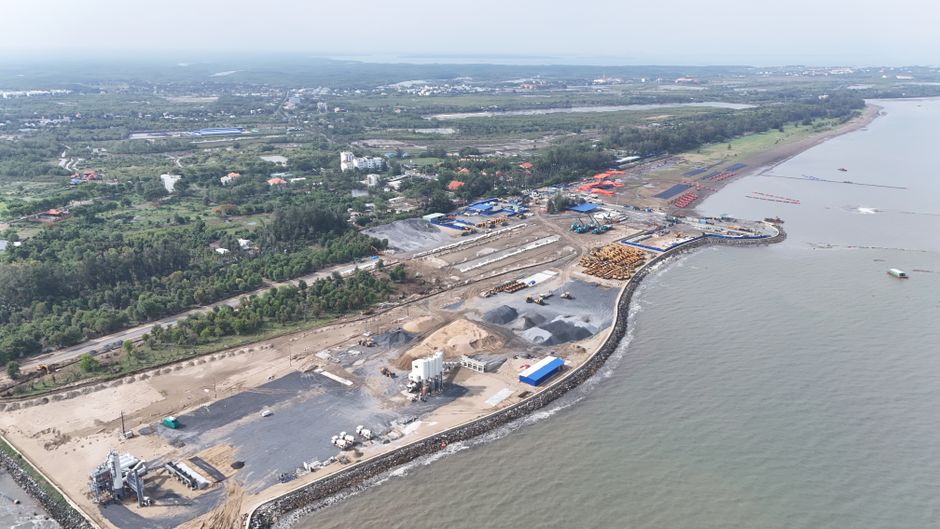


Fuyang Economic Development Zone: A Strategic Hub for Foreign Agribusiness in Anhui
Fuyang Economic Development Zone (阜阳经济技术开发区, Fùyáng Jīngjì Jìshù Kāifā Qū) has attracted over 2.8 billion RMB in cumulative foreign agribusiness investment since 2020, positioning itself as Anhui’s fastest-growing destination for agro-processing and food manufacturing FDI. Located in northern Anhui’s agricultural heartland, this provincial-level zone combines raw material proximity, dedicated infrastructure, and targeted incentives to serve foreign companies seeking China’s midstream agribusiness opportunities. For executives evaluating second-tier zones versus first-tier coastal alternatives, FEDZ offers a distinct cost-and-access proposition worth serious due diligence.
Why Fuyang — The Agribusiness Logic
Fuyang sits at the center of a 50-kilometer radius that produces over 6 million tons of grain and 1.2 million tons of livestock annually. This raw material density gives foreign processors a logistical edge: inbound transport costs drop by an estimated 18% compared to coastal zones reliant on imported or distant domestic supply. The zone itself spans 30 square kilometers, with a dedicated 4.5-square-kilometer agribusiness cluster featuring cold chain facilities, bonded warehousing, and a specialized wastewater treatment plant designed for food processing effluent.
The local government has prioritized 农业产业化 (nóngyè chǎnyèhuà, agricultural industrialization) as a core economic pillar since 2018, allocating 1.2 billion RMB in special funds for processing equipment subsidies and cold chain infrastructure. For foreign firms, this means co-investment terms that can reduce capital expenditure by 15–25% on eligible projects. Meanwhile, the zone’s proximity to the Fuyang River port and the newly expanded Fuyang West Railway freight station enables multimodal logistics — barge to the Yangtze, rail to Shanghai — at roughly 30% lower per-ton cost than all-truck routes.
Incentive Structure and Policy Support
Foreign-invested enterprises (FIEs) registered in FEDZ qualify for a layered incentive package that combines national-level tax holidays with zone-specific subsidies. New manufacturing ventures in agribusiness enjoy a three-year corporate income tax exemption followed by a 50% reduction for years four through six, effectively an 11% effective rate during the reduction period. Additionally, the zone offers a 15% cash rebate on eligible fixed asset investments above 50 million RMB, paid in annual installments over three years.
Beyond tax, land lease costs in FEDZ average 22 RMB per square meter per month — roughly 40% below comparable industrial land in Hefei and 55% below Shanghai’s outer districts. The zone also operates a “single window” service desk for foreign investors, handling business licenses, tax registration, and customs clearance with a stated processing timeline of 15 working days for WFOE setup. For agribusiness specifically, there is expedited certification for 有机食品 (yǒujī shípǐn, organic food) and 绿色食品 (lǜsè shípǐn, green food) labeling, reducing approval from the typical 6 months to 3 months.
| Incentive Category | FEDZ Detail | Coastal Zone Benchmark (Shanghai Suburban) | Estimated Savings |
|---|---|---|---|
| Corporate income tax (years 4–6) | 11% effective rate | 25% standard (no local reduction) | 56% tax cost reduction |
| Industrial land lease (RMB/m²/month) | 22 | 49 | 55% lower |
| Fixed asset rebate | 15% on investment >50M RMB | Typically 5–8% | 2–3x cash back rate |
| WFOE setup time (working days) | 15 | 25–40 | 40–60% faster |
| Organic/green food certification | 3 months | 6 months | 50% faster |
Sector Focus and Operational Case Studies
Three agribusiness sub-sectors dominate FEDZ’s foreign investment pipeline: grain and oilseed crushing, poultry and meat processing, and specialty ingredient extraction for plant-based proteins. As of Q2 2025, 41 foreign-invested enterprises operate within the zone, employing 9,200 workers. A notable example is a joint venture between a German ingredient firm and a local soybean cooperative, producing textured vegetable protein for export to Southeast Asia — achieving 95% capacity utilization within 14 months of commissioning.
Another case: a Japanese frozen-vegetable processor that relocated from Shandong to FEDZ in 2022, attracted by lower electricity costs (0.52 RMB/kWh versus 0.78 RMB/kWh in coastal zones) and direct proximity to broccoli and edamame growers within 30 kilometers. The company reports 18% lower total production cost per ton compared to its previous coastal operation. These examples illustrate that FEDZ is not merely a low-cost alternative but a functionally specialized hub where raw material adjacency translates into measurable margin improvement for foreign processors.
The zone also supports 冷链物流 (lěngliàn wùliú, cold chain logistics) with three major third-party operators providing temperature-controlled warehousing and multi-temperature trucking. This infrastructure enables foreign exporters to maintain cold chain integrity from factory floor to Shanghai port within 14 hours, a critical factor for high-value fresh and frozen products destined for Japan, Korea, and the EU.
Pitfalls to Navigate in Fuyang Economic Development Zone
Decision Framework: Is FEDZ Right for Your Agribusiness?
If your operation depends on proximity to bulk raw grains, oilseeds, or livestock — and your target markets are domestic Chinese processing hubs or export to Asia — Fuyang Economic Development Zone offers tangible cost advantages over coastal alternatives. If your product requires high complexity in cold chain, organic certification, or food safety compliance with EU or Japanese standards, FEDZ’s dedicated agribusiness cluster and expedited certification pathways reduce time-to-market. If your priority is serving the wealthy coastal consumer market directly (e.g., packaged foods for Shanghai retailers), the inland location adds 12–18 hours of logistics time versus a Zhejiang or Jiangsu zone, so recalculate the total landed cost with logistics.
NEXT STEPS
- Conduct a site visit with a zone briefing. FEDZ’s investment promotion bureau offers a 2-day familiarization trip for qualified foreign investors, including factory visits and meetings with existing FIEs. Schedule through our introduction service.
- Compare FEDZ with alternative Anhui zones. Each zone has different sector emphases and subsidy terms. Read our side-by-side comparison of Anhui’s six major development zones.
- Engage a local legal and tax advisor. Incentive packages require meticulous documentation for annual renewal. Contact a specialist through our agribusiness advisory network.
— Anhui Gateway —
Remote China market entry support, built around execution.