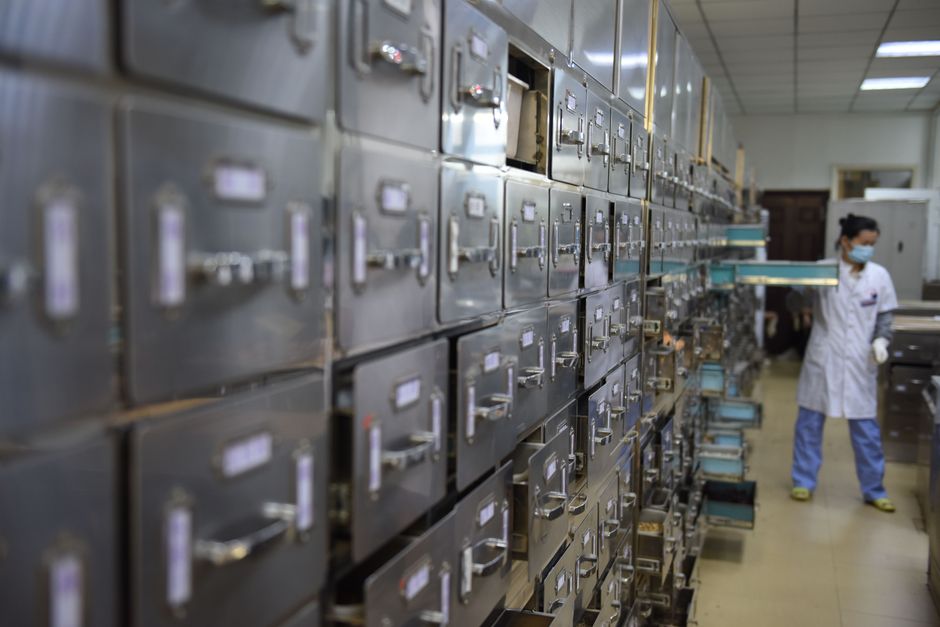


Healthcare Update: Anhui Healthcare Tax Incentives Extended to 2028
Anhui Province 安徽省 (Ānhuī Shěng) has formally extended its healthcare tax incentive program through 2028, maintaining a 25 percent reduction in corporate income tax for qualifying medical device and biopharmaceutical enterprises. This extension, announced by the provincial finance department on 15 March 2025, ensures eligible companies continue paying only 15 percent corporate income tax (CIT) instead of the standard 25 percent rate. The policy directly supports Anhui’s ambition to become a top-three Chinese province for healthcare innovation by 2030. Foreign investors should note that the extension removes uncertainty for 2025 budget planning and signals long-term commitment to the sector.
Policy Extension Details: Scope, Eligibility and Timelines
The extended tax incentive framework, formally titled the “Anhui Province Healthcare Industry Tax Reduction Measures (2025–2028 Revision)” builds directly on the pilot scheme launched in 2022. The core provision reduces the corporate income tax 企业所得税 (qǐyè suǒdé shuì) rate to 15 percent for qualifying enterprises in the medical device 医疗器械 (yīliáo qìxiè) and biopharmaceutical 生物医药 (shēngwù yīyào) sectors. This represents a saving of 10 percentage points against the standard 25 percent CIT rate applicable to most for-profit enterprises in China.
To qualify, enterprises must meet three conditions. First, at least 60 percent of annual revenue must derive from healthcare-related research, development or production. Second, the enterprise must maintain a registered presence and principal business operation in Anhui Province. Third, the company must hold valid certification as a “high-tech enterprise” 高新技术企业 (gāo xīn jìshù qǐyè) under national standards or demonstrate equivalent technological capability through provincial assessment. The application window for 2025 certification opens 1 April 2025 and closes 31 May 2025, giving foreign-invested entities a 60-day window to secure eligibility.
Beyond the headline CIT reduction, the extended package includes two supplementary incentives with significant financial impact. Qualifying enterprises may claim an additional 50 percent super-deduction on eligible R&D expenses, effectively reducing taxable income by 1.5 times the actual R&D spend. Furthermore, newly established healthcare manufacturing facilities with total investment exceeding RMB 50 million receive a three-year property tax exemption on land and buildings used for production. These measures compound to create a tax environment that, according to provincial estimates, reduces the effective tax burden for qualifying companies by up to 35 percent compared with standard rates.
The extension timeline is deliberately aligned with China’s 15th Five-Year Plan (2026–2030), signalling that Anhui intends these incentives as a structural feature of the provincial economy rather than a temporary stimulus. Provincial officials have confirmed that no further changes will be made to the rate or eligibility criteria before 31 December 2028, providing a four-year planning horizon for foreign executives.
Impact on Foreign-Invested Healthcare Enterprises
The extension arrives at a critical juncture for foreign healthcare companies operating in or considering entry to China’s interior provinces. Anhui has positioned itself as the leading healthcare manufacturing hub in the Yangtze River Delta outside Shanghai, leveraging lower operational costs and streamlined regulatory approvals. Currently, over 300 healthcare enterprises operate within the province’s three major medical clusters in Hefei, Wuhu and Bengbu. Of these, approximately 85 percent of foreign-invested entities have utilized the tax incentive since its 2022 pilot, according to data from the Anhui Provincial Department of Commerce.
For foreign executives evaluating China expansion, the extension reduces a key risk factor. Tax incentive uncertainty was cited as a top-three concern by 68 percent of respondents in a Q4 2024 survey of foreign healthcare investors conducted by the China-Britain Business Council. The confirmed extension through 2028 removes the need for contingency planning around a potential sunset, allowing companies to commit to multi-year capital expenditure plans with greater confidence. This is particularly relevant for medical device manufacturers, where facility construction and regulatory approval cycles typically span 18 to 36 months before revenue generation begins.
Several subsectors stand to benefit disproportionately. In vitro diagnostics (IVD) manufacturers producing test reagents and analysers—a segment where Anhui has built particular strength—qualify fully under the program. Similarly, contract development and manufacturing organizations (CDMOs) serving the biopharmaceutical sector can access the reduced rate provided they meet the revenue threshold and high-tech certification requirements. The provincial government has indicated that RMB 300 million in cumulative tax savings has flowed to qualifying enterprises since the pilot began in 2022, with projections that the extension will deliver an additional RMB 500 million in benefits through 2028.
Foreign joint ventures and wholly foreign-owned enterprises (WFOEs) are treated equally with domestic firms under the eligibility criteria. However, foreign investors should note that profit repatriation remains subject to standard withholding tax rates—the incentive applies only to the enterprise-level CIT obligation. Nevertheless, the reduced CIT rate increases after-tax profits available for reinvestment or distribution, improving the overall return on invested capital for foreign shareholders.
Strategic Compliance and Application Guidance
Securing and maintaining eligibility under the extended program requires proactive compliance by foreign-invested entities. The high-tech enterprise certification 高新技术企业认证 (gāo xīn jìshù qǐyè rènzhèng) is the most common qualifying pathway, but the certification process demands documented evidence of R&D expenditure as a percentage of revenue, the number of technical staff as a proportion of total employees, and the volume of intellectual property generated. Anhui Province has streamlined the certification timeline to 90 working days from application to decision, significantly faster than the national average of 120 working days.
Companies that do not hold national high-tech enterprise certification may still qualify through the provincial technology assessment pathway. The Anhui Provincial Department of Science and Technology evaluates applicants based on five criteria: technological novelty, commercial viability, R&D intensity, intellectual property portfolio strength and contribution to provincial healthcare priorities. Foreign-invested enterprises have successfully used this pathway: in 2024, 22 foreign-invested companies received provincial-level qualification, representing approximately 15 percent of all certifications granted that year. The assessment fee is RMB 10,000, and successful certification is valid for three years, aligning with the incentive period.
Documentation requirements are substantial but manageable for well-organized foreign enterprises. Applicants must submit audited financial statements for the preceding three fiscal years, a detailed R&D project register, patent or utility model certificates for core technologies, and a business plan demonstrating revenue composition. The Anhui Gateway can assist with document preparation and liaison with provincial authorities. Importantly, the application must be submitted before the enterprise files its annual CIT return for the relevant tax year; late applications are not accepted retroactively.
Foreign executives should also monitor the interaction between the Anhui healthcare tax incentive and other national-level incentives. Companies that qualify for the “western development” reduced CIT rate (also 15 percent) for operations in designated western regions cannot double-claim, but Anhui’s healthcare-specific incentive offers additional R&D super-deductions and property tax exemptions not available under the western program. A tax advisor with China experience should review the optimal structuring for each enterprise’s specific circumstances.
The provincial government has committed to maintaining a dedicated service desk for foreign-invested enterprises during the extension period. The “Foreign Healthcare Enterprise Service Window” at the Anhui Government Service Center in Hefei provides bilingual application support and expedited processing. In 2024, the service desk handled 470 inquiries from foreign companies, with an average response time of 48 hours. This resource reduces the administrative burden of compliance for companies without in-house China tax expertise.
NEXT STEPS: Three Decision-Path Recommendations
Based on the confirmed extension and current eligibility frameworks, we recommend foreign executives take the following actions in sequence:
- Complete a Qualification Assessment by 31 May 2025. The 2025 application window closes on 31 May. Engage a qualified China tax advisor to assess whether your existing or planned healthcare operations in Anhui meet the revenue composition (60 percent healthcare-derived), high-tech certification or provincial assessment criteria. If your company already holds high-tech enterprise certification, confirm its validity period and renew if necessary. For companies in the planning stage, structure your Anhui subsidiary’s business model to satisfy the revenue threshold from year one.
- Model Multi-Year Tax Savings Against Expansion Scenarios. With the incentive locked through 2028, run scenario analyses comparing effective tax rates with and without the incentive across different investment sizes. Use the 15 percent CIT rate, the 50 percent R&D super-deduction and the three-year property tax exemption in your financial models. We estimate that a foreign-invested CDMO investing RMB 100 million in an Anhui facility could achieve cumulative tax savings of RMB 18–22 million over the four-year extension period, significantly improving project IRR.
- Engage Provincial Authorities Through the Dedicated Service Window. Contact the Foreign Healthcare Enterprise Service Window directly (+86-551-62345678) to schedule a consultation. Confirm your specific product category and business model qualifies under the published criteria. Request written confirmation of eligibility for your planned activities before committing capital. For companies already operating in Anhui but not yet utilizing the incentive, initiate the application process immediately—retroactive claims are not permitted, so every month of delay represents lost savings.
— Anhui Gateway —