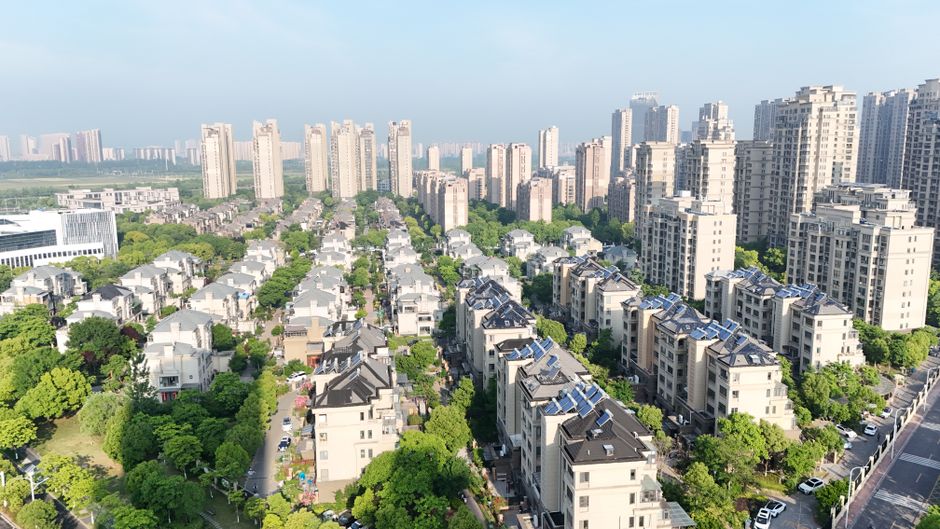


Hefei Investment Update: New Foreign Enterprise Incentives Reshape Anhui’s Business Landscape
Hefei, the capital of 安徽省 (Anhui Province, Ānhuī Shěng), has unveiled a comprehensive incentive package worth RMB 15 billion (USD 2.1 billion) targeting 外商投资企业 (Foreign-Invested Enterprises, FIEs, wàishāng tóuzī qǐyè), aiming to attract 50 new foreign-funded projects in 2025 across advanced manufacturing, electric vehicles (EVs), and semiconductor sectors. This marks Hefei’s most aggressive foreign investment push since 2018, when the city first launched its “Global Partner” initiative.
New Incentive Framework: What Executives Need to Know
The new policy, effective March 1, 2025, replaces the previous 2022 framework with sharper financial tools. Qualified FIEs in priority sectors now receive a 15% corporate income tax rebate for the first three profit-making years, up from 10% under the old scheme. Additionally, R&D centers established by foreign entities can access subsidies of up to RMB 5 million per project, covering equipment, talent recruitment, and intellectual property registration. Hefei’s 外商直接投资 (Foreign Direct Investment, FDI, wàishāng zhíjiē tóuzī) grew 28% year-on-year in 2024 to USD 4.2 billion, driven by expansions from existing investors like Volkswagen’s EV battery joint venture and NIO’s new production line.
The city has also streamlined approval timelines. A new “one-stop” service window for FIEs cuts business registration from 15 working days to 5 working days, with simultaneous processing for land use, environmental permits, and construction licenses. Hefei now offers an estimated 20% lower operational cost compared to Shanghai for manufacturing FIEs, according to the Hefei Municipal Commerce Bureau’s 2025 cost benchmarking report. This gap widens to 35% for labor-intensive assembly operations, making the city a clear alternative for cost-sensitive expansions.
Sector Focus: Where Hefei Is Placing Its Bets
Hefei is targeting three priority verticals with tailored incentives. In 新能源汽车 (New Energy Vehicles, NEVs, xīn néngyuán qìchē), the city offers a capital grant of RMB 20 million per foreign-funded project exceeding RMB 500 million in total investment, plus a 10% subsidy on battery R&D equipment. In 半导体 (Semiconductors, bàndǎotǐ), FIEs receive a 30% rebate on cleanroom construction costs up to RMB 10 million, and fast-track access to Hefei’s chip design incubator. For 高端装备制造 (Advanced Equipment Manufacturing, gāoduān zhuāngbèi zhìzào), the city provides land-use fee waivers for the first five years and a 50% subsidy on automation system upgrades.
These sectors reflect Hefei’s strategic alignment with China’s “Made in China 2025” priorities and its own “Hefei 2035” blueprint, which targets doubling the city’s manufacturing output to RMB 2.5 trillion. Foreign executives should note that eligibility requires a minimum registered capital of RMB 10 million for manufacturing FIEs and RMB 5 million for R&D centers, with at least 30% of senior management posts filled by foreign nationals—a condition aimed at ensuring genuine technology transfer.
Anhui Impact: Regional Ripple Effects
The incentives are already reshaping the province’s investment geography. In 2024, Hefei accounted for 62% of Anhui’s total FDI of USD 6.8 billion, up from 55% in 2022. Cities like Wuhu and Ma’anshan—home to automotive and steel clusters—are now facing pressure to match Hefei’s terms or risk losing projects. Wuhu’s municipal government announced in January 2025 a complementary package offering an additional 5% tax rebate for FIEs that locate in its new High-Tech Development Zone within 30 km of NIO’s Hefei campus.
This inter-city competition is accelerating infrastructure upgrades. Anhui province has allocated RMB 8 billion in 2025 for highway expansions linking Hefei to Wuhu, Xuancheng, and Chuzhou, reducing logistics times by an estimated 25%. For foreign investors, this means Hefei’s incentives now come with improved regional connectivity, making satellite operations in neighboring cities more viable. However, the policy also introduces a clawback: FIEs that relocate outside Hefei within five years forfeit 50% of incentive value received, a clause designed to lock in commitments.
Implementation Timeline and Application Process
Foreign enterprises must submit applications to the Hefei Investment Promotion Bureau by December 31, 2025 to qualify for the full package. Key milestones include a preliminary eligibility review within 10 working days, followed by a 60-day due diligence period. Projects exceeding RMB 1 billion in investment receive priority processing with a dedicated case manager. The city has committed to disbursing 70% of capital grants within 30 days of project commencement, with the remainder paid upon achieving agreed milestones.
Below is a breakdown of incentives by sector and project size, based on official scoring criteria released in February 2025.
| Sector | Project Size (RMB) | Tax Rebate (Years 1-3) | Capital Grant (RMB) | R&D Subsidy (RMB max) | Land Fee Waiver |
|---|---|---|---|---|---|
| New Energy Vehicles | > 500 million | 15% | 20 million | 5 million | 5 years |
| Semiconductors | > 200 million | 15% | 10 million | 10 million (cleanroom) | 3 years |
| Advanced Equipment | > 100 million | 15% | 5 million | 3 million (automation) | 5 years |
| Non-Priority (General Manufacturing) | > 50 million | 10% | 2 million | 1 million | None |
Non-priority sectors—including textiles, food processing, and basic assembly—receive reduced benefits, though still above the 2022 baseline. The city also reserves the right to negotiate individual deals for “mega-projects” exceeding RMB 5 billion, a flexibility frequently used to attract global anchor firms like 康宁公司 (Corning Inc., Kāngníng Gōngsī), which operates a display glass facility in Hefei’s Hefei Hi-Tech Zone.
NEXT STEPS
- Review Hefei’s full incentive criteria against your project size and sector eligibility. Compare the 2025 benefits with the previous 2022 framework in our detailed guide to Hefei FIE incentives.
- Submit a preliminary eligibility self-assessment using the Hefei Investment Promotion Bureau’s online portal. For complex projects, consider engaging an Anhui-based consulting firm through our directory of FIE consulting partners.
- Evaluate regional alternatives in Wuhu, Ma’anshan, or Xuancheng if your operation requires close proximity to existing supply chains or lower land costs. Read our comparison of Hefei vs. Wuhu FDI incentives for a side-by-side analysis.
— Anhui Gateway —
Remote China market entry support, built around execution.