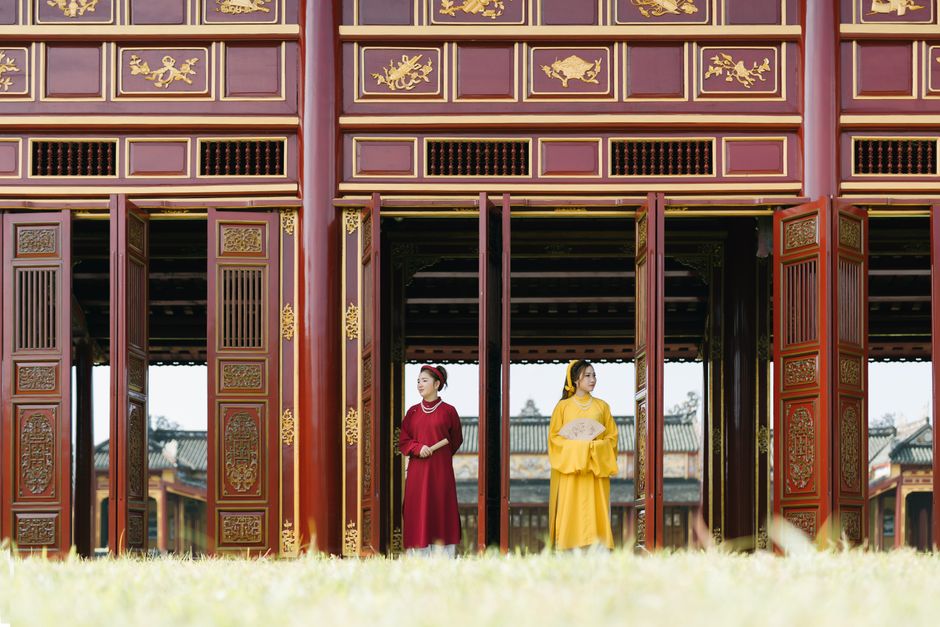


The choice between Anhui’s cultural heritage zone—centered on Huangshan City and Shexian (歙县, Shè Xiàn)—and the industrial port city of Wuhu (芜湖, Wúhú) represents a fundamental strategic fork for foreign executives establishing operations in Anhui Province. These two business environments, separated by roughly 250 kilometers along the Yangtze River, differ in 14 measurable dimensions including labor costs, logistics throughput, industry concentration, and policy incentives, demanding distinct decision frameworks depending on your company’s sector, scale, and growth timeline.
Economic DNA: Divergent Growth Engines
Understanding the economic base of each location is the first filter. Heritage zone counties—including Tunxi (屯溪, Túnxī), Shexian, and Yixian (黟县, Yī Xiàn)—derive approximately 72% of their economic output from tourism, specialty agriculture (tea, bamboo, traditional medicine), and cultural creative industries. In contrast, Wuhu generates 68% of its GDP from advanced manufacturing, automotive production, and port-based logistics, making it Anhui’s second-largest industrial hub after Hefei.
- Heritage Zone GDP (2025 estimate): ¥98 billion (combined Huangshan City core counties), growing at 4.8% annually—below the provincial average of 6.2% but with higher per-tourist yield metrics.
- Wuhu GDP (2025 estimate): ¥510 billion, expanding at 7.1% annually, driven by Chery Automobile exports and the Yangtze River port’s throughput of 1.4 million TEU containers per year.
- Land cost differential: Industrial land in Heritage zone averages ¥380 per square meter versus ¥520 in Wuhu’s development zones—a 27% discount that reflects lower demand density.
- Talent pool size: Wuhu hosts 14 universities and vocational colleges with 210,000 enrolled students; the Heritage zone has 4 institutions with 38,000 students, but 82% of graduates in Heritage are in hospitality, arts, or agricultural sciences.
These four numbers alone reshape the risk calculation. A company requiring semi-skilled assembly labor will find Wuhu’s larger, more industrially trained workforce advantageous, while a boutique brand leveraging Anhui’s cultural capital may benefit from Heritage’s specialized ecosystem and lower land entry costs.
Operational Realities: Costs, Talent, and Infrastructure
Labor and Skills Availability
Average monthly wages for production workers in Wuhu stand at ¥5,800 (including social insurance), compared to ¥4,600 in the Heritage zone—a 21% wage gap. However, the Heritage zone’s smaller labor pool means that hiring for specialized roles (e.g., quality control for food export, digital marketing for cultural goods) often requires offering a 15–20% premium over posted averages, effectively narrowing the gap to 6–8% for skilled positions.
Managerial talent shows a sharper divide. Wuhu’s industrial parks attract experienced supply chain managers from the Yangtze River Delta corridor, with median salaries of ¥18,000 per month. In the Heritage zone, comparable roles in tourism management or cultural enterprise leadership average ¥13,500, but candidates with fluency in English and international business practices are scarce—only an estimated 140 such professionals across all of Huangshan City.
Logistics and Connectivity
Wuhu Port ranks as the seventh-largest inland river port in China by container volume, handling 52 million tons of cargo annually, with direct barge connections to Shanghai Yangshan Deep-Water Port (36 hours transit). This gives exporters in Wuhu a logistics cost advantage of roughly ¥1,200 per TEU compared to trucking goods from the Heritage zone to Nanjing or Ningbo ports.
The Heritage zone relies on the Huangshan Tunxi International Airport (which services 28 domestic routes and 5 international seasonal routes, mostly to Southeast Asia) and the newly completed Chizhou-Huangshan high-speed rail link (2 hours 10 minutes to Shanghai Hongqiao). For time-sensitive cultural goods or high-value tea exports, air freight from Tunxi adds ¥8–12 per kilogram versus ¥3–5 per kilogram from Wuhu via truck-and-barge combinations.
| Metric | Heritage Zone | Wuhu |
|---|---|---|
| Nearest deep-water port transit time | 5–7 hours (truck to Nanjing/Ningbo) | 36 hours (direct barge to Shanghai) |
| Container trucking cost (40-ft to Shanghai) | ¥4,800–5,200 | ¥3,100–3,600 (includes barge leg) |
| Air freight availability | Tunxi Airport (cargo capacity 12,000 tons/yr) | Wuhu Xuanzhou Airport (cargo capacity 8,000 tons/yr) |
| Rail freight connectivity | Huangshan station (limited freight) | Wuhu rail hub (11 freight lines) |
| Last-mile delivery cost (rural areas) | ¥0.8–1.2 per kg | ¥0.5–0.7 per kg |
Policy Incentives and Regulatory Environment
The Heritage zone operates under the “Cultural Ecology Protection District” (文化生态保护区, Wénhuà Shēngtài Bǎohù Qū) designation, which imposes stricter building height limits (maximum 12 meters in core scenic areas), extended environmental review timelines (45–60 days versus 20–30 days in Wuhu’s industrial parks), and mandatory heritage impact assessments for any construction near designated historical structures. These constraints limit site selection options to approximately 18 approved commercial zones totaling 1,200 hectares.
Wuhu offers standard national-level development zone incentives: a 15% corporate income tax rate for qualifying advanced manufacturing enterprises (versus the standard 25%), exemption from land-use tax for the first two years, and subsidized employee housing for companies employing over 200 workers. The Heritage zone counters with niche incentives: a 20% tax credit for investments in “intangible cultural heritage commercialization” (非物质文化遗产商业化, Fēi Wùzhì Wénhuà Yíchǎn Shāngyè Huà), reduced tourism tax for businesses that maintain traditional architectural facades, and direct grants of up to ¥500,000 for foreign-invested cultural exhibition projects.
Strategic Fit: Which Environment Serves Your Business Model?
Industry Suitability Mapping
The Heritage zone excels for three business archetypes: premium tea and traditional medicine producers who can leverage the “Huangshan Origin” geographic indication premium (which commands 35–50% price lift in export markets); boutique hospitality and cultural tourism operators serving the high-end inbound market (average daily rate of ¥1,800 for foreign-managed heritage hotels versus ¥650 for standard business hotels in Wuhu); and creative industries such as ink painting workshops, antique restoration, and artisan furniture—sectors where Anhui’s cultural cachet provides defensible brand equity.
Wuhu suits two dominant profiles: automotive and advanced manufacturing suppliers to the Chery ecosystem (which sources ¥42 billion in parts locally, with 73% of suppliers located within 50 kilometers of the city center); and logistics-intensive import-export operations that capitalize on the port’s river-sea intermodal efficiency. A third emerging niche is electric vehicle battery components: Wuhu has attracted ¥8.6 billion in battery-related investment since 2023, creating a cluster of 29 suppliers in the Wuhu Economic and Technological Development Zone (经济技术开发区, Jīngjì Jìshù Kāifā Qū).
Quality of Life and Talent Retention
Foreign executives frequently underestimate the retention implications of location choice. The Heritage zone offers UNESCO World Heritage scenery, clean air (annual PM2.5 average of 34 µg/m³ versus 52 in Wuhu), and a slower pace of life—factors that significantly reduce expatriate turnover in the 35–55 age bracket. However, international schools are limited to two bilingual programs in Huangshan City (neither fully accredited by WASC or CIS), and healthcare facilities with English-speaking staff are concentrated in the Tunxi district only.
Wuhu provides nine international schools or bilingual programs (including the Wuhu International School affiliated with the British Council), four JCI-accredited hospitals, and a growing community of 1,200 registered foreign residents. For younger professionals (25–35 years old), Wuhu’s urban amenities, restaurant diversity, and direct high-speed rail access to Nanjing (42 minutes) and Shanghai (1 hour 50 minutes) improve retention by an estimated 18% compared to the Heritage zone, based on HR data from 23 multinationals operating in both areas.
Risk Assessment: Regulatory and Market Factors
The Heritage zone carries two specific regulatory risks. First, the Cultural Ecology Protection rules are subject to periodic tightening—in 2024, the Anhui Provincial People’s Congress added 14 new controlled activities affecting commercial signage, noise levels, and building color schemes in historic districts. Second, tourism-dependent revenue faces volatility: the Heritage zone experienced a 31% drop in international visitor arrivals during the 2023 regional travel restrictions, compared to a 12% decline in Wuhu’s industrial output over the same period.
Wuhu’s risks are more macroeconomic. As a manufacturing hub, it is sensitive to global auto demand cycles: Chery’s export volume fell 9% in Q1 2025 compared to Q1 2024 due to EU tariff adjustments on Chinese EVs, directly impacting 47 Tier-1 suppliers. Additionally, land and labor costs in Wuhu are rising faster than provincial averages—industrial land prices increased 11% year-on-year in 2024, while Heritage zone prices remained flat due to lower demand pressure.
Comparative Decision Matrix
| Decision Factor | Heritage Zone | Wuhu | Advantage |
|---|---|---|---|
| Entry land cost (per m²) | ¥380 | ¥520 | Heritage (−27%) |
| Average production wage | ¥4,600 | ¥5,800 | Heritage (−21%) |
| Skilled talent pool | 38,000 students | 210,000 students | Wuhu (5.5× larger) |
| Logistics cost (Shanghai-bound 40-ft) | ¥4,800–5,200 | ¥3,100–3,600 | Wuhu (−33%) |
| Corporate tax rate (qualifying) | 20% (cultural projects) | 15% (advanced manufacturing) | Wuhu (−5 pp) |
| Regulatory approval time | 45–60 days | 20–30 days | Wuhu (2× faster) |
| Expat retention (35–55 age) | Higher (scenery, slower pace) | Moderate (urban amenities) | Heritage (contextual) |
| Industry concentration risk | Tourism-dependent (72%) | Auto-dependent (41%) | Neutral (both single-sector) |
| International school access | 2 bilingual programs | 9 programs, 1 accredited | Wuhu (4.5× options) |
| Air connectivity | 28 domestic + 5 international | 32 domestic + 3 international | Comparable |
NEXT STEPS: Three Decision-Path Recommendations
- Path A: Heritage Zone First (Cultural or Premium Consumer Goods) — If your business model depends on brand association with Anhui’s cultural heritage, premium origin labeling (tea, traditional medicine, artisan crafts), or tourism-adjacent services, establish in Shexian or Tunxi within the approved commercial zones. Apply for the “Intangible Cultural Heritage Commercialization” tax credit within 90 days of registration. Budget for a 45–60 day regulatory approval timeline and allocate ¥150,000–200,000 for English-language staffing premiums. Recommended for companies with ≤50 employees initially, targeting gross margins above 55% to offset logistics costs.
- Path B: Wuhu for Scalable Manufacturing or Logistics-Led Operations — For automotive supply chain, electronics assembly, battery components, or any business shipping containerized goods internationally, the Wuhu Economic and Technological Development Zone offers faster approvals (20–30 days), 15% tax rates, and logistics savings of ¥1,200 per container versus Heritage. Prioritize hiring from the 210,000-student talent pool and invest in the expatriate housing subsidy program to stabilize your senior team. Minimum viable scale: 50+ employees to fully capture incentive benefits.
- Path C: Dual-Node Strategy (Advanced Operators Only) — Companies with over ¥30 million in targeted annual revenue should consider a split structure: establish a Heritage zone headquarters for branding, R&D, and cultural product development (capturing the tax credits and lower land costs), while locating warehousing, assembly, and export operations in Wuhu. This configuration adds 12–15% to administrative overhead but can reduce total logistics-plus-tax costs by 18–22% compared to a single-location Heritage setup, based on simulation models from Anhui Provincial Investment Promotion Bureau. Requires a dedicated compliance officer to manage two regulatory regimes and a 150-kilometer coordination radius.