

How a UK Eco-Tour Operator Partnered with Chizhou for Sustainable Tourism: Case Study
Table of Contents
- Background: Wild Planet Travel and China Market Entry Strategy
- Why Chizhou? The Sustainable Tourism Opportunity Assessment
- Partnership Structure — The Chizhou Eco-Tourism Joint Initiative
- Tour Product Development and Programming
- Community Engagement and Benefit-Sharing Model
- Environmental Impact Management and Certification
- Financial Performance and Growth Trajectory
- Lessons for Eco-Tourism Investors
1. Background: Wild Planet Travel and China Market Entry Strategy
Wild Planet Travel, founded in 2004 in Bristol, United Kingdom, had built an international reputation as one of Europe’s leading specialist eco-tour operators. The company’s portfolio, prior to the Chizhou initiative, included 28 sustainable tourism programs across 15 countries, with a particular focus on Southeast Asia (Vietnam, Laos, Cambodia, Thailand, Indonesia) and East Africa (Kenya, Tanzania, Rwanda). The company’s operating model was distinctive: rather than owning hotels or transportation assets, Wild Planet focused on destination development, working with local communities and conservation organizations to design low-impact tourism experiences, train local guides and service providers, establish environmental management protocols, and then market the resulting programs to the European eco-tourism market.
Wild Planet’s expansion into China was driven by three strategic considerations. First, the Chinese government’s “Ecological Civilization” policy framework, formalized in the 2018 constitutional amendment and elaborated through the “14th Five-Year Plan for Eco-Environmental Protection” (2021–2025), had created a policy environment increasingly supportive of sustainable tourism development. Second, growing demand from Wild Planet’s existing customer base for China as a destination — the number of UK tourists visiting China had grown 8–12% annually through 2019, with a notable increase in requests for “off the beaten track” and “sustainable” China experiences. Third, China’s post-COVID tourism recovery, supported by the 2023 resumption of visa-free transit policies for 54 countries and new direct flight routes between European cities and Chinese secondary airports, had created a window of opportunity for market entry before the inbound tourism market became more competitive.
The company initiated its China exploration in 2022 with a scoping visit to six potential regions: Yunnan (Xishuangbanna and Dali), Sichuan (Western Sichuan Plateau), Guangxi (Yangshuo and Longji), Gansu (Southern Gansu Tibetan areas), Zhejiang (Moganshan and Anji), and Anhui (Chizhou and Huangshan). After evaluating each region against Wild Planet’s destination selection criteria — natural environment quality and biodiversity significance, existing tourism infrastructure quality, government openness to sustainable tourism partnership models, community engagement willingness, accessibility from international arrival points, and uniqueness of the cultural/natural proposition — Chizhou emerged as the preferred partner.
2. Why Chizhou? The Sustainable Tourism Opportunity Assessment
Wild Planet Travel’s detailed destination assessment identified several factors that made Chizhou uniquely suitable for an eco-tourism partnership. The Qiyang River (秋浦河) valley, located in Shitai County, was identified as the centerpiece of the eco-tourism proposition. The river flows through a 45-kilometer canyon of exceptional biodiversity, with water quality classified as Grade I (the highest classification under China’s surface water quality standards) throughout its upper and middle reaches. The valley supports a range of habitats including evergreen broadleaf forest, bamboo groves, riverine wetlands, and karst limestone formations, hosting 186 bird species (including the vulnerable Chinese merganser and the white-bellied kingfisher), 42 mammal species (including the clouded leopard and Asian black bear in the less accessible upper reaches), and over 1,200 vascular plant species. The Chinese government had designated the area as part of the Anhui Qiyang River Source National Wetland Park in 2019, providing a legal framework for conservation-compatible economic development.
Chizhou’s existing tourism infrastructure provided an adequate foundation for sustainable tourism development without being so developed that the destination had lost its natural character. The Jiuhua Mountain scenic area attracts 10 million annual visitors, providing a critical mass of tourism service providers (guides, drivers, accommodation) who could be trained in sustainable tourism practices. However, the vast majority of these visitors stay within the Jiuhua Mountain scenic area itself, and few venture into the surrounding countryside — the Qiyang River valley, the Shitai County tea villages, and the lesser-known mountain trails receive fewer than 5% of total tourist visits despite being within 30–45 minutes of the main scenic area. This juxtaposition of high tourism volume in one concentrated zone and near-pristine conditions in the surrounding region created an ideal environment for developing new eco-tourism itineraries that could divert a portion of visitor flow to lower-impact, higher-value rural experiences.
Critically, the Chizhou Municipal Government had demonstrated interest in sustainable tourism development through several policy initiatives: the “Chizhou City Eco-Tourism Development Plan (2021–2025)” that identified eco-tourism as a priority sector; the designation of Shitai County as a “National Eco-Civilization Construction Demonstration Zone” by the Ministry of Ecology and Environment in 2020; and the establishment of a dedicated Eco-Tourism Promotion Office within the Chizhou Bureau of Culture and Tourism in early 2022. These institutional commitments indicated that the government would be a willing and capable partner in developing a sustainable tourism initiative, unlike some Chinese destinations where eco-tourism was promoted in policy documents but not supported in practice.
3. Partnership Structure — The Chizhou Eco-Tourism Joint Initiative
Wild Planet Travel and the Chizhou Bureau of Culture and Tourism formalized their partnership in March 2023 through the establishment of the “Chizhou Eco-Tourism Joint Initiative” (CETJI), a cooperative framework agreement rather than a joint venture company. The CETJI structure was deliberately chosen to avoid the complexity and regulatory overhead of establishing a WFOE or equity joint venture while still providing a formal basis for cooperation. Under the framework, Wild Planet Travel contributed: international marketing and brand access (including listing Chizhou programs on the company’s UK and EU websites and print catalogues); eco-tourism product design expertise (3–4 months of in-country time per year from the company’s senior product development team); guide training curriculum and delivery (adapted from the company’s existing GTAC-ECO certified training program used in Southeast Asia); environmental management system design for partner properties and activities; and access to the company’s international certification partnerships (including membership in the Global Sustainable Tourism Council and the International EcoTourism Society).
The Chizhou Bureau of Culture and Tourism contributed: coordination with all relevant government agencies (natural resources, environmental protection, transportation, public security) for permitting and approvals; introduction to and relationship management with local communities and service providers; co-funding of community training programs through the Chizhou Tourism Development Fund (RMB 1.5 million over three years); marketing support through Chinese domestic channels (Chizhou’s official tourism WeChat account, Douyin channel, and participation in domestic travel trade shows); and provision of a liaison officer seconded to the CETJI for day-to-day coordination. The agreement was structured as a renewable three-year term with a review clause at 18 months, allowing either party to exit if the partnership was not achieving its objectives.
Operating under this framework agreement (rather than a formal investment vehicle), Wild Planet Travel did not need to establish a Chinese legal entity — the company operated through a representative office registration in Hefei and a memorandum of understanding with the Chizhou government that was recognized as a lawful basis for its activities under the “Interim Measures for the Administration of Foreign Non-Governmental Organizations’ Activities within China.” This lighter-touch regulatory approach substantially reduced the entry barrier for foreign eco-tourism operators who do not wish to make fixed-asset investments or establish permanent legal entities in China.
4. Tour Product Development and Programming
The product development phase, running from April to September 2023, involved extensive field research by Wild Planet’s product development team to identify and evaluate potential activities, accommodation partners, dining venues, and guide candidates across Chizhou and the surrounding region. The team evaluated 28 potential accommodation providers — from village homestays to small boutique hotels — against Wild Planet’s sustainability criteria, ultimately selecting 8 properties as “Wild Planet Recommended” partners. The selection criteria included: verifiable waste management and recycling practices; energy and water conservation measures; use of locally-sourced and organic ingredients in food service; fair labor practices including payment of at least the local minimum wage plus social insurance; and willingness to participate in the CETJI sustainability training program.
The resulting tour portfolio, launched for the spring 2024 season, comprised four distinct programs:
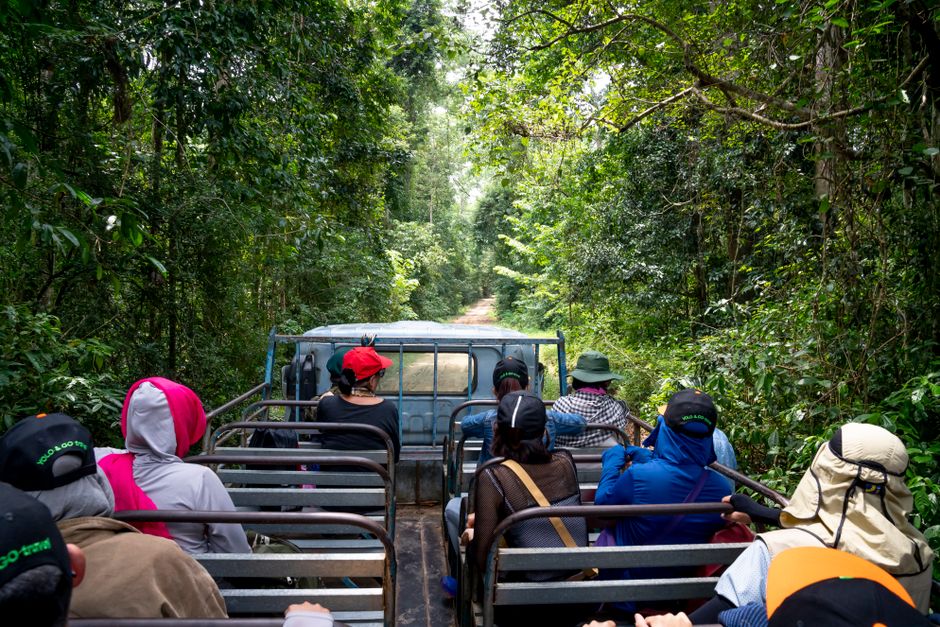
Program 1: “Qiyang River Valley Discovery” (7 days/6 nights, GBP 1,850 per person) — The flagship ecotourism program, featuring: guided hiking along the Qiyang River canyon trails (3–6 hours per day, moderate difficulty); canoeing on the upper Qiyang River, passing through wetland bird sanctuary zones with interpretation by a local ornithologist; overnight stays at three different village homestays, each operated by a family that has undergone CETJI sustainable hospitality training; visits to Shitai County organic tea gardens with tea tastings and processing demonstrations; a half-day volunteer activity (trail maintenance or invasive species removal) contributing to the Qiyang River Wetland Park conservation program; and interpretive sessions on local biodiversity, conservation challenges, and community development. Maximum group size: 12 guests. Guide-to-guest ratio: 1:6.
Program 2: “Jiuhua Mountain Buddhist Eco-Retreat” (5 days/4 nights, GBP 1,550 per person) — A lower-impact alternative to the mass-tourism Jiuhua Mountain experience, featuring: early-morning access to less-visited trails on the mountain’s eastern and northern slopes (avoiding the crowded cable car and temple complex areas); private meditation sessions with Jiuhua Mountain monks in a small temple outside the main tourist zone; vegetarian Buddhist cuisine prepared by the temple kitchen using vegetables grown in the temple’s organic garden; participation in morning chanting and evening meditation sessions; a half-day workshop on Buddhist environmental philosophy and its relationship to modern ecological thinking; and overnight accommodation at a restored monastery guesthouse with basic but comfortable facilities. Maximum group size: 8 guests.
Program 3: “Anhui Tea and Culture Trail” (6 days/5 nights, GBP 1,680 per person) — A sustainable cultural tourism program linking Chizhou’s tea culture with broader Anhui cultural heritage, featuring: guided visits to three family-operated organic tea gardens in Shitai and Qingyang counties; tea ceremony instruction from a local tea master certified by Anhui Tea Culture Association; traditional Anhui cuisine cooking classes using seasonal, locally-sourced ingredients; visits to a Huizhou-style ancestral hall and a Ming dynasty village with interpretation of Anhui’s architectural heritage; a hands-on craft workshop learning bamboo weaving techniques from local artisans; and a community dinner where guests share a meal with host families. Maximum group size: 14 guests.
Program 4: “China’s Green Heart — Combined Chizhou Experience” (12 days/11 nights, GBP 2,950 per person) — A comprehensive eco-tourism program combining elements of all three shorter programs with additional experiences including: a three-day service component (trail building, tree planting, or village infrastructure improvement projects); a full-day biodiversity survey workshop led by a university researcher; and a closing sustainability roundtable where guests share observations and recommendations with Chizhou tourism officials. Maximum group size: 10 guests.
| Program | Duration | Price (GBP) | Max Group | 2024 Bookings | 2025 Bookings |
|---|---|---|---|---|---|
| Qiyang River Valley Discovery | 7 days | £1,850 | 12 | 18 departures / 164 guests | 24 departures / 215 guests |
| Jiuhua Mountain Buddhist Eco-Retreat | 5 days | £1,550 | 8 | 12 departures / 72 guests | 16 departures / 96 guests |
| Anhui Tea and Culture Trail | 6 days | £1,680 | 14 | 14 departures / 140 guests | 20 departures / 198 guests |
| China’s Green Heart | 12 days | £2,950 | 10 | 6 departures / 42 guests | 8 departures / 60 guests |
| Total | 50 departures / 418 guests | 68 departures / 569 guests |
5. Community Engagement and Benefit-Sharing Model
A defining feature of the CETJI partnership was its community benefit-sharing model, designed to ensure that the economic benefits of eco-tourism flow directly to local communities in Chizhou’s rural areas. The model had four components. First, direct employment: Wild Planet Travel committed to using only locally-licensed guides (all from Chizhou or Shitai County), local drivers (from registered Chizhou transport cooperatives), and locally-owned accommodation (all homestays and guesthouses within the village collective structure). Second, capacity building: the CETJI training program, funded jointly by Wild Planet and the Chizhou Tourism Development Fund, provided 240 hours of training to 60 local community members in its first two years, covering: sustainable hospitality operations (32 participants), English-language guiding skills (15 participants), organic kitchen gardening and food safety (8 participants), and nature interpretation and birdwatching guiding (5 participants). Third, community fund: each Wild Planet guest departure paid a “Community Benefit Contribution” of GBP 25 per person into a fund administered by a committee comprising three village representatives, two Chizhou Tourism Bureau officials, and one Wild Planet representative. The fund, which collected approximately GBP 26,000 in 2024 and GBP 37,000 in 2025, supported community-identified projects including: renovation of a village cultural center in Xihekou Township (GBP 8,000), installation of solar-powered lighting on a 3-kilometer walking trail (GBP 5,500), and a scholarship program for 12 village children to attend Chizhou’s tourism vocational school (GBP 12,000 annually). Fourth, supply chain linkages: Wild Planet worked with the eight partner properties to develop local sourcing guidelines, targeting 80% of all food ingredients by value to be sourced within 50 kilometers of the property. By the end of 2025, the average achieved across partner properties was 73%, up from approximately 45% before the partnership began.
6. Environmental Impact Management and Certification
Environmental impact management was central to the CETJI’s operating philosophy and a key differentiator in Wild Planet’s marketing to the European eco-tourism market. The partnership implemented a comprehensive Environmental Management System (EMS) covering all tour operations and partner properties, based on the ISO 14001 framework adapted for the small-scale eco-tourism context. Key elements of the EMS included: a carbon footprint assessment for each tour program (covering transport, accommodation, food, and activities), with a commitment to offset 150% of calculated emissions through Anhui-based reforestation projects; a “Leave No Trace” protocol for all hiking and water-based activities, adapted for the Chinese context with Chinese-language training materials; a waste management protocol requiring single-use plastics elimination at all partner properties (achieved by the end of 2024), with composting of organic waste and recycling of glass, paper, and metals; water conservation measures including flow restrictors on all showers and taps at partner properties, rainwater harvesting for garden irrigation at 5 of 8 properties, and greywater treatment systems at 3 properties; and biodiversity monitoring protocols requiring guides to record wildlife sightings using a standardized mobile app, with data shared with the Qiyang River Wetland Park management authority.
In early 2025, CETJI achieved certification under the Global Sustainable Tourism Council (GSTC) Destination Criteria for the Chizhou programs — the first GSTC-certified destination-level program in Anhui Province and one of fewer than 20 in all of China. The certification process, which took approximately 14 months and required demonstrating compliance with 41 GSTC criteria across four pillars (sustainable management, socio-economic sustainability, cultural sustainability, and environmental sustainability), involved documentation review, on-site audits of multiple properties and activity sites, and interviews with community members, government officials, and guests. The GSTC certification has been a significant marketing asset, directly credited by Wild Planet for a 28% increase in booking conversion rates from the European market and inclusion in several European travel media “best sustainable tourism experiences in China” features.
7. Financial Performance and Growth Trajectory
Wild Planet Travel’s CETJI programs generated total revenue of approximately GBP 745,000 in 2024 (first full operating year) and GBP 1,070,000 in 2025, representing growth of 44%. After deducting direct costs (accommodation, transport, meals, guide fees, park entrance fees) of GBP 390,000 and GBP 545,000 respectively, and CETJI overhead (Wild Planet’s staff costs, marketing, certification maintenance, community fund contributions) of GBP 220,000 and GBP 280,000, the partnership generated net margins of 18% in 2024 (GBP 135,000) and 23% in 2025 (GBP 245,000). Chizhou’s share of direct tourism spending from Wild Planet guests (accommodation, dining, guiding, transport, handicraft purchases) was estimated at RMB 5.2 million in 2024 and RMB 7.8 million in 2025, providing meaningful economic benefit to the local communities involved.
The partnership’s growth trajectory targets 1,000 guests annually by 2028 — still a modest number by Chinese tourism standards but significant as a demonstration model for high-value, low-impact tourism. The average Wild Planet guest spends approximately GBP 2,100 per person per trip (including the tour price, international airfare, and personal spending), stays 8.5 nights in Chizhou, and generates an estimated total economic multiplier effect of 1.8–2.2x in the local economy. By contrast, a typical Jiuhua Mountain mass-tourism visitor spends approximately RMB 1,500–2,500 (GBP 165–275) per visit, stays 1–2 nights, and generates a lower multiplier due to the higher share of spending going to corporate-owned hotels and cable car operators rather than local community members. The CETJI model thus generates approximately 10–15x more local economic benefit per visitor while generating less environmental impact, demonstrating the economic case for sustainable tourism even in a mass-tourism-dominated destination.
Lessons for Eco-Tourism Investors
Q: What is the minimum commitment required for a foreign eco-tourism operator to enter the Chinese market through a partnership model?
A: Based on Wild Planet’s experience, the minimum commitment is approximately GBP 80,000–120,000 over the first two years, covering: initial scoping visits and feasibility assessment (GBP 15,000–25,000), product development team deployment (GBP 25,000–35,000), guide and partner training program (GBP 15,000–20,000), marketing investment for the first season (GBP 10,000–20,000), and legal and administrative setup including representative office registration (GBP 8,000–15,000). This is dramatically lower than the multi-million-pound investment required for a fixed-asset hospitality project, making the partnership model an attractive entry strategy for foreign operators seeking to test the Chinese market before committing to larger investments.
Q: How did the UK operator handle the language and cultural barrier?
A: Wild Planet Travel hired a full-time China Program Manager based in Hefei (a British national with fluent Mandarin, recruited from an ecotourism NGO in Yunnan) and a Chinese Operations Coordinator based in Chizhou (a local hire with tourism management degree from Anhui University). The two-person in-country team, with combined annual cost of approximately GBP 48,000, handled all day-to-day coordination, translation, government liaison, and quality control. For a smaller operator, a single bilingual manager based in Anhui combined with remote support from the UK office would be the minimum viable staffing model.
Q: What are the biggest risks for foreign eco-tourism operators in China?
A: Wild Planet’s experience identified three principal risks. First, regulatory risk: the legal framework for foreign non-governmental organizations (including foreign eco-tourism operators) operating without a Chinese legal entity remains subject to interpretation and potential change. The current permissive approach in Anhui reflects provincial-level policy discretion that could be tightened at the national level. Second, market access risk: China’s inbound tourism market remains heavily dependent on visa policies and international relations. The suspension of visa-free transit policies during 2020–2023 caused a 70% drop in Wild Planet’s China bookings during that period, and any future geopolitical disruption could similarly impact demand. Third, climate risk: the Qiyang River valley experienced severe flooding in July 2024 that caused the cancellation of two tour departures and damage to two partner properties, costing approximately GBP 28,000 in cancellations and recovery support.
Q: Can the model be replicated in other Chinese destinations?
A: Yes, with appropriate local adaptation. Wild Planet Travel has since signed similar framework agreements with Lishui City (Zhejiang Province) and the Sanjiangyuan Nature Reserve (Qinghai Province), applying the same partnership model developed in Chizhou. The Chizhou experience served as the proof-of-concept that demonstrated to other Chinese destinations the viability of working with international eco-tourism operators through non-equity partnership structures. Each replication requires similar upfront investment in destination assessment, local partner relationship building, guide training, and environmental management system development. The Chizhou case established a transferable template that reduces the cost and timeline for subsequent destination entries.
Conclusion
The Wild Planet Travel partnership with Chizhou demonstrates that sustainable tourism development in Anhui’s secondary cities can be a viable and rewarding strategy for foreign operators, even without making large fixed-asset investments. The CETJI model — a cooperative framework agreement rather than an equity investment, community benefit-sharing as a core principle, environmental management integrated into all operations, and partnership with an actively supportive municipal government — provides a template that could be replicated in other Anhui cities with strong natural assets and tourism development ambitions. For Chizhou, the partnership has brought international visibility, economic benefits to rural communities, and a demonstration effect that sustainable tourism can coexist with and complement the mass-market tourism centered on Jiuhua Mountain. For the broader Anhui tourism sector, the CETJI experience offers evidence that the province can attract international sustainable tourism investment and that the partnership model can deliver meaningful outcomes for all stakeholders. As China’s inbound tourism market continues to recover and grow, and as sustainability becomes an increasingly important criterion for international travelers’ destination choices, Chizhou’s early adoption of a structured sustainable tourism partnership positions it well to capture a disproportionate share of this growing segment.