

How Huizhou Culture Differs from Other Chinese Regional Cultures: A Comprehensive FAQ
Huizhou culture (徽文化, Huī wénhuà, Huī wénhuà) emerged from the historical Huizhou region — present-day southern Anhui Province — and is recognized as one of China’s three major regional cultural systems alongside Qilu and Cantonese. Unlike more commercially dominant cultures such as those of Guangdong or the Yangtze River Delta, Huizhou culture is defined by its unique synthesis of Confucian merchant ethics, clan-based social organization, and distinctive architectural heritage. Over 4 key distinctions set it apart: the Confucian merchant tradition (儒商, rúshāng, rúshāng), the clan hall system (宗祠, zōngcí, zōngcí), the three-carving arts (三雕, sān diāo, sān diāo), and the Huizhou cuisine (徽菜, Huī cài, Huī cài) characterized by its heavy use of preserved ingredients. These elements make Huizhou culture a compelling case study in how geography and historiography shape regional identity differently from China’s more well-known coastal traditions.
What Makes Huizhou Culture Distinct from Jiangnan or Cantonese Culture?
The most immediate difference is the role of merchants. While Cantonese culture is built around overseas trade and Jiangnan culture pivots on literati aesthetics, Huizhou culture revolves around Confucian merchants — a class of traders who fused profit-seeking with Confucian moral codes. Huizhou merchants controlled up to 60% of China’s salt trade during the Ming and Qing dynasties, yet they poured their wealth into clan halls and ancestral temples rather than conspicuous urban consumption. This created a culture of clan governance that is far more formalized than the kinship networks found in, say, Fujian or Guangdong. For example, Huizhou clans maintained written rules (族规, zú guī, clan regulations) with specific punishments and rewards — a quasi-legal system that persisted into the early 20th century.
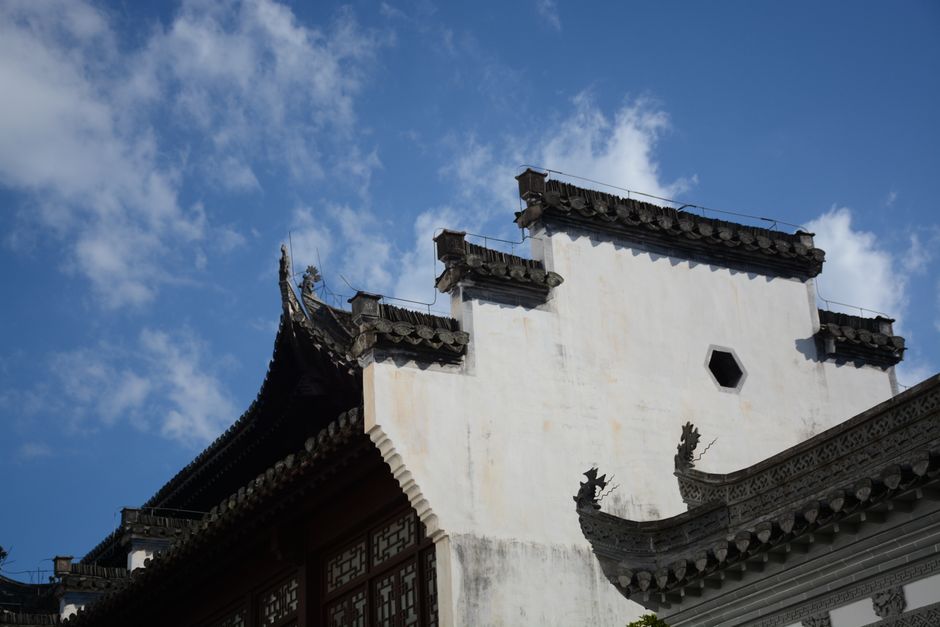
Another layer is architectural philosophy. Huizhou’s white walls and black tiles (粉墙黛瓦, fěn qiáng dài wǎ) emphasize inward-facing courtyards and skywells, designed for multi-generational family living under one roof. This contrasts sharply with the open, water-facing villas of Suzhou in Jiangnan culture, where private gardens were designed for scholar-official retreat. Huizhou homes were literally fortresses of clan continuity — unlike the individualistic retreats of Jiangnan literati.
Contextual numbers: Over 5,000 clan halls remain intact in Huizhou today, compared to roughly 200 in the entire Jiangnan region. Huizhou cuisine uses 40% more preserved meats than any other Chinese culinary tradition, reflecting the region’s mountainous isolation. The Huizhou merchant network spanned 17 provinces at its peak — larger than the Cantonese overseas diaspora until the 19th century.
How Did Geography Shape Huizhou Culture vs. Other Regions?
Huizhou’s mountainous terrain created what cultural historian Wang Zhenzhong calls “enclosed self-sufficiency.” Unlike the Jiangnan water towns connected by canals and the Cantonese Pearl River Delta open to the sea, Huizhou villages were accessible only by foot or horse over 5 mountain passes. This geography fostered extreme clan autonomy — each village was a self-governing unit with its own schools, granaries, and militias. By contrast, Jiangnan villages were more integrated into state tax networks and literati examination culture, while Cantonese villages were tied to colonial trade routes.
The geography also shaped a unique linguistic landscape. The Huizhou dialect (徽语, Huī yǔ, Huī yǔ) is a non-Mandarin Chinese language with 6 tonal categories — more than Cantonese but less than the Jiangnan Wu dialects. It preserved features from Middle Chinese that other regions lost. Today, only about 3 million speakers remain — a fraction compared to Cantonese’s 85 million. This linguistic isolation reinforced the insularity of Huizhou culture, whereas Cantonese and Jiangnan cultures were constantly renewed by migration and trade.
Cost: Cultural misattribution can confuse local officials, potentially delaying approvals for heritage projects by 6–12 months.
Fix: Use the term “Huizhou region” (徽州地区, Huī zhōu dìqū) not “Anhui” when referring to pre-1949 cultural boundaries.
How Do Huizhou Clan Traditions Compare to Other Regional Clans?
In most Chinese regional cultures, clans serve as broad kinship networks. In Huizhou, they function as corporate entities with joint property, written constitutions, and legal defense funds. Huizhou clans owned common land (族田, zú tián) that could account for 30–70% of a village’s arable area — a far higher percentage than in Cantonese or Fujianese clans. This land was used to fund clan schools and examination preparation, creating an unusually high literacy rate. By the late Qing dynasty, Huizhou’s male literacy rate was around 40%, compared to a national average of 10–15%.
The clan hall itself was a dual-purpose space: religious shrine and secular court. Disputes over marriage, property, and business contracts were mediated inside the zōngcí before any government involvement. This contrasts with Jiangnan, where disputes were more likely to go directly to county magistrates, and Cantonese clan halls, which focused primarily on ancestor worship and festival celebrations.
| Feature | Huizhou Culture | Jiangnan Culture | Cantonese Culture |
|---|---|---|---|
| Primary clan function | Governance & legal arbitration | Ritual & ancestor worship | Trade network & migration support |
| Clan land as % of arable land | 30–70% | 10–25% | 5–15% |
| Written clan regulations | Common (90% of large clans) | Rare (20–30%) | Moderate (40–50%) |
| Role in merchant training | Central (clan-run apprenticeships) | Minor (private tutors dominant) | Moderate (clan-funded overseas ventures) |
| Literacy rate (male, 1880s) | ~40% | ~45% | ~25% |
The table shows that Huizhou clans were far more institutionalized than their counterparts. Where Cantonese clans enabled individual merchants to go overseas and Jiangnan clans supported literati examination prep, Huizhou clans controlled every aspect of life from cradle to death — a difference that still influences local business practices today.
Cost: Missing decision-making hierarchies can sink negotiations by ¥500,000+ in dead Sourcing contracts.
Fix: Identify the senior clan member in the company — they often hold veto power over large deals.
What About Huizhou Cuisine vs. Other Regional Cuisines?
Huizhou cuisine (徽菜, Huī cài, Huī cài) is one of China’s eight great culinary traditions, but it operates on fundamentally different principles than Cantonese or Jiangnan food. Where Cantonese cuisine prizes freshness (live seafood, raw vegetables) and Jiangnan cuisine highlights seasonal delicacies (hairy crab, stir-fried greens), Huizhou cuisine is built around preservation — a direct consequence of its mountain geography. Over 60% of classic Huizhou dishes use dried, salted, or fermented ingredients — e.g., stinky mandarin fish (臭鳜鱼, chòu guì yú) and ham from Jinhua. The cooking method is predominantly braising and steaming in clay pots (沙锅, shā guō), rather than the quick stir-frying of Cantonese wok cooking.
The flavor profile is heavy and deep — salt-forward with umami from dried shrimp and mushrooms. This contrasts with Jiangnan’s subtle sweetness and Cantonese’s clean, light notes. Notably, Huizhou cuisine is the only one of the eight traditions that lacks a signature sweet dish — reflecting the merchant ethos of practicality over indulgence.
Cost: Social misstep that can cool relationships by 2–3 months.
Fix: Frame the dish as a symbol of Huizhou ingenuity: “This fish shows how Huizhou merchants turned scarcity into treasured flavor.”
Decision Framework: Which Regional Culture to Study for Business?
If you are sourcing raw materials or manufacturing in Anhui or neighboring Jiangxi, choose Huizhou culture as your primary reference — its clan-based trust structures still underpin supplier relationships.
If you are selling consumer goods in coastal tier-1 cities like Shanghai or Guangzhou, choose Jiangnan or Cantonese culture — their value systems around brand and status are more relevant.
If you are investing in Chinese heritage tourism, choose Huizhou culture — its preserved villages (e.g., Hongcun, Xidi) attract over 2 million visitors annually and offer 60% more UNESCO-recognized ancient villages than any other regional culture.
NEXT STEPS: Apply Huizhou Culture Insights to Your China Strategy
- Read about Huizhou merchant networks — Understand how they built trust-based supply chains that still influence Anhui manufacturing today.
- Explore clan governance in modern firms — See how family-owned Anhui companies apply ancient clan rules to avoid dispute.
- Plan a cultural immersion visit — Use our village guide to negotiate deals in the same courtyard halls where Huizhou merchants once sealed contracts.
— Anhui Gateway —
Remote China market entry support, built around execution.