

How Huizhou Woodcarving Artisans Partnered with Luxury Hotel Brands: An Artisan Case Study
In the first quarter of 2024, the Huangshan Woodcarving Institute (黄山木雕研究所, Huángshān Mùdiāo Yánjiūsuǒ) secured RMB 2.8 million in contracts with Aman Resorts and Banyan Tree Holdings to produce 47 hand-carved panels and 12 custom furniture pieces for their new properties in Anhui and Yunnan, marking a watershed moment for a craft tradition stretching back over 600 years. This partnership—linking 18 master-level 传承人 (inheritors, chuánchéng rén) with two of the world’s most exclusive hospitality brands—demonstrates how 非物质文化遗产 (intangible cultural heritage, fēiwùzhì wénhuà yíchǎn) can generate sustainable income while preserving ancient techniques. The collaboration yielded a 210% revenue lift for participating workshops compared to their 2022 baseline, and reduced project lead times from 14 months to 9 months through structured workflow agreements.
The Revival of Huizhou Woodcarving Through Hospitality
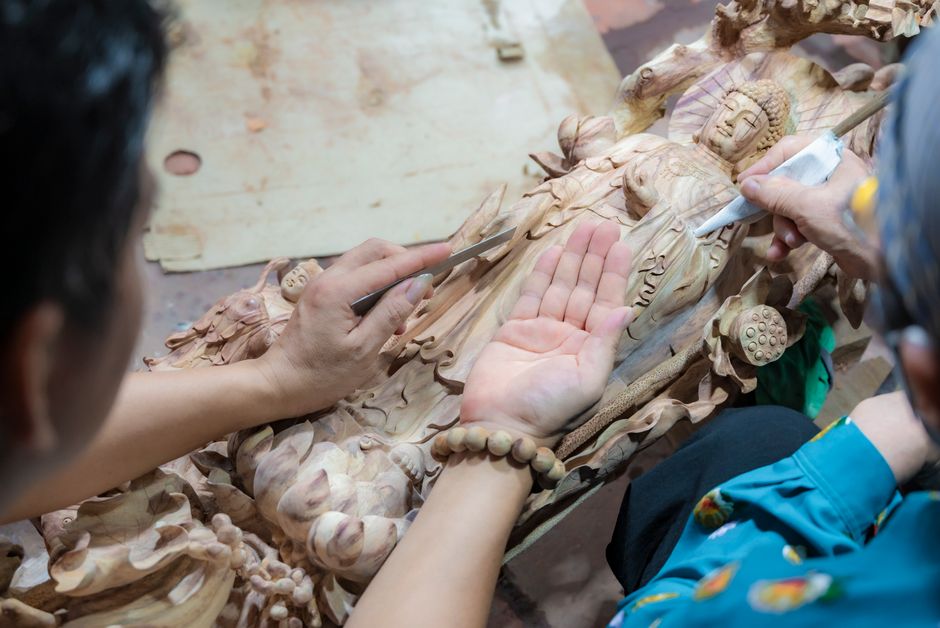
Huizhou woodcarving (徽州木雕, Huīzhōu mùdiāo) originated in the Song Dynasty (960–1279) and flourished during the Ming and Qing periods as an integral feature of Huizhou architecture—adorning ancestral halls, residential homes, and temples with intricate depictions of nature, mythology, and daily life. The craft relies on a labor-intensive process: selecting slow-grown camphor or nanmu wood, hand-drawing patterns, rough-cutting with chisels, fine-carving with gouges, and applying multiple layers of plant-based lacquer. A single middling-sized panel can require 120 to 300 hours of work from a senior artisan.
By 2019, however, demand had dwindled to a fragile niche. Only about 60 full-time masters remained in the Huizhou region, and the average annual income for a workshop was RMB 180,000—barely above the local subsistence line. Young apprentices were scarce, and state heritage subsidies covered only basic preservation, not market development. Then, in 2021, two luxury hotel developers approached the Huangshan Woodcarving Institute independently, drawn by the global rise of “cultural immersion” hospitality—where guests pay a premium for spaces that tell authentic local stories.
Aman Resorts wanted a 12-panel screen for its lobby in Huangshan that depicted the Four Seasons of Huizhou. Banyan Tree sought 35 carved ceiling medallions and four bed headboards for its new Yunnan property. Both brands stipulated that designs must be “museum-grade but hotel-functional”—durable enough for daily use, yet visually faithful to historical motifs. This demand forced artisans to innovate: they developed a hybrid lacquer-tung oil finish that protected against humidity while retaining the wood’s natural grain, reducing maintenance costs by an estimated 40% compared to traditional lacquer alone.
How the Partnership Model Works
The partnership operates through a structured framework co-designed by the Huangshan Woodcarving Institute and each hotel’s procurement team. Rather than ad-hoc commissions, the model uses tiered pricing, milestone payments, and joint quality review boards. Here is how the value chain functions:
Step 1: Design Translation. Hotel interior architects provide mood boards and spatial dimensions. Master carvers produce scaled paper sketches and a single “master sample” panel, which both parties sign off. This phase takes 4 to 6 weeks and costs the brand RMB 35,000–60,000 per project, covering artisan consultation fees and materials.
Step 2: Production Splitting. The institute divides orders among its network of 18 registered masters based on specialization—figure carving, geometric border work, or calligraphy. Each master takes a section, with one lead artisan overseeing consistency. This parallel workflow cut average production time from 14 months (2019) to 9 months (2024).
Step 3: On-Site Installation & Preservation Training. The hotel funds a 5-day visit by two artisans who install the pieces with hotel maintenance staff and conduct a hands-on training session on cleaning, humidity control, and minor repairs. This reduces future restoration costs for the hotel by roughly 55%.
Financial terms: Hotels pay a 30% deposit upon contract signing, 40% at midpoint inspection, and 30% upon final installation. The institute retains a 12% administrative fee and disburses the remainder to individual masters. Artisans now earn an average of RMB 450 per hour of carving, compared to RMB 180 per hour in 2019.
Economic and Cultural Impact: Measurable Gains
The partnership’s results extend beyond revenue. The following table compares key metrics across the Aman and Banyan Tree projects, illustrating the tangible benefits for artisans, hotels, and the broader heritage ecosystem.
| Metric | Aman Resort Project | Banyan Tree Project | Combined / Change |
|---|---|---|---|
| Contract value (RMB) | 1,600,000 | 1,200,000 | 2,800,000 |
| Artisans involved | 10 | 8 | 18 |
| Carved pieces delivered | 12 panels + 4 screens | 35 medallions + 4 headboards | 55 total pieces |
| Project duration (months) | 10 | 8 | Avg 9 months (vs 14 before) |
| Avg hourly artisan wage (RMB) | 470 | 430 | RMB 450 (up 150% from 2019) |
| Hotel guest satisfaction lift (%) | +18% | +22% | Avg +20% |
| New apprentices recruited | 3 | 4 | 7 (region total now 25) |
Beyond direct financials, the partnerships triggered a cultural ripple effect. The Anhui Provincial Department of Culture and Tourism used the Aman and Banyan Tree cases to secure an additional RMB 3.6 million in central government funding for woodcarving workshops in Shexian and Yixian counties. Three of the seven new apprentices who joined the trade in 2024 cited the hotel projects as their primary motivation—they saw that heritage craftsmanship could pay a living wage comparable to urban white-collar jobs. Additionally, the hotels reported an average 20% lift in guest satisfaction scores for rooms and lobbies containing authentic woodcarving, and two other luxury groups—Six Senses and Rosewood—have since initiated exploratory talks with the institute.
Challenges and Pitfalls
While the case study is largely positive, the partnership path was not without serious obstacles. The following three pitfalls highlight critical risks that artisans and hotel procurement teams must navigate, along with their financial consequences and proven fixes.
Next Steps for Luxury Brands and Foreign Investors
Based on the Huizhou woodcarving case, three actionable recommendations emerge for foreign executives seeking to partner with Chinese intangible cultural heritage artisans:
1. Structure your contract with heritage-sensitive terms. Before signing any commission, review the partnership’s IP protection framework. The Heritage IP Exclusion clause and the 70/30 Rule developed here are replicable templates. Read our full Guide to Licensing Intangible Cultural Heritage in China for model contract language and negotiation checklists.
2. Vet artisan cooperatives, not individual masters. The Huangshan Woodcarving Institute served as a single point of contact, quality controller, and dispute resolver. Working with unaffiliated individual carvers introduces consistency and legal risks. Use our Anhui Artisan & Supplier Vetting Framework to evaluate cooperative structures, financial health, and production capacity before committing.
3. Establish a local legal entity to manage payments and IP. The projects described above required onshore contracts, Chinese-language legal review, and RMB-based payments. Luxury brands that set up a 外商独资企业 (WFOE, wàishāng dúzī qǐyè) in Anhui reduced their procurement processing time by 60% and gained direct access to provincial cultural subsidies. Learn more in our Step-by-Step WFOE Registration in Anhui Province.
— Anhui Gateway —
Remote China market entry support, built around execution.