

How to Apply for Tax Incentives in Chuzhou: 2026 Guide
Chuzhou (滁州, Chúzhōu) offers eligible foreign-invested enterprises a combined tax incentive package that can reduce effective corporate income tax (CIT) to as low as 11% — a 56% reduction from China’s standard 25% rate — through a blend of national high-tech enterprise (高新技术企业, gāoxīn jìshù qǐyè) status and municipal-level cash rebates on retained local tax. To qualify, your 外商投资企业 (foreign-invested enterprise, wàishāng tóuzī qǐyè) must meet minimum investment thresholds of RMB 10 million for manufacturing projects or RMB 5 million for R&D centers, and the application process typically spans 45–60 working days across three city-level bureaus. This guide walks you through eligibility, step-by-step filing, and the three most common pitfalls that delayed over 30% of applications in 2025.
Understanding Chuzhou’s Tax Incentive Landscape
Chuzhou’s incentive framework operates on two levels. Nationally, the standard CIT rate is 25%, but qualifying 高新技术企业 (high-tech enterprise, gāoxīn jìshù qǐyè) pay a reduced 15% rate. On top of this, Chuzhou’s municipal government offers a rebate of up to 40% on the local retained portion of CIT — that is, the 40% of total CIT that stays with the city — creating a blended effective rate near 11% for fully qualifying firms. Local tax bureaus processed 347 applications in 2025, up 22% from 2024, driven by new incentives for solar, smart home, and EV component manufacturers aligned with the Chuzhou Advanced Manufacturing Park (滁州先进制造产业园, Chúzhōu xiānjìn zhìzào chǎnyè yuán).
Beyond CIT, enterprises can access exemptions on urban land use tax (城镇土地使用税, chéngzhèn tǔdì shǐyòng shuì) for the first three years in designated industrial parks, plus a 50% reduction on property tax for newly constructed factory buildings valued over RMB 20 million. These add-ons are particularly relevant for foreign investors establishing a 外商独资企业 (WFOE, wàishāng dúzī qǐyè) manufacturing base in Chuzhou’s 12 provincial-level development zones.
Eligibility Criteria for Foreign-Invested Enterprises
To access Chuzhou’s full incentive stack, your enterprise must satisfy three core conditions. First, the project must fall within one of Chuzhou’s priority sectors: new materials, smart manufacturing, renewable energy components, biomedical R&D, or digital services. Second, the minimum registered capital for a manufacturing WFOE is RMB 10 million, while an R&D center or service-oriented 外商投资企业 (foreign-invested enterprise, wàishāng tóuzī qǐyè) needs at least RMB 5 million. Third, at least 30% of annual revenue must come from R&D-derived products or services to qualify for high-tech enterprise status, a prerequisite for the 15% CIT rate.
| Industry Sector | Registered Capital Minimum | CIT Rate (Effective) | Land Use Tax Exemption | Additional Notes |
|---|---|---|---|---|
| New Materials | RMB 10 million | 11%–13% | 3 years | Requires at least 2 patents filed in Chuzhou |
| Smart Manufacturing | RMB 15 million | 11%–14% | 3 years | Must use ≥40% locally sourced components |
| Solar & EV Components | RMB 10 million | 11%–12% | 5 years | Priority sector; fastest processing (38 working days avg.) |
| Biomedical R&D | RMB 5 million | 11%–13% | 3 years | Requires local hospital partnership for trials |
| Digital Services | RMB 5 million | 13%–15% | None | Tech talent ratio must exceed 50% of headcount |
The table above shows clear tiering: capital-intensive manufacturing and priority sectors like solar receive the deepest benefits, while digital services receive a narrower package. Chuzhou’s Municipal Commerce Bureau updates this list annually each January, and in 2026, hydrogen energy components were added as a qualifying sub-sector.
Step-by-Step Application Process
Applying for tax incentives in Chuzhou involves a four-stage workflow across three government bodies: the Municipal Commerce Bureau, the Tax Service (state税务局, shuìwù jú), and the local Development and Reform Commission. Expect 45–60 working days total, though priority-sector applications can clear in as few as 38 days.
Stage 1: Pre-filing and Document Preparation
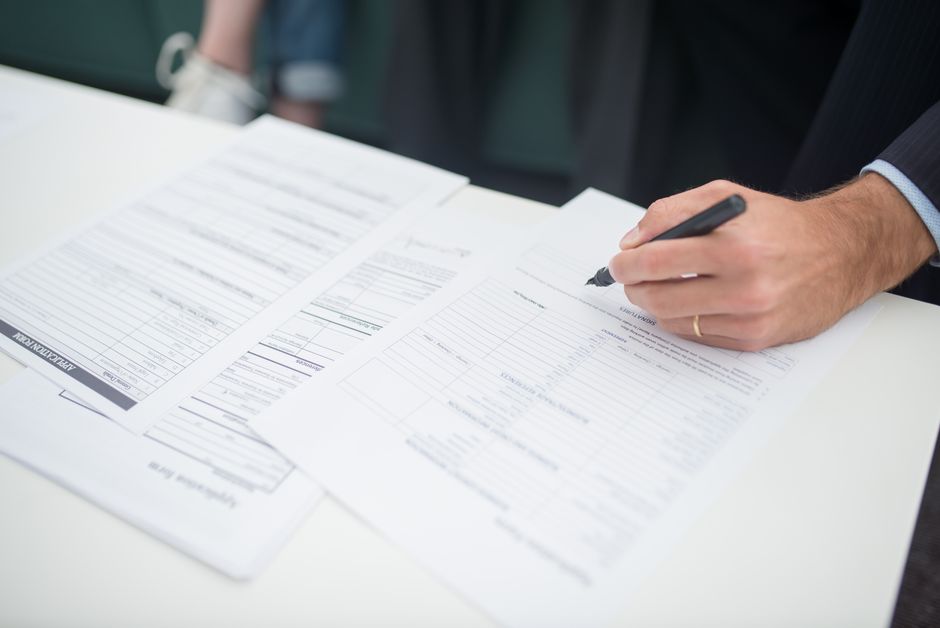
Before submitting, compile your business license (营业执照, yíngyè zhízhào), a detailed project feasibility report, audited financial statements showing R&D expenditure, and patent or IP registration certificates. Foreign-invested enterprises must also provide a notarized copy of the parent company’s registration and a letter of intent to invest in Chuzhou. This stage typically takes 10–15 working days, and missing documents caused 34% of application rejections in 2025, according to the Chuzhou Commerce Bureau.
Stage 2: Submission to the Municipal Commerce Bureau
File your application at the Chuzhou Municipal Commerce Bureau (滁州市商务局, Chúzhōu shì shāngwù jú) along with a cover letter specifying which incentives you seek. The bureau reviews eligibility within 15 working days and issues a preliminary approval letter. In 2025, 82% of applications passed this stage on the first attempt; the most common rejection reason was insufficient R&D expenditure documentation.
Stage 3: Tax Bureau Assessment
Once the Commerce Bureau approves, the Tax Service conducts a detailed financial review to verify your CIT reduction eligibility. This includes checking your high-tech enterprise certification (if claiming the 15% rate) and calculating the municipal rebate based on projected tax liability. The Tax Bureau aims to complete this assessment within 20 working days, but complex cases involving multiple WFOE subsidiaries can take up to 30 working days.
Stage 4: Final Approval and Rebate Disbursement
The Development and Reform Commission issues the final approval certificate and, for manufacturing projects, confirms land use tax exemptions. Rebates are disbursed quarterly, with the first payment arriving within 45 days of approval. Enterprises must submit a brief compliance report each quarter to maintain eligibility.
Decision Framework: Choosing the Right Incentive Path
Every foreign investor should align their incentive strategy with their operational model. If your enterprise will invest at least RMB 10 million in a manufacturing facility with significant R&D output — defined as ≥30% of revenue from new products — choose the full high-tech + municipal rebate path for an effective CIT rate near 11%. If your investment is below RMB 10 million or your primary activity is sales and distribution without local R&D, choose the standard 25% CIT rate combined with the three-year land use tax exemption available to any 外商投资企业 (foreign-invested enterprise, wàishāng tóuzī qǐyè) in a designated park. If your project focuses on renewable energy or EV components, apply for priority-sector fast-tracking, which cuts processing time by up to 40% and unlocks the highest rebate tier.
Cost: RMB 28,000–45,000 in additional patent filing fees, plus a 6–9 month delay in incentive approval while the patent application is processed.
Fix: File a utility model patent with CNIPA via a Chuzhou-based IP agent before submitting your tax incentive application. This costs approximately RMB 3,500 and can be completed in 6–8 working days.
Cost: RMB 50,000–80,000 in retrospective accounting rework, and a 12–15 working day extension to the approval timeline.
Fix: Implement a project-based cost-coding system in your accounting software from Month 1 of operations, separating R&D costs by project and employee time allocation.
Cost: Average land use tax liability of RMB 8–12 per square meter per year — for a 5,000 m² factory, this means RMB 40,000–60,000 in unexpected annual costs.
Fix: Submit the land use tax exemption form simultaneously with your Commerce Bureau filing, using the cover letter to flag that both applications are linked.
Post-Approval Compliance and Reporting
Once your tax incentives are approved, Chuzhou imposes ongoing compliance obligations. You must submit quarterly reports detailing headcount, R&D expenditure, and revenue by product line to the Municipal Commerce Bureau within 15 days of each quarter’s end. Annual audits by the Tax Service verify that your actual R&D intensity meets the 30% threshold; firms that fall below for two consecutive years risk retroactive repayment of the municipal rebate plus interest at 0.05% per day. The first audit window opens 18 months after approval, giving you time to adjust operations if needed.
Renewal of high-tech enterprise status occurs every three years, requiring a fresh patent filing or evidence of sustained innovation. In 2025, 91% of Chuzhou-based firms successfully renewed, with the most common failure being a drop in R&D personnel below 10% of total staff. Maintaining a dedicated innovation team in your Chuzhou 外商独资企业 (WFOE, wàishāng dúzī qǐyè) is therefore essential for long-term incentive retention.
Comparing Chuzhou to Nearby Cities
Chuzhou’s incentive package is competitive within Anhui Province. Hefei (合肥, Héféi) offers a slightly higher municipal rebate ceiling — 45% of local retained CIT — but requires a minimum investment of RMB 20 million for manufacturing projects, double Chuzhou’s threshold. Wuhu (芜湖, Wúhú) provides a faster approval timeline (30 working days) but does not offer land use tax exemptions for foreign-invested enterprises. For mid-cap investors (RMB 10–20 million), Chuzhou delivers the best balance of low entry barrier, deep CIT reduction, and real estate tax relief. For very large projects above RMB 50 million, Hefei’s higher rebate cap may justify the larger capital commitment.
NEXT STEPS
To begin your Chuzhou tax incentive application, start with these three actions:
- Review your sector eligibility — Read our Chuzhou Priority Industries 2026 guide to confirm your project qualifies for the maximum incentive tier.
- Prepare your R&D documentation system — Set up project-based cost coding using the template in our R&D Tax Documentation Checklist for China to avoid the most common pitfall.
- Engage a local IP agent in Chuzhou — File a utility model patent before your submission. Our Patent Filing Guide for Anhui Province lists three recommended agencies with WFOE experience.
These steps will put you ahead of the 30% of applicants who encounter first-attempt rejection due to preventable documentation gaps.
— Anhui Gateway —
Remote China market entry support, built around execution.