

Huainan Business Environment in Anhui: What It Means for Foreign Investors
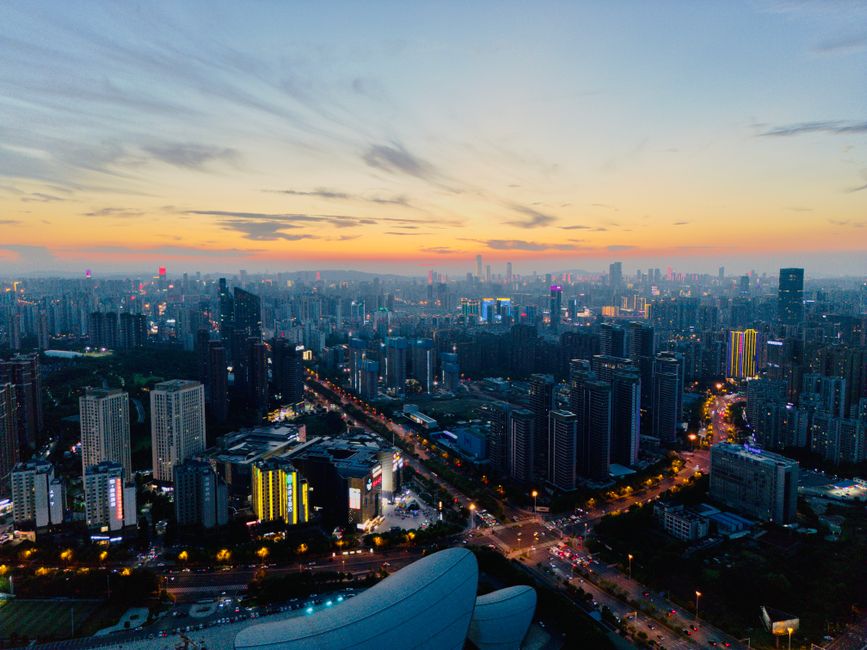
Huainan (淮南, Huáinán), a prefecture-level city in Anhui Province, has undergone a remarkable transformation from a coal-dependent economy to a diversified industrial hub, achieving a GDP of RMB 120.8 billion in 2023. For foreign investors evaluating the Anhui business environment, Huainan offers a distinct value proposition: lower operational costs by 35–40% compared to Hefei, alongside expanding access to emerging sectors such as new energy, advanced manufacturing, and intelligent connected vehicles. This review assesses Huainan’s current business environment, its strategic advantages, and the practical considerations for foreign companies establishing a presence in the city.
Huainan’s Economic Transformation: From Coal City to Diversified Hub
Huainan’s economic identity remains deeply tied to its coal reserves, which once accounted for over 60% of the city’s industrial output. However, since 2015, the local government has actively pursued industrial diversification, investing RMB 45 billion into emerging industries between 2018 and 2023. The share of non-coal sectors in Huainan’s GDP has grown from 38% in 2015 to 67% in 2023, reflecting a significant structural shift.
Foreign direct investment (FDI) into Huainan reached approximately USD 280 million in 2023, a year-over-year increase of 18.2%, driven largely by manufacturing and renewable energy projects. The city now hosts three major industrial parks: the Huainan Economic Development Zone, the Huainan High-tech Industrial Park, and the new Huainan Intelligent Manufacturing Park. Collectively, these parks attracted 47 foreign-invested projects in 2023, up from 29 in 2019.
The transformation is further supported by the Huainan government’s “New Engine Initiative,” which provides tax rebates of 15–25% for foreign companies investing in strategic sectors. These incentives, combined with Huainan’s lower labor costs — an average monthly wage of RMB 5,200 for skilled workers, compared to RMB 7,800 in Hefei — make the city a cost-effective entry point for foreign investors targeting China’s inland markets.
Key Sectors for Foreign Investment in Huainan
Huainan’s business environment is particularly attractive in three sectors: new energy, intelligent manufacturing, and modern logistics. The city has become a hub for photovoltaic (PV) manufacturing, hosting five major solar panel factories with a combined annual output of 18 GW. Foreign companies in this sector benefit from proximity to raw material suppliers in neighboring cities and a dedicated PV industry fund established by the Anhui provincial government.
Intelligent connected vehicles (ICVs) represent a second growth sector. Huainan is home to two major ICV testing grounds and has attracted investments from eight Tier 3 auto parts suppliers since 2021. The city offers a 30% subsidy on R&D expenditures for foreign companies developing ICV software or hardware, a policy that has drawn companies from Germany, Japan, and South Korea.
Modern logistics is the third key sector, leveraging Huainan’s position as a rail and highway junction in central Anhui. The Huainan Railway Logistics Center handled 12.4 million tons of freight in 2023, with 15% of that volume attributable to foreign-invested enterprises. The city offers foreign logistics companies a 50% reduction on land lease fees for the first three years of operation in its designated logistics zones.
Infrastructure and Talent Availability
Huainan’s infrastructure has improved significantly over the past decade. The city is connected to the Beijing-Shanghai high-speed rail network, with trains reaching Hefei in 40 minutes and Shanghai in 2.5 hours. Huainan’s road network density is 1.8 km per square kilometer, above the Anhui provincial average of 1.4 km per km².
On the talent front, Huainan is home to Anhui University of Science and Technology, which produces 8,200 graduates annually in engineering, computer science, and business fields. The local government has also launched a “Talent Return” program, offering housing subsidies of RMB 50,000–100,000 for professionals returning to work in foreign-invested enterprises. However, the city faces a brain drain to Hefei and Nanjing, with approximately 35% of local graduates seeking employment outside Huainan within two years of graduation.
For foreign companies, the available talent pool is sufficient for mid-level positions but may require additional training for senior management roles. Several international schools and bilingual education centers have opened in Huainan since 2020, addressing the needs of expatriate families.
Comparison with Other Anhui Cities for Foreign Investors
Foreign investors often compare Huainan with Hefei, Wuhu, and Ma’anshan. The following table highlights key differences across these cities.
| Metric | Huainan | Hefei | Wuhu |
|---|---|---|---|
| GDP (2023, RMB billion) | 120.8 | 1,274.6 | 415.2 |
| FDI (2023, USD million) | 280 | 3,200 | 780 |
| Average monthly wage (skilled worker) | RMB 5,200 | RMB 7,800 | RMB 6,100 |
| Industrial park space (hectares) | 4,200 | 9,800 | 5,600 |
| Top foreign investor sectors | New energy, manufacturing, logistics | Technology, EV, finance | Automotive, shipbuilding, materials |
| Corporate income tax incentives | 15% rebate for strategic sectors | 10% for high-tech enterprises | 25% reduction for manufacturing |
Huainan offers the lowest operating costs among these cities, making it suitable for cost-sensitive manufacturing and logistics operations. However, its smaller market size and limited high-tech talent pool mean it may not be ideal for R&D-intensive or software-focused firms.
Decision Framework for Foreign Investors
If your primary objective is minimizing operational costs while establishing a manufacturing base for the inland Chinese market, choose Huainan. If your focus is on accessing advanced R&D talent, university partnerships, or proximity to international airports, choose Hefei. If you require a balance between cost and access to the Yangtze River Delta logistics network, choose Wuhu.
Three Pitfalls for Foreign Investors in Huainan
NEXT STEPS
- Download our detailed Anhui City Comparison Guide for a side-by-side analysis of all 16 prefecture-level cities, including tax incentives, labor availability, and infrastructure scores.
- Request a personalized Huainan Incentive Package Report that calculates your potential tax rebates and subsidies based on your sector, projected investment size, and planned hiring targets.
- Book a Site Visit Consultation with our local team to tour the Huainan Economic Development Zone, meet with the Foreign Investment Promotion Bureau, and assess facility options first-hand.
— Anhui Gateway —
Remote China market entry support, built around execution.