

Huainan Industrial Update: Key Manufacturing Sectors in 2026
Huainan (淮南, Huáinán) is rapidly evolving into a major inland manufacturing hub, with its industrial output projected to reach ¥185 billion by 2026, a 40% increase from 2023 levels. The city’s manufacturing sector (制造业, zhìzàoyè) is now anchored by three high-growth industries: new energy vehicles, high-end equipment manufacturing, and smart digital factories. For foreign executives evaluating China expansion beyond Tier-1 cities, Huainan offers lower operational costs, central logistics access, and targeted government incentives under the 外商独资企业 (WFOE, wàishāng dúzī qǐyè) structure. Anhui province has designated Huainan a pilot city for industrial transformation, unlocking ¥8.2 billion in dedicated funding between 2024 and 2026. This update provides a sector-by-sector breakdown of what foreign investors can expect on the ground.
New Energy Vehicle Manufacturing Leads Growth
Huainan has attracted over ¥12 billion in investments for 新能源汽车 (new energy vehicles, xīn néngyuán qìchē) since early 2024, including battery cell production, electric drive systems, and final assembly lines from both domestic and joint-venture OEMs. Annual NEV production capacity is projected to reach 500,000 units by 2026, a threefold increase from the 2024 baseline of 170,000 units. This growth is supported by a dedicated 800-hectare NEV industrial park offering subsidized land leases at ¥48 per square meter—roughly one-third of rates in Shanghai’s Lingang area. The local government provides capital equipment subsidies of up to 30% for foreign-invested NEV component manufacturers, with a cap of ¥50 million per project. For foreign firms, the streamlined approval pathway under the 外商独资企业 (WFOE, wàishāng dúzī qǐyè) structure allows 100% foreign ownership in NEV component manufacturing, avoiding the joint-venture requirements that apply to vehicle assembly for passenger cars.
By comparison, Tier-1 cities such as Shanghai and Guangzhou impose higher land costs and stricter environmental quotas, making Huainan an attractive alternative for volume production. The city’s rail and highway links to the Yangtze River Delta mean finished components can reach Shanghai’s ports within four hours. Several foreign Tier-1 suppliers from Germany and Japan have already broken ground on facilities in the park, with a lead time of just 14 months from signing to production readiness.
High-End Equipment Manufacturing Gains Momentum
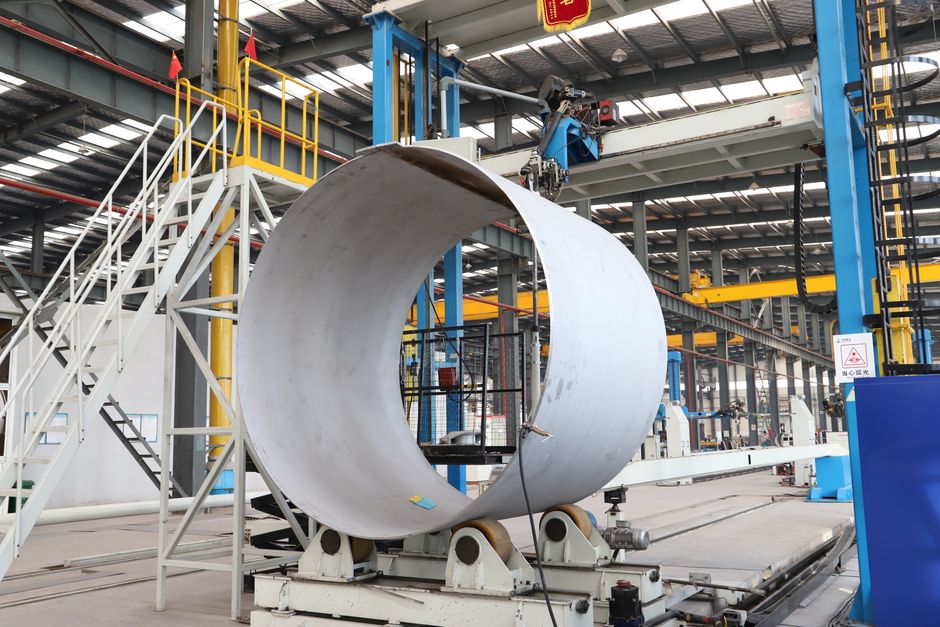
Huainan’s high-end equipment manufacturing segment (高端装备制造, gāoduān zhuāngbèi zhìzào) has grown from 240 enterprises in 2025 to a projected 310 by 2026, a 29% year-on-year increase. The subsector includes industrial robotics, precision machining, aerospace components, and semiconductor capital equipment. Export revenue from this segment rose 18% year-on-year in 2025 to reach ¥6.8 billion, driven primarily by orders from Southeast Asian electronics makers and European industrial automation buyers. Huainan’s three specialized industrial parks for high-end equipment provide dedicated power substations and wastewater treatment facilities sized for heavy manufacturing, which is often constrained in older urban industrial zones.
A specific advantage for foreign companies is the city’s “plug-and-play” factory shell program: standard buildings of 5,000–20,000 square meters with reinforced flooring (5-ton load capacity), pre-installed 10kV power, and gas connections. Lease rates average ¥22 per square meter per month, compared to ¥55–65 in Suzhou’s industrial parks. For foreign firms considering a localized production base, Huainan also offers a fast-track environmental impact assessment approval (EIA) that cuts the typical 90-day process to 45 days for WFOE applicants in designated high-end manufacturing categories.
Smart Manufacturing and Digital Transformation
Huainan has committed ¥3.5 billion to 智能制造 (smart manufacturing, zhìnéng zhìzào) infrastructure by 2026, including 5G standalone networks covering all major industrial parks, edge computing nodes, and AI-powered quality inspection systems. The city aims to have 70% of large manufacturers (revenue >¥100 million) adopt intelligent manufacturing systems by the end of 2026, up from 42% in 2024. Employment in the broader manufacturing sector has grown to 150,000 jobs—an 8% increase since 2023—with technical roles such as CNC programmers, robotics technicians, and data analysts accounting for 35% of new hires. Huainan has partnered with three leading Chinese tech firms to provide subsidized industrial software licenses to foreign-invested enterprises, reducing upfront digitalization costs by an estimated 20–30%.
For foreign executives, the implication is that Huainan’s smart manufacturing push reduces the labor intensity traditionally associated with inland manufacturing. A 2025 pilot in the high-end equipment zone showed that adopting AI-driven visual inspection cut defect rates by 62% and reduced manual inspection headcount by 40%. This makes Huainan increasingly viable for precision manufacturing that requires both cost efficiency and quality consistency—a combination often hard to achieve outside established coastal clusters.
NEXT STEPS
- If you are evaluating NEV component production or assembly in inland China: Review the subsidy caps and land lease terms in Huainan’s dedicated park. Read our full Huainan Investment Guide for a breakdown of incentives per enterprise size.
- If you need to set up a WFOE for equipment manufacturing in Anhui: The streamlined EIA and factory shell program can reduce your timeline by months. See the step-by-step WFOE registration process in Anhui.
- If you want a tailored cost-comparison between Huainan and your current China location: Our team provides site evaluations including logistical, labor, and tax benchmarking. Contact our Market Entry Team for a confidential assessment.
— Anhui Gateway —
Remote China market entry support, built around execution.