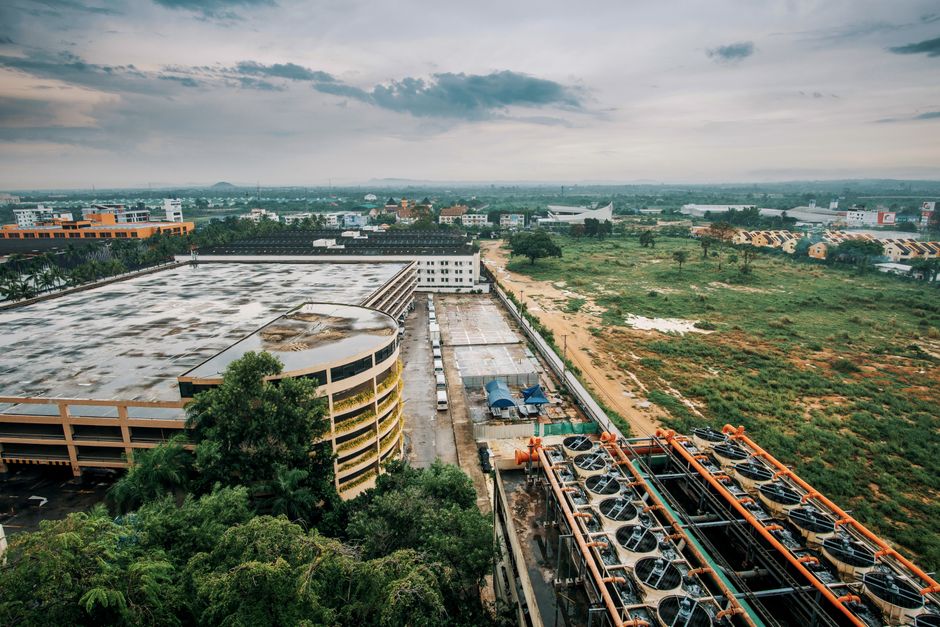


Industrial Parks Update: New Smart Manufacturing Park Opens in Wuhu — Anhui
Published: July 11, 2026 | Category: Industrial Park News | Location: Wuhu, Anhui Province, China
Overview of the Development
On July 8, 2026, the Anhui provincial government officially inaugurated the Wuhu Smart Manufacturing Industrial Park, a flagship project under the province’s “Manufacturing Power” initiative and a key component of the Yangtze River Delta Integrated Development Strategy. Located in the eastern portion of Wuhu’s Economic and Technological Development Zone, the park occupies a total planned area of 8.6 square kilometers and is designed as a demonstration zone for intelligent manufacturing, industrial internet, and green production.
Wuhu, historically known as one of China’s earliest treaty ports and an important commercial center along the Yangtze River, has been undergoing a significant industrial renaissance over the past decade. The city is already home to major manufacturing operations of Chery Automobile (China’s 8th largest automaker), and has developed strength in robotics, aviation零部件, and electronic components. The new Smart Manufacturing Park builds on these existing industrial advantages while pushing the technological frontier toward fully digitized and AI-optimized production environments.
Scale and Investment Breakdown
The RMB 24 billion total investment in WSMIP is structured across three phases. Phase I, which opened this month, accounted for RMB 9.8 billion and covers 3.2 km². Phase II (RMB 8.2 billion) and Phase III (RMB 6 billion) are scheduled for completion by Q4 2027 and Q2 2029 respectively.
| Phase | Investment (RMB) | Area | Completion Target | Key Focus |
|---|---|---|---|---|
| Phase I | 9.8 billion | 3.2 km² | July 2026 (Completed) | Robotics, EV components, AI-enabled assembly |
| Phase II | 8.2 billion | 3.0 km² | Q4 2027 | Semiconductor packaging, precision machinery |
| Phase III | 6.0 billion | 2.4 km² | Q2 2029 | Advanced materials, hydrogen energy systems |
The investment is being funded through a combination of sources: approximately 40% from the Anhui Provincial Government and Wuhu Municipal Government (including land concessions and infrastructure subsidies), 35% from State-owned enterprise investment platforms, and 25% from private sector and foreign direct investment. Notably, the park has already secured a total of RMB 12.3 billion in committed investments from anchor tenants across Phases I and II.
Anchor Tenants and Industry Composition
The park has attracted a diverse mix of domestic and international enterprises. As of the opening ceremony, 27 companies have signed lease or land purchase agreements for Phase I, with an additional 18 in advanced negotiations for Phase II.
Major Tenants in Phase I
- Chery New Energy Vehicle Division — A 420,000 m² intelligent assembly plant for the company’s next-generation EV platform, with a designed annual capacity of 150,000 vehicles. The plant will incorporate 1,200 industrial robots and an AI-driven quality inspection system developed in partnership with iFlytek.
- ABB Robotics (Switzerland-Sweden) — A new manufacturing and R&D center for industrial robots, marking ABB’s fourth robotics facility in China and the first in the Yangtze River Delta region outside of Shanghai. The center will produce the new CRB 1300 collaborative robot series for Asian markets.
- Contemporary Amperex Technology Co. (CATL) — Battery Pack Assembly Hub — A 280,000 m² facility dedicated to assembling battery packs for NEV manufacturers in the Anhui and central China regions, with a capacity of 12 GWh per year.
- iFlytek AI Manufacturing Lab — An industrial AI R&D and deployment center focusing on computer vision inspection, predictive maintenance, and production planning optimization algorithms for manufacturing clients.
- Hefei Metalforming Machine Tool Co. — A smart press and forming equipment manufacturing facility, producing servo press lines for automotive body panel stamping.
Industry Mix
The park’s tenant composition is heavily weighted toward new energy vehicles and robotics, reflecting Anhui’s strategic priority industries. The estimated industry breakdown by floor area upon full build-out:
- New Energy Vehicles & Components: 38%
- Industrial Robotics & Automation: 22%
- Precision Machinery & Tooling: 16%
- Semiconductor & Electronics: 12%
- Advanced Materials: 8%
- Other Support Services: 4%
Strategic Significance for Anhui Province
The opening of WSMIP carries significant strategic importance for Anhui’s industrial development trajectory. Several factors make this park particularly noteworthy:
Strengthening the Anhui NEV Supply Chain
Anhui has aggressively positioned itself as a national leader in new energy vehicles. The province produced 2.1 million NEVs in 2025, accounting for approximately 14% of China’s total NEV output. Parks like WSMIP provide the critical manufacturing infrastructure to support this growing industry. The proximity to Chery’s main R&D center (just 15 km away) and the concentration of battery and component suppliers creates a vertically integrated NEV ecosystem that reduces logistics costs and accelerates product development cycles.
Industrial Digital Transformation Model
WSMIP is being positioned as a national demonstration zone for “Smart Manufacturing + Industrial Internet.” The park-wide deployment of 5G private networks, edge computing nodes, and a unified industrial IoT platform is intended to serve as a replicable model for other industrial zones across China. The Anhui provincial government has committed to sharing WSMIP’s technology standards and operational practices with other parks in the province, effectively using WSMIP as a testbed for province-wide industrial digitalization.
Integration into the Yangtze River Delta Ecosystem
Wuhu’s location on the Yangtze River, midway between Nanjing and Hefei, makes it an ideal logistics and manufacturing node within the broader YRD economic zone. The park’s direct barge access to the Yangtze River (via the Wuhu Port, which handled 1.5 million TEUs in 2025) enables cost-effective bulk cargo movement to Shanghai’s deep-water ports. Additionally, the recently completed Wuhu–Hefei High-Speed Railway (travel time: 38 minutes) and the Wuhu–Nanjing intercity rail (28 minutes) provide excellent connectivity for executive travel and just-in-time parts delivery.
Green and Sustainability Features
WSMIP incorporates comprehensive sustainability design principles that align with China’s dual-carbon goals (carbon peak by 2030, carbon neutrality by 2060). Key environmental features include:
- On-site Renewable Energy: A 120 MW rooftop solar photovoltaic installation across all Phase I factory buildings, expected to supply 35% of the park’s baseline electricity consumption.
- Distributed Energy System: A natural gas-fired combined heat and power (CHP) plant with 40 MW capacity, providing both electricity and process heat with an overall efficiency of 78%.
- Zero Liquid Discharge (ZLD): All industrial wastewater is treated and recycled within the park, with a ZLD target by 2028.
- Smart Energy Management System: AI-powered energy optimization platform that monitors and adjusts power consumption across all tenants in real time.
- Green Building Standards: All factory buildings in Phase I have achieved China Green Building Label 2-Star or higher, with three buildings achieving 3-Star (the highest national rating).
The park administration estimates that these measures will result in a 42% reduction in carbon emissions per unit of industrial output compared to conventional industrial parks, and a 35% reduction in water consumption per unit of output.
Incentives for Tenants
Enterprises settling in WSMIP are offered a competitive incentive package that supplements both national and provincial-level policies:
| Incentive | Details | Eligibility Period |
|---|---|---|
| Land Price Discount | 30% below standard industrial land auction price for strategic industries | First 50 qualified tenants |
| Rent Free Period | First 12 months rent-free in standard factory buildings | 2026–2027 entrants |
| Smart Equipment Subsidy | 20% of qualified smart manufacturing equipment costs (cap RMB 5 million) | First 3 years of operation |
| Energy Cost Subsidy | RMB 0.08/kWh reduction on industrial electricity price for first 3 years | First 3 years |
| Talent Recruitment Support | Subsidized recruitment services + reimbursed relocation costs (up to RMB 15,000 per hire) | First 5 years |
| R&D Matching Grant | 1:1 match on qualified R&D spending up to RMB 2 million/year | 2026–2029 |
Implications for Foreign Investors
The opening of WSMIP presents several strategic opportunities for foreign manufacturing and technology companies considering expansion in central China:
- Gateway to the Central China NEV Supply Chain: Foreign suppliers of NEV components (battery management systems, power electronics, thermal management, sensors) will find a ready customer base within the park and surrounding region.
- Cost-Effective Manufacturing Base: Wuhu’s industrial land prices are approximately 60% of Hefei’s and 25–30% of Shanghai’s, while labor costs for skilled manufacturing workers are 30–40% below Tier-1 cities.
- Proactive Government Facilitation: The Wuhu Municipal Government has established a dedicated “Foreign Investment Service Desk” for the park, offering English-language support for company registration, work permits, and customs clearance.
- Participation in Digital Transformation Pilots: Foreign technology companies specializing in industrial AI, IoT platforms, or smart manufacturing software can use WSMIP as a living laboratory to develop and showcase their solutions.
- Lower Entry Barriers: The incentive packages for early tenants (2026–2027) are notably generous, potentially reducing first-year operating costs by 25–35% compared to standard industrial park entry.
Outlook and Timeline
With Phase I now operational, the park administration expects tenant factories to begin production gradually from Q3 2026 onward, with full operational capacity for Phase I anticipated by Q2 2027. Phase II infrastructure construction will commence in January 2027, with tenant move-ins expected to begin in Q3 2027. The park’s total planned build-out by 2030 is projected to make it one of the three largest smart manufacturing clusters in central China, alongside the Changsha and Zhengzhou industrial corridors.
We will continue to monitor developments at WSMIP and provide updates as new tenants are announced and construction milestones are reached.