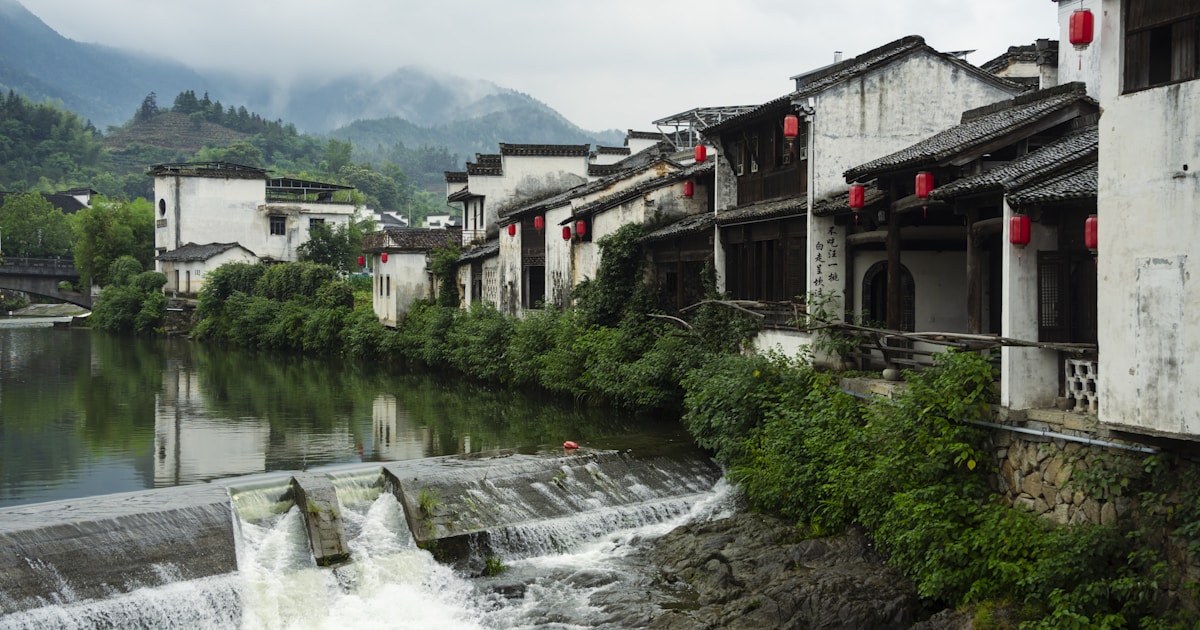


Why Anhui in Anhui Province, China — key insights for foreign investors and businesses.
Prerequisites: Understanding Anhui’s Investment Landscape Before You Start
Before diving into the step-by-step process, it is essential to grasp the current economic and policy environment in Anhui Province. As of mid-2026, Anhui has solidified its position as a top-tier destination for foreign direct investment (FDI) in central China, driven by its integration into the Yangtze River Delta (YRD) and its specialization in high-tech manufacturing. The province recorded a year-on-year increase of 18.4% in actual utilized foreign capital in 2025, reaching a total of USD 24.6 billion.
Key prerequisites for a smooth investment process include:
- Legal Entity Registration: Foreign investors must establish a Wholly Foreign-Owned Enterprise (WFOE), Joint Venture (JV), or Representative Office. The average registration time in Hefei’s pilot free trade zone has been reduced to 5 working days.
- Industry Access Compliance: Review the latest Special Administrative Measures (Negative List) for Foreign Investment Access (2025 Edition). Anhui is particularly open to sectors like new energy vehicles (NEVs), integrated circuits, biomedicine, and artificial intelligence.
- Capital Verification: A minimum registered capital is not universally required, but for specific regulated industries (e.g., financial services), a minimum of RMB 10 million applies. All capital must be verified by a qualified accounting firm.
- Tax Registration: Secure a Tax Registration Certificate from the local tax bureau. Anhui offers a reduced Corporate Income Tax (CIT) rate of 15% for qualified High and New Technology Enterprises (HNTE), compared to the standard 25%.
Detailed Steps: Your 6-Step Investment Roadmap for Anhui (2026)
Step 1: Strategic Pre-Feasibility & Site Selection
Begin with a data-driven analysis of Anhui’s industrial clusters. The province is not a monolith; different cities offer distinct advantages. For instance, Hefei leads in display panels (BOE) and electric vehicles (NIO, Volkswagen Anhui), while Wuhu dominates in robotics and aviation components (Chery, Zhongdian). Bengbu is a rising hub for silicon-based materials.
Use the Anhui Provincial Department of Commerce’s “Investment Anhui” digital platform to access real-time data on industrial land prices, labor costs, and utility rates. As of Q2 2026, average industrial land prices in Hefei Economic Development Zone are RMB 675,000 per mu (approx. 0.067 hectares), while in less developed cities like Fuyang, prices are as low as RMB 280,000 per mu.
Key regulation: “Catalogue of Priority Industries for Foreign Investment in Central and Western China (Anhui Province)” (revised 2025) lists 47 specific sub-sectors eligible for additional tax incentives and land subsidies.
Step 2: Legal Entity Formation & Name Pre-approval
File your company name with the Anhui Administration for Market Regulation (AMR) via the “One-Stop Online Service” portal. The name must be unique and comply with Chinese naming conventions. This step takes approximately 1-2 working days.
Simultaneously, prepare the core incorporation documents:
- Articles of Association (AoA) – must be notarized in the investor’s home country.
- Feasibility Study Report – required for projects exceeding USD 30 million in total investment.
- Identity and credit documents of all shareholders.
Data point: In 2025, over 1,200 new WFOEs were registered in Anhui, with an average processing time of 8.3 working days from application to license issuance.
Step 3: Capital Injection & Bank Account Opening
After receiving the Business License, open a Capital Account (FDI account) at a designated bank in Anhui. The China Banking and Insurance Regulatory Commission (CBIRC) requires that foreign capital be remitted in a single currency (USD, EUR, or JPY) and converted to RMB at a local branch. The minimum capital contribution period is 5 years for most manufacturing projects.
Regulation citation: “Circular on Further Simplifying Foreign Exchange Administration for Direct Investment” (State Administration of Foreign Exchange, SAFE, 2025) permits a simplified capital verification process for investments under USD 50 million.
Table: Average Capital Requirements by Industry (Anhui, 2026)
| Industry | Minimum Registered Capital (RMB) | Typical First-Year Injection (%) |
|---|---|---|
| New Energy Vehicle Manufacturing | 50,000,000 | 30% |
| Integrated Circuit Design | 10,000,000 | 50% |
| Biomedical R&D | 20,000,000 | 40% |
| Logistics & Warehousing | 5,000,000 | 25% |
| Software & IT Services | 1,000,000 | 100% |
Step 4: Industry-Specific Licenses & Approvals
Beyond the general business license, many sectors require additional permits. For example, a food processing facility must obtain a Food Production License (SC Mark) from the Anhui Food and Drug Administration. A medical device manufacturer needs a Medical Device Registration Certificate. The approval time for these licenses ranges from 20 to 90 working days.
Key regulation: “Anhui Province Implementation Plan for the Reform of ‘Separation of Licenses and Permits’” (2025) has streamlined approvals for 78 specific investment projects, cutting red tape by an average of 40%.
Data point: In 2025, 93% of foreign-invested projects in Hefei’s High-Tech Zone reported that they received all necessary operational permits within 60 calendar days of license issuance.
Step 5: Tax Registration & Incentive Application
Register with the local tax bureau within 30 days of incorporation. Anhui offers a comprehensive incentive package:
- HNTE 15% CIT rate: Requires independent intellectual property rights and R&D expenditure exceeding 5% of sales revenue.
- Two-year CIT exemption, three-year 50% reduction: For software and integrated circuit enterprises.
- VAT refund: For export-oriented manufacturing, a 13% VAT refund rate applies.
Regulation citation: “Anhui Province Fiscal and Tax Incentive Measures for Foreign Investment” (2026 Edition) explicitly grants a 30% subsidy on land transfer fees for FDI projects in the “10 Key Emerging Industries” (including AI, new materials, and green energy).
Step 6: Operational Launch & Ongoing Compliance
Once all licenses are secured, you can begin operations. Key ongoing compliance requirements include:
- Annual FDI report to the Ministry of Commerce (MOFCOM) by June 30 each year.
- Quarterly tax filings.
- Annual audit by a Chinese CPA firm.
Data point: The Anhui Provincial Government launched the “Foreign Investor Service Hotline (12345-8)” in 2025, which handled 4,700 inquiries in its first year, with a 98.2% resolution rate.
Common Pitfalls to Avoid
- Underestimating Cultural & Language Barriers: Many foreign investors fail to hire a bilingual legal representative. In Anhui, all official documents must be in Chinese. A mistranslation of a single clause in the AoA can delay registration by weeks. Always use a certified translation service.
- Ignoring Local Government Relationship Building: Anhui’s local governments value regular communication. Skipping the formal introduction meeting with the district-level investment promotion bureau can result in slower permit processing. It is customary to maintain a quarterly reporting schedule with the local commerce bureau.
- Overlooking Environmental Impact Assessments (EIA): For manufacturing projects, the EIA is mandatory and can take 30-60 days. Starting construction without an approved EIA can lead to fines of up to RMB 1 million and a suspension order. In 2025, 12 foreign-invested firms in Anhui were penalized for EIA violations.
- Misjudging Labor Costs & Social Insurance: While Anhui’s labor costs are lower than Shanghai or Beijing, they are rising. The average monthly wage for a skilled technician in Hefei is now RMB 8,500, up 8% from 2024. Employers must also contribute approximately 32% of gross salary to social insurance and housing fund.
- Failing to Protect Intellectual Property (IP): Anhui has a specialized IP court in Hefei. Register your patents and trademarks in China before disclosing any proprietary technology. The Anhui IP Protection Center offers a fast-track registration process for foreign investors, reducing patent approval time to 12 months (from an average of 24).
Action Checklist for a Successful Investment in Anhui
- [ ] Month 1: Complete pre-feasibility study; select target city (Hefei, Wuhu, Bengbu).
- [ ] Month 2: Submit company name pre-approval; prepare notarized AoA.
- [ ] Month 3: Obtain Business License; open Capital Account at bank.
- [ ] Month 4: Apply for industry-specific licenses (SC, medical device, etc.).
- [ ] Month 5: Complete EIA; register for tax; apply for HNTE status (if applicable).
- [ ] Month 6: Begin capital injection; hire initial staff; register for social insurance.
- [ ] Ongoing: File annual FDI report; maintain quarterly government liaison; renew licenses as needed.
Source: Anhui Provincial Department of Commerce, “Anhui Foreign Investment Report 2025-2026”; Hefei High-Tech Zone Investment Guide (2026); SAFE Circular on Direct Investment (2025); Anhui Tax Bureau Official Gazette (2026). | July 2026