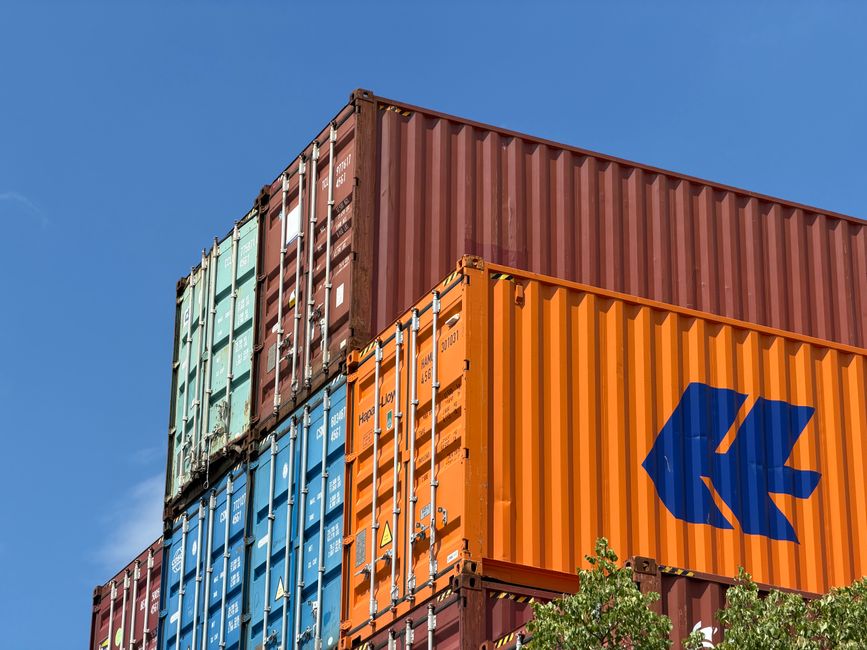


Trade Update: Hefei-Europe Freight Train Volume Grows 25% in Q1 2026 — Anhui Impact
In the first quarter of 2026, the Hefei-Europe freight train service (中欧班列, China-Europe Railway Express, Zhōng-Ōu bānliè) handled 4,800 TEUs (twenty-foot equivalent units), a 25% year-on-year increase from 3,840 TEUs in Q1 2025, cementing Anhui’s role as a critical logistics node in central China. This growth outpaced the national average of 18% for the same period, reflecting accelerating export demand from Anhui’s manufacturing base and improved rail infrastructure connecting 合肥 (Hefei, Héféi) to 18 European destinations.
Q1 2026 Performance: Rail Volume in Context
The 4,800 TEUs moved between January and March 2026 represent 68 trains, up from 54 trains in Q1 2025. This marks a compound annual growth rate of 22.5% since Q1 2024, when the service handled just 3,200 TEUs across 45 trains. The total declared value of goods shipped reached $340 million in Q1 2026, compared to $270 million in the same quarter of 2025 — a 26% value increase that suggests shippers are also moving higher-margin products such as new energy vehicle components and industrial machinery.
Anhui’s share of total China-Europe Railway Express volume now stands at 5.8%, up from 4.5% in Q1 2024, according to Hefei Customs data. For perspective, the national network handled approximately 83,000 TEUs in Q1 2026, meaning Anhui’s growth rate of 25% is 7 percentage points above the system average.
| Metric | Q1 2024 | Q1 2025 | Q1 2026 |
|---|---|---|---|
| Total TEUs | 3,200 | 3,840 | 4,800 |
| Number of Trains | 45 | 54 | 68 |
| Declared Value (USD) | $210 million | $270 million | $340 million |
| European Destinations | 14 | 16 | 18 |
| Outbound vs Inbound Ratio | 65:35 | 63:37 | 60:40 |
The outbound-inbound ratio shifting from 65:35 to 60:40 indicates growing two-way trade, with European imports such as automotive parts and specialty chemicals increasingly using the return leg — a sign the route is maturing beyond a one-way export corridor.
Drivers of Growth: Manufacturing, Infrastructure, and Policy
Three structural factors explain Anhui’s above-average performance. First, the province’s new energy vehicle (NEV) sector — concentrated in Hefei and Wuhu — has driven container demand. NEV battery packs and chassis components accounted for 38% of outbound tonnage in Q1 2026, up from 29% in Q1 2024, as European automakers ramp up production timelines that require just-in-time rail delivery. Second, the expansion of Hefei North Railway Station’s container yard in October 2025 added 150,000 TEUs of annual capacity, reducing staging times for trains by 12 hours on average. Third, a bilateral customs facilitation agreement signed between Anhui’s port office and the Kazakhstan border authority in December 2025 cut cross-border clearance time at Khorgos from 48 hours to 20 hours, directly improving schedule reliability for shippers.
Policy support from the Anhui Provincial Department of Commerce has also played a role. Exporters using the 中欧班列 service now receive a subsidy of RMB 3,000 per TEU — up from RMB 2,000 in 2024 — making the rail route approximately 15% cheaper than sea freight for high-value, time-sensitive goods. This subsidy reduction is offset by lower logistics costs for manufacturers in 合肥 (Hefei, Héféi), who report average savings of 6–8 days versus ocean routes to Rotterdam or Hamburg.
Impact on Anhui’s Trade Profile and Foreign Investors
The 25% volume growth translates into tangible economic effects for Anhui’s 进出口 (import and export, jìnchūkǒu) ecosystem. Total provincial trade in Q1 2026 reached $18.2 billion, of which the rail corridor contributed 1.9% by value — but 12% by weight, highlighting the corridor’s role in moving bulky manufactured goods. For foreign-invested enterprises (外商独资企业, WFOE, wàishāng dúzī qǐyè) operating in Anhui, the rail service offers a competitive logistics advantage. Companies like Volkswagen Anhui and Bosch Hefei report that rail transit times of 14–16 days to Duisburg, Germany, allow them to manage lean inventory cycles that would be impossible with 30–35 day sea routes.
For foreign executives evaluating China market entry decisions, the Hefei-Europe rail data signals that Anhui is no longer just a low-cost manufacturing base — it is a supply chain hub. The province now offers bonded warehouse space at Hefei Comprehensive Bonded Zone, where WFOEs can store goods duty-free before rail shipment. Utilization of this space grew 40% year-on-year in Q1 2026, suggesting foreign firms are increasingly using Anhui as a consolidation point for pan-Asia production feeding European markets.
However, challenges remain. Container availability became a bottleneck in February 2026 when a spike in demand coincided with Chinese New Year factory closures, pushing spot rail rates 12% above contract levels. The Anhui Rail Group has ordered 2,000 new specialized containers for NEV battery transport, but delivery is not expected until Q3 2026. This means shippers should book capacity 3–4 weeks in advance through Q2 to avoid premium pricing.
Outlook for Q2 2026 and Beyond
Forward bookings for April–June 2026 suggest Q2 volume could reach 5,100–5,300 TEUs, a 22–27% year-on-year increase, though this depends on how quickly the Red Sea disruption reroutes additional cargo to rail alternatives. Anhui’s competitive advantage lies in its diversification: the Hefei-Europe network now serves 18 European destinations including major hubs like Hamburg, Duisburg, and Milan, as well as secondary cities like Łódź and Bratislava, offering shippers routing flexibility unavailable from many other Chinese departure points.
For foreign investors monitoring Anhui as a production location, the rail growth validates the province’s “dual circulation” strategy — leveraging both domestic demand and export connectivity. The Anhui government plans to launch a dedicated Hefei-Central Asia route in Q3 2026, targeting the emerging markets of Uzbekistan and Kazakhstan, which could open new export channels for agricultural machinery and textiles. If this expansion proceeds on schedule, Anhui’s total rail TEU volume could exceed 20,000 for full-year 2026, up from 16,000 in 2025.
Executives should weigh these developments against the 7–9% tariff cost of shipping via rail compared to sea, and note that the average container load factor on Hefei-Europe trains is 94%, leaving little slack for urgent shipments. The window for competitive rail logistics in Anhui is widening, but advance planning — both for capacity and customs documentation — remains essential.
NEXT STEPS
- Evaluate rail logistics for your supply chain — Read our Hefei Logistics Hub Analysis for a breakdown of costs, transit times, and customs procedures relevant to WFOEs in Anhui.
- Assess subsidy eligibility — Consult the Anhui Export Subsidy 2026 Guide to determine if your products qualify for the RMB 3,000 per TEU rail subsidy and how to file claims.
- Plan Q2 container bookings — Use our China-Europe Rail Capacity Tracker to monitor available slots from Hefei and avoid the 12% spot premium experienced in February 2026.
— Anhui Gateway —
Remote China market entry support, built around execution.