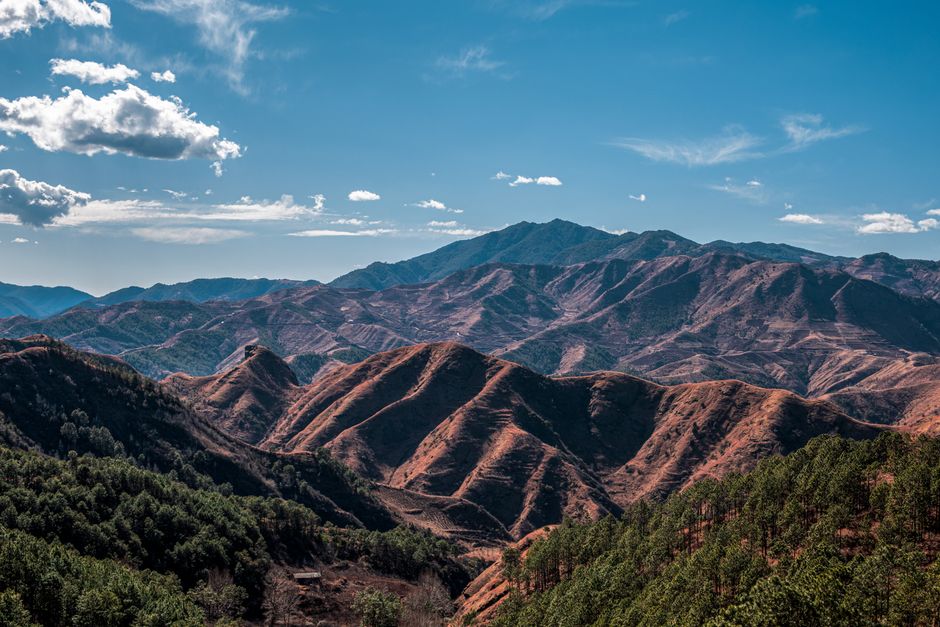


What Is Jiuhua Mountain’s Significance for Tourism Investment?
Jiuhua Mountain (九华山, Jiǔhuá Shān), located in Chizhou (池州, Chízhōu) city, Anhui Province, attracted over 6.8 million visitors in 2023 and generated approximately 12.3 billion RMB in tourism revenue, making it the fastest-growing of China’s four sacred Buddhist mountains and a high-potential destination for foreign tourism investment. As Chizhou’s government actively opens the sector to foreign-invested enterprises (外商投资企业, wàishāng tóuzī qǐyè), Jiuhua Mountain offers a rare combination of cultural heritage assets, government-backed infrastructure expansion, and rising domestic demand for premium tourism experiences.
Below we answer the most common questions foreign executives ask when evaluating Jiuhua Mountain as a tourism investment target, with specific data, policy context, and risk considerations.
Why Is Jiuhua Mountain a Strategic Tourism Investment Target?
Jiuhua Mountain’s significance goes beyond religious tourism. The site is a UNESCO World Heritage candidate and holds over 80 ancient temples, many dating to the Tang and Song dynasties. Unlike Wutai or Emei, Jiuhua Mountain is the only sacred Buddhist mountain with a fully operational cable car network and four-season accessibility, reducing seasonality risk for investors.
Visitor data shows a compound annual growth rate (CAGR) of 15.2% from 2019 to 2023, outperforming Putuo Mountain (11.8%) and Wutai Mountain (9.4%). Overnight stays increased by 22% year-on-year in 2023, signaling rising demand for hospitality infrastructure. In 2023 alone, Chizhou city signed 22 specialized tourism investment projects worth 4.5 billion RMB, including a 1.2 billion RMB wellness resort with foreign partnership.
From a foreign perspective, Jiuhua Mountain sits within the Anhui Southern Anhui International Cultural Tourism Demonstration Zone, which offers preferential tax treatment and streamlined approval for foreign-invested tourism projects. The zone’s policy explicitly encourages foreign investment in boutique hotels, health retreats, and cultural experience centers — segments where foreign expertise commands premium pricing.
What Investment Policies and Incentives Does Chizhou Offer?
Chizhou’s municipal government has published a Tourism Investment Catalogue listing 17 project categories open to foreign enterprises. Key incentives include:
- Corporate income tax reduction: Eligible tourism projects in designated zones receive a 15% preferential CIT rate (standard 25%) for the first five profit-making years.
- Land use subsidies: Foreign-invested hotels and resorts meeting green building standards receive up to 30% rebate on land transfer fees.
- Fast-track WFOE registration: Tourism-related 外商独资企业 (WFOE, wàishāng dúzī qǐyè) applications are processed within 15 working days in Chizhou’s pilot reform program.
- Talent subsidies: Foreign managers with five-plus years of hospitality experience receive 200,000 RMB relocation allowance and personal income tax rebates for three years.
The policy framework is specifically designed to attract experiential tourism investments — wellness centers, Buddhist culture immersion programs, eco-lodges — rather than traditional hotels. This aligns with Jiuhua Mountain’s strategic repositioning from pilgrimage-only to a year-round leisure destination.
How Does Jiuhua Mountain Compare to Other Buddhist Sacred Mountains for ROI?
| Metric | Jiuhua Mountain (Anhui) | Emei Mountain (Sichuan) | Putuo Mountain (Zhejiang) | Wutai Mountain (Shanxi) |
|---|---|---|---|---|
| Annual Visitors (2023) | 6.8 million | 8.2 million | 6.1 million | 5.7 million |
| Visitor CAGR (2019–2023) | 15.2% | 8.1% | 11.8% | 9.4% |
| Avg. Overnight Stay (days) | 1.8 | 2.1 | 1.5 | 1.3 |
| Revenue per Visitor (RMB) | 1,810 | 2,240 | 1,650 | 1,420 |
| Foreign Investment Openness | High (explicit policy) | Moderate | Low (restricted) | Moderate |
| Policy Incentives Score (1–10) | 9 | 6 | 4 | 5 |
| Infrastructure Readiness | High (cable car, 4-season access) | High (cable car, airport) | Moderate (ferry-dependent) | Low (seasonal road closures) |
As the table shows, Jiuhua Mountain’s primary advantage for foreign investors is its combination of high visitor growth and explicit policy openness. While Emei generates higher revenue per visitor, its foreign investment framework is less developed. Putuo Mountain has the most restrictive foreign access due to its status as a maritime defense zone. For investors seeking a controlled entry point, Jiuhua Mountain offers the most practical regulatory environment.
Decision Framework: Which Investment Model Fits Your Profile?
If your firm specializes in luxury hospitality with foreign brand management, choose Jiuhua Mountain’s Qiaomu area where the government is developing a 300-room international hotel zone with direct cable car access. If your focus is health and wellness tourism, choose the Jiuhua Mountain Health Town project in Qingyang County, where the local government offers 50-year land use rights with a 15-year tax holiday for foreign-invested medical wellness centers.
If your model is cultural experience and education (Buddhist study retreats, meditation programs), choose the Jiuhua Mountain Cultural Exchange Center project, which specifically targets foreign partnership and includes preferential visa processing for international participants. If your approach is ecotourism and adventure travel, choose the Jiuhua Mountain Back Mountain Trail development zone, where infrastructure costs are subsidized up to 40% for foreign operators.
Three Common Pitfalls for Foreign Investors
Local Market Entry Notes
Foreign executives should note that Chizhou’s tourism investment environment has improved significantly since 2021, when the provincial government designated Jiuhua Mountain as a pilot zone for foreign capital in cultural tourism. The city now has a dedicated Foreign Investment Service Center that provides English-language documentation and assists with WFOE registration. However, the investment threshold for foreign projects remains at a minimum of 15 million RMB for hospitality and 8 million RMB for cultural experience projects.
Labor costs in Chizhou are approximately 30% lower than in Hangzhou or Nanjing, with average monthly wages for hospitality staff at 3,800–4,500 RMB. Skilled English-speaking tourism management talent is available through the Chizhou Vocational and Technical College, which operates a dedicated international hospitality program with 120 graduates annually.
NEXT STEPS
- Review the full project catalogue: Download the Chizhou Tourism Investment Project Book (2024 edition) for 17 vetted opportunities with financial projections and land allocation details. See our Chizhou Tourism Investment Guide for a sector-by-sector breakdown.
- Conduct a site assessment: Schedule a guided inspection tour with the Chizhou Foreign Investment Service Center. Our Anhui Religious Tourism Market Entry Analysis includes a site evaluation checklist specifically for Jiuhua Mountain projects.
- Structure your WFOE properly: Tourism WFOEs in Chizhou require specific business scope wording and registered capital verification. Use our WFOE Setup for Tourism Projects in Chizhou guide to avoid approval delays.
— Anhui Gateway —
Remote China market entry support, built around execution.