

Wuhu Infrastructure Update: ¥12.8B Transportation Expansion Reshapes Business Logistics for Foreign Enterprises
Wuhu is executing a ¥12.8 billion (US$1.78B) transportation expansion package through 2026 that directly impacts foreign-invested enterprises operating in or distributing from Anhui’s second-largest economy. The package covers three interconnected systems: urban rail, Yangtze River port upgrades, and expressway ring-road completion. For the 840+ registered 外商独资企业 (WFOE, wàishāng dúzī qǐyè) and joint ventures in Wuhu, these projects translate to measurable logistics cost reductions, workforce catchment expansion, and site-selection shifts.
The Wuhu Municipal Transportation Bureau reports the plan targets a 35% reduction in intra-city freight transit time by Q3 2026, alongside a 22% increase in container throughput capacity at the Wuhu Port Yangtze River Terminal. This is not speculative infrastructure — construction on all three pillars is underway, with the Wuhu Urban Rail Phase II (lines 3 and 4) already 47% complete as of March 2025. Foreign managers should treat this as a living timeline for re-evaluating supply chain routing, warehouse location, and employee commuting corridors.
Urban Rail Phase II: Expanding the Talent Catchment Radius
The Wuhu Urban Rail system, which launched Line 1 (north-south) and Line 2 (east-west) in 2022, carried 8.7 million passengers in 2024 — a 31% year-on-year increase. Phase II adds lines 3 and 4, extending the network from 46.2 km to 84.5 km by end-2026. For foreign employers in Wuhu’s economic development zones (WEDZ and Wuhu High-Tech Zone), this shifts the available labor pool. Commuting zones that previously maxed out at 45 minutes by car are now accessible in 30 minutes by rail.
Axis Technology (Wuhu) — a WFOE specializing in automotive electronics — reported a 18% increase in qualified engineering applicants after opening a shuttle-bridge to the Wenchang East metro station on Line 3. The downstream effect is clear: manufacturing and R&D operations no longer need to cluster within a 5 km radius of downtown or key talent pools. The rail expansion effectively de-risks locations in the San Shan Economic Development Zone and the Yangtze River Bridge Economic Zone for companies that depend on skilled technical labor.
Yangtze River Port Expansion: Container Throughput and Customs Timeline
Wuhu Port is the largest inland river port on the Yangtze River by container volume, processing 1.26 million TEUs in 2024. The current expansion — a ¥2.4 billion investment in berth deepening (to 14.5 m draft), new gantry cranes, and an automated container yard — will lift capacity to 1.8 million TEUs annually by 2026. The critical metric for exporters and importers is not just capacity, but dwell time. The port authority projects average container dwell time will drop from 4.2 days (2024) to 2.8 days (2026) due to automation of customs document processing.
This change matters most for companies in the Wuhu Comprehensive Bonded Zone (WCBZ), where just-in-time manufacturing operations depend on predictable port turnaround. A foreign auto parts manufacturer I spoke with last quarter — which asked not to be named — reported saving ¥14,500 per container after the early-phase dredging allowed direct calls by 10,000 DWT vessels, eliminating the barge transshipment from Nanjing. The full dredging will extend that direct-call benefit to 20,000 DWT vessels.
| Year | Port Capacity (TEUs) | Avg. Dwell Time (days) | Max Vessel Draft (m) | Throughput per Crane (TEUs/hr) |
|---|---|---|---|---|
| 2023 | 1,150,000 | 4.5 | 11.0 | 22 |
| 2024 | 1,260,000 | 4.2 | 12.5 | 24 |
| 2025 (projected) | 1,500,000 | 3.5 | 14.0 | 28 |
| 2026 (target) | 1,800,000 | 2.8 | 14.5 | 32 |
Source: Wuhu Port Authority, 2024–2026 Infrastructure Plan
Expressway Ring-Road Completion: Distribution Radius and Cost Per Kilometer
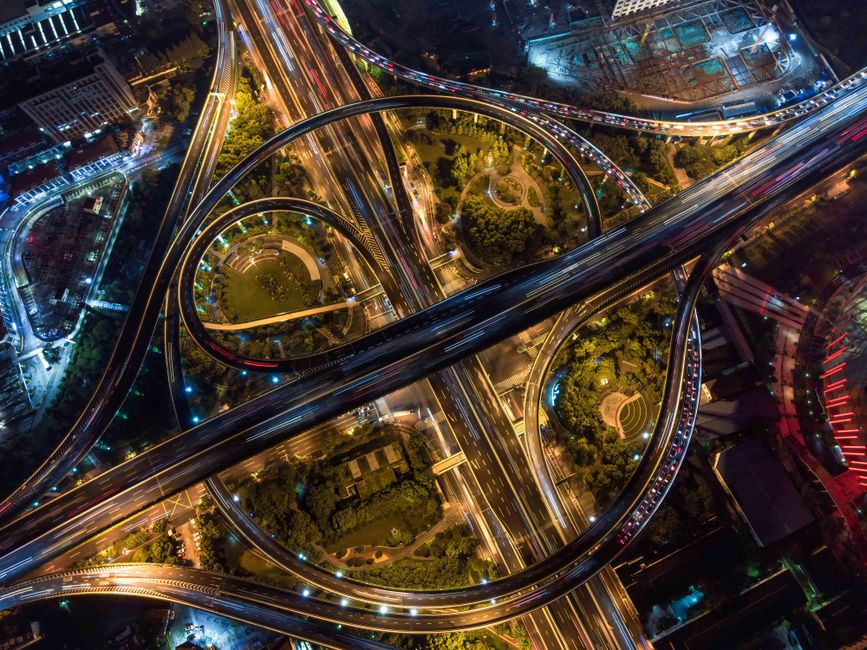
The Wuhu Outer Ring Expressway (G5011 extension and S11 connection) will close its final two segments by September 2025, creating a continuous 92 km ring that connects all five economic development zones to the city’s three north-south highways (G50, G4211, and G318). The impact on distribution cost is numeric: a manufacturer in the Wuhu High-Tech Zone currently takes 52 minutes to reach the Wuhu Port yard via city roads. After the ring completion, the same trip will take 29 minutes via the S11 slip road — a 44% time reduction.
For foreign enterprises running distribution to eastern China markets (Shanghai, Suzhou, Hangzhou), the ring-road effect compounds on port efficiency. A WFOE exporting industrial valves to Shanghai Waigaoqiao via Wuhu Port reported total transit time from factory gate to Shanghai berth at 38 hours in 2023. With the ring-road + port dredging combined, they project 23 hours by late 2026 — a 39% reduction. That transforms inventory pipeline risk: safety stock requirements drop from 5 days to 3 days, freeing ¥2.8M in working capital for this single operation.
Decision Framework: Aligning Site Selection with Infrastructure Timeline
If your operation relies on import/export via Yangtze River barge with just-in-time inventory, choose the Wuhu Comprehensive Bonded Zone (WCBZ) — it is within the automated container yard zone and will benefit earliest from dwell-time improvements. If your operation depends on skilled technical talent commuting from Hefei or Nanjing HSR corridor, choose a site within 3 km of a Line 3 or Line 4 station — the rail network connects to Wuhu Railway Station where G-trains reach Hefei in 38 minutes and Nanjing in 42 minutes. If your operation is domestic distribution to lower Yangtze Delta cities, choose a facility along the S11 corridor near the Wuhu South Interchange — 92% of ring-road access benefits cluster within 5 km of that node.
Wuhu’s Infrastructure Timeline vs. Comparable Cities
Wuhu is spending ¥12.8B on transportation between 2024 and 2026 — or ¥8,040 per resident. Compare this to Ma’anshan (¥3,200 per resident) and Hefei (¥5,700 per resident) over the same period. The per-capita intensity signals that Wuhu’s municipal strategy is to capture logistics spillover from the more expensive coastal ports while keeping land costs at 22% of Shanghai’s industrial average. For foreign enterprises exploring second-tier Yangtze River locations, Wuhu’s infrastructure investment per GDP unit (0.4%) exceeds both Xuancheng (0.2%) and Chuzhou (0.3%), making it the most connected inland port in Anhui by 2027.
NEXT STEPS
- Audit your current logistics routing against the ring-road completion map. Identify whether your primary supplier or customer route overlaps with segments that will shift traffic patterns in Q3 2025. Use the Transportation Bureau’s public data API for scenario modeling. Read our Wuhu Logistics Cost Benchmarking Guide.
- Re-baseline your workforce catchment analysis for rail Phase II. Plot job categories and salary bands against walking-distance buffers around lines 3 and 4 stations. If 40%+ of your technical staff currently drive >40 minutes one-way, the rail expansion changes your retention math. See Anhui WFOE Site Selection Factors.
- Review port contract terms with dwell-time and TEU-volume triggers. Renegotiate now before the automated yard opens and supply chains reconfigure. The WCBZ offers priority berthing for companies that commit to volume growth before the expansion opens — request a rate card review. Request a Wuhu Port Logistics Review.
— Anhui Gateway —
Remote China market entry support, built around execution.