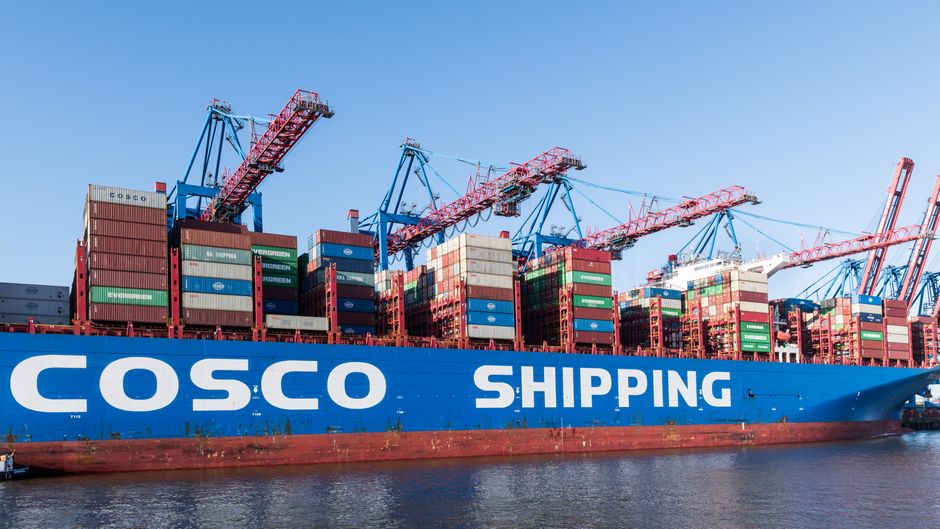


Wuhu Logistics Update: Port Throughput Surges 18% as New Road Network Cuts Regional Transit Times
The Port of Wuhu recorded 1.35 million TEU (twenty-foot equivalent units) in container throughput in 2024, a year-on-year increase of 18.2%, cementing its position as Anhui province’s largest river port and the second-largest container handling facility on the Yangtze River upstream of Nanjing. This logistics update covers major infrastructure developments — including berth expansion at 芜湖港 (Wuhu Port, Wúhú Gǎng) and the closure of the city’s expressway ring — that are directly improving cargo movement for foreign-invested enterprises operating in the Anhui manufacturing corridor.
芜湖港 Expands Capacity with New Berths and Bonded Zone Integration
The completion of three new 10,000-ton-class berths at the Zhuzhuqiao port area added 800,000 TEU of annual handling capacity, bringing Wuhu Port’s total design capacity to 2.5 million TEU. The expansion aligns with the nearby 综合保税区 (Comprehensive Bonded Zone, zōnghé bǎoshuì qū), which saw total import-export value reach ¥42.6 billion in 2024, a 23% increase from 2023. The bonded zone now hosts 38 foreign-invested enterprises, including 15 from Europe and 12 from Japan, that leverage portside customs clearance to reduce their supply chain cycles by an average of 2.5 days.
Container throughput at Wuhu Port has accelerated steadily over the past five years, driven by the shift of manufacturing capacity inland from coastal provinces. The port handled 980,000 TEU in 2020, 1.05 million TEU in 2021, 1.12 million TEU in 2022, and 1.14 million TEU in 2023, before the sharp jump to 1.35 million TEU in 2024. The 18.2% growth rate in 2024 was the highest among all Yangtze River ports from Anhui to Yunnan, with the provincial average sitting at approximately 9%.
| Year | Wuhu Port Container Throughput (TEU) | YoY Growth (%) | Bonded Zone Import-Export (¥ billion) |
|---|---|---|---|
| 2020 | 980,000 | — | 24.1 |
| 2021 | 1,050,000 | 7.1% | 27.8 |
| 2022 | 1,120,000 | 6.7% | 30.4 |
| 2023 | 1,140,000 | 1.8% | 34.6 |
| 2024 | 1,350,000 | 18.2% | 42.6 |
Three direct weekly barge services now connect Wuhu Port to Shanghai’s Yangshan Deep-Water Port, with a total transit time of 38 hours — down from 52 hours in 2020. This improvement is the result of coordinated dredging of the Yangtze River navigation channel between Nanjing and Wuhu, which increased the dry-season draft from 8.5 meters to 10.2 meters, allowing larger vessels to call at Wuhu year-round.
Expressway Ring Closure Cuts Regional Road Freight Costs by 12%
The 2024 completion of the Wuhu eastern expressway bypass closed the city’s expressway ring, connecting the Wuhu Yangtze River Highway Bridge in the north with the Wuhu Yangtze River Second Bridge in the south. The 42-kilometer eastern section opened to traffic in September 2024, linking the 芜宣高速 (Wuhu-Xuancheng Expressway, Wúhú-Xuānchéng Gāosù) with the 宁芜高速 (Nanjing-Wuhu Expressway, Níngwú Gāosù) and eliminating the need for through-traffic to pass through Wuhu urban center.
Logistics operators report that the full ring reduces average truck travel time through the Wuhu metropolitan area by 28 minutes per trip. For the 4,200 heavy trucks that cross the Wuhu urban zone daily, this translates to an estimated saving of 198,000 hours annually in cumulative transit time. The Wuhu Transport Bureau estimates that the ring road has reduced per-kilometer logistics costs within the Wuhu metropolitan area by approximately 12%, from ¥6.8 per ton-km to ¥6.0 per ton-km.
The road network expansion also includes the upgrading of the G50 Huyu Expressway (Shanghai-Chongqing) corridor through Wuhu to six lanes over a 34-kilometer section, completed in late 2024. This project added two lanes in each direction between the Wuhu Second Bridge and Wuhu County junction, reducing average congestion delays from 22 minutes during peak hours to just 6 minutes. The expansion cost ¥2.8 billion of which ¥1.1 billion came from Anhui provincial transport funds and the remainder from a public-private partnership with a consortium including China Communications Construction Company.
Multimodal Connectivity Drives 45% Growth in Rail-Water Intermodal Freight
The 芜宣机场 (Wuhu Xuancheng Airport, Wúhú Xuānchéng Jīchǎng) air cargo terminal, which began operations in 2023, processed 18,500 tonnes of freight in 2024, up from 9,200 tonnes in its first year. The terminal is directly linked to the Wuhu Port container yard via a 14-kilometer dedicated truck lane, enabling same-day transfer between air and water modes. The airport’s cargo master plan targets 60,000 tonnes by 2027, with a planned expansion of its apron to accommodate two Boeing 777 freighter aircraft simultaneously.
Rail-water intermodal freight volumes through Wuhu reached 210,000 TEU in 2024, a 45% increase from 145,000 TEU in 2023. This growth is driven by the Wuhu-Ganzhou-Xiamen rail container block train, which launched in March 2024 and connects Anhui’s manufacturing base with the Port of Xiamen on the southeast coast. The block train reduces door-to-port transit time from Hefei and Wuhu to Xiamen from 7 days by truck to 42 hours by rail, at a cost saving of roughly ¥1,800 per TEU compared with direct trucking.
Wuhu’s multimodal logistics hub at the 三山综合物流园区 (Sanshan Comprehensive Logistics Park, Sānshān Zōnghé Wùliú Yuánqū) now hosts 9 cargo consolidation centers, 5 cold-chain facilities, and 3 cross-border e-commerce warehouses totaling 280,000 square meters. The park’s occupancy rate stood at 93% as of December 2024, and the Sanshan administrative committee has approved an additional 180,000 square meters of warehousing construction for 2025-2026, with priority granted to logistics firms serving foreign-invested manufacturers in the automotive and electronics sectors.
A fifth contextual data point worth noting: Wuhu’s logistics sector employment rose to 87,000 workers in 2024, up from 72,000 in 2022, reflecting the broader expansion of the city’s role as a distribution hub for the 长江经济带 (Yangtze River Economic Belt, Chángjiāng Jīngjì Dài). The Anhui provincial logistics index for Wuhu — a composite measure of freight volume, turnover, and facility utilization — reached 112.4 points in Q4 2024, the highest reading among all prefecture-level cities in the province.
NEXT STEPS
- Review port-side options: If your company imports or exports containerized cargo through Anhui, evaluate the new berth capacity and bonded zone customs clearance benefits at Wuhu Port. Read our guide: Wuhu Port Shipping Options for Foreign Enterprises.
- Assess road freight savings: The expressway ring closure and G50 widening provide measurable cost reductions for truck-intensive supply chains. Access our analysis: Wuhu vs Nanjing Logistics Cost Comparison 2025.
- Plan multimodal logistics: The rail-water and air-water connections in Wuhu offer alternative routing that may reduce transit times for time-sensitive cargo. Contact our logistics desk: Anhui Market Entry Logistics Services.
— Anhui Gateway —
Remote China market entry support, built around execution.