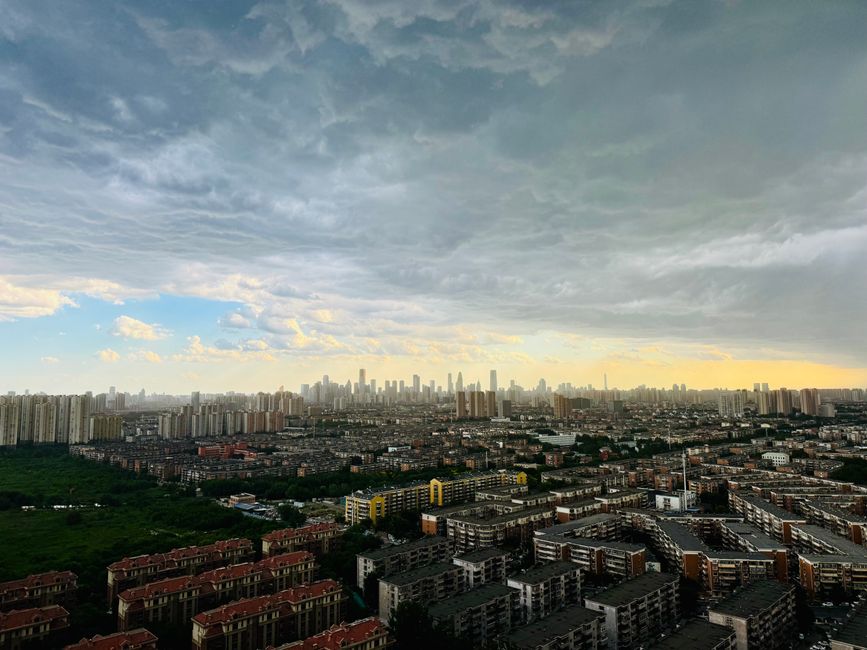


Wuhu vs Wuhu: The Old Manufacturing Hub vs The New Innovation Engine — A Business Environment Comparison
Wuhu (芜湖, Wúhú) has undergone a dramatic transformation over the past decade, creating what many analysts describe as “two Wuhus” operating within the same city limits. As of 2024, the city hosts 3,250 foreign-invested enterprises (外商独资企业, WFOE, wàishāng dúzī qǐyè), a 170% increase from 1,200 in 2015, but the nature of these investments has shifted fundamentally. The question for foreign executives is no longer “should I invest in Wuhu?” but “which version of Wuhu — the legacy industrial base or the emerging high-tech ecosystem — fits your strategic needs?”
This comparison dissects Wuhu’s business environment into its two dominant phases: the traditional manufacturing-driven economy centered on automotive production, and the rapidly expanding new economy powered by new energy vehicles (新能源汽车, xīn néngyuán qìchē), artificial intelligence, and smart manufacturing. Using five years of economic data, we contrast the infrastructure, talent pools, costs, and incentive structures of each, then provide a decision framework to guide your market entry.
The Old Wuhu: A Single-Industry City Built on Automobiles
From the late 1990s through 2015, Wuhu’s economy was synonymous with Chery Automobile, the state-owned automaker that launched in 1997 and quickly became China’s largest independent car brand. The Wuhu Economic and Technological Development Zone (经济技术开发区, jīngjì jìshù kāifā qū) was built around Chery’s supply chain, attracting over 600 Tier 1 and Tier 2 auto parts suppliers to a concentrated area north of the Yangtze River. By 2015, automotive manufacturing accounted for 58% of the city’s industrial output, and 1,200 foreign firms operated primarily as parts suppliers to Chery and its joint ventures.
Infrastructure in this “Old Wuhu” reflects its manufacturing DNA: large-scale industrial parks with standardized factory floors, heavy-truck logistics corridors, and a labor force of 400,000 workers trained in assembly-line operations. Average monthly wages for production workers in 2015 stood at RMB 3,800, well below the national average of RMB 5,300, making Wuhu a cost-effective destination for volume manufacturing. However, the city’s FDI profile was narrow — over 70% of inbound capital came from automotive-related projects, creating a vulnerability that became apparent when the domestic auto market slowed in 2018-2019.
Environmental compliance in the old industrial zones was a persistent challenge. The 经济技术开发区’s factories, many built before 2010, faced retrofitting costs averaging RMB 6 million per facility when the national “Blue Sky” campaign tightened emissions standards. By 2019, the municipal government had closed 47 high-pollution plants and shifted its industrial strategy away from heavy manufacturing’s single-sector dependence.
The New Wuhu: Diversification into New Energy, AI, and Smart Manufacturing
Starting around 2018, Wuhu began a deliberate economic rebalancing, founding the Wuhu National High-Tech Industrial Development Zone (高新区, gāoxīn qū) south of the city center. This new zone targeted exactly the sectors that the old economy lacked: new energy vehicle R&D, battery manufacturing, artificial intelligence, and intelligent manufacturing equipment. By 2024, the 高新区 hosted 340 high-tech enterprises, including 47 foreign-funded R&D centers, up from just 12 in 2018. FDI into the high-tech zone reached USD 1.4 billion in 2024 alone, overtaking the older 经济技术开发区 for the first time.
The data reveals a sharp divergence. Chery’s traditional internal combustion engine vehicle production plateaued at 650,000 units annually between 2018 and 2023, while its new energy vehicle production surged from 45,000 units in 2019 to 280,000 units in 2024. More critically, non-automotive high-tech sectors — including AI chip design, industrial robotics, and lithium battery materials — grew at 28% CAGR from 2019 to 2024, contributing 48% of Wuhu’s total industrial output by the end of the period, up from 22% in 2015.
Talent profiles shifted accordingly. The 高新区 attracted 22,000 engineering graduates from universities in Hefei, Nanjing, and Shanghai between 2020 and 2024, with average monthly salaries for R&D positions reaching RMB 12,500 — higher than in the old manufacturing zones but still 15-20% below comparable roles in Shanghai. The city government offered relocation subsidies of up to RMB 200,000 per PhD hire and corporate tax rebates of 15% for certified high-tech enterprises, making the New Wuhu cost-competitive for innovation-driven investments.
Business Environment Breakdown: Infrastructure, Incentives, and Talent
The table below provides a side-by-side quantitative comparison of the Old Wuhu (manufacturing baseline, circa 2015-2018) and the New Wuhu (high-tech and new energy ecosystem, circa 2022-2024), using metrics that matter most to foreign investors.
| Factor | Old Wuhu (2015 Baselines) | New Wuhu (2024 Baselines) |
|---|---|---|
| FDI (annual inflow) | USD 1.1 billion | USD 3.2 billion |
| High-tech share of industrial output | 22% | 48% |
| Average monthly wage (production) | RMB 3,800 | RMB 5,600 |
| Average monthly wage (R&D engineer) | RMB 7,200 | RMB 12,500 |
| Number of WFOEs | 1,200 | 3,250 |
| Industrial land cost (per m²) | RMB 450 | RMB 680 (high-tech zone) |
| Corporate income tax rate (effective) | 25% standard | 15% for certified high-tech enterprises |
| Chery vehicle exports (annual) | 180,000 units | 930,000 units |
| University partnerships for talent | 3 | 17 |
Several trends leap out. FDI more than doubled in absolute terms, but the composition shifted from automotive parts manufacturing to R&D-intensive sectors. Land costs in the new high-tech zone are 50% higher than the old industrial parks, reflecting better infrastructure, digital connectivity, and proximity to talent pipelines. Meanwhile, the effective corporate tax rate reduction from 25% to 15% for certified enterprises represents a meaningful long-term saving — equivalent to RMB 2.5 million annually for a company with RMB 50 million in taxable profits.
Infrastructure in the 高新区 includes dedicated fiber-optic lines for AI research, 5G coverage across all park areas, and a direct shuttle link to Nanjing South railway station (45 minutes). The 经济技术开发区 offers superior heavy logistics: river port access via the Yangtze, cargo rail connections to the Shanghai-Nanjing-Anhui corridor, and 1.2 million square meters of warehousing space. These are not interchangeable ecosystems; they serve different operational models.
Decision Framework: Old Wuhu vs New Wuhu
If your company relies on traditional automotive supply chains, mature industrial labor pools, and cost-effective manufacturing floorspace, choose the Old Wuhu model — target the established 经济技术开发区 (jīngjì jìshù kāifā qū) where land costs are lower, logistics for heavy goods are proven, and the labor force has 10-20 years of assembly-line experience. This path suits Tier 1/Tier 2 auto parts suppliers, heavy machinery manufacturers, and logistics/distribution companies serving the existing industrial base.
If you are entering new energy, AI, advanced R&D, or smart manufacturing sectors, choose the New Wuhu ecosystem — locate in the 高新区 (gāoxīn qū) where tax incentives, talent pipelines, and R&D infrastructure are designed for your industry. This path fits battery technology firms, AI software developers, medical device R&D centers, and any investment requiring high-skilled engineering talent and proximity to university partnerships.
If your business model involves both manufacturing and R&D, consider a hybrid approach: establish your R&D center in the 高新区 for talent access and tax benefits, then contract manufacturing to partners or a dedicated facility in the 经济技术开发区 to keep production costs low. Several foreign companies — including a German auto parts supplier that built a testing lab in the high-tech zone and a production plant in the old zone — have successfully used this dual-location strategy.
Three Pitfalls to Avoid
Conclusion: The Two Wuhus Will Merge, But Not Yet
Wuhu’s dual identity is a transitional phase, not a permanent split. As the old 经济技术开发区 retrofits its factories for new energy production and the 高新区 matures into a full-cycle innovation hub, the distinction will blur over the next 5-7 years. For foreign executives making a decision in 2025, however, the difference is real and measurable. The numbers are clear: 3,250 WFOEs now operate in the city, up from 1,200 a decade ago, but they are distributed unevenly across two very different business environments. Choose the one that fits your strategy, and you gain Wuhu’s core advantage — a cost base 20-30% below Shanghai, Nanjing, or Hefei — without inheriting the mismatch risks of the wrong zone.
NEXT STEPS
- Read the full Wuhu district-by-district analysis. Get park-level data on land costs, tax incentives, and talent availability for each of Wuhu’s six economic zones. Download the Wuhu Site Selection Report →
- Review the complete Anhui WFOE registration guide. Understand the 12-step process for incorporating a 外商独资企业 in Wuhu, including document templates and timeline estimates. Read the WFOE Setup Guide →
- Schedule a virtual Wuhu site visit. Our on-ground team can arrange tailored meetings with park management in both the 经济技术开发区 and 高新区, plus introductions to existing foreign investors in each zone. Book a strategy call →
— Anhui Gateway —
Remote China market entry support, built around execution.