

Bengbu Green Energy Update: Stricter Sustainability Requirements Reshape Industrial Operations
Serving as a manufacturing hub in northern Anhui Province, Bengbu (蚌埠, Bèngbù) has introduced a new suite of sustainability requirements that will affect approximately 1,200 industrial enterprises by June 2025. Under the city’s latest Green Energy Transition Implementation Plan for Key Industries (2025–2027), factories in glassmaking, photovoltaic component manufacturing, machinery, and chemical processing must cut energy intensity by at least 18% from 2023 baseline levels or face escalating penalties. The update marks Bengbu’s most aggressive push yet to align with China’s “dual carbon” goals of peaking emissions by 2030 and achieving carbon neutrality by 2060.
Why Bengbu’s Green Energy Shift Matters Now
Bengbu’s industrial sector currently accounts for 63% of the city’s total energy consumption, a share that has grown steadily as new photovoltaic and glass production lines came online between 2020 and 2024. The new requirements target the six highest-emitting sub-sectors, which together produce 4.2 million tonnes of CO₂ annually — roughly equal to the emissions of 900,000 passenger vehicles driven for one year. By comparison, Bengbu’s neighbor Hefei imposed similar measures in 2023 but gave factories a 30-month grace period; Bengbu is compressing that window to 18 months, signaling greater regulatory urgency.
For foreign-invested enterprises (外商独资企业, WFOE, wàishāng dúzī qǐyè), the timeline is especially tight. Under the new rules, 80% of qualifying firms must submit a Carbon Reduction Roadmap by March 2026, and 100% by December 2026. Firms that fail to comply risk losing tax benefits previously granted under the Anhui Provincial Green Manufacturing Incentive Scheme, which in 2024 disbursed roughly ¥45 million to Bengbu-based factories.
Key Sustainability Requirements in Detail
The Bengbu Municipal Bureau of Ecology and Environment (蚌埠市生态环境局, Bèngbù Shì Shēngtài Huánjìng Jú) has grouped the new mandates into four pillars: Energy Efficiency, Emissions Cap, Waste Heat Recovery, and Green Power Procurement. The energy efficiency requirement alone affects 350 glass furnaces and 270 chemical processing units, which together form the backbone of Bengbu’s industrial output. By 2027, each furnace must operate at a minimum thermal efficiency of 72%, up from the current industry average of around 61%.
As part of the emissions cap, the city has introduced a total CO₂ budget of 3.6 million tonnes per year for the combined industrial zone covering the High-tech Industrial Development Zone (蚌埠高新技术产业开发区, Bèngbù Gāoxīn Jìshù Chǎnyè Kāifā Qū) and the Longzihu Industrial Park. Companies that exceed their allocated quota must purchase offsets on the national carbon market at prevailing rates, which averaged ¥82 per tonne in Q4 2024. The budget is set to decline by 5% annually through 2030.
Case Comparison: How Bengbu Compares with Other Anhui Cities
To help readers assess the relative stringency of Bengbu’s approach, the table below compares key metrics across four Anhui industrial cities that have published similar green energy policies.
| City | Energy Intensity Reduction Target (by 2027) | CO₂ Budget (Million Tonnes/Year) | Grace Period for WFOEs | Penalty for Non-Compliance |
|---|---|---|---|---|
| Bengbu (蚌埠) | 18% | 3.6 | 18 months | Loss of tax incentives; carbon offset purchase at ¥82/tonne |
| Hefei (合肥) | 15% | 12.0 | 30 months | Fine of ¥50,000–500,000 per violation |
| Wuhu (芜湖) | 20% | 5.2 | 24 months | Production cap reduction by 10% |
| Ma’anshan (马鞍山) | 12% | 8.1 | 36 months | Increased environmental inspection frequency |
Note: Data sourced from city-level implementation plans published through January 2025. CO₂ budgets apply to the primary industrial zone in each municipality.
Decision Framework: Choosing a Compliance Path for Your Bengbu Factory
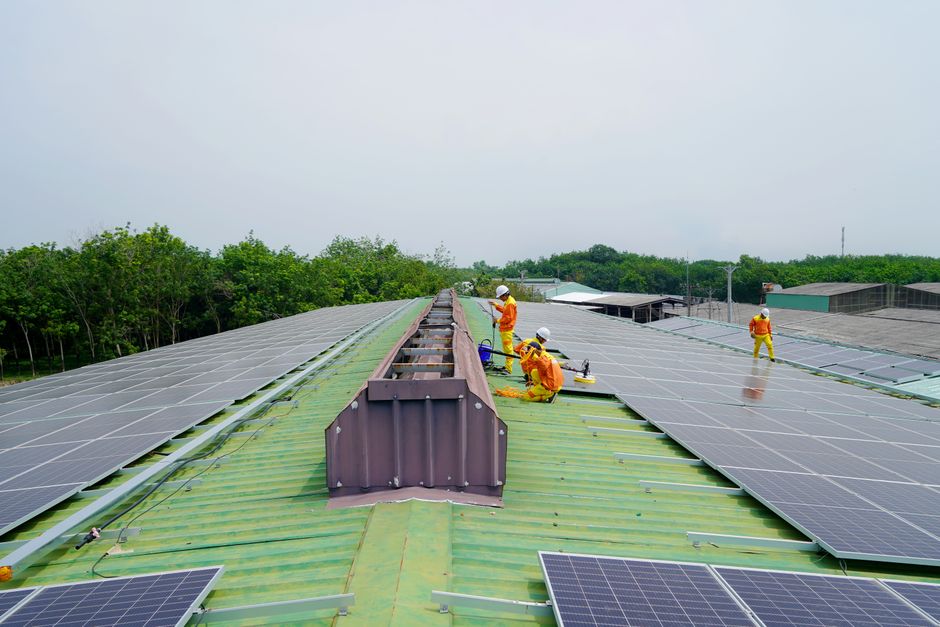
If your current factory operates above 60% thermal efficiency and has at least 2,000 square meters of roof space for solar panels, choose the “Deep Retrofit” path: fully electrify process heat and install on-site solar. This route typically costs between ¥3 million and ¥8 million per facility but yields operational savings of 25–40% in energy spending within 4 years.
If your factory runs below 55% thermal efficiency or lacks roof space, choose the “Offset & Reduce” path: purchase carbon offsets for the first two years while installing waste-heat recovery units on existing equipment. This route keeps upfront capital costs below ¥1.5 million but carries a recurring annual offset bill of roughly ¥500,000 for a mid-size furnace operator. After three years, efficiency gains should reduce offset needs by at least half.
3 Pitfalls to Avoid When Adapting to Bengbu’s Green Energy Rules
Cost: Forfeiture of an estimated ¥180,000–¥420,000 in annual tax credits under Anhui’s green manufacturing scheme.
Fix: Commission a certified Chinese carbon accounting firm (e.g., CECEP or China Quality Certification Centre) immediately to begin baseline measurement. Budget approval takes 2–4 months.
Cost: Audits run ¥60,000–¥120,000; retesting time can reach 8 weeks, delaying roadmap submission and risking incentives.
Fix: Obtain the Bengbu-specific add-on audit (usually 3 days per facility) at the same time as your annual ISO surveillance audit to avoid duplication.
Cost: Non-compliance can trigger a production curtailment order of up to 15% of daily output, costing a mid-sized glass factory roughly ¥2 million per month in lost revenue.
Fix: Conduct a quick temperature survey on all exhaust stacks using a handheld infrared thermometer (cost: ¥2,000). If any reading exceeds 150°C, initiate a waste-heat recovery feasibility study.
NEXT STEPS: Practical Actions for Foreign Firms in Bengbu
- Verify your facility’s current energy baseline against Bengbu’s 2023 benchmark. Use our Energy Audit Checklist for Bengbu Factories to gather the specific data points the municipal bureau requires for roadmap approval.
- Review the list of licensed verification bodies accepted by the Bengbu Municipal Bureau of Ecology and Environment. Cross-reference with our Anhui Carbon Auditor Directory to find firms with experience serving WFOEs in the glass and chemical sectors.
- Prepare your Carbon Reduction Roadmap using the bureau’s new template released in January 2025. Download our WFOE Carbon Roadmap Template with pre-filled Chinese regulatory language and timeline anchors.
— Anhui Gateway —
Remote China market entry support, built around execution.